Comprehensive Strain Introduction & Botanical Overview
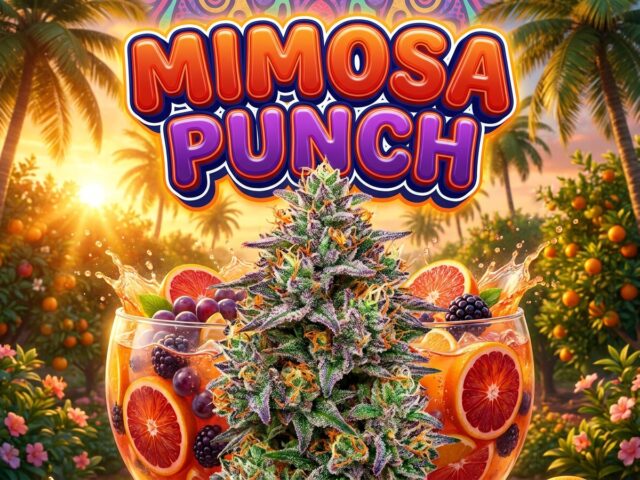
Mimosa Punch is a contemporary hybrid phenotype bred by the legendary Dutch Passion Seed Company, a breeding house world-renowned for its rigorous genetic selection programs and unwavering commitment to phenotypic stability. First introduced to international acclaim in 2018, Mimosa Punch rapidly secured its status as a top-shelf flagship cultivar that marries the radiant, sun-drenched citrus brightness of Clementine with the rich, grape-berry undertones and heavyweight resin production of Purple Punch. The cultivar displays an expertly balanced 50/50 Indica-Sativa lineage, producing a versatile morphology that combines energetic apical branching with dense, chunky calyx clusters.
Mimosa Punch Phytochemistry & Technical Benchmarks
| Parameter | Value / Benchmark | Pharmacological & Agronomic Notes |
|---|---|---|
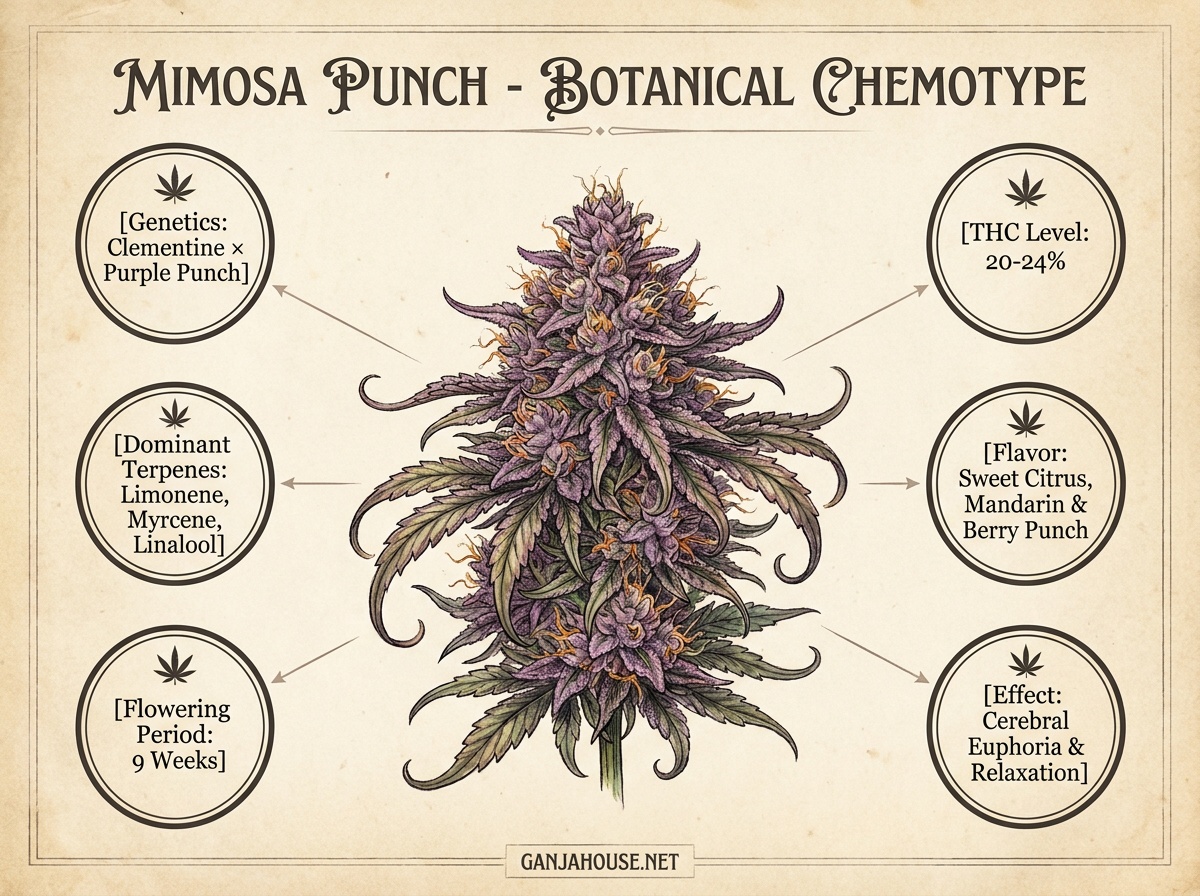
| Cannabinoid Potency | 20% – 24% Δ⁹-THC | High psychoactive potency delivering rapid mood enhancement and muscular ease. |
| Primary Terpenes | d-Limonene, β-Myrcene, Linalool | Sweet tangerine zest, ripe purple fruit, soothing floral undertones. |
| Lineage Classification | Clementine × Purple Punch | Stabilized F6 polyhybrid uniting Skunk/Haze citrus lines with Granddaddy Purple OG roots. |
| Flowering Window | 9 Weeks (Photoperiod) | Rapid calyx swelling during weeks 6–8 with vibrant anthocyanin accumulation. |
| Yield Efficiency | 500 – 600 g/m² Indoor / 700g/plant Outdoor | Substantial commercial yields when trained under ScrOG or multi-topped canopies. |
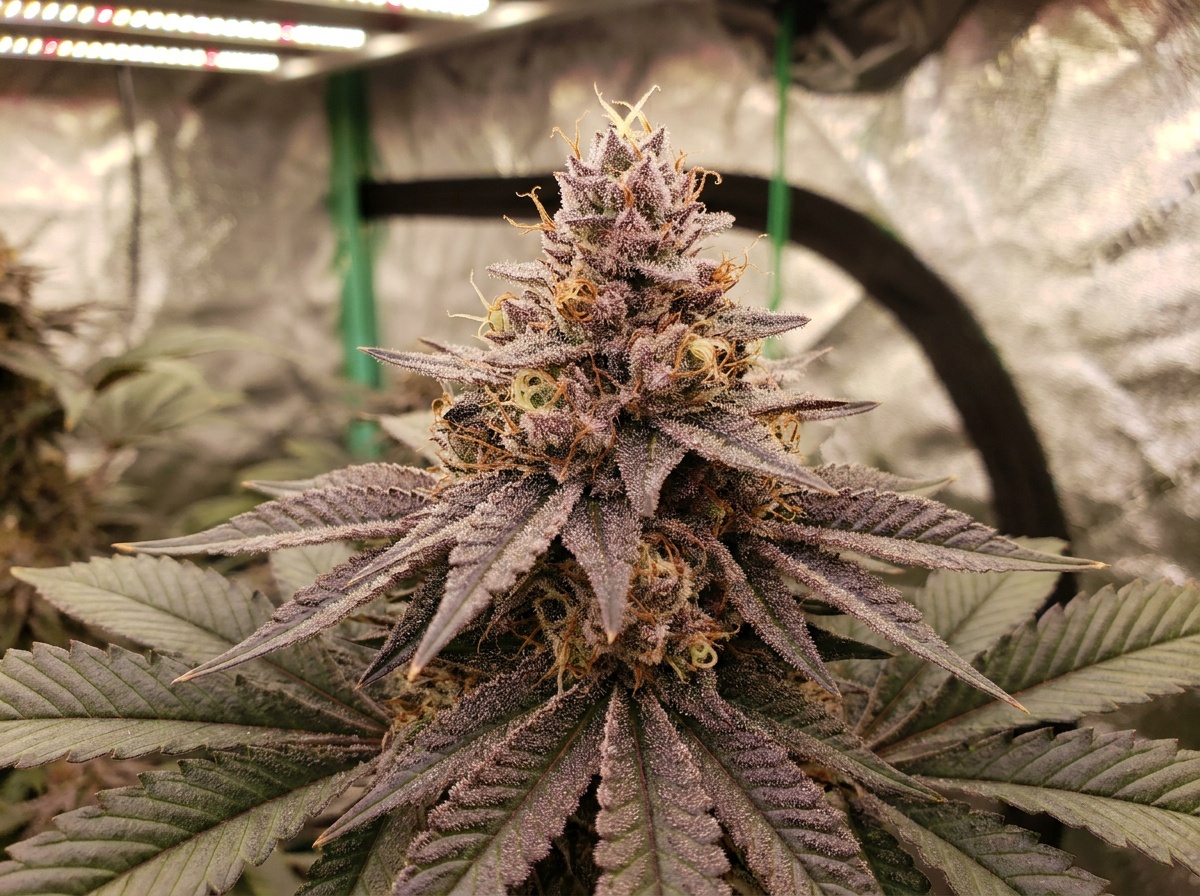
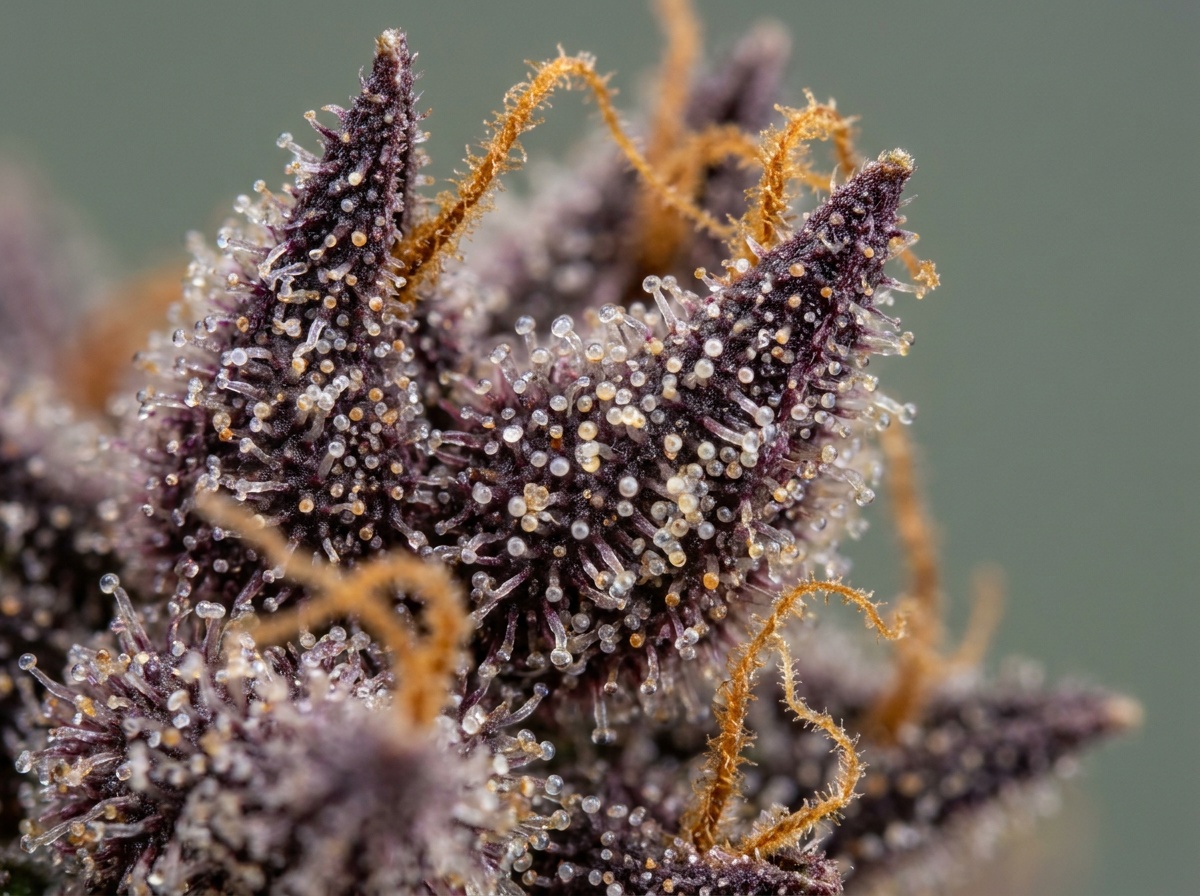
Botanically, Mimosa Punch exhibits an interspecific hybrid vigour (Cannabis sativa × Cannabis indica). Under photoperiod regimens, plants develop a medium-to-tall stature with robust lateral scaffolding. The foliage features classic tri-falcate and quinque-falcate fan leaves with deep serrations and a glaucous, deep-forest hue. As the floral transition progresses, bract tissues undergo heavy anthocyanin pigmentation, yielding deep lavender, violet, and royal purple hues across the calyxes that contrast strikingly with fiery tangerine pistils and a glittering blanket of glandular trichomes.
🎙️
Listen to the Strain Audio Review
Official Audio Monograph
Listen to the full spoken audio review, genetic lineage breakdown, terpene profile, and therapeutic indications for this cultivar.
Genetics, Breeding History & Parentage (Clementine × Purple Punch)
The genetic architecture of Mimosa Punch represents the deliberate convergence of two elite American cultivars, selected specifically to achieve an extraordinary balance between terpene saturation, resin yield, and invigorating psychoactivity:
- Clementine: A renowned Sativa-dominant hybrid bred from Tangie × Lemon Skunk (with ancestral roots in Skunk #1 and Jack Herer). Clementine supplies the cultivar's unmistakable sweet orange citrus aroma, high limonene concentration, and sharp cerebral clarity.
- Purple Punch: An iconic indica-dominant pairing of Granddaddy Purple × Larry OG. Purple Punch contributes heavy resin output, compact flower density, deep purple coloration, and calming myrcene/caryophyllene complexes.
The initial F1 cross was synthesized at Dutch Passion’s European research facility in 2015. Through six filial generations (F6) of rigorous phenotypic selection, breeders stabilized the "Citrus-Punch" chemotype, prioritizing plants that preserved the invigorating daylight clarity of Clementine while eliminating larval branch brittleness through the stout node framework of Purple Punch.
Photoperiod vs Autoflower Phenotypic Comparison
| Trait / Characteristic | Mimosa Punch (Photoperiod) | Auto Mimosa Punch (Autoflower) |
|---|---|---|
| Lifecycle Duration | 13 – 16 Weeks (Veg + 9 Weeks Bloom) | 10 – 11 Weeks (Seed to Harvest) |
| Canopy Control & Training | High tolerance for Mainlining, Topping & ScrOG | Optimized for LST & minimal defoliation |
| Peak Cannabinoid Potential | 20% – 24% THC (Ceiling up to 26%) | 18% – 21% THC |
| Lighting Schedule | 18/6 Veg transitioning to 12/12 Bloom | 20/4 Constant throughout lifecycle |
Phytochemistry, Terpene Spectrum & Cannabinoid Profile
The psychoactive and medicinal efficacy of Mimosa Punch is driven by a sophisticated phytochemical matrix. While Δ⁹-THC dominates the cannabinoid fraction, trace cannabinoids and a rich terpene profile create a distinct entourage effect that sets this cultivar apart from typical dessert strains.
Comprehensive Terpene & Minor Cannabinoid Matrix
| Phytochemical | Relative Proportion | Aroma Profile | Physiological Mechanisms |
|---|---|---|---|
| d-Limonene | 0.85% – 1.30% | Sharp citrus, tangerine, lemon zest | Anxiolytic, 5-HT1A serotonergic modulation, gastroprotective. |
| β-Myrcene | 0.60% – 0.95% | Earthy mango, sweet herbal musk | Blood-brain barrier permeability enhancer, analgesic, sedative. |
| Linalool | 0.25% – 0.45% | Lavender, fresh sweet floral | GABAergic neurotransmission modulation, anticonvulsant, stress mitigation. |
| β-Caryophyllene | 0.30% – 0.50% | Cracked black pepper, warm spice | Direct CB₂ receptor agonist, potent peripheral anti-inflammatory. |
| Cannabigerol (CBG) | 0.40% – 0.80% | Non-aromatic cannabinoid | α2-adrenoceptor agonism, neuroprotective, intraocular pressure moderation. |
Comprehensive Cultivation Guide & Canopy Management
Mimosa Punch exhibits robust agronomic vigor, making it exceptionally rewarding for both indoor climate-controlled facilities and tropical outdoor garden plots such as Southern Thailand. The cultivar responds enthusiastically to canopy manipulation, yielding uniform horizontal colas when trained properly.
Agronomic Feeding & Environmental Parameters
| Growth Phase | Day / Night Temp | Relative Humidity | Target PPFD | Substrate EC / pH |
|---|---|---|---|---|
| Early Vegetative (W1–W3) | 25°C – 28°C / 20°C | 65% – 70% RH | 400 – 600 µmol/m²/s | EC 1.2 – 1.4 | pH 5.8 – 6.2 |
| Late Veg & Transition (W4–W5) | 24°C – 27°C / 19°C | 55% – 60% RH | 650 – 800 µmol/m²/s | EC 1.5 – 1.8 | pH 6.0 – 6.3 |
| Mid-Flowering Bloom (W6–W8) | 22°C – 25°C / 18°C | 45% – 50% RH | 850 – 1050 µmol/m²/s | EC 1.9 – 2.2 | pH 6.2 – 6.5 |
| Late Ripening & Flush (W9) | 20°C – 23°C / 16°C | 38% – 42% RH | 700 – 850 µmol/m²/s | EC 0.2 – 0.4 | pH 6.2 – 6.5 |
Canopy Training & Pruning Protocol
- Early Low-Stress Training (Week 3): Gently pin down the main stem laterally at a 45-degree angle using rubberized garden ties. This breaks apical dominance and directs auxins into secondary lateral shoots.
- Strategic Apical Topping (Week 4): Top the main apical shoot cleanly above the 4th or 5th node. This creates a symmetrical four-mainline framework ideal for high-efficiency lighting grids.
- Screen of Green (ScrOG) Weaving (Weeks 5–6): Install a trellis mesh 25–30 cm above the substrate. Weave emerging shoots horizontally until the trellis is 75% populated prior to initiating the 12/12 photoperiod flip.
- Strategic Defoliation (Day 21 & Day 42 of Bloom): Strip interior lower fan leaves ("lollipoping") to eliminate microclimate humidity pockets, maximize airflow, and channel metabolic energy directly into top-tier floral colas.
- Harvest Timing via Trichome Microscopy: Monitor glandular trichome heads with a 60× jeweler's loupe. The sweet spot for harvesting Mimosa Punch occurs when 80% of heads are milky-cloudy with 15–20% amber conversion, securing peak terpene vibrancy and potent euphoria.
Medical Research & Therapeutic Applications
Although randomized clinical trials specific to the proprietary Mimosa Punch phenotype remain emerging, extensive biomedical research into its constituent terpenes and high-potency cannabinoid profile supports its efficacy across multiple clinical indications.
| Clinical Indication | Primary Active Drivers | Proposed Pharmacological Mechanism |
|---|---|---|
| Depressive Disorders & Anhedonia | Δ⁹-THC + d-Limonene | Mesolimbic dopamine release combined with 5-HT1A serotonergic receptor facilitation. |
| Musculoskeletal Inflammation | β-Caryophyllene + CBG + Myrcene | Peripheral CB₂ receptor agonism reducing pro-inflammatory cytokine cascades (IL-6, TNF-α). |
| Stress & Somatic Tension | Linalool + β-Myrcene | GABAergic positive allosteric modulation dampening autonomic nervous system overdrive. |
| Appetite Stimulation & Cachexia | Δ⁹-THC + Ghrelin Pathways | Hypothalamic CB₁ activation promoting orexigenic hunger signaling. |
Pharmacokinetics, Dosing & Administration
When inhaled via convection dry herb vaporization at 175°C–190°C (347°F–374°F), the onset of action occurs within 90 to 180 seconds, reaching peak plasma concentration between 10 and 20 minutes with a therapeutic duration of 2.5 to 3.5 hours. Vaporization within this temperature window ensures the preservation of volatile limonene and linalool fractions while minimizing the formation of thermal degradation byproducts.
For oral edible formulations, hepatic first-pass metabolism converts Δ⁹-THC into the significantly more potent 11-hydroxy-THC metabolite, producing a prolonged systemic duration of 6 to 8 hours. Patients new to high-THC cultivars are advised to start with low microdoses (2.5 mg to 5 mg THC equivalent) to evaluate individual tolerance before titrating upward.
Conclusion
Mimosa Punch represents a tour de force in modern hybrid cannabis breeding: uniting the illustrious pedigree of Clementine and Purple Punch into a stabilized, high-yielding cultivar with extraordinary visual appeal and sensory complexity. Its rich, multi-layered terpene architecture—dominated by bright tangerine limonene, soothing myrcene, and floral linalool—delivers an uplifting, euphoric, yet deeply balancing entourage effect that satisfies both connoisseurs and therapeutic patients alike.
From an agronomic perspective, its resilient root system, vigorous lateral branching, and high resin-to-leaf ratio make Mimosa Punch an indispensable asset in any modern cultivation portfolio. Ganja House Koh Lanta is proud to feature this exceptional Dutch Passion masterpiece among our premier dispensary collections.
- Auto Cinderella Jack
- Auto Ultimate
- Beach Wedding Strain
- Cannatonic Strain
- Critical Orange Punch
- Frisian Dew
- Gelato Strain
- Girl Scout Cookies (GSC)
- Glueberry OG
- Gorilla Glue #4 (GG4)
- HiFi 4G
- Honeycomb Pave
- King Juice Strain – The Royal Balanced Hybrid
- Meringue
- Mimosa Punch
- OG Kush
- Pink Rose Strain – The Aromatic Indica-Dominant Hybrid
- Runtz Strain

Ajarn Spencer Littlewood & Agent Gemini Unleashed for GanjaHouse.net
All rights reserved.