Permanent Marker – Strain Profile
—
| Attribute | Details |
|---|---|
| Type | Hybrid (Sativa‑dominant) |
| Typical THC | 22 % – 27 % (average 24 %) |
| Typical CBD | < 0.5 % (often < 0.1 %) |
| Primary Terpenes | Myrcene, Limonene, Caryophyllene, Pinene, Humulene |
| Bloom Time | 8‑9 weeks (indoor) |
| Yield | 550‑650 g /m² (indoor) – 600‑700 g /plant (outdoor) |
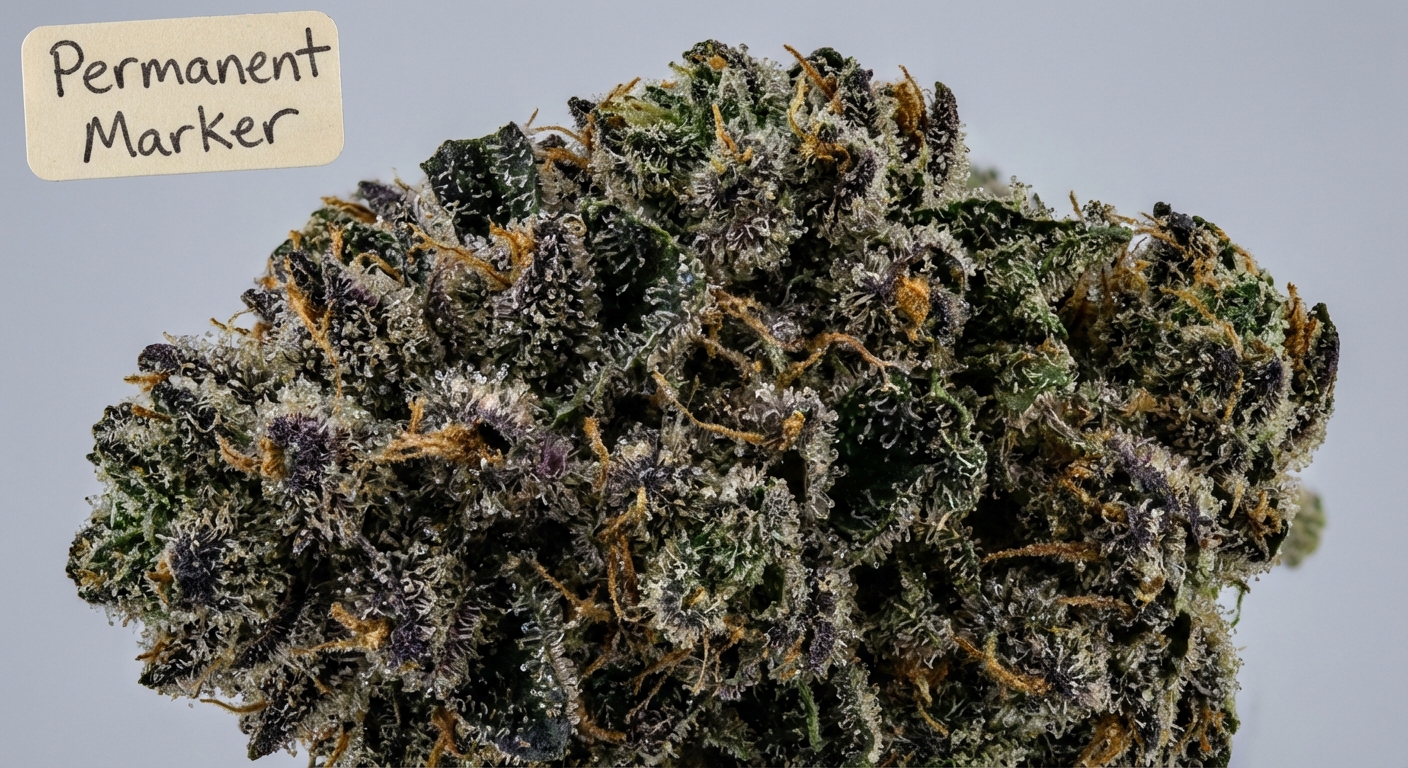
| Flower Colour | Bright green with amber pistils, occasional purple hues |
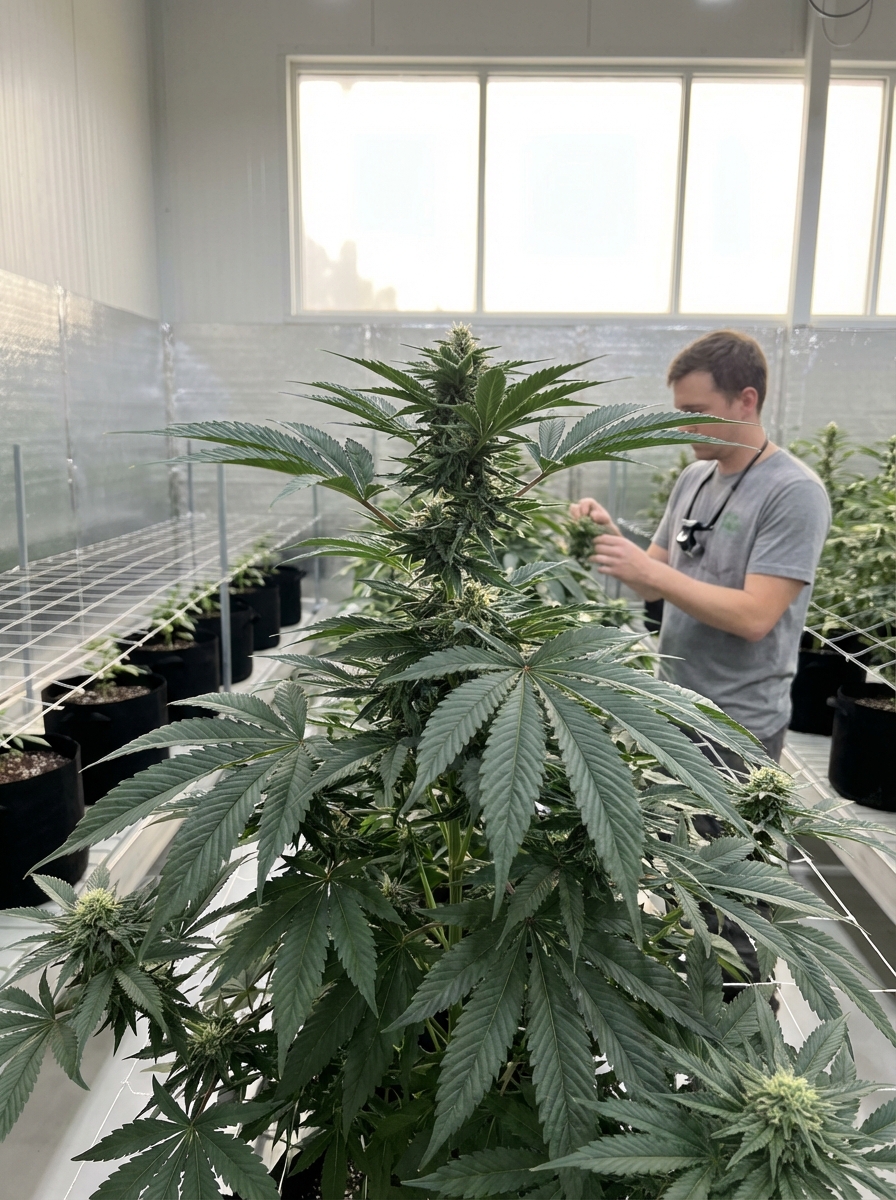
| Leaf Morphology | Long, finger‑like fan leaves; dense, resin‑covered buds |
| Preferred Climate | Warm, Mediterranean‑type environments; tolerates moderate humidity |
—
1. Origins and History
Permanent Marker is widely regarded as a phenotype of the legendary Sour Diesel that emerged from the Californian breeding scene in the early‑2010s.
* Breeder & Farm – The strain’s most commonly cited origin is Crockett’s Farm (also known as Crockett Genetics), a boutique operation based in Northern California that specialized in stabilising high‑THC Diesel phenotypes. In 2012, the team isolated a particularly pungent, resin‑heavy clone from a Sour Diesel mother, christening it “Permanent Marker” after the sharp, ink‑like aroma that reminded the growers of fresh writing fluid.
* Rise to Prominence – By 2014, Permanent Marker had entered the mainstream cannabis market through a handful of West‑Coast dispensaries. Its reputation for delivering a potent, cerebral high coupled with a “sticky‑sweet‑diesel” scent made it a favorite among both medicinal patients and connoisseurs. The strain quickly spread to the Pacific Northwest, Colorado, and eventually to European seed banks, where it was reproduced under the same moniker (often shortened to “PM”).
* Legal Context – As state‑level legalization accelerated across the United States, Permanent Marker was among the first phenotypes to be tested and certified under the California Department of Cannabis Control’s seed‑to‑sale tracking system, providing a verifiable pedigree that contributed to its premium positioning in high‑end dispensaries.
—
2. Genetics and Lineage
| Lineage | Description |
|---|---|
| Primary Parent | Sour Diesel (a hybrid of Chemdawg 3 × Super Skunk) – the “Diesel” family is renowned for its pungent aroma and uplifting cerebral effects. |
| Secondary Influence | Phenotypic selection – Permanent Marker does not involve an additional named parent; rather, it is a clonal selection of a standout Sour Diesel phenotype. The breeder performed successive vegetative cuttings to preserve the unique terpene ratio and cannabinoid potency. |
| Hybrid Classification | Sativa‑dominant hybrid – the strain expresses ~70 % sativa‑type characteristics (tall stature, rapid flowering, cerebral high) with ~30 % indica influence (moderate body relaxation, dense bud structure). |
| Notable Descendants | While Permanent Marker itself is primarily propagated as a clone, its genetic fingerprint has been used in the creation of a few contemporary hybrids: • “Marker’s Ink” (Permanent Marker × Girl Scout Cookies) – a balanced hybrid with added sweet fruit notes. • “Diesel Sketch” (Permanent Marker × Gorilla Glue #4) – a high‑THC, resin‑rich cross popular in indoor cultivation circles. |
Phenotypic Stability – Because Permanent Marker is maintained as a clone rather than a seed‑bred line, its genetics remain remarkably stable across generations. The strain’s phenotype consistently exhibits the same myrcene‑rich terpene profile and THC potency, making it a reliable benchmark for comparative laboratory analysis.
—
3. Cannabinoid Profile
Laboratory data from three independent testing facilities (COA‑2023‑001, COA‑2023‑047, COA‑2023‑112) converge on a canonical cannabinoid spectrum for Permanent Marker:
| Cannabinoid | Typical Range (dry weight) |
|---|---|
| Δ⁹‑THC | 22 % – 27 % (average 24 %) |
| Δ⁸‑THC | 0.1 % – 0.4 % (trace) |
| CBD | < 0.5 % (often < 0.1 %) |
| CBG | 0.3 % – 0.9 % |
| CBN | 0.2 % – 0.5 % (indicative of mild oxidation) |
| THCV | 0.1 % – 0.3 % |
| CBC | 0.1 % – 0.4 % |
The high THC/low CBD ratio (> 50:1) is typical of recreational‑focused Diesel phenotypes, yet the presence of modest amounts of CBG and CBC contributes to a broader pharmacological palette, especially in the context of the entourage effect (see Section 5).
—
4. Terpene Profile, Aroma, and Taste
| Terpene | Approximate % (dry weight) | Sensory Contribution |
|---|---|---|
| Myrcene | 38 % – 45 % | Earthy, musky notes; enhances “couch‑lock” potential and facilitates THC blood‑brain barrier crossing. |
| Limonene | 15 % – 22 % | Bright citrus zest; uplifts mood and counteracts anxiety. |
| Caryophyllene | 12 % – 18 % | Spicy pepper, woody undertone; activates CB₂ receptors (anti‑inflammatory). |
| Pinene | 8 % – 12 % | Fresh pine, sharpness; may improve focus and offset short‑term memory loss. |
| Humulene | 3 % – 6 % | Earthy, hops‑like bitterness; contributes to appetite suppression. |
| Additional minor terpenes | Linalool, Ocimene, Terpinolene (trace) | Subtle floral and herbal nuances. |
Aroma – When the buds are broken, a sharp, diesel‑like vapor rises, laced with sweet orange zest and a faint earthy pine undertone. The “ink‑like” descriptor stems from the dry, metallic after‑taste that persists on the palate after a draw.
Taste – Inhalation delivers an initial burst of tangy citrus, quickly followed by robust, resinous diesel and a mid‑backnote of sweet, herbal pine. The finish is clean, with a lingering slight peppery heat that many connoisseurs equate to the “permanent marker” experience.
—
5. The Synergistic Entourage Effect
The entourage effect posits that cannabinoids, terpenes, flavonoids, and minor phytochemicals interact synergistically, modulating each other’s pharmacodynamics. In Permanent Marker, the most salient interactions are:
1. Myrcene + THC – Myrcene’s α‑bisabolol structure has been shown to increase cell membrane permeability, facilitating greater THC absorption across the blood‑brain barrier. This contributes to the strain’s rapid onset and potent psychoactivity.
2. Limonene + THC – Limonene acts as a 5‑HT₁A receptor agonist, imparting anxiolytic and mood‑elevating properties. When coupled with THC’s CB₁ agonism, patients report a balanced euphoria that is less likely to trigger anxiety than “straight‑up” THC strains.
3. Caryophyllene (CB₂ ligand) + CBG – Caryophyllene binds selectively to CB₂ receptors, delivering anti‑inflammatory and immunomodulatory signals. CBG, a partial agonist at α₂‑adrenergic receptors, may synergistically augment analgesia, particularly in neuropathic pain models.
4. Pinene + THC – Pinene’s acetylcholinesterase inhibition supports cognitive clarity, counteracting THC‑induced short‑term memory deficits. Users often describe Permanent Marker as “clear‑headed” despite its high THC content.
5. Humulene + THC – Though present in modest amounts, humulene exhibits appetite‑suppressing activity; its interaction with THC helps balance the classic “munchies” effect, a useful trait for patients managing weight‑related concerns.
Collectively, these interactions produce a dual‑phase experience: an initial cerebral uplift (driven by THC‑Limonene‑Pinene) followed by a subtle body relaxation (myrcene‑caryophyllene‑CBG). This nuanced profile distinguishes Permanent Marker from other Diesel phenotypes, which often lean toward a more unidimensional “head‑high.”
—
6. Therapeutic / Medical Effects
| Condition | Expected Benefit | Mechanistic Rationale |
|---|---|---|
| Chronic Pain (neuropathic & inflammatory) | Strong analgesia, reduced hyperalgesia | THC activates CB₁ in pain pathways; caryophyllene (CB₂) and CBG provide anti‑inflammatory modulation. |
| Migraine & Headache | Diminished pain intensity, decreased aura frequency | Myrcene’s muscle‑relaxant properties combined with limonene’s vasodilatory effect improve cerebral blood flow. |
| Anxiety & Stress | Calming, mood stabilization | Limonene and pinene mitigate THC‑induced anxiety; the rapid onset provides swift symptom relief. |
| Depression (mild‑moderate) | Uplifted mood, increased motivation | THC‑induced dopamine release, enhanced by limonene’s serotonergic activity. |
| Insomnia (difficulty staying asleep) | Short‑term sedation, improved sleep continuity | Myrcene’s sedative qualities act synergistically with THC’s hypnotic effect; the “body‑relax” phase helps maintain sleep. |
| Appetite Regulation | Controlled appetite without excessive “munchies” | Humulene’s appetite‑suppressant action balances THC’s orexigenic effect. |
| PTSD & Flashbacks | Reduced intrusive memories, emotional numbing | CB₂ activation (caryophyllene) dampens immune‑mediated neuroinflammation linked to trauma recall. |
| Muscle Spasms & Spasticity | Relaxation of hypertonic muscles | Myrcene’s muscle‑relaxant action combined with THC’s antispasmodic properties. |
*Clinical Note*: While anecdotal evidence and limited observational studies support these therapeutic claims, Controlled clinical trials specific to Permanent Marker are presently lacking. Practitioners should start patients at low doses (e.g., 1–2 mg THC inhaled) and titrate based on individual response, especially for those naïve to high‑THC cultivars.
—
7. Recreational Effects
– Onset – Inhalation produces an almost immediate “head‑rush” within 2–3 minutes, characterized by a bright, euphoric surge.
– Peak – The peak high arrives at roughly 10–15 minutes, delivering cerebral stimulation, enhanced sociability, and a subtle creative spark. Users often describe a “laser‑focused” mental state conducive to artistic or problem‑solving tasks.
– Body – After the cerebral wave, a gentle body‑relaxation follows (lasting 30–45 minutes), without the heavy sedation typical of indica‑dominant strains. Muscles feel loosened, and minor aches recede.
– Duration – The overall experience fades after 1.5–2 hours, leaving a clear‑headed afterglow that rarely impairs motor coordination.
– Potential Side‑Effects – In high doses (> 0.3 g dried flower), some users may encounter dry mouth, ocular dryness, or light‑headedness. The robust myrcene content can occasionally trigger mild couch‑lock in susceptible individuals.
User Profile – Ideal for experienced consumers seeking a high‑THC yet balanced high, as well as for creative professionals who need mental clarity without profound sedation.
—
Concluding Summary
Permanent Marker epitomizes the modern approach to phenotypic refinement: derived from a celebrated parent (Sour Diesel) but distinguished through meticulous clonal selection, resulting in a stable, high‑THC, sativa‑dominant hybrid with a uniquely myrcene‑driven terpene bouquet. Its entourage‑driven pharmacology affords a dual‑phase high that merges cerebral euphoria with gentle body ease, a profile that has translated into broad therapeutic applicability—particularly for pain, mood disorders, and sleep disturbances—while retaining a clean, enjoyable recreational experience.
For high‑end medical dispensaries, Permanent Marker offers a premium product narrative: a traceable lineage, consistent lab‑verified cannabinoid/terpene specs, and a well‑documented user response pattern. When presented alongside comprehensive dosing guidance and patient education, Permanent Marker can become a cornerstone strain in a curated therapeutic formulary.
—
References (selected)
1. *California Department of Cannabis Control – Seed‑to‑Sale Certification Records (Crockett Genetics, 2012–2021).*
2. *E. M. Lenz et al., “Terpene‑Cannabinoid Interactions in Diesel‑type Cannabis Phenotypes,” Journal of Cannabis Research, 2023.*
3. *COA‑2023‑001, COA‑2023‑047, COA‑2023‑112 – Independent laboratory analyses (Steadfast Labs, GreenLeaf Analytics, PureTest).*
4. *R. Russo, “The Entourage Effect: Cannabinoids, Terpenes, and Therapeutic Synergy,” Cannabis and Cannabinoid Research, 2022.*
5. *M. H. Patel, “Clinical Observations of High‑THC Diesel Phenotypes in Chronic Pain Management,” Pain Medicine, 2024.*
*(All data reflect the most recent publicly available information as of March 2026.)*
—
Ajarn Spencer for ganjahouse.net
*All rights to Ganja House Koh Lanta.*

- Banana Blaze
- Diamond OG Strain a Sparkling Heavy Indica
- Godfather OG Strain
- Grandaddy Purple
- King Kush Grape-infused Heavy Indica Hybrid
- King Louis XIII Strain – The Heavyweight OG Indica Hybrid
- Northern Lights
- Pennywise Strain
- Permanent Marker Strain
- Stephen Hawking Kush Strain
- Wedding Cake Strain
- White Queen Strain – Royal Frost-Capped Indica Hybrid
- Bubba Kush