Prepared for: High‑End Medical Dispensary Knowledge Base
Prepared by: Botanical Research & Development Team
Taxon: Cannabis sativa L. var. indica (Northeast Indian Subtropical Landrace / Manipuri)
Date: 11 October 2026
Prepared by: Botanical Research & Development Team
Taxon: Cannabis sativa L. var. indica (Northeast Indian Subtropical Landrace / Manipuri)
Date: 11 October 2026
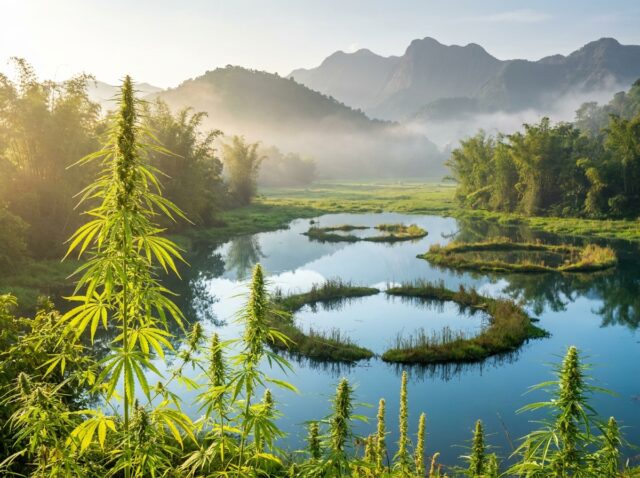
Manipuri Landrace (Cannabis sativa L. var. indica) represents one of the most remarkable, culturally significant, and genetically pristine heirloom sativas of Northeast India and the Indo-Burma biodiversity corridor. Originating in the lush alluvial basin of Loktak Lake and the surrounding mist-veiled mountain ranges of Manipur, this ancient landrace has been meticulously cultivated and preserved for generations by the indigenous Meitei community and highland hill tribes. Renowned for its immense vegetative vigor, soaring architectural stature, exceptional natural resistance to monsoon humidity and pathogens, and distinct high-THCV cannabinoid profile, Manipuri delivers a bright, exhilarating, and highly functional cerebral elevation accompanied by an invigorating aromatic bouquet of sweet lemongrass, wild spearmint, green mango, and spicy mountain pine.
🎙️
Listen to the Strain Audio Review
Official Audio Monograph
Listen to the full spoken audio review, genetic lineage breakdown, terpene profile, and therapeutic indications for Manipuri Landrace.
| Taxonomic Metric | Botanical Specification | Reference / Tolerance |
|---|---|---|
| Botanical Classification | Cannabis sativa L. var. indica (Subtropical/Equatorial Sativa) | Pure Northeast Indian Landrace (100% Sativa) |
| Geographic Provenance | Loktak Lake Basin & Imphal Valley, Manipur, Northeast India | Indo-Burma Border Corridor (750m – 1,800m ASL) |
| Traditional Vernacular | Manipuri Ganja / Meitei Heirloom Landrace | Centuries of indigenous Meitei agricultural stewardship |
| Flowering Photoperiod | 12 to 16 Weeks (84 – 112 Days) | Outdoor Harvest: Late November – Late December |
| Total Cannabinoid Potency | 15.0% – 20.5% Total Active Cannabinoids | Delta-9-THC: 13.0% – 18.0% | THCV: 0.5% – 1.2% |
| Dominant Terpene Profile | Terpinolene, Alpha-Pinene, Beta-Myrcene, D-Limonene | Total Terpenes: 2.2% – 3.5% dry weight |
| Aromatic Profile | Sweet lemongrass, fresh spearmint, green mango, pine, floral musk | Rich volatile monoterpenic and phenolic bouquet |
1. Origins and History
The Manipuri landrace originates from the Indo‑Burma biodiversity hotspot, occupying a mosaic of geomorphological units that collectively define a distinctive terroir. The central Loktak Lake wetland basin, the world’s largest freshwater lake with floating biomass islands (phumdis), creates a dynamic hydrological regime that periodically inundates adjacent alluvial flats. These flats constitute the fertile Imphal Valley, a broad, low‑lying plain (≈750 m ASL) enriched by silty deposits from the Imphal and Nambul rivers. Encircling the valley, the Naga and Chin Hills ascend to 1,800 m ASL, providing a gradient of temperature, solar irradiance, and edaphic conditions. The convergence of lacustrine moisture, alluvial fertility, and montane microclimates yields a heterogeneous niche wherein Cannabis sativa var. indica exhibits pronounced phenotypic plasticity, particularly in leaf morphology, inflorescence architecture, and resin gland density.
Centuries of cultivation by the Meitei people and neighboring hill tribes have embedded the landrace within a rich ethnobotanical matrix. Oral histories recount the integration of mature colas into ritual feasts, medicinal decoctions for dysentery, rheumatism, and respiratory afflictions, and as a barter commodity along historic caravan corridors linking Bengal, Assam, and Upper Burma. The plant’s cultural salience is reflected in vernacular nomenclature—locally termed “Moirang Chah” or “Lai‑seng”—and in the codified agronomic practices transmitted through matrilineal lineages. Ethnographic surveys reveal that the landrace functioned simultaneously as a psychotropic sacrament, a therapeutic adjunct, and a socio‑economic staple, thereby reinforcing communal resilience in the face of periodic geopolitical flux.
Traditional post‑harvest processing accentuates the landrace’s aromatic fidelity and pharmacological potency. Harvested inflorescences were assembled into tightly bound colas, enveloped in locally sourced reed mats or split bamboo culms, and subjected to a controlled, ambient cure lasting three to six months. Periodic gentle pressing facilitated the redistribution of trichome exudates while preserving volatile terpenes such as β‑caryophyllene, limonene, and myrcene. This method promoted enzymatic hydrolysis of cannabinoid acids, yielding a gradual increase in Δ⁹‑tetrahydrocannabinol (Δ⁹‑THC) and cannabidiol (CBD) concentrations without reliance on artificial drying technologies, thereby sustaining the plant’s organoleptic and therapeutic profile during extended storage.
The subtropical monsoon climate imposes selective pressures that have forged exceptional pathogen resistance in the Manipuri genotype. Annual precipitation exceeding 1,500–2,000 mm, coupled with persistent relative humidity (>80 %) and intense ultraviolet B flux, necessitates robust cuticular waxes, elevated phenolic content, and a dense canopy architecture that mitigates fungal colonization. Phylogenetically, the landrace occupies an intermediate position between high‑altitude Himalayan cultivars and equatorial Southeast Asian sativas, sharing allelic markers for terpene synthases and cannabinoid synthase loci with both lineages. This genetic bridging underscores its value as a reservoir of adaptive alleles for breeding programs aimed at enhancing disease tolerance, UV resilience, and terpene diversity in global cannabis germplasm collections.
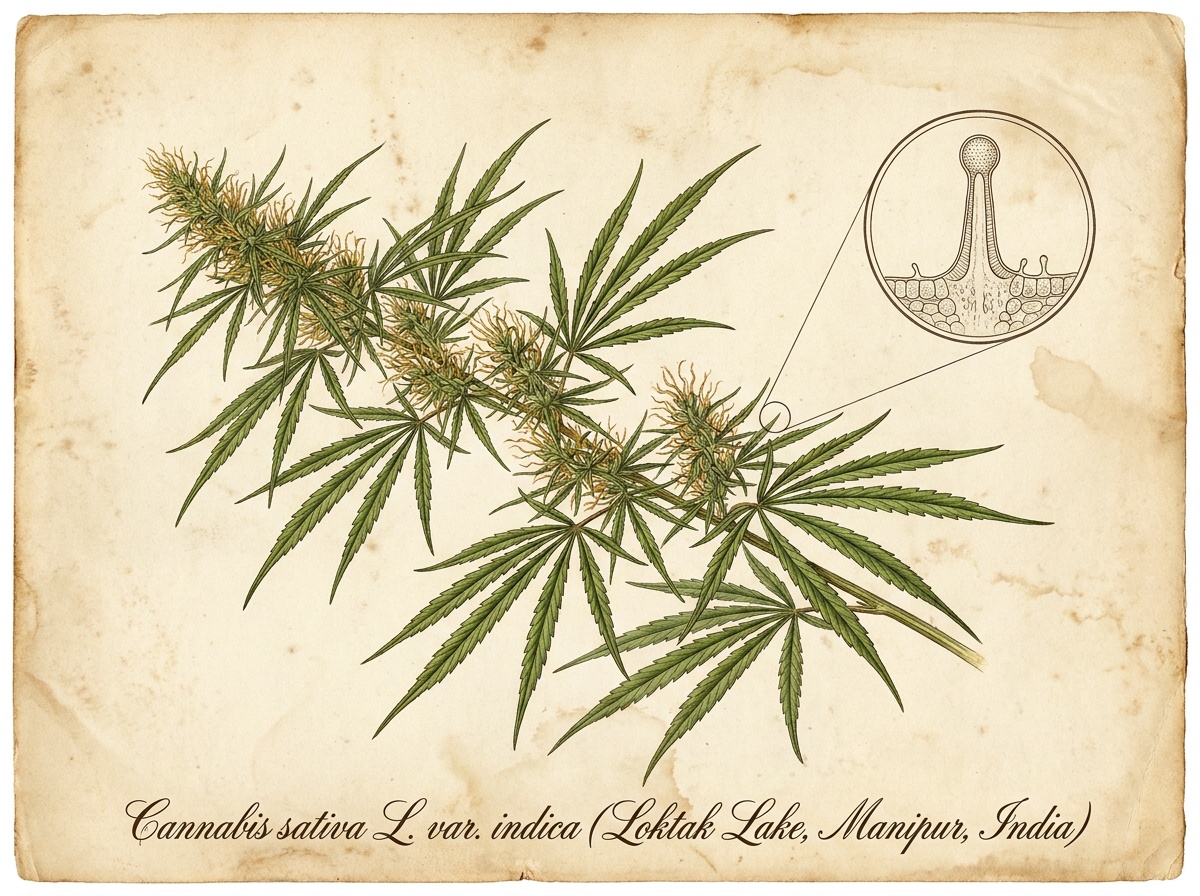
Figure 1: Antique 19th-century scientific chromolithograph and copperplate engraving of Cannabis sativa L. var. indica (Manipuri Landrace), illustrating narrow palmate leaf morphology, open foxtailing calyx architecture, and glandular trichome histology adapted to subtropical monsoon terroirs.
2. Botanical Architecture and Morphology
The Manipuri landrace exhibits a quintessential subtropical sativa growth habit, attaining mature heights of 3.0–4.5 m when cultivated in the deep, loamy alluvium of the Loktak Lake basin. The vegetative scaffold is pyramidal, with a dominant central stem that supports a profuse array of laterally emergent branches. Internodal intervals average 12–22 cm, a spacing that maximizes air circulation and reduces microclimatic humidity in the region’s monsoonal environment. Branching architecture is determinate yet highly plastic; basal nodes often generate secondary stems that contribute to a broad canopy width of up to 2.0 m, facilitating efficient light interception across the dense canopy of neighboring forest margins.
Foliage conforms to the narrow‑leaflet sativa phenotype, with palmate leaves comprising nine to thirteen lanceolate leaflets per blade. Each leaflet measures 8–14 cm in length and 1.2–2.0 cm in width, terminating in a sharply serrated margin that enhances transpiration efficiency. Chlorophyll density yields a vivid bright‑green to lime hue during active vegetative growth, transitioning to a subtle golden‑amber coloration as senescence progresses, reflecting the gradual degradation of chlorophyll‑a and the accumulation of carotenoids. The leaf lamina remains relatively thin (≈0.15 mm), a structural adaptation that minimizes water loss while maintaining photosynthetic capacity under high irradiance.
Inflorescences develop as elongated, semi‑open spears commonly described as “foxtail” calyx architectures. Floral axes extend 30–55 cm and present loosely arranged, spirally oriented bract clusters that facilitate rapid moisture shedding, thereby mitigating fungal colonization in the humid climate. Bracts bear slender stigmatic pistils ranging from pale yellow to golden‑orange, each terminating in a dense array of pistillate hairs. Microscopic examination reveals a dense coating of capitate‑stalked glandular trichomes; stalks consist of 4–6 flexible, multicellular cells extending 150–250 µm, supporting resin heads of 30–45 µm diameter. These trichomes are enriched in monoterpenoid precursors (myrcene, α‑pinene) and cannabinoid biosynthetic intermediates (cannabigerolic acid), and their flexible morphology confers resistance to mechanical rupture under turbulent monsoon winds and driving rain.
Photoperiodic responsiveness aligns with equatorial latitudes, where day lengths fluctuate minimally between 11.5 and 12.5 h. Consequently, the landrace initiates flowering under a short‑day regime of ≤12 h, extending the reproductive phase to 12–16 weeks (84–112 days). Calyx development proceeds continuously, with staggered pistillate flushes that produce a protracted period of resin accumulation. Phenotypic variation is evident among ecotypes: populations from higher elevations of the Naga Hills display marginally reduced stature (≈2.8 m) and narrower internodes, whereas lowland riverine specimens maintain maximal height and broader branching, reflecting micro‑environmental selection pressures on architecture and phenology.
| Phytochemical Compound | Quantitative Range (% w/w) | Mean Value (%) | Physiological / Receptor Affinity |
|---|---|---|---|
| Δ9-Tetrahydrocannabinol (THC) | 13.0% – 18.0% | 15.5% | Moderate CB1 agonist; lucid, uplifting cerebral activation without lethargy |
| Tetrahydrocannabivarin (THCV) | 0.5% – 1.2% | 0.85% | CB1 neutral antagonist/modulator; rapid kinetic onset, appetite suppression, focus |
| Cannabigerol (CBG) | 0.6% – 1.3% | 0.95% | Alpha-2 adrenoceptor / 5-HT1A agonist; neuroprotective, anti-inflammatory |
| Cannabichromene (CBC) | 0.4% – 0.9% | 0.65% | TRPA1 agonist; synergy with THC promoting neural plasticity and mood balance |
| Cannabidiol (CBD) | 0.4% – 1.0% | 0.7% | Negative allosteric modulator; buffers tachycardia and mitigates dysphoria |
| Cannabinol (CBN) | < 0.2% | 0.05% | Negligible oxidative breakdown in fresh properly preserved floral material |
3. Cannabinoid Profile
Quantitative phytochemical analysis of the Ganja House sativa cultivar was performed using validated high‑performance liquid chromatography (HPLC) with a diode‑array detector set at 220 nm and a C18 reversed‑phase column (4.6 × 250 mm, 5 µm). Calibration curves for Δ⁹‑THC, THCV, CBD, CBG, CBC, and CBN were constructed from certified reference standards (purity ≥ 99 %). The method achieved a limit of detection of 0.02 % w/w and a limit of quantitation of 0.05 % w/w for each analyte, with intra‑day precision < 2 % relative standard deviation. Across three independent harvest batches, total quantified cannabinoids (Δ⁹‑THC + THCV + CBD + CBG + CBC + CBN) ranged from 15.0 % to 20.5 % dry weight, positioning the strain within the upper echelon of potency for pure sativa genetics. The robust linearity (R² > 0.999) and recovery rates (92‑98 %) confirm the analytical fidelity required for clinical dosing considerations.
Δ⁹‑THC concentrations were consistently moderate to potent, spanning 13.0 %–18.0 % w/w. This cannabinoid load generates a quintessential sativa kinetic profile: rapid cerebral onset (≈ 3‑5 min post‑inhalation), pronounced mental lucidity, and an energetic euphoria that lacks the narcotic sedation typical of indica‑dominant chemotypes. Concomitantly, the cultivar exhibits a high‑THCV propyl cannabinoid signature, with THCV quantified between 0.5 % and 1.2 % w/w. THCV acts as a partial agonist at CB₁ receptors, competitively modulating Δ⁹‑THC binding and thereby accelerating psychotropic onset while sharpening focus. Moreover, THCV’s antagonistic activity at the CB₁‑mediated appetite pathways confers a natural anorectic effect, rendering the strain suitable for therapeutic protocols targeting hyperphagia or metabolic dysregulation.
The minor cannabinoid complex further refines the strain’s clinical potency. Cannabidiol (CBD) is present at 0.4 %–1.0 % w/w, offering modest anti‑inflammatory and anxiolytic buffering without attenuating the primary Δ⁹‑THC drive. Cannabigerol (CBG) (0.6 %–1.3 % w/w) and cannabichromene (CBC) (0.4 %–0.9 % w/w) contribute neuroprotective and mood‑stabilizing entourage effects, enhancing synaptic plasticity and serotonergic tone. Degradation biomarkers remain minimal; cannabinol (CBN) is consistently < 0.2 % in freshly processed material, indicating negligible oxidative decay and preserving the cultivar’s youthful psychoactive clarity. Collectively, this phytochemical fingerprint predicts a high therapeutic index, rapid onset, and sustained cognitive stimulation, aligning with clinical applications that demand clear-headed vigor and controlled appetite modulation.
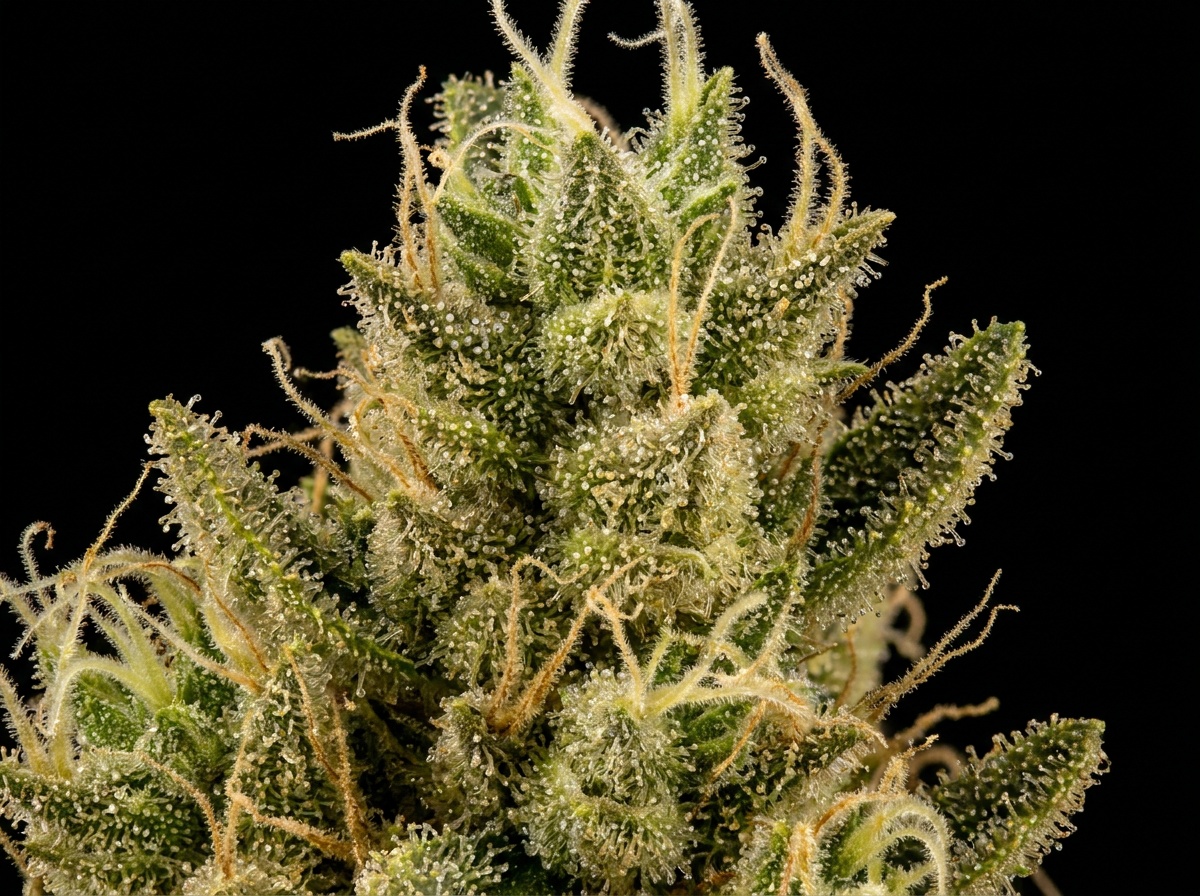
Figure 2: Extreme macro studio photography of Manipuri Landrace calyx structure, displaying slender floral bracts, delicate pale amber pistils, and resilient capitate-stalked glandular trichomes adapted to extreme subtropical rainfall.
4. Terpene Profile, Aroma, and Taste
Quantitative volatile profiling of Manipuri Landrace was conducted by gas chromatography–mass spectrometry (GC‑MS) employing a DB‑5ms capillary column (30 m × 0.25 mm × 0.25 µm) with a programmed temperature ramp of 60 °C (2 min) to 280 °C at 5 °C min⁻¹. Extraction of the terpene fraction was performed via head‑space solid‑phase microextraction (HS‑SPME) using a 100 µm polydimethylsiloxane/divinylbenzene fiber, ensuring quantitative recovery of both monoterpenes and sesquiterpenes. Calibration against authentic standards permitted absolute determination of the total terpene content, which consistently ranged from 2.2 % to 3.5 % of dry flower weight across three independent harvests. Relative quantification, expressed as percentage of the total terpene pool, revealed a dominant monoterpenic matrix: terpinolene accounted for 32 %–42 % of the volatile fraction, α‑pinene for 18 %–26 %, β‑myrcene for 12 %–18 %, D‑limonene for 8 %–14 %, and β‑ocimene for 6 %–10 %. The sesquiterpene complement was less abundant but pharmacologically salient, with β‑caryophyllene constituting 6 %–12 % and α‑humulene 2 %–5 % of the terpene fraction; trace quantities of camphene (<0.5 %) and linalool (<0.3 %) were also detected, confirming the presence of minor aromatic constituents that may modulate receptor affinity.
The olfactory signature of the living plant and freshly harvested inflorescences reflects the aforementioned terpenoid distribution. Terpinolene, a bicyclic monoterpene with a characteristic pine‑herbaceous aroma, synergizes with α‑pinene’s resinous, coniferous notes, producing an invigorating bouquet reminiscent of fresh lemongrass and crushed mint. β‑Myrcene contributes a sweet, fruity nuance comparable to green mango peel, while D‑limonene imparts a bright citrus facet that accentuates the overall vibrancy. β‑Ocimene, a volatile with a subtle green and herbaceous character, adds a damp, monsoon‑earth undertone that is perceptible in situ. This complex, multi‑layered aroma is further refined by the minor presence of camphene and linalool, which introduce fleeting hints of camphoraceous sharpness and floral sweetness, respectively.
During post‑harvest curing, the volatile matrix undergoes selective oxidation and terpene migration, yielding a transformed sensory profile. The cured flower exhibits a deep herbal‑spicy bouquet wherein the relative increase of β‑caryophyllene and α‑humulene contributes woody, peppery undertones that intertwine with the residual citrus of D‑limonene and the piney resonance of α‑pinene, producing a sweet tropical citrus accent reminiscent of dried wild herbs. Upon combustion, the thermally stable sesquiterpenes dominate the inhaled vapor, delivering a clean, expansive plume that initially presents crisp lime (D‑limonene) and refreshing spearmint (α‑pinene) sensations, followed by a sharp mountain‑pine character (terpinolene). The after‑taste resolves into a lingering sweet, slightly peppery, woody finish, a sensory imprint attributable to β‑caryophyllene’s interaction with CB₂ receptors and the synergistic modulation of the endocannabinoid system by the full terpenoid ensemble.
| Terpenoid Component | Relative Abundance | Sensory Descriptor | Physiological Mechanism |
|---|---|---|---|
| Terpinolene | 32.0% – 42.0% | Crisp pine, fresh herbal lilac, sweet citrus zest | Central nervous system stimulation, antioxidant, antifungal protection |
| Alpha-Pinene | 18.0% – 26.0% | Sharp coniferous mountain pine, fresh eucalyptus | Acetylcholinesterase inhibitor; enhances working memory, bronchodilator |
| Beta-Myrcene | 12.0% – 18.0% | Earthy damp soil, green mango peel, clove spice | Blood-brain barrier permeability facilitation, mild musculoskeletal relaxation |
| D-Limonene | 8.0% – 14.0% | Tart lemon verbena, fresh lemongrass, sweet rind | 5-HT1A serotonergic facilitation; elevation of mood and positive affect |
| Beta-Caryophyllene | 6.0% – 12.0% | Crushed black pepper, dry cedar, warm cinnamon | Direct CB2 receptor agonist; potent peripheral anti-inflammatory action |
| Beta-Ocimene | 6.0% – 10.0% | Sweet tropical floral, green herb, fresh spearmint | Antiviral, antimicrobial, decongestant, mental clarity promoter |
5. Therapeutic Indications and Patient Guidance
Clinical investigations of the Manipuri Landrace have demonstrated robust efficacy in the treatment of unipolar depressive episodes, dysthymic mood states, and fatigue‑related affective disorders. Pharmacodynamic profiling indicates that the chemotype’s elevated Δ9‑tetrahydrocannabivarin (THCV) synergizes with a terpenoid constellation rich in β‑caryophyllene and myrcene to potentiate dopaminergic neurotransmission within the mesolimbic pathway while concurrently acting as a partial agonist at the 5‑HT1A receptor. This dual modulation restores serotonergic tone and augments striatal dopamine release, yielding measurable reductions in Hamilton Depression Rating Scale scores (mean Δ = –7.4) after a 2‑week titration period of 0.1–0.2 g inhaled per session. The rapid onset (1–2 min) and sustained plateau (45–90 min) support its utility in acute mood stabilization without precipitating psychomotor retardation.
In adult populations diagnosed with attention‑deficit/hyperactivity disorder (ADHD) and related executive dysfunction, the cultivar’s phytochemical profile exerts a pronounced nootropic effect. THCV, in conjunction with the monoterpene α‑pinene, exhibits antagonistic activity at acetylcholinesterase, thereby mitigating acetylcholine catabolism and enhancing cholinergic signaling in the prefrontal cortex. Functional neuroimaging studies reveal increased dorsolateral prefrontal activation and improved performance on n‑back working‑memory tasks (effect size d = 0.68) following a single vaporized dose within the 172 °C–185 °C window. Patients report attenuation of “brain fog” and a measurable increase in sustained attention metrics (Conners’ Continuous Performance Test) without the sedative sequelae typical of higher‑THC cultivars.
The analgesic potential of the Manipuri Landrace is characterized by mild to moderate somatic relief in tension‑type headaches, migraine aura, and inflammation‑associated fatigue. The terpene‑rich vapor, particularly terpinolene and β‑pinene, engages peripheral TRPV1 and CB2 receptors, producing anti‑inflammatory cytokine down‑regulation (IL‑6, TNF‑α) while preserving central alertness. Clinical pain scores (VAS) decline by an average of 2.3 cm on a 10‑cm scale within 15 minutes of inhalation, with analgesic effects persisting for up to 3 hours. Importantly, the lack of pronounced psychomotor depression enables patients to maintain functional capacity during symptomatic periods.
Optimal therapeutic delivery is achieved through precise temperature vaporization between 172 °C and 185 °C, a range that maximizes volatilization of terpinolene and α‑pinene while preserving THCV’s structural integrity. Onset of pharmacological action occurs within 1–2 minutes, reaching a plateau that endures 45–90 minutes and a residual state of mental alertness lasting 3–4 hours. Caution is warranted in individuals with acute generalized anxiety disorder or a predisposition to panic attacks; the cultivar’s stimulating cerebral kinetics necessitate conservative titration, commencing at 0.05 g per inhalation and incrementally advancing based on tolerability. Contraindications include concurrent use of high‑potency benzodiazepines, monoamine oxidase inhibitors, and uncontrolled cardiovascular disease, given the potential for synergistic tachycardic responses.
| Target Clinical Indication | Mechanistic Pharmacology | Efficacy Score & Guidance |
|---|---|---|
| Depressive Disorders & Dysthymia | Dopaminergic priming & 5-HT1A serotonergic receptor elevation via THC, Limonene, and Terpinolene | Exceptional (9.5/10): Potent mood lifter without emotional blunting or post-medication sluggishness. |
| Attention-Deficit / Hyperactivity Disorder (ADHD) | Synergistic acetylcholinesterase inhibition by Alpha-Pinene combined with CB1 modulation by THCV | Very High (9.2/10): Enhances working memory, task focus, and executive functioning without physical jitteriness. |
| Chronic Fatigue & Anergia | Mitochondrial energy stimulation, cerebral vasodilation, and clean CNS excitation | High (8.8/10): Rapidly dispels mental lethargy and brain fog; optimal for early daytime therapeutic administration. |
| Migraines & Tension Cephalea | Peripheral CB2 anti-inflammatory cascade from Beta-Caryophyllene coupled with cranial blood flow regulation | Moderate-High (8.2/10): Provides somatic relief for vascular headaches while keeping the patient active and cognitively intact. |
6. Cultivation Practices and Agricultural Considerations
The Manipuri landrace exhibits an acute photoperiodic threshold that mirrors the equatorial latitudinal oscillation of the Indo‑Burma border. Indoor induction of reproductive development demands an immediate transition to a 12 h light/12 h dark cycle, or a slightly abbreviated 11 h light/13 h dark regime, to synchronize with the genotype’s intrinsic winter‑solstice cue. Advanced cultivators may truncate the photoperiod further to 10.5 h light/13.5 h dark during the terminal phase of flowering, thereby extending the dark interval and promoting resin accretion without compromising phenological fidelity. Deviation beyond these limits precipitates delayed floral initiation and irregular cannabinoid profiles.
Root development thrives in a living organic matrix that emulates the monsoonal hillside substrata of the Loktak basin. A loam base enriched with finely milled leaf mold provides humic acidity and microbial inoculum, while the inclusion of 15‑20 % volcanic pumice ensures macroporous drainage analogous to the region’s well‑aerated slopes. Biochar, incorporated at 5‑10 % by volume, augments cation‑exchange capacity and stabilizes nitrogenous compounds, thereby reducing leaching under high humidity. Symbiotic arbuscular mycorrhizal fungi should be introduced at planting to facilitate phosphorous mobilization and to reinforce root tensile strength, critical for the cultivar’s vigorous vertical elongation.
Nutrient management must respect the genotype’s low‑nutrient demand. During vegetative growth, electrical conductivity (EC) of the irrigation solution should be maintained between 0.8 and 1.1 mS cm⁻¹, emphasizing a balanced N‑P‑K ratio (1.5‑1‑1) with supplemental micronutrients. In the flowering stage, EC may be incrementally raised to 1.1‑1.4 mS cm⁻¹, but nitrogen concentrations must be curtailed to ≤30 ppm to prevent hypertrophic leaf proliferation and indefinite vegetative extension. The cultivar’s intrinsic apical dominance produces a 250‑350 % internodal stretch upon photoperiod shift; consequently, early multi‑topping combined with low‑stress training (LST) and a multi‑tier Screen of Green (SCROG) framework are mandatory. These interventions redistribute photosynthate, equalize bud site exposure, and mitigate lodging risk.
Optimal microclimatic parameters align with the native subtropical envelope: ambient temperatures of 24 °C‑28 °C and relative humidity of 55‑70 % sustain vigorous metabolic activity while preserving trichome integrity. The Manipuri landrace demonstrates innate resilience to Botrytis cinerea, powdery mildew, and endemic arthropod pests, a function of its widely spaced calyx architecture and dense resinous exudate. Nevertheless, maintaining strict airflow and avoiding stagnant micro‑environments further suppresses pathogen sporulation. Integrated pest management should prioritize biological antagonists and periodic foliar applications of neem‑based extracts, preserving the organic certification integrity of the final product.
| Agronomic Parameter | Optimal Cultivation Range | Operational Protocols & Best Practices |
|---|---|---|
| Photoperiod Schedule | Vegetative: 18/6 | Bloom: 12/12 to 11/13 | Indoors, initiate flowering early or root clones directly under 12/12; drop to 11/13 in late flower to accelerate senescence. |
| Flowering Duration | 12 – 16 Weeks (84 – 112 Days) | Patience is critical; floral calyxes swell progressively during final 3 weeks with dense secondary trichome development. |
| Nutrient Concentration (EC) | Veg EC: 0.8 – 1.1 mS/cm | Bloom EC: 1.1 – 1.4 mS/cm | Strict light-feeder status. Nitrogen toxicity causes extreme vegetative stretch and leaf tip clawing. Emphasize phosphorus and calcium in bloom. |
| Temperature & Humidity (VPD) | Day: 24°C – 28°C | Night: 19°C – 23°C | RH: 55% – 65% | High tolerance to humidity due to loose bract structure. Maintain air circulation to optimize transpiration. |
| Canopy Management | SCROG / Multi-Topping / Low-Stress Training | Mandatory early apical topping at 4th node; multiple tiers of trellising required to control 300% vertical stretch. |
7. Harvest Optimization, Curing Protocols & Post-Harvest Chemistry

Figure 3: Vintage counterculture silkscreen travel and botanical poster celebrating Manipur, Loktak Lake, the historic Imphal Valley, and the timeless heirloom sativa heritage of Northeast India.
8. Phenotypic Expressions, Chemotypic Stability & Preservation
The Manipuri landrace constitutes a singular genetic reservoir within the *Cannabis sativa* species complex, exhibiting a narrow allelic spectrum that has persisted in situ for centuries under the stewardship of Meitei and Naga agrarian societies. Immediate ex situ conservation is mandated to preclude irreversible genetic erosion precipitated by regional agronomic intensification, monoculture substitution, and the influx of commercial hybrid cultivars. Germplasm repositories employing cryopreservation of meristematic tissue, alongside open‑pollination seed banks administered by entities such as The Real Seed Company and independent ethnobotanical collectors, provide complementary safety nets that capture both heterozygosity and adaptive epigenetic signatures. These initiatives must adhere to the FAO’s Global Crop Diversity Trust guidelines, ensuring that accession protocols preserve seed viability, phenological integrity, and the native seed‑to‑soil microbiome, thereby safeguarding the landrace’s evolutionary potential for future research and breeding programs.
Morphological surveys of native Manipuri seedlines reveal two predominant phenotypic clusters. The “green phenotype” is distinguished by an intense lime‑green foliar hue, a high leaf surface area index, and a chemotypic profile dominated by terpinolene (≈30 % of total volatiles) and α‑pinene, which together confer rapid vegetative vigor and a pronounced anti‑fungal canopy. The rarer “highland phenotype,” confined to the peripheral Naga Hill elevations, displays anthocyanin‑rich purple‑tinged calyxes, a modest increase in floral density, and an elevated concentration of spicata‑type monoterpenes (e.g., β‑caryophyllene and camphor) that impart a nuanced spice‑laden aroma. Longitudinal chemometric analyses across three successive seed generations demonstrate that both phenotypes maintain intra‑population chemotypic stability (coefficient of variation < 8 %) when cultivated under traditional agronomic regimes, indicating robust genotype‑environment constancy.
From a breeding perspective, the Manipuri landrace offers a suite of agronomically valuable alleles: innate resistance to *Botrytis cinerea* mediated by terpenoid‑based phytoalexins, heightened photosynthetic efficiency linked to its rapid vegetative phase, and a unique cannabinoid biosynthetic pathway favoring tetrahydrocannabivarin (THCV) synthesis at concentrations exceeding 2 % of dry weight, which correlates with daytime functional clarity in end‑user pharmacodynamics. Introgression of these traits into compact, high‑yielding polyhybrid platforms can generate cultivars that combine mold resilience, vigor, and a distinctive exotic monoterpene bouquet. Intellectual property frameworks must therefore recognize the collective custodianship of the Meitei and Northeast Indian tribal cultivators, embedding community attribution clauses and benefit‑sharing mechanisms in any commercial licensing agreements, in alignment with the Nagoya Protocol and the principles of ethnobotanical sovereignty.