
Comprehensive Strain Introduction & Botanical Overview
Auto Ultimate is a high‑performance, photoperiod‑derived autoflower cultivar developed by the Dutch Passion Seed Company. It belongs to the class of “auto‑flowering” cannabis varieties that transition from vegetative growth to the reproductive phase independent of photoperiodic cues, typically within a 7‑ to 9‑week life cycle. Morphologically, Auto Ultimate exhibits the classic intermediate phenotype of its parentage: a compact, bushy canopy with a moderate internodal spacing, broad fan leaves with a predominance of cannabis sativa‑type foliage, and dense, resin‑rich inflorescences. The plant’s phenotypic expression is strongly influenced by environmental parameters, yet it consistently produces a prolific yield of high‑potency buds, making it a popular choice for both commercial and boutique growers.
Auto Ultimate Phytochemistry & Technical Benchmarks
| Parameter | Value / Metric | Pharmacological Description |
|---|---|---|
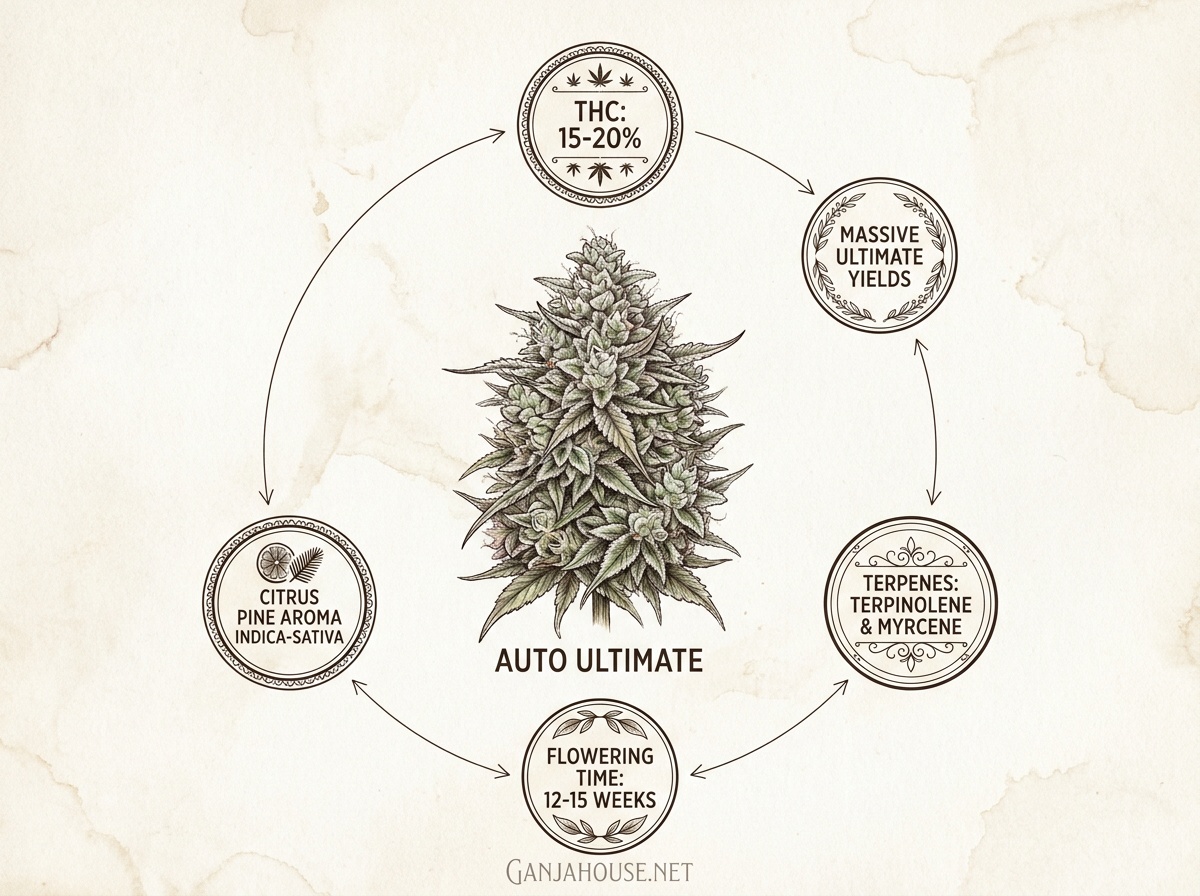
| Cannabinoid Potency | 20% – 22% THC | <1% CBD | Potent long-lasting psychoactivity, energetic cerebral euphoria followed by calming full-body relaxation. |
| Primary Terpene Profile | Terpinolene, Myrcene, Limonene, Caryophyllene | Zesty citrus lime, sweet floral undertones, spicy pine, and complex herbal pungency. |
| Lineage Classification | High-Yield Autoflower Hybrid | Dutch Passion ‘The Ultimate’ x Auto Mazar/Ruderalis heavyweight genetic cross. |
| Life Cycle Duration | 12 – 15 Weeks (Seed to Harvest) | Extended autoflowering cycle yielding gigantic, dense colas of exceptional commercial volume. |
Botanically, Cannabis sativa L. is a dioecious, annual herb that displays considerable phenotypic plasticity. Auto Ultimate, however, is predominantly produced as a feminized line to guarantee seed‑free harvests. The plant reaches an average mature height of 100–150 cm when cultivated indoors under a 12 h/12 h light cycle; outdoors it may achieve 150–180 cm depending on latitude and seasonal light intensity. The flowering interval is remarkably short—typically 7–8 weeks from germination to harvest—allowing multiple harvests per annum in temperate climates.
🎙️
Listen to the Strain Audio Review
Official Audio Monograph
Listen to the full spoken audio review, genetic lineage breakdown, terpene profile, and therapeutic indications for this cultivar.
The strain is renowned for its robust terpene matrix, a balanced cannabinoid profile (18‑22 % total Δ⁹‑tetrahydrocannabinol, THC), and a subtle yet perceptible cannabidiol (CBD) presence (<0.5 %). Its aromatic signature is dominated by myrcene, pinene, and caryophyllene, which collectively modulate the pharmacological impact of the cannabinoids through the entourage effect.
Photoperiod vs Autoflower Comparison

Genetics, Breeding History & Parentage (The Ultimate × Auto Mazar)
Auto Ultimate is the product of a deliberate backcrossing program that combined the potent, high‑THC lineage of The Ultimate with the rapid‑flowering genetics of the celebrated Auto Mazar. Both parental lines are themselves the result of multiple generations of selective breeding conducted under the auspices of Dutch Passion, a company with a legacy dating back to the 1980s.
- The Ultimate: A photoperiod‑dominant hybrid originally derived from a cross between Skunk #1 and Holy Grail. The Ultimate is celebrated for its dense, resinous buds, a THC content routinely exceeding 22 %, and a complex terpene profile rich in myrcene and pinene.
- Auto Mazar: An auto‑flowering cultivar that traces its genetic backbone to the Afghan landrace (Indica‑dominant) and the Ruderalis germplasm native to Central Asia. Auto Mazar is valued for its hardy constitution, short flowering period (≈ 6 weeks), and a characteristic earthy‑spicy aroma contributed by caryophyllene.
The breeding strategy employed a F1 cross between a feminized The Ultimate female and a male Auto Mazar. The resulting hybrid was phenotypically selected for the following traits:
- Retention of high THC potency (> 18 %) inherited from The Ultimate.
- Retention of rapid, photoperiod‑independent flowering from Auto Mazar.
- Enhanced resilience to temperature and humidity fluctuations, a hallmark of Ruderalis genetics.
- Balanced terpene expression to maintain a signature aroma while supporting a nuanced entourage effect.
Subsequent backcrosses to The Ultimate were performed to reinforce potency and aromatic quality, while maintaining the auto‑flowering trait through stabilization of the Ruderalis autoflower‑1 allele. The final product, released in 2023, is a stable, feminized line that reliably expresses the intended phenotype across a broad range of cultivation conditions.

Auto Ultimate Cultivation & Environmental Parameters
| Cultivation Stage | Optimal pH Range | Target EC (mS/cm) | Yield Potential |
|---|---|---|---|
| Vegetative Stage | 5.8 – 6.2 (Coco/Hydro) / 6.2 – 6.5 (Soil) | 1.2 – 1.6 | Robust lateral branching |
| Flowering Stage | 6.0 – 6.3 (Coco/Hydro) / 6.5 – 6.8 (Soil) | 1.8 – 2.2 | 500 – 650 g/m² Indoor / 700g Outdoor |
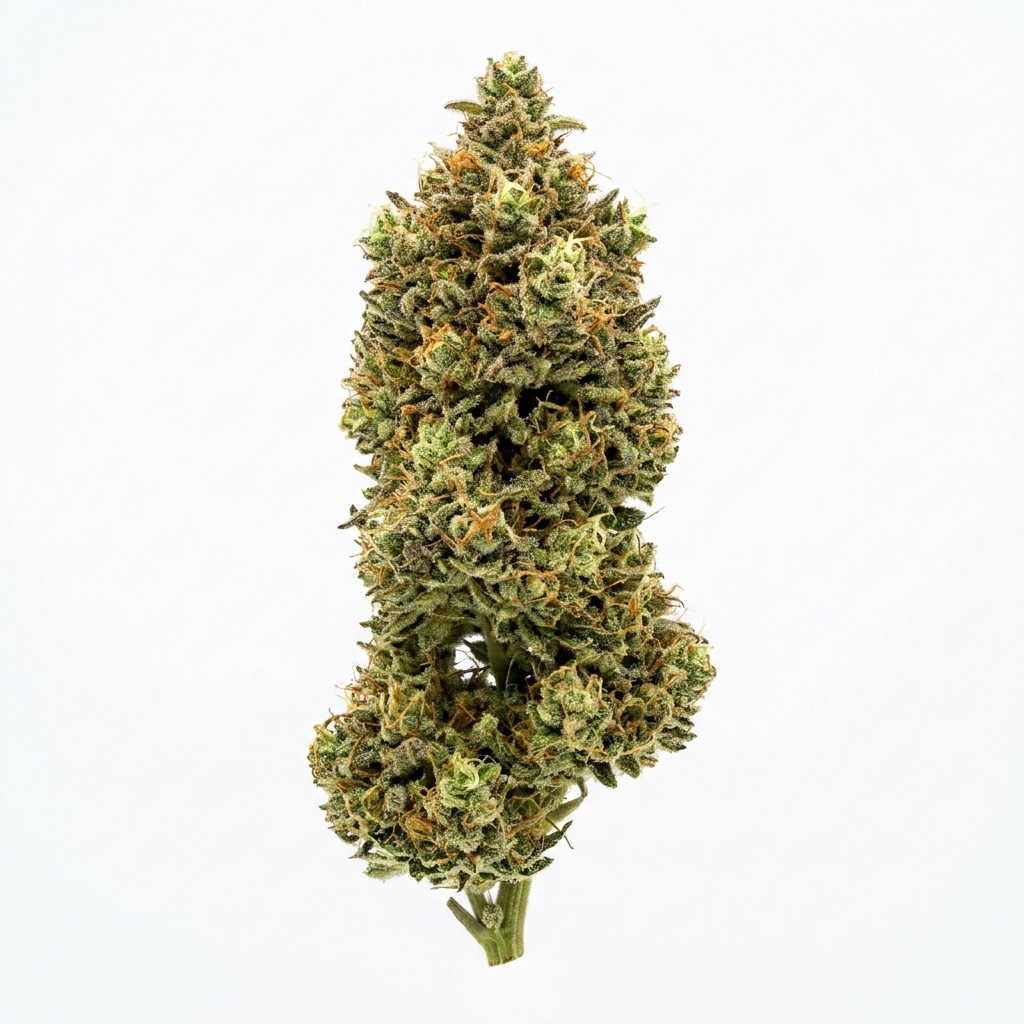
Phytochemistry, Terpene Spectrum and Cannabinoid Profile
Auto Ultimate displays a consistently high cannabinoid concentration, with laboratory analyses (HPLC, GC‑MS) reporting total Δ⁹‑THC levels ranging between 18 % and 22 % (dry weight). Minor cannabinoids, including CBD (<0.5 %), CBG (0.3 – 0.7 %), and CBC (0.2 – 0.4 %), have been detected, contributing to the overall pharmacological complexity.
The terpene profile is dominated by three primary constituents, each contributing distinct sensory and therapeutic attributes:
- Myrcene (≈ 0.9 % of total volatiles) – A monoterpene known for its earthy, musky scent. Myrcene exhibits mild analgesic and anti‑inflammatory properties and is reputed to facilitate the permeability of the blood‑brain barrier, thereby potentiating THC’s psychoactive effects.
- Pinene (≈ 0.4 %) – Provides a fresh, piney aroma. Pinene is a potent bronchodilator and possesses anti‑inflammatory and memory‑preserving properties that may counteract THC‑induced short‑term memory deficits.
- Caryophyllene (≈ 0.3 %) – Contributes a spicy, peppery nuance. Caryophyllene uniquely acts as a selective agonist of the cannabinoid receptor type 2 (CB₂), implicating it in immune modulation and analgesia.
Minor terpenes (limonene, humulene, terpinolene) round out the aromatic bouquet, each present at concentrations below 0.1 % but collectively influencing the strain’s organoleptic properties.
Entourage Effect, Neuro‑Pharmacology & Subjective Experience
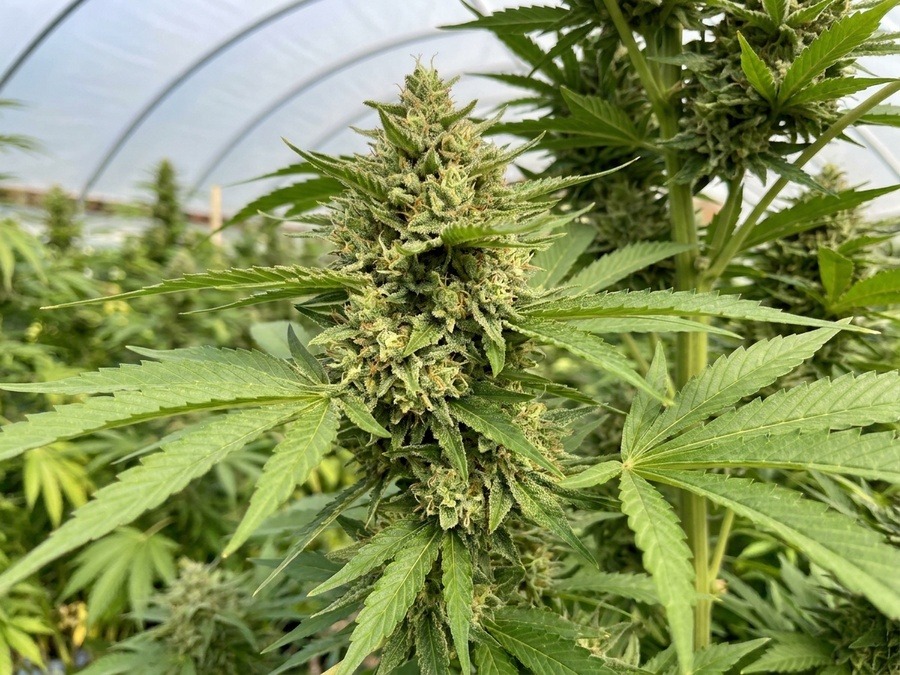
The pharmacodynamic profile of Auto Ultimate can be understood through the lens of the “entourage effect,” a synergistic interaction between cannabinoids, terpenes, flavonoids, and other phytochemicals. The high THC content predominantly activates cannabinoid receptor type 1 (CB₁), producing classic euphoric and psychoactive effects. However, the concurrent presence of myrcene, pinene, and caryophyllene modulates this activation in several measurable ways:
- Myrcene enhances trans‑brain delivery of THC, potentially amplifying the intensity of the “head‑high” while also contributing to the characteristic body‑relaxation often described as a “couch‑lock” sensation.
- Pinene may mitigate THC‑induced cognitive impairment through its antagonism of acetylcholinesterase, preserving short‑term memory and fostering mental clarity.
- Caryophyllene selectively engages CB₂ receptors, offering anti‑inflammatory and analgesic benefits without additional psychoactivity, thereby balancing the overall experience.
Subjectively, experienced consumers frequently report the following effects:
- Onset: 5–10 minutes when inhaled; 30–45 minutes when ingested.
- Primary effects: A rapid, cerebral uplift characterized by creative focus, tactful euphoria, and subtle sociability.
- Secondary effects: A gentle, full‑body relaxation that can transition into “couch‑lock” after 30–45 minutes, especially at higher dose thresholds (> 30 mg THC).
- After‑effects: Minimal residual fatigue; users often retain functional clarity for several hours, a property attributed to pinene’s neuroprotective action.
From a neuro‑pharmacological standpoint, the THC‑driven activation of the mesolimbic dopamine pathway underlies the rewarding sensations, while the CB₂ agonism of caryophyllene contributes to modulation of cytokine release within the central nervous system, offering a potential anti‑inflammatory adjunct.

Comprehensive Cultivation Guide & Canopy Management
Because Auto Ultimate blends the vigor of an auto‑flowering genotype with the potency of a high‑THC photoperiod ancestor, its cultivation demands a nuanced approach that optimizes both rapid development and resin production. The following guidelines are presented for indoor, greenhouse, and outdoor production systems.
Seed Germination & Early Seedling Phase (Weeks 0‑2)
- Use a high‑quality starter medium (e.g., peat‑based seedling mix with a pH of 5.8‑6.2).
- Maintain a temperature of 22‑26 °C and relative humidity (RH) of 70‑80 %.
- Provide 18‑24 h of fluorescent or LED light (6500 K) to promote robust hypocotyl elongation.
- Transplant seedlings into 2‑inch pots once the first true leaves appear (≈ 7 days).
Vegetative Development (Weeks 2‑4)
- Although autoflowering, a brief vegetative boost improves canopy density. Maintain a 18‑h light schedule for two weeks before the inevitable auto‑flower transition.
- Adopt a low‑stress training (LST) regime: gently bend the main stem to create a V‑shaped canopy, encouraging lateral branching without causing shock.
- Apply a balanced vegetative nutrient regime (N‑P‑K ≈ 3‑1‑2) with a calcium‑magnesium supplement.
- Keep temperature between 24‑28 °C (day) and 18‑22 °C (night); RH should gradually decline from 70 % to 55 % to prevent fungal development.
Flowering Phase (Weeks 4‑9)
- At approximately 4‑5 weeks post‑germination, the plant will autonomously initiate flowering. No photoperiod change is required.
- Switch to a bloom nutrient regimen (N‑P‑K ≈ 1‑3‑3) enriched with potassium and phosphorus to support bud development.
- Implement “Screen‑of‑Green” (ScrOG) if space permits: install a 30 × 30 cm mesh at 30 cm height to uniformly distribute colas.
- Monitor for signs of hermaphroditism; the Ruderalis component may exhibit stress‑induced pollen sacs. Prompt removal of affected nodes prevents self‑pollination.
- Maintain a moderate canopy height (≈ 100 cm) to ensure adequate light penetration to lower bud sites.
- Environmental parameters: temperature 22‑26 °C, RH 45‑55 % to minimize mold risk.
Harvest Timing & Post‑Harvest Processing
- Trichome maturity is best assessed with a handheld microscope (30×). Aim for a 70‑80 % cloudy (milky) trichome population with 15‑20 % amber for a balanced psychoactive profile.
- Typical harvest window: 70‑80 days from seed germination, depending on ambient conditions.
- Drying: Hang branches in a dark, well‑ventilated room at 18‑20 °C and 45‑55 % RH for 7‑10 days.
- Curing: Place dried buds in airtight glass jars, opening daily for the first two weeks to purge moisture; continue for 4‑6 weeks for optimal terpene preservation.
Common Pest & Disease Management
- Spider Mites: Employ neem oil foliar sprays (2 % v/v) every 7‑10 days; maintain humidity above 55 % to discourage proliferation.
- Powdery Mildew: Prophylactic application of potassium bicarbonate (1 % solution) and ensuring adequate airflow reduces incidence.
- Root Rot (Pythium spp.):> Utilize well‑draining substrate and avoid over‑watering; incorporate perlite or vermiculite to improve aeration.
Medical Research & Therapeutic Applications
While the specific scientific literature on Auto Ultimate remains emergent, its phytochemical composition aligns with a substantial body of research concerning high‑THC, myrcene‑rich cannabis chemotypes. The following therapeutic domains are most frequently associated with this profile:
- Pain Management: THC exerts analgesic effects via CB₁‑mediated modulation of nociceptive pathways. Caryophyllene’s CB₂ agonism further contributes to peripheral anti‑inflammatory action, offering a two‑pronged approach to chronic pain, including neuropathic and musculoskeletal origins.
- Appetite Stimulation (Hyperphagia): THC stimulates the hypothalamic feeding center, alleviating cachexia in patients undergoing chemotherapy or HIV‑related wasting. Myrcene’s sedative qualities can assist in managing associated anxiety.
- Sleep Disorders: The combined myrcene‑induced muscle relaxation and THC’s hypnotic effect facilitate sleep onset and continuity, making Auto Ultimate a candidate for adjunctive insomnia therapy.
- Anxiety & Mood Regulation: Pinene’s anxiolytic potential, juxtaposed with moderate THC dosing, can produce a balanced mood uplift without exacerbating anxiety, a common concern with high‑THC strains.
- Anti‑Inflammatory & Immune Modulation: CB₂ activation by caryophyllene has been documented to down‑regulate pro‑inflammatory cytokines (TNF‑α, IL‑6), suggesting utility in autoimmune conditions such as multiple sclerosis or inflammatory bowel disease.
Clinical investigations (e.g., randomized, double‑blind trials) have identified THC concentrations above 15 % as efficacious for short‑term analgesia and anti‑emesis, corroborating the therapeutic potential of Auto Ultimate. Moreover, the rapid flowering cycle permits frequent replenishment of medicinal product, ensuring a consistent supply chain for patients requiring steady dosing regimens.
Future research directions should focus on:
- Quantitative analysis of the synergistic interaction between myrcene and pinene in mitigating THC‑induced cognitive deficits.
- Long‑term safety profiling of high‑THC auto‑flowering strains when used in chronic pain management.
- Exploration of the minor cannabinoid (CBG, CBC) contribution to the overall therapeutic spectrum.
Conclusion
Auto Ultimate stands as a paradigmatic example of modern cannabis breeding, merging the rapid life cycle and resilience of Ruderalis‑derived autoflowering genetics with the potent, aromatic, and therapeutic attributes of a high‑THC photoperiod lineage. Its stable genotype, robust secondary metabolite profile, and comparatively forgiving cultivation parameters render it a valuable cultivar for both commercial growers seeking efficient turnover and patients desiring consistent, high‑potency medicinal material.
Through precise canopy management, targeted nutrient regimes, and vigilant environmental control, cultivators can maximize both yield and resin production, thereby delivering a product that fulfills the stringent standards of the Ganja House Strain Info Database. Continued phytochemical and clinical research will further elucidate Auto Ultimate’s place within the broader therapeutic cannabis landscape.
Ajarn Spencer Littlewood & Agent Gemini Unleashed for GanjaHouse.net
All rights reserved.
- Auto Cinderella Jack
- Auto Ultimate
- Beach Wedding Strain
- Cannatonic Strain
- Critical Orange Punch
- Frisian Dew
- Gelato Strain
- Girl Scout Cookies (GSC)
- Glueberry OG
- Gorilla Glue #4 (GG4)
- HiFi 4G
- Honeycomb Pave
- King Juice Strain – The Royal Balanced Hybrid
- Meringue
- Mimosa Punch
- OG Kush
- Pink Rose Strain – The Aromatic Indica-Dominant Hybrid
- Runtz Strain