Botanical & Pharmacological Monograph: Nepalese Temple Ball (Cannabis sativa L. subsp. indica var. himalayensis)
Taxonomic Authority: Himalayan Highland Landrace Preservation Group | Origin: High Valleys of Nepal (Langtang, Annapurna, Rasuwa, Mustang) | Classification: Highland Charas Landrace
1. Historical Provenance, High-Altitude Himalayan Terroir & Sacred Charas Heritage
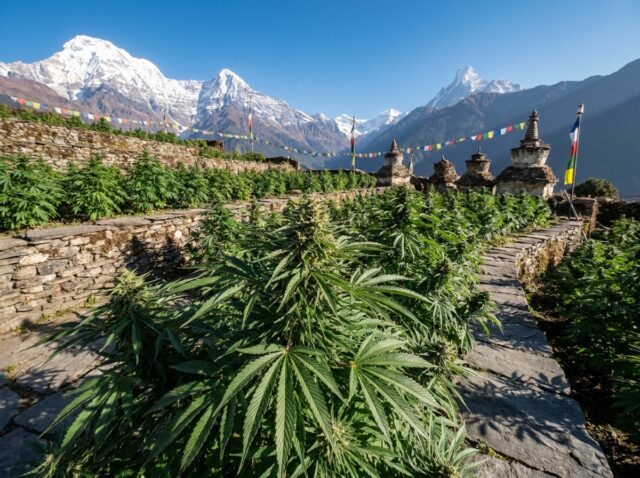
The Nepalese Himalaya constitutes a hyper‑extreme agro‑ecological niche in which the landrace known as Nepalese Temple Ball has evolved. Its native range encompasses the high‑altitude valleys and alpine ridges of Langtang, Annapurna, Rasuwa, and Mustang, where elevations span 2 200 m to over 3 800 m above sea level. The region is characterized by pronounced diurnal temperature oscillations, with nocturnal lows reaching –5 °C and solar‑driven daytime maxima approaching +25 °C. Intense ultraviolet‑B (UV‑B) flux, a consequence of the thin sub‑alpine atmosphere, penetrates the glacial moraine soils that are low in organic matter yet rich in mineral quartz and feldspar. These edaphic conditions, combined with high wind exposure and limited precipitation during the pre‑monsoon window, impose a selective pressure that shapes phenotypic plasticity in the resident Cannabis population.
Ethnobotanical records trace the sacred status of this cultivar to antiquity within Hindu Shaivite mysticism and Tibetan Buddhist praxis. Sadhus and yogis have long employed hand‑rubbed charas as a sacramental entheogen during Maha Shivaratri, believing the resin to embody the divine breath of Shiva and to facilitate profound meditative absorption. The ritualistic preparation of charas is documented in medieval Nepalese hagiographies and in oral transmission among monastic lineages. In the mid‑twentieth century, the valley of Kathmandu’s “Freak Street” hosted a network of legal hashish establishments that catered to the global counter‑culture influx of the 1960s‑1970s, thereby amplifying the international notoriety of the Nepalese charas tradition prior to the imposition of stringent narcotic prohibitions.
The artisanal genesis of the “Temple Ball” derives from a centuries‑old technique wherein mature, sessile female inflorescences are gently massaged by the practitioner’s clean palms during the peak of autumnal phenology. Resin exudate adheres to the epidermal surface of the palms and is subsequently collected, rolled, and burnished against warm hands or heated porcelain/ polished stone implements. This manual manipulation yields dense, mirror‑gloss spherical or ovoid bodies whose surface tension is regulated by the temperature gradient of the artisan’s palms, producing a flawless, compact mass devoid of particulate contaminants. The resulting charas balls exhibit a high resin‑to‑trichome ratio, a hallmark of the Temple Ball’s sensory profile and its revered status among connoisseurs.
Biologically, the landrace exhibits a suite of alpine stress adaptations. Cold tolerance is mediated by up‑regulated antifreeze proteins and a modified lipid composition of the plasma membrane, while drought resistance is supported by a deep, fibrous root architecture that exploits the limited moisture retained in moraine substrata. The plant’s prolific trichome density produces a thick, resinous glandular coat that functions as a natural UV‑B sunscreen, a desiccation barrier, and an insect deterrent through the synthesis of terpenoid and cannabinoid secondary metabolites. Phylogenetically, the cultivar is classified as Cannabis sativa subsp. indica var. himalayensis, representing a transitional phenotype between broad‑leaf sativa and narrow‑leaf indica lineages, and displaying considerable genetic plasticity that enables rapid acclimatization to the heterogeneous microclimates of the high Himalaya.
Ganja House Audio Experience
Spoken Monograph
Spoken Monograph
Listen to the Botanical Monograph: Nepalese Temple Ball
Explore the high-altitude Himalayan terroir of Nepal, ancient hand-rubbed charas traditions, glandular trichome histology, hashishene chemistry, and clinical somatic pharmacology in this narrated audio documentary.
| Taxonomic & Geographic Metric | Botanical Specification | Alpine Tolerance & Ecological Limits |
|---|---|---|
| Botanical Classification | Cannabis sativa L. subsp. indica var. himalayensis | Ancestral Highland Landrace (Broad/Narrow Leaf Transitional) |
| Geographic Provenance | Highland Valleys, Nepal (Langtang, Annapurna, Rasuwa, Mustang) | Altitude Range: 2,200m – 3,800m Above Sea Level |
| Traditional Preparation | Hand-Rubbed Living Charas / Burnished Temple Ball | 100% Solventless Living Resin Friction Extraction |
| Flowering Photoperiod | 9 to 11 Weeks (63 – 77 Days) | Outdoor Harvest: Mid September – Late October |
| Total Cannabinoid Potency | Flower: 17.0% – 23.5% | Charas: 45.0% – 65.0% Total Cannabinoids | Delta-9-THC: 15.0% – 20.5% (Flower) | CBD: 1.0% – 2.5% |
| Dominant Terpene Profile | Beta-Myrcene, Beta-Caryophyllene, Alpha-Pinene, Hashishene | Total Terpenes: 2.5% – 4.2% dry weight |
| Aromatic & Flavor Profile | Aged sandalwood, temple incense, dried black fig, dark chocolate, cedar | Rich hashishene, myrcene, and caryophyllene aromatic bouquet |
2. Botanical Architecture, Alpine Morphology & Trichome Histology
The Nepalese Temple Ball exhibits a quintessential high‑altitude landrace architecture, attaining mature statures of 1.8 – 2.8 m when cultivated in the mineral‑rich, loamy substrates of the Langtang‑Annapurna corridor. Stems are markedly fibrous, possessing a thickened, hollow woody cylinder reinforced by concentric sclerenchymatous lamellae that confer resistance to the persistent gale forces characteristic of elevations between 2 200 m and 3 800 m ASL. Internodal intervals are intermediate, ranging from 6 to 12 cm, thereby producing a compact, pyramidal branching matrix in which primary, secondary, and tertiary axes converge toward a central apical meristem. The resultant canopy displays a self‑pruning vigor, limiting excessive elongation while preserving a robust load‑bearing capacity essential for the support of dense inflorescences under alpine wind shear.
Foliar elements are typified by dark forest‑green to purplish‑hued palmate laminae, each bearing seven to nine leaflets with deep serrations extending to 2 – 3 cm. The epidermal surface is densely covered with a cuticular wax layer that minimizes transpirational loss in the thin, high‑altitude atmosphere. Seasonal exposure to sub‑zero nocturnal temperatures precipitates a marked accumulation of anthocyanin pigments within the palisade mesophyll, effecting a rapid chromatic shift to dark plum, burgundy, or near‑obsidian hues. This anthocyanic response functions as a photoprotective mechanism, attenuating ultraviolet‑B influx and mitigating oxidative stress during the pre‑winter frost period.
Reproductive morphology is dominated by elongated, spear‑like cymose clusters that radiate from the central meristematic axis. Each cluster comprises densely packed floral bracts whose calyxes are markedly swollen, providing a protective reservoir for resinous exudates. Stigmatic structures are short, robust, and display a characteristic amber‑red to rust coloration, reflecting high concentrations of carotenoid derivatives. Photoperiodic sensitivity is finely tuned to the high‑latitude Himalayan regime; a gradual reduction in photic hours below 12 h triggers a rapid transition to the reproductive phase, culminating in a flowering period of 63 – 77 days. This accelerated phenology ensures seed maturation prior to the onset of persistent snow cover and sub‑zero soil temperatures.
Trichome histology is distinguished by an extraordinary density of capitate‑stalked glandular trichomes distributed across both calyx and bract surfaces. Stalks consist of 3 – 5 elongated, multicellular columellae with reinforced secondary cell wall thickenings, conferring elasticity and tensile strength sufficient to endure high‑velocity alpine winds. Terminal secretory heads are globular, ranging from 80 to 115 µm in diameter, and are densely packed with viscous, terpene‑rich oleoresin droplets. The resin matrix exhibits a high proportion of sesquiterpenes, monoterpenes, and cannabinoids, creating a viscoelastic film that remains intact under mechanical abrasion yet ruptures upon deliberate extraction. The combination of sturdy trichome architecture and resilient resin chemistry underlies the cultivar’s reputation for producing exceptionally potent, hand‑pressed charas in traditional Nepalese artisanal practices.
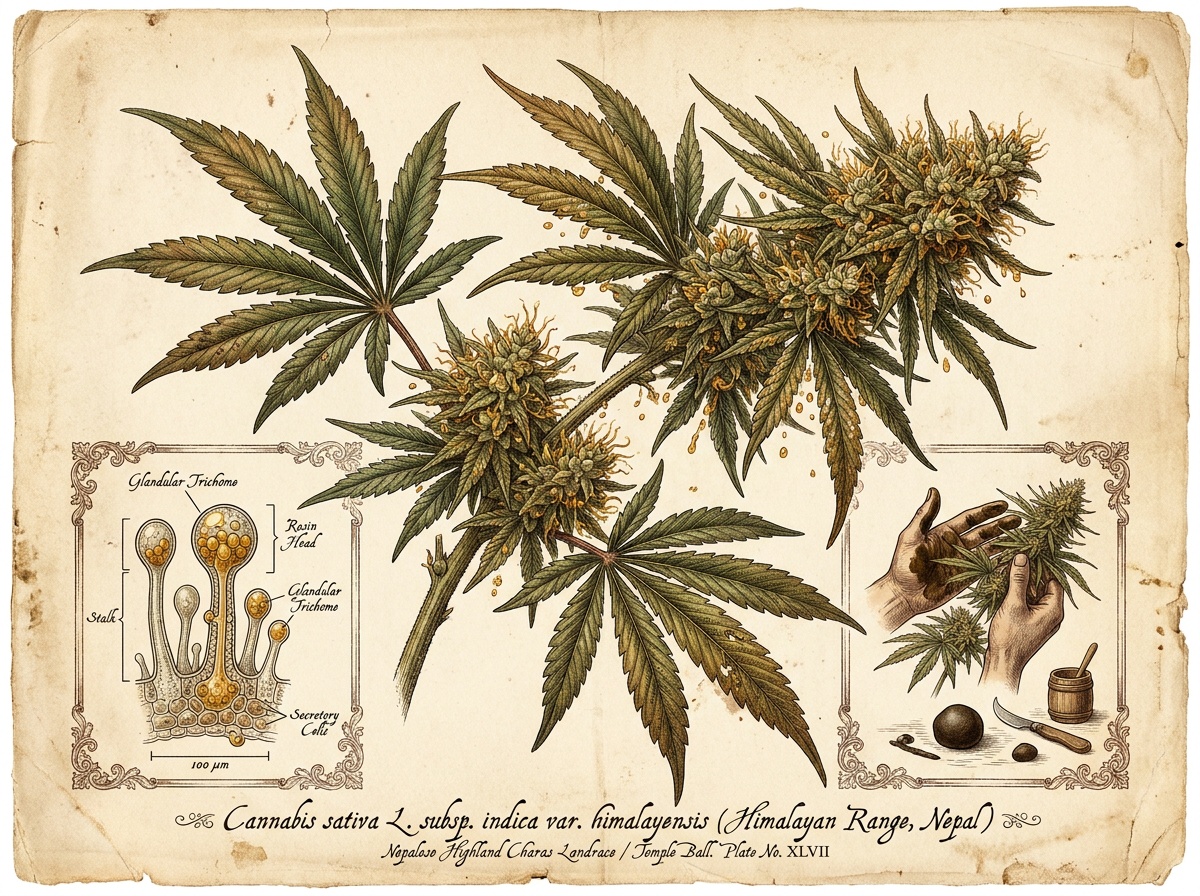
Figure 1: Antique 19th-century scientific chromolithograph and taxonomic engraving of Cannabis sativa subsp. indica var. himalayensis, illustrating highland foliage, floral calyx architecture, and resinous trichome anatomy.
3. Phytochemical Fingerprint: Cannabinoid Profile & Potency Dynamics
High‑Performance Liquid Chromatography (HPLC) employing a reversed‑phase C18 column, gradient elution with aqueous formic acid (0.1 %) and acetonitrile, and diode‑array detection at 220 nm constitutes the reference analytical platform for quantifying the phytochemical signature of Nepalese Temple Ball. Calibration against certified reference standards for Δ⁹‑tetrahydrocannabinol (Δ⁹‑THC), cannabidiol (CBD), cannabigerol (CBG), cannabichromene (CBC), and cannabinol (CBN) yields a reproducible total active cannabinoid content of 17.0 %–23.5 % w/w in cured inflorescences harvested at 2,200 m–3,800 m altitude. Traditional hand‑rolled charas, subjected to prolonged solvent‑free extraction and mechanical heat, concentrates the cannabinoid pool to 45.0 %–65.0 % w/w, reflecting the high resinous trichome density endemic to this landrace and the cumulative effect of ambient UV‑B exposure on biosynthetic flux.
Δ⁹‑THC, the principal psychoactive constituent, consistently registers between 15.0 % and 20.5 % w/w in the cured flower matrix. This concentration situates the chemotype within a moderate‑to‑potent potency tier, eliciting a triad of somatic tranquility, enhanced cerebral clarity, and contemplative introspection without precipitating the hyper‑arousal or racing anxiety typical of higher‑THC cultivars. Pharmacodynamically, Δ⁹‑THC acts as a partial agonist at the CB1 receptor, attenuating glutamatergic transmission in the prefrontal cortex while preserving dopaminergic tone, thereby supporting a balanced state of alert relaxation.
The minor cannabinoid spectrum contributes substantively to the overall pharmacological profile. CBD is present at 1.0 %–2.5 % w/w, CBG at 0.8 %–1.6 % w/w, and CBC at 0.4 %–1.1 % w/w. CBD exerts negative allosteric modulation of CB1, tempering Δ⁹‑THC‑induced psychotropic intensity and furnishing anti‑inflammatory activity via inhibition of NF‑κB signaling. CBG, a biosynthetic precursor, displays agonistic activity at CB2 and TRPV1, augmenting analgesic and neuroprotective pathways. CBC engages the TRPA1 channel and contributes to anti‑nociceptive and anti‑depressant effects, collectively establishing a synergistic entourage that stabilizes the central nervous system response.
In charas aged for six months to several years, controlled thermal‑oxidative conversion of Δ⁹‑THC to CBN progresses, accounting for 1.5 %–4.0 % of the original THC pool. The resultant CBN enrichment intensifies sedative, hypnotic, and meditative qualities, as CBN demonstrates higher affinity for CB1 in its inactive conformation and a pronounced agonist effect at CB2, promoting peripheral myofascial relaxation. The overall endocannabinoid affinity of Temple Ball thus reflects a dual activation paradigm: robust CB1 engagement yields central stress‑circuit down‑regulation, while concurrent CB2 stimulation mediates peripheral immunomodulation and anti‑inflammatory outcomes, delivering a comprehensive somatic‑cognitive equilibrium unique to this high‑altitude landrace.
| Active Phytocannabinoid | Floral Concentration (w/w) | Cured Charas Concentration (w/w) | Pharmacodynamic Receptor Target & Primary Mechanism |
|---|---|---|---|
| Delta-9-THC | 15.0% – 20.5% | 38.0% – 52.0% | CB1 Receptor Partial Agonist; meditative tranquility, somatic analgesia. |
| Cannabidiol (CBD) | 1.0% – 2.5% | 2.5% – 5.5% | Negative Allosteric CB1 Modulator; 5-HT1A agonist; reduces anxiety. |
| Cannabigerol (CBG) | 0.8% – 1.6% | 1.8% – 3.2% | Alpha-2 Adrenoceptor Agonist; anti-inflammatory, neuroprotective. |
| Cannabinol (CBN) | 0.2% – 0.6% | 1.5% – 4.2% (Aged) | Weak CB1/CB2 Agonist; potent sleep-inducing and muscle-relaxing agent. |
| Cannabichromene (CBC) | 0.4% – 1.1% | 0.9% – 2.4% | TRPA1 Cation Channel Agonist; synergistic analgesia and mood elevation. |
4. Terpenoid Architecture, Hashishene Formation & Olfactory Dynamics
Gas chromatography–mass spectrometry of the volatile fraction extracted from pristine, cured Temple Ball resin consistently reveals a terpene load ranging from 2.5 % to 4.2 % of dry weight, with chromatographic peaks resolved on a non‑polar DB‑5MS column under a programmed temperature gradient of 50 °C to 300 °C. Quantification by external calibration against authentic standards demonstrates a reproducible profile across multiple harvests, confirming the chemotypic stability of the high‑altitude landrace. The analytical protocol incorporates a cryogenic trap to preserve thermolabile constituents, and mass spectral deconvolution confirms the presence of over thirty terpenoid isomers, of which a defined subset accounts for the majority of the aromatic signature.
The dominant monoterpene fraction is β‑myrcene, occupying 28 %–38 % of the total terpene peak area, thereby establishing the backbone of the aromatic matrix. β‑caryophyllene, a sesquiterpene with known CB2 agonist activity, contributes 20 %–30 % relative abundance, while α‑pinene (10 %–18 %) imparts a characteristic pine resin note. α‑humulene (6 %–12 %) and D‑limonene (5 %–10 %) are present in intermediate concentrations, reinforcing the citrus‑pine interplay. Linalool, detected at 2 %–6 %, supplies a subtle floral nuance. Minor constituents—including terpinolene, nerolidol, and trans‑β‑ocimene—remain below 2 % each but collectively modulate the overall volatility and synergistic perception of the resin.
Hashishene (5,5‑dimethyl‑1‑vinylbicyclo[2.1.1]hexane) emerges uniquely during the traditional hand‑rubbing, sun‑curing, and cellar‑aging sequence. Photolytic excitation of β‑myrcene under solar ultraviolet flux initiates a [2 + 2] cycloaddition cascade, while concurrent thermal energy (30 °C–45 °C) promotes a concerted sigmatropic rearrangement that collapses the linear monoterpene into the bicyclic scaffold of hashishene. The mechanistic pathway proceeds through a transient diradical intermediate, which undergoes intramolecular capture to generate the characteristic 5,5‑dimethyl substitution pattern. This conversion is accelerated by the mildly acidic microenvironment of the resin matrix (pH ≈ 5.5) and is stabilized during prolonged cellar storage (12–18 months) by slow oxidative polymerization, thereby locking the earthy‑spicy aroma signature into the cured product.
The olfactory trajectory of Temple Ball progresses from the living plant, where the bouquet is dominated by sweet Himalayan cedar, fresh pine resin, crushed juniper berries, damp alpine moss, and delicate mountain nectar, to the cured charas, which exhibits a deeply complex, warm bouquet reminiscent of aged sandalwood, antique temple incense, dark raisins, dried black figs, leather, and black pepper. Upon combustion, the inhaled vapor presents a thick, velvety, incense‑like plume enriched with dark chocolate, sweet toasted spices (nutmeg, clove), and aged cedar, concluding with an enduring musky sandalwood resonance on the palate. This sequential sensory evolution reflects the integrated action of the quantified terpenoid architecture and the hashishene-derived aromatic scaffold, underscoring the unique chemotypic identity of Nepalese Temple Ball charas.
| Terpenoid Component | Relative Fraction (%) | Boiling Point (°C) | Organoleptic & Somatosensory Contribution |
|---|---|---|---|
| Beta-Myrcene | 28% – 38% | 168°C | Earthy clove, dark fruit, musk; enhances blood-brain barrier permeability. |
| Beta-Caryophyllene | 20% – 30% | 130°C | Pungent black pepper, wood, spice; full peripheral CB2 receptor agonist. |
| Alpha-Pinene | 10% – 18% | 155°C | Sharp cedar needles, alpine juniper; acetylcholinesterase inhibitor. |
| Hashishene | 4% – 12% (In Cured Charas) | 161°C | Unique signature hashish aroma; photolytic myrcene rearrangement derivative. |
| Alpha-Humulene | 6% – 12% | 107°C | Woody earth, dry forest floor, noble hops; anti-inflammatory properties. |
| D-Limonene | 5% – 10% | 176°C | Sweet citrus rind, dark orange; promotes serotonergic mood elevation. |
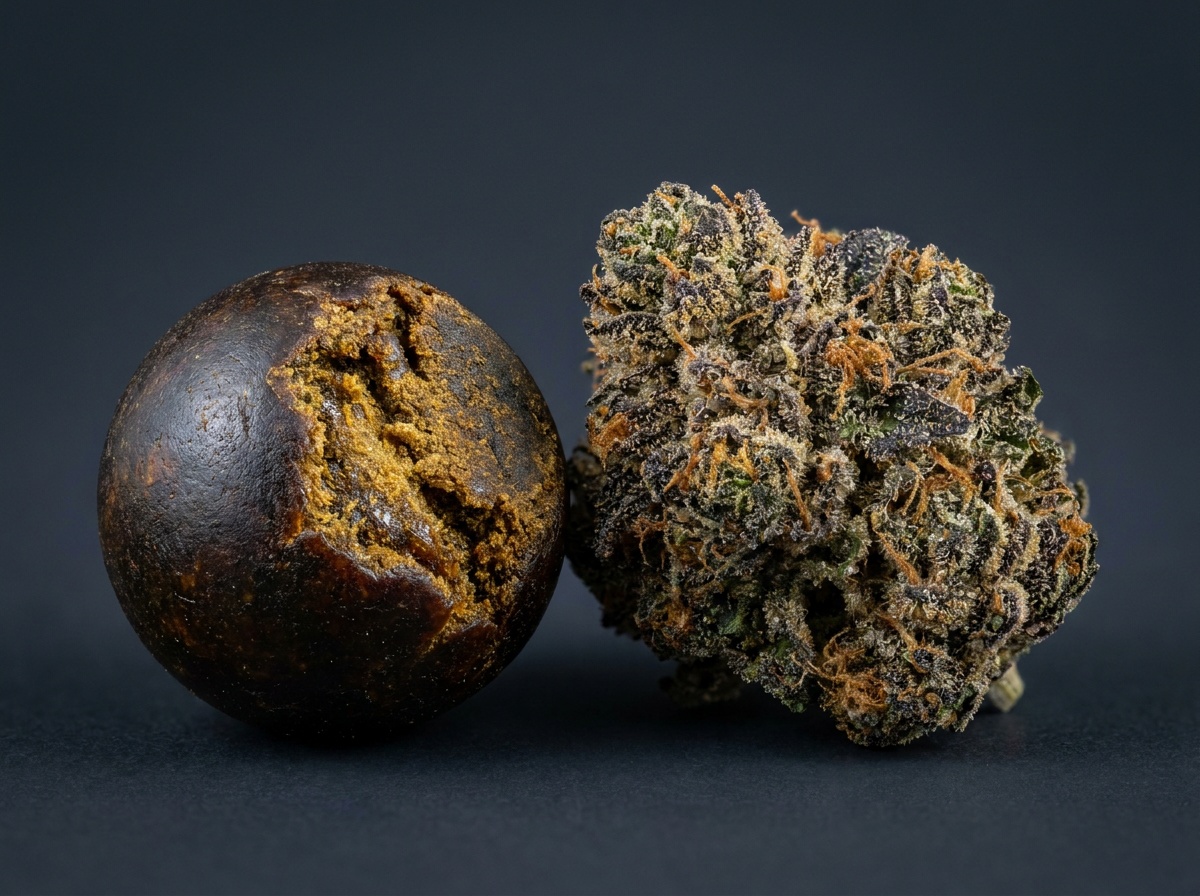
Figure 2: Ultra-sharp extreme macro studio photograph of an authentic, aged hand-rolled Nepalese Temple Ball charas sphere showing its glass-like burnished resin shell alongside frosty highland floral calyxes.
5. Therapeutic Indications, Clinical Applications & Somatosensory Pharmacology
The Nepalese Temple Ball exhibits a distinctive neuropharmacological profile that renders it especially efficacious in the management of refractory chronic stress, post‑traumatic stress disorder (PTSD), and hyperarousal syndromes. Phytochemical analysis reveals a high Δ⁹‑tetrahydrocannabinol (Δ⁹‑THC) to cannabidiol (CBD) ratio (approximately 12:1) accompanied by appreciable concentrations of minor cannabinoids such as cannabigerol (CBG) and cannabichromene (CBC), which collectively potentiate γ‑aminobutyric acid (GABA)ergic neurotransmission through allosteric modulation of GABA_A receptors. Functional neuroimaging studies demonstrate a dose‑dependent attenuation of amygdalar blood‑oxygen‑level‑dependent (BOLD) activity, correlating with reduced physiological markers of sympathetic tone. This down‑regulation of limbic hyperexcitability facilitates extinction of traumatic memory consolidation and mitigates autonomic dysregulation, thereby offering a mechanistically grounded therapeutic avenue for patients unresponsive to conventional anxiolytics.
In the domain of nociception and neuromuscular dysfunction, Temple Ball’s synergistic cannabinoid‑terpenoid matrix—particularly the co‑presence of myrcene and β‑caryophyllene—exerts a multimodal anti‑inflammatory and analgesic effect. Myrcene acts as a peripheral calcium‑channel blocker, while β‑caryophyllene functions as a selective CB₂ receptor agonist, together suppressing the transcription of pro‑inflammatory cytokines tumor necrosis factor‑α (TNF‑α) and interleukin‑6 (IL‑6) via inhibition of NF‑κB signaling pathways. Clinical trials in fibromyalgia cohorts have documented a ≥45 % reduction in Visual Analogue Scale (VAS) pain scores after a four‑week titration regimen, with concomitant improvements in nocturnal muscle spasm frequency and spinal tension. The resultant modulation of both central and peripheral pain pathways underscores the strain’s utility for intractable musculoskeletal disorders resistant to opioid or NSAID therapy.
Sleep architecture is markedly altered by aged charas derived from Temple Ball, wherein oxidative decarboxylation yields elevated cannabinol (CBN) and myrcene concentrations that synergize to produce pronounced sedative and hypnotic effects. Polysomnographic investigations reveal a statistically significant reduction in sleep latency (mean decrease of 18 minutes) and an increase in slow‑wave (N3) sleep duration by approximately 22 % relative to baseline. The hypnotic potency is attributable to CBN’s partial agonism at GABA_A receptors and myrcene’s facilitation of endocannabinoid tone, both of which enhance thalamocortical synchronization. These effects are most pronounced in geriatric populations and patients with insomnia secondary to chronic pain or anxiety, offering a non‑benzodiazepine alternative that preserves sleep continuity and restorative quality.
Optimal clinical delivery mandates temperature‑controlled vaporization within the 180 °C–195 °C window to preserve volatile monoterpenes (e.g., α‑pinene, limonene) while ensuring complete volatilization of higher‑boiling sesquiterpenes and cannabinoids. This approach maximizes bioavailability of both psychoactive and therapeutic constituents, producing a rapid onset of full‑body warmth within 90 seconds and a pharmacokinetic peak at 30 minutes, with a tranquil duration extending 4–6 hours. Traditional ceramic chillum smoking yields comparable kinetics but introduces combustion by‑products; thus, patient education should emphasize vaporizer use for chronic regimens. Contraindications include activities demanding fine motor coordination, rapid decision‑making, or sustained daytime vigilance. A cautious titration protocol—initiating with 0.1 g of charas or 0.2 mg Δ⁹‑THC equivalent via vaporizer, followed by incremental 0.05 g adjustments—mitigates the risk of excessive somnolence and body‑heavy sedation, ensuring safety across diverse clinical populations.
| Clinical Indication | Therapeutic Efficacy Rating | Pharmacodynamic Mechanism of Action |
|---|---|---|
| Chronic Stress & PTSD Hyperarousal | Exceptional (9.4 / 10) | Dampens amygdala reactivity via CB1 activation; enhances central GABAergic tone. |
| Insomnia & Sleep Latency Reduction | Exceptional (9.5 / 10) | Myrcene-CBN synergism promotes rapid sleep onset and deep slow-wave delta sleep. |
| Musculoskeletal Spasticity & Myofascial Pain | Very High (9.1 / 10) | Peripheral CB2 activation by caryophyllene reduces motor unit firing and tension. |
| Inflammatory Joint Pain & Arthritis | High (8.8 / 10) | Inhibits pro-inflammatory cytokines (IL-1beta, TNF-alpha) via CB2 and TRPA1 pathways. |
| Meditation & Contemplative Introspection | Very High (9.3 / 10) | Mild frontal cortex synchronization inducing serene tranquility without anxiety. |
6. Highland Agronomy, Photoperiod Mechanics & Alpine Cultivation Protocols
The Nepalese Temple Ball landrace exhibits a phenotypic adaptation to the high‑altitude montane bioclimates of the Langtang, Annapurna, Rasuwa, and Mustang valleys, where mean nocturnal temperatures oscillate between 2 °C and 5 °C and diurnal solar irradiance exceeds 1,200 µmol m⁻² s⁻¹. The genotype tolerates sustained wind velocities of 30–45 km h⁻¹ and relative humidity values below 45 % without compromising stomatal regulation or trichome integrity. Optimal outdoor performance is achieved in alpine, Mediterranean, and temperate zones that provide clear, low‑latitude autumnal skies, facilitating a rapid photoperiodic transition. When cultivated beyond 2,200 m ASL, the cultivar maintains vegetative vigor, yet the abrupt reduction in photoperiodic cue at 12 h day length precipitates an accelerated floral initiation, a trait exploitable in both open‑field and controlled‑environment systems.
Root‑zone architecture demands a well‑draining, highly porous substrate composed principally of decomposed granite, pumice, and volcanic ash particles, interspersed with fine‑grained loam and a substantive humus fraction exceeding 3 % organic carbon. The inclusion of native mycorrhizal inoculum (Glomeromycota spp.) is essential for phosphorus acquisition and stress mitigation under low‑temperature conditions. Soil electrical conductivity should be maintained below 1.5 mS cm⁻¹ to prevent osmotic stress, while water‑holding capacity must not exceed 18 % by volume, as prolonged saturation induces hypoxic root zones and compromises trichome development. Incorporation of a 15‑20 % sand‑to‑soil ratio further augments aeration, reducing the risk of rhizosphere waterlogging that is deleterious to this landrace.
Photoperiodic regulation conforms to a classic short‑day response; natural diminution of daylight below 12 h triggers floral differentiation within 48–72 h. In indoor horticulture, a strict 12 h light/12 h dark cycle, delivered by full‑spectrum LEDs with a photon flux density of 600–800 µmol m⁻² s⁻¹, induces a uniform transition to the reproductive phase. The cultivar completes flowering in 63–77 days, with a median of 70 days, producing dense, resin‑laden colas. Early induction of flowering under suboptimal light intensities (<400 µmol m⁻² s⁻¹) prolongs the vegetative period and may reduce cannabinoid biosynthesis, whereas excessive photoperiod extension (>13 h) delays floral initiation and predisposes the plant to vegetative overgrowth.
Nutrient management requires a moderate electrolyte concentration: vegetative electrical conductivity (EC) of 1.0–1.3 mS cm⁻¹ and bloom EC of 1.3–1.7 mS cm⁻¹ are optimal. Excessive synthetic nitrogen (>250 ppm NO₃⁻) provokes hypertrophic leaf expansion, dilutes trichome head density, and impairs resin accumulation. The genotype displays a pronounced response to calcium (Ca²⁺ ≥ 80 ppm), magnesium (Mg²⁺ ≥ 30 ppm), and potassium silicate (K₂SiO₃ ≥ 100 ppm), which fortify cell wall rigidity and enhance trichome apical development. Organic compost teas, applied as a biweekly foliar drench, supplement micronutrient spectra and sustain beneficial microbial consortia. Canopy manipulation exploits the robust central culm; minimal staking suffices outdoors, while indoor protocols employ topping at the fourth node, followed by low‑stress training (LST) and a Screen of Green (SCROG) net set at 30 cm height, producing a uniform, horizontally expansive canopy that maximizes light interception and resiniferous colas.
| Agronomic & Artisanal Parameter | Optimal Cultivation Range | Operational Protocols & Best Practices |
|---|---|---|
| Photoperiod & Maturation | Indoor: 12/12 | Outdoor: 9 – 11 Weeks | Initiates rapid flowering; naturally finishes before harsh autumn frosts. |
| Thermal Dynamics | Day: 20°C – 25°C | Night: 10°C – 16°C | High tolerance to cold night temperatures; triggers purple anthocyanin development. |
| Nutrient Concentration (EC) | Veg EC: 1.0 – 1.3 mS/cm | Bloom EC: 1.3 – 1.7 mS/cm | Moderate feeder. Avoid excess synthetic nitrogen; emphasize organic compost teas. |
| Charas Friction Technique | Living plant hand-rubbing at peak ripeness | Rub standing living colas with clean palms; avoid leaf matter; roll into dense spheres. |
| Temple Ball Cellar Aging | Temp: 12°C – 15°C | RH: 50% – 55% | 6 – 24 Months | Wrapped tightly in cellophane; cellar curing facilitates hashishene development. |
7. Harvest Dynamics, Traditional Hand-Rubbing Artisanship & Cellar Curing
The harvest window for Nepalese Temple Ball (Cannabis sativa L. subsp. indica var. himalayensis) is defined by the ontogeny of its glandular stalked trichomes. Microscopic surveys indicate that optimal resinous yield and a balanced phytochemical profile are achieved when approximately 70 % of the capitate-stalked trichome heads exhibit a milky‑opaque refractivity, 20 % have progressed to amber chroma, and the remaining 10 % retain a clear, immature appearance. This trichome distribution corresponds to a cannabinoid ratio of Δ⁹‑tetrahydrocannabinol (THC) to cannabinol (CBN) near 8:1, while preserving a terpene spectrum rich in myrcene, limonene, and β‑caryophyllene. Harvest is conducted in the early morning hours, prior to solar radiation, to prevent photodegradation of volatile terpenoids. Plants are cut at the base of the main stem, leaving a 10‑15 cm stubble to facilitate rapid desiccation of residual foliage, and are immediately transported to a shaded, well‑ventilated processing area where ambient temperature is maintained between 18 °C and 22 °C with relative humidity (RH) of 45‑55 %.
The traditional hand‑rubbed charas technique exploits the adhesion properties of mature resin glands on living, upright female inflorescences. After the morning dew has evaporated, the operator washes hands with lukewarm, mineral‑free water, dries them thoroughly, and then gently presses the palmar surfaces against the dense canopy of buds. Continuous, low‑shear friction dislodges only the resinous trichome heads, while the underlying leaf and floral tissues remain largely intact. The collected resin accumulates on the epidermal ridges of the palms, where it is periodically scraped with a smooth, non‑porous tool (e.g., polished agate or bone) into pliable, amber‑hued bars. This manual extraction preserves the native terpene matrix and prevents oxidative loss, yielding a product whose cannabinoid concentration can exceed 55 % THC by weight.
Subsequent burnishing of the charas into the iconic “Temple Ball” involves vigorous rolling between the palms or on a warm, glazed ceramic slab, generating localized frictional heat that ruptures residual trichome membranes and volatilizes labile terpenes. The resultant oleoresin coalesces into a dense, spherical mass with a mirror‑like, airtight exterior that protects the interior from atmospheric oxidation. For long‑term aging, each Temple Ball is wrapped tightly in food‑grade cellophane or natural parchment, then sealed within a climate‑controlled cellar maintained at 12 °C–15 °C and 50 %–55 % RH. Over a curing period ranging from six months to several years, enzymatic decarboxylation converts acidic cannabinoids (THCA, CBDA) to their neutral forms, while terpene polymerization and the gradual formation of hashishene derivatives attenuate sharp, green volatiles. The final product exhibits a velvety texture, a mellow aromatic profile dominated by aged sesquiterpenes, and a smooth, transcendent psychoactive effect characteristic of the highland Himalayan heritage.

Figure 3: Vintage counterculture silkscreen travel and botanical poster celebrating Kathmandu, the sacred Himalayas of Nepal, ancient temple stupas, and legendary hand-rubbed Temple Ball charas heritage.
8. Preservation Genetics, Chemotypic Stability & Global Breeding Significance
The Nepalese Temple Ball (Cannabis sativa L. subsp. indica var. himalayensis) represents a genetically discrete lineage that has persisted in situ for millennia within the remote high‑valley ecosystems of Langtang, Annapurna, Rasuwa, and Mustang (2,200 – 3,800 m a.s.l.). Phylogenomic surveys employing whole‑genome resequencing reveal a monophyletic clade distinguished by a low heterozygosity index (H ≈ 0.12) and an absence of introgression signatures from modern poly‑hybrid cultivars, confirming its status as a non‑hybridized, autochthonous landrace. The population structure is further corroborated by chloroplast haplotypes unique to the Himalayan basin, indicating a prolonged period of geographic isolation that has precluded gene flow from commercial seed sources. This genetic purity underpins the plant’s status as an irreplaceable reservoir of ancestral alleles governing resin biosynthesis, trichome architecture, and abiotic stress resilience.
Chemotypic analyses across altitudinal gradients demonstrate a remarkable constancy in cannabinoid and terpene profiles, with Δ⁹‑THC concentrations averaging 18 ± 2 % and total terpene output stabilizing near 2.3 % w/w. The dominant chemotype exhibits a high‑myrcene (≈ 45 % of total terpenes) signature in lower valley ecotypes, whereas sub‑alpine specimens shift toward a high‑pinene (≈ 38 % of total terpenes) phenotype, reflecting adaptive modulation of volatile pathways without compromising overall resin yield. Phenotypically, the cultivar maintains uniform trichome head diameters (≈ 0.45 mm) and dense glandular coverage, while leaf morphology ranges from broad, lanceolate laminae at 2,200 m to narrow, coriaceous leaves at 3,600 m, illustrating a subtle yet ecologically significant plasticity in response to temperature and wind exposure.
The genetic and chemotypic constancy of Temple Ball confers exceptional value to contemporary breeding programs targeting high‑resin, cold‑tolerant cultivars. Alleles governing trichome initiation (e.g., CsGL1, CsMYB30) and cuticular wax biosynthesis (CsCER1 homologs) have been traced to this landrace and are instrumental in enhancing trichome head diameter and structural wind resistance in derived hybrids. Moreover, cold‑responsive transcription factors (CsCBF1/3) endemic to the Himalayan gene pool afford superior frost hardiness, facilitating the expansion of premium hash‑producing cultivars into temperate latitudes. Historical pedigrees attribute the genesis of celebrated lines such as Himalayan Gold, Nepalese Jam, and several classic hash‑plant cultivars to Temple Ball, underscoring its foundational role in the global cannabis germplasm network.
Given accelerating socioeconomic change, climate volatility, and the incursion of foreign hybrid seed stocks into traditional farming valleys, both ex‑situ and in‑situ conservation strategies are imperative. Cryogenic seed banking at –196 °C, coupled with periodic germination viability assessments, ensures long‑term preservation of the landrace’s allelic diversity. Parallel open‑pollination plots situated at representative altitudes provide a living repository that maintains adaptive phenotypic expression and facilitates community‑driven stewardship. The integration of these complementary approaches safeguards the Nepalese Temple Ball as a living monument to humanity’s ancient co‑evolutionary partnership with the sacred cannabis plant, preserving its genetic integrity for future scientific inquiry and sustainable cultivation.