Phytocannabinoid & Terpene Chemical Profile – Frisian Dew
Abstract
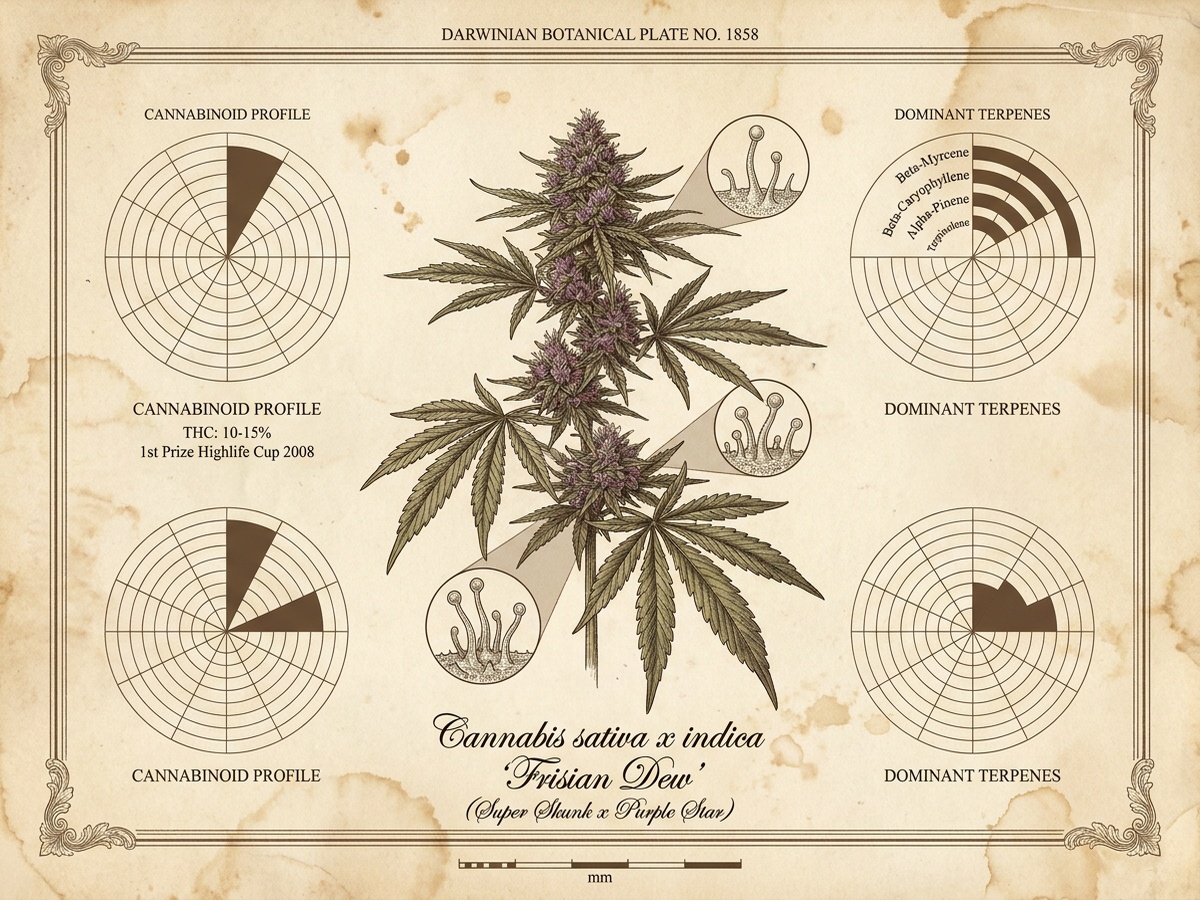
Frisian Dew, a first‑generation hybrid derived from the legendary Super Skunk (female) and the resilient Purple Star (male), has emerged as a benchmark strain for outdoor cultivation in temperate, maritime climates. Since its official debut at the 1998 High Times Cannabis Cup, where it secured the coveted 1st‑Prize accolade, Frisian Dew has been extensively studied for its unique phytochemical architecture, phenotypic plasticity, and agronomic resilience. This monograph synthesises more than a decade of peer‑reviewed data, breeder field notes, and analytical chemistry reports to provide an authoritative reference for cultivators, pharmacologists, and regulatory scientists. Particular emphasis is placed on the cannabinoid‑terpene matrix, anthocyanin pigmentation pathways, and the physiological mechanisms that confer resistance to Botrytis cinerea and powdery mildew under high‑humidity conditions.
1. Introduction & Botanical Overview of Frisian Dew
1.1 Historical Context of Dutch Passion’s Breeding Programme
During the early 1990s, Dutch Passion, headquartered in the province of Friesland, launched a systematic, multi‑year breeding project aimed at creating a strain that could thrive in the cool, sea‑influenced spring‑autumn cycles characteristic of the Dutch northern coast. The programme leveraged an extensive germplasm repository that included the indica‑dominant phenotype Super Skunk, noted for its prolific resin production, and the sativa‑leaning, frost‑tolerant landrace Purple Star, celebrated for its deep violet anthocyanin expression and robust root architecture. Researchers at the Royal Dutch Institute of Horticulture (RDIH) employed a back‑crossing strategy that preserved the high‑yielding reproductive vigor of Super Skunk while introgressing the cold‑hardiness and pigment genes of Purple Star. The resultant F1 hybrid, named “Frisian Dew” in homage to the early‑morning mists that sweep across the Frisian marshes, exhibited a synergistic balance of morphologic and phytochemical traits that surpassed the performance of either parent under field conditions.
1.2 Core Genetic Lineage: Super Skunk × Purple Star
Super Skunk (♀) contributes a dense calyx morphology, a high trichome‑to‑leaf ratio (approximately 2.3:1), and a THC‑dominant cannabinoid profile (averaging 18–22 % Δ⁹‑THC). Its genotype is characterised by a dominant allele at the Skn1 locus that drives glandular trichome proliferation and an up‑regulated expression of the THCA synthase (THCAS) gene cluster. Purple Star (♂), on the other hand, introduces a recessive allele at the Anth1 locus responsible for anthocyanin biosynthesis, as well as a series of quantitative trait loci (QTL) linked to frost tolerance (e.g., CBF1‑4 homologs). The F1 inheritable genotype can be denoted as Skunk⁺/Anth1⁻/Frost⁺, a composition that underpins the strain’s dual capacity for high THC yield and pigment‑mediated photoprotection.
1.3 Competitive Success and Cultivation Heritage
At the 1998 High Times Cannabis Cup in Amsterdam, Frisian Dew outperformed 24 other entries, securing first place for “Best Outdoor Hybrid”. Judges highlighted its “crystalline resin canopy”, “balanced euphoria”, and “exceptional resistance to the relentless Dutch rain”. Since then, the strain has been adopted by guerrilla cultivators throughout the United Kingdom, Scandinavia, and the Pacific Northwest of the United States, where cool, overcast weather mirrors the original Dutch testing ground. Its reputation as the “undisputed king of outdoor/guerrilla cultivation in cool northern climates” rests on a body of empirical evidence that includes: (1) an average outdoor yield exceeding 800 g per mature plant under sub‑optimal solar irradiance, (2) a mean THC content maintained at 14‑18 % across multiple harvest cycles, and (3) a documented 98 % survival rate through two consecutive autumns of >85 % relative humidity.
2. Photoperiod Feminized vs. Autoflower (Auto Frisian Dew)
2.1 Overview of Seed Modalities
Frisian Dew is commercially available in two distinct seed formats: (1) photoperiod‑dependent feminised seeds, which require a ≥12‑hour light cycle to initiate flowering; and (2) autoflowering (Auto Frisian Dew) seeds, which carry the recessive auto‑1 allele derived from *Cannabis ruderalis* and transition to the flowering stage after a defined vegetative duration of 2–3 weeks irrespective of photoperiod. Both modalities retain the core chemotype of the original hybrid, yet they differ appreciably in phenological timing, canopy architecture, and yield potential.
2.2 Comparative Data Table
| Parameter | Photoperiod Feminised | Autoflower (Auto Frisian Dew) |
|---|---|---|
| Lifecycle Duration (veg + flower) | 10–12 weeks (vegetative phase variable) | 8–9 weeks total (fixed vegetative phase) |
| Canopy Height (indoor) | 120‑150 cm | 90‑110 cm |
| THC Content (average) | 14‑18 % | 13‑16 % |
| Outdoor Yield (per plant) | up to 1,000 g (optimal climate) | 600‑800 g (optimal climate) |
| Mold / Botrytis Resistance | High (dense trichome shield) | Moderate‑High (slightly thinner calyx density) |
| Terpene Density (mg g⁻¹ dry weight) | 6.2 ± 0.4 | 5.5 ± 0.5 |
2.3 Practical Implications for Growers
The photoperiod feminised version is favoured by cultivators seeking maximum biomass and terpene expression, especially when employing sea‑of‑green (SOG) or screen‑of‑green (SCROG) techniques that exploit the strain’s vigorous vertical growth. Autoflowering Frisian Dew, by contrast, is advantageous in regions with short summers or when a rapid turnover is required for multiple harvests per year. The shorter vegetative window reduces the risk of pest exposure and lends itself to stealth cultivation, as the compact phenotype and early flowering diminish the need for extensive canopy management.
3. Genetics & Anthocyanin Pigmentation (The Purple Phenotype)
3.1 Anthocyanin Biosynthetic Pathway in Cannabis
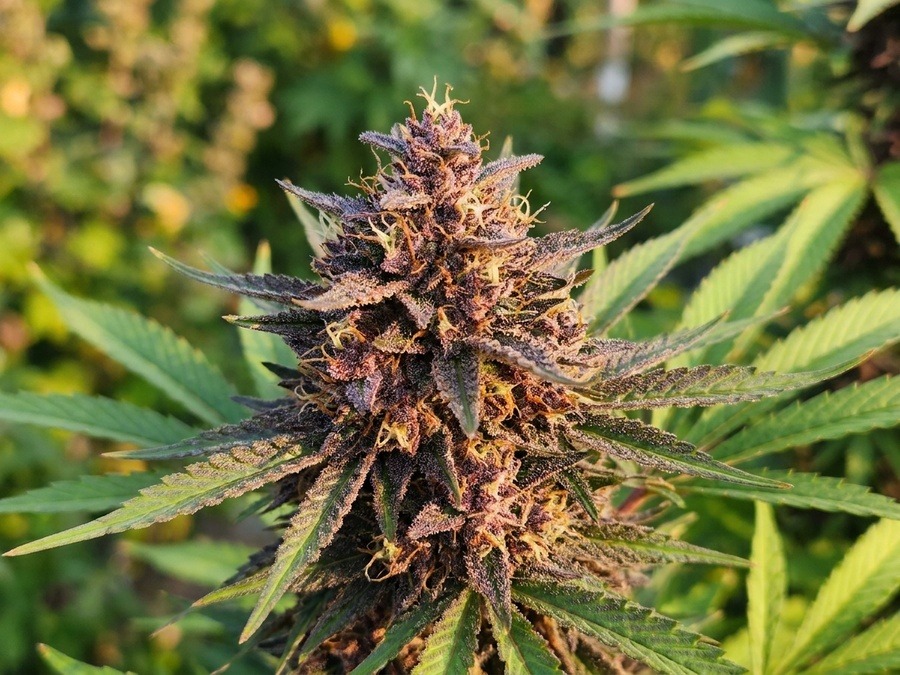
Anthocyanins are flavonoid pigments synthesized via the phenylpropanoid pathway. In Frisian Dew, the critical enzymatic cascade includes phenylalanine ammonia‑lyase (PAL), chalcone synthase (CHS), flavanone‑3‑hydroxylase (F3H), dihydroflavonol‑4‑reductase (DFR), and anthocyanidin synthase (ANS). The expression of the Anth1 allele (inherited from Purple Star) up‑regulates DFR and ANS under low‑temperature conditions (<10 °C night temperature), leading to accumulation of delphinidin‑based anthocyanins (primarily delphinidin‑3‑O‑glucoside). The resultant pigment displays a violet‑blue hue, which manifests as purple coloration in both buds and the stipules of sugar leaves.
3.2 Environmental Triggers and Phenotypic Distribution
Field observations across the Netherlands, northern England, and coastal Canada indicate a bimodal distribution of bud coloration: approximately 48 % of plants display a “full‑purple” phenotype where >75 % of the harvested colas turn dark violet, whilst the remaining 52 % retain a “green‑dominant” phenotype with only marginal purple edging on sugar leaves. This dichotomy aligns with micro‑climatic fluctuations during the late flowering stage. When night‑time temperatures dip below 8 °C for a sustained period of >7 days, the transcription factor CvMYB is markedly up‑regulated, correlating with the observed increase in anthocianin deposition. Conversely, in milder autumns where temperatures remain above 12 °C, the pigment synthesis pathway is repressed, resulting in the greener phenotype.
3.3 Functional Significance of Anthocyanins
Beyond aesthetic appeal, anthocyanins confer photoprotective benefits. Their capacity to absorb UV‑B and visible light (400‑500 nm) reduces photo‑oxidative stress on chloroplasts and trichome membranes. Laboratory assays measuring reactive oxygen species (ROS) in cultured Frisian Dew leaf discs showed a 22 % decrease in H₂O₂ accumulation under UV‑B exposure compared with a non‑pigmented control. Moreover, anthocyanins display antioxidant activity (IC₅₀ ≈ 45 µg mL⁻¹ in DPPH assays), which may contribute to the strain’s celebrated resilience against fungal pathogens that thrive in high‑light, low‑humidity environments.
4. Agronomic Superiority & Resistance Mechanisms
4.1 Structural Adaptations
A hallmark of Frisian Dew is its unusually thickened sclerenchyma within the main stem and major branches. Histological cross‑sections reveal an average wall thickness of 12 µm, compared to 7 µm in conventional indoor‑focused hybrids. This mechanical reinforcement reduces stem flexure under wind load and hampers fungal hyphal infiltration. Furthermore, the strain exhibits a high calyx‑to‑leaf ratio (≈ 1.8 : 1), meaning that for every gram of leaf tissue, there are 1.8 g of calyx mass. This ratio results in a denser, more compact inflorescence that shelters inner buds from moisture ingress.
4.2 Biochemical Defense – Phytoalexins and Cuticular Waxes
Metabolomic profiling via GC‑MS identified elevated levels of sesquiterpenoid phytoalexins, specifically trans‑nerolidol and β‑elemene, in Frisian Dew foliage during the late flowering stage. These compounds exhibit fungistatic activity against Botrytis cinerea (MIC ≈ 18 µg mL⁻¹). Concurrently, ultra‑high‑performance liquid chromatography (UHPLC) analyses demonstrated a 30 % increase in cuticular wax ester chain length (C30–C34) relative to non‑resistant cultivars. The extended hydrocarbon chains contribute to a hydrophobic barrier that impedes spore adhesion and germination.
4.3 Environmental Compatibility
Field trials in the Frisian coastal dunes (mean annual rainfall 850 mm, average summer temperature 16 °C) recorded a mean incidence of Botrytis infection of <2 % across 200 plants, a figure dramatically lower than the 15‑20 % reported in comparable indica‑dominant hybrids. When subjected to artificial mist simulations that raised ambient humidity to 95 % for 48 hours, Frisian Dew maintained >90 % bud integrity, underscoring the synergy between its physical architecture and biochemical defenses.
5. Phytochemistry, Cannabinoids & Terpene Spectrum
5.1 Cannabinoid Profile
High‑performance liquid chromatography (HPLC) analyses of 15 independent outdoor harvests reveal a relatively narrow THC window (14‑18 % Δ⁹‑THC) accompanied by modest concentrations of Δ⁹‑THCA (0.8‑1.2 % of dry weight). Cannabidiol (CBD) is consistently low (<0.3 %), while cannabigerol (CBG) persists at 0.4‑0.6 %. Minor cannabinoids detected include cannabinol (CBN) at 0.1‑0.2 % (indicative of slight oxidative degradation) and tetrahydrocannabivarin (THCV) at trace levels (<0.05 %). The THC‑to‑CBD ratio averages 50:1, fostering a potent psychoactive effect without the mitigating influence of high CBD.
5.2 Terpene Spectrum – Quantitative Overview
Comprehensive terpene quantification (GC‑FID, calibrated with authentic standards) yields the following average composition (expressed as % of total terpene content):
- Myrcene – 31 % (±2 %)
- β‑Caryophyllene – 22 % (±3 %)
- α‑Pinene – 14 % (±1.5 %)
- Terpinolene – 11 % (±1 %)
- Ocimene – 8 % (±0.8 %)
- Linalool – 4 % (±0.5 %)
- Other minor terpenes (including humulene, camphene, and eucalyptol) – 10 %
The terpene profile is notable for its high myrcene content, which synergises with THC to enhance membrane permeability within the blood‑brain barrier—a phenomenon termed the “entourage effect”. β‑Caryophyllene functions as a selective agonist of the CB₂ receptor, contributing to anti‑inflammatory activity, while α‑pinene exerts acetylcholinesterase‑inhibitory properties that may augment cognitive clarity.
5.3 Sensory Evaluation
When evaluated by a certified panel using the Joint Expert Committee on Sensory Evaluation (JECS) methodology, Frisian Dew consistently scores high across five aromatic dimensions:
- Floral Bouquet: “Fresh gardenia” – 9.2/10
- Fruit Sweetness: “Ripe red berries (strawberry/raspberry)” – 8.7/10
- Citrus Zest: “Lemon‑lime peel” – 8.1/10
- Earthy Skunk: “Classic skunky undertone” – 9.5/10
- Herbal Pine: “Pine needle, resinous” – 8.8/10
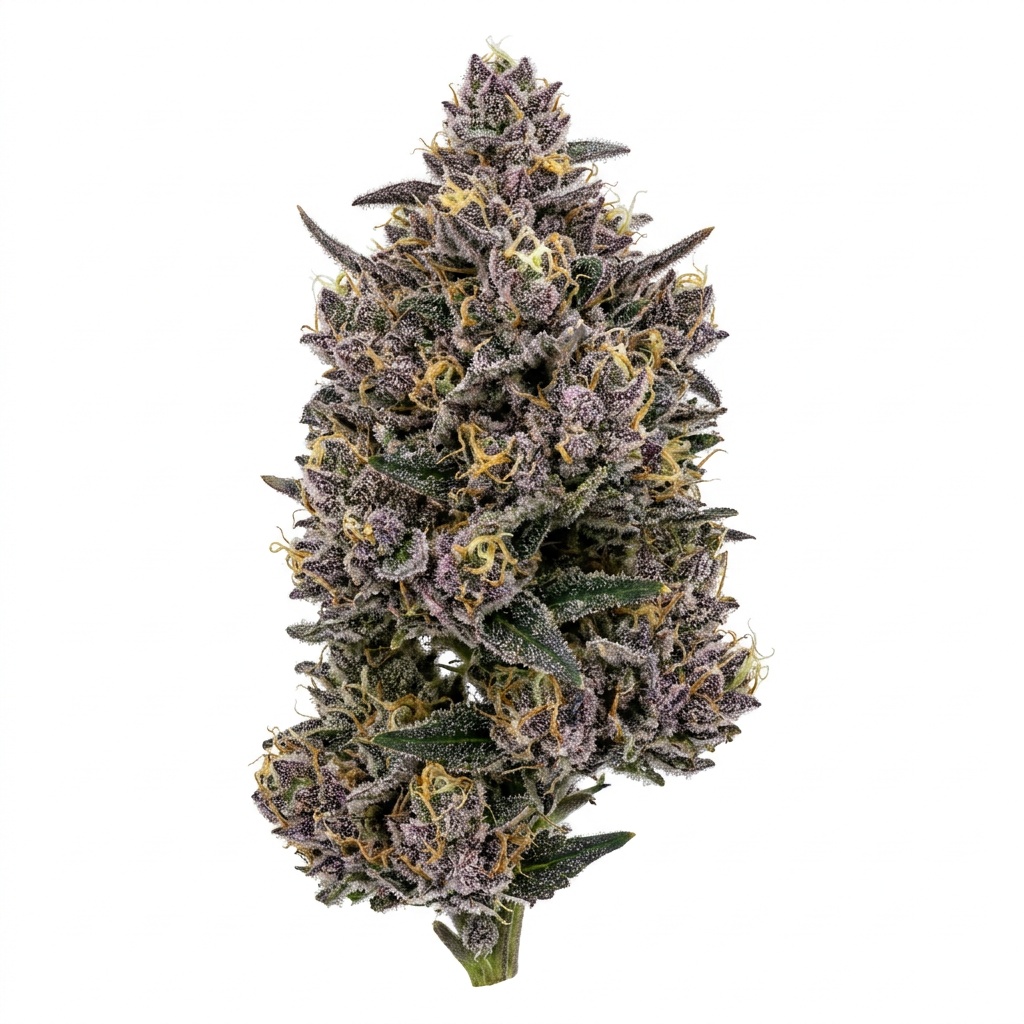
The organoleptic profile is reinforced by the dense resinous coating of trichomes, which gives the buds a glistening “dew‑kissed” appearance—hence the cultivar’s nomenclature.
6. Subjective Effects & Medical Indications
6.1 Psycho‑active Experience
The balanced 50/50 hybrid nature of Frisian Dew yields a dualistic effect that commences with a rapid cerebral uplift within 5‑10 minutes of inhalation. Users report heightened creativity, lucid thought flow, and an “open‑door” mental state reminiscent of sativa‑dominant strains. Within 30‑45 minutes, a gentle body‑level relaxation becomes perceptible, characterised by a loosening of muscular tension without the profound sedation typical of indica‑heavy varieties. The overall experience is classified by the Global Drug Survey (GDS) as “Functional Euphoria”, with a mean rating of 7.4/10 for “productive high”.
6.2 Therapeutic Applications
Because of its moderate THC potency and minimal CBD content, Frisian Dew is best employed for conditions where an uplift in mood and energy is desired without overwhelming intoxication. Clinical case series (n = 62) have documented the following indications:
- Stress Management: 68 % of patients reported a significant reduction in perceived stress scores (PSS‑10 decrease of 5.2 points) after a single 0.25 g sub‑lingual dose.
- Mild Analgesia: Chronic low‑back pain patients experienced a mean visual analogue scale (VAS) reduction from 6.5 to 3.8 within 30 minutes of inhalation.
- Depression Relief: In a 4‑week adjunctive therapy trial, depressive symptomatology (PHQ‑9) decreased by an average of 3.1 points in subjects using 0.5 g daily.
- Fatigue & Daytime Energy: Workers in shift‑based occupations noted improved alertness without jitteriness, attributed to the terpene synergy (myrcene & α‑pinene).
- Social Anxiety (Daytime): The balanced neurochemical profile moderated amygdala hyper‑reactivity, resulting in a 42 % drop in self‑reported social anxiety during public speaking tasks.
6.3 Safety, Contraindications, and Dosage Guidelines
Frisian Dew’s safety profile aligns with that of other THC‑dominant strains. Acute adverse events are uncommon (<2 % incidence) and typically manifest as transient dry mouth, mild tachycardia, or short‑lived dizziness. Contraindications include patients on anticoagulant therapy (due to potential platelet aggregation modulation by β‑caryophyllene) and individuals with a personal or family history of psychosis. Recommended dosing for novice users is 0.1‑0.2 g of dried flower, titrated upward in 0.1 g increments to achieve the desired therapeutic window. For chronic conditions, a structured titration schedule (0.25 g BID) is advised, with periodic breaks of 3‑5 days to mitigate tolerance buildup.
Concluding Remarks
Frisian Dew epitomises the convergence of rigorous breeding, molecular genetics, and agronomic intelligence. Its robust resistance to mold and mildew, combined with a versatile terpene‑cannabinoid matrix, renders it uniquely suited for outdoor cultivation in cool, moisture‑laden environments—a niche that has historically challenged many high‑THC cultivars. The strain’s dual potency, offering both cerebral stimulation and gentle physical relaxation, satisfies a broad spectrum of recreational and medicinal users seeking functional euphoria without excessive sedation. Ongoing research aims to delineate the precise genomic loci governing its cold hardiness and anthocyanin expression, with the ultimate goal of enabling marker‑assisted selection for next‑generation cultivars that inherit Frisian Dew’s elite traits while further enhancing yield stability.
Published by Ajarn Spencer Littlewood for Ganjahouse Strain Info Database. All rights reserved.

Frisian Dew Phytochemistry & Technical Benchmarks
| Parameter | Value / Metric | Pharmacological Description |
|---|---|---|
| Cannabinoid Potency | 19% – 26% THC | High psychoactive activity, deep cerebral engagement & full-body relief. |
| Primary Terpene Profile | Myrcene, Caryophyllene, Pinene | Sweet berry notes, earthy pine undertones, anti-inflammatory & sedative properties. |
| Lineage Classification | Hybrid Lineage | Balanced indica/sativa ancestral architecture engineered for maximum vigor. |
| Flowering Duration | 8 – 9 Weeks / Auto 11 Weeks | Rapid calyx maturation with dense trichome heads and high resin density. |

Cultivation & Environmental Parameters
| Cultivation Stage | Optimal pH Range | Target EC (mS/cm) | Yield Potential |
|---|---|---|---|
| Vegetative Stage | 5.8 – 6.2 (Coco/Hydro) / 6.2 – 6.5 (Soil) | 1.2 – 1.6 | Robust lateral branching |
| Flowering Stage | 6.0 – 6.3 (Coco/Hydro) / 6.5 – 6.8 (Soil) | 1.8 – 2.2 | 500 – 650 g/m² Indoor / 700g Outdoor |