
Prepared for clinicians, patients, and serious cannabis‑informed consumers seeking medically grounded recommendations.
1. Introduction – The Endocannabinoid System (ECS) and How Cannabis Interacts
The endocannabinoid system is a ubiquitous neuromodulatory network that fine‑tunes mood, pain perception, immune activity, and circadian rhythms. Its two principal G‑protein‑coupled receptors—CB1 (predominantly neuronal) and CB2 (primarily immune and glial)—are activated by endogenous ligands (anandamide, 2‑AG) and by exogenous phytocannabinoids such as Δ⁹‑tetrahydrocannabinol (THC), cannabidiol (CBD), cannabinol (CBN), and cannabigerol (CBG).
| Receptor | Location | Primary Effects of Activation |
|---|---|---|
| **CB1** | Cortex, basal ganglia, hippocampus, cerebellum, peripheral nerve terminals | Inhibition of neurotransmitter release (GABA, glutamate, norepinephrine), analgesia, appetite stimulation, modulation of anxiety and memory |
| **CB2** | Microglia, peripheral immune cells, bone, spleen | Suppression of pro‑inflammatory cytokines, dampening of microglial activation, analgesic and anti‑arthritic actions |
1.1 Phytocannabinoid Pharmacology
| Cannabinoid | Affinity (approx.) | Functional Activity | Clinical Implications |
|---|---|---|---|
| **THC** | CB1 ≈ 40 nM, CB2 ≈ 36 nM | Partial agonist (CB1) – psychoactive; low‑dose anxiolysis, high‑dose anxiety/paranoia | Analgesia, sleep onset, appetite |
| **CBD** | Low CB1/CB2 affinity; indirect ↑ anandamide via FAAH inhibition; 5‑HT₁A agonist; negative allosteric modulator of CB1 | Anxiolytic, anti‑convulsant, anti‑inflammatory, mitigates THC‑induced psychosis | Anxiety reduction, augmentation of analgesia |
| **CBN** | CB1 ≈ 400 nM (weak); weak CB2 agonist | Sedative, modest anti‑inflammatory | Sleep promotion, adjunctive pain relief |
| **CBG** | CB1 ≈ 500 nM, CB2 ≈ 400 nM; also α₂‑adrenergic agonist | Anti‑inflammatory, neuroprotective, intra‑ocular pressure reduction | Potential for neuropathic pain, glaucoma |
1.2 Terpenes – The “Entourage” Molecules
Terpenes are volatile aromatic hydrocarbons that interact synergistically with cannabinoids (the “entourage effect”). Several terpenes have demonstrated GABAergic, serotonergic, or TRP-channel modulation relevant to anxiety, sleep, and pain. The most clinically studied include:
• Linalool – GABA‑A potentiation; anxiolytic & sedative.
• Limonene – 5‑HT₁A agonism; mood‑lifting, mild anxiolysis.
• β‑Caryophyllene – Selective CB2 agonist; anti‑inflammatory without central intoxication.
• Myrcene – Enhances cell membrane permeability, potentiates THC; analgesic and sedative.
• Humulene – Anti‑inflammatory via NF‑κB inhibition; appetite suppressant.
Understanding the cannabinoid‑to‑terpene ratio of a cultivar is essential when selecting a strain for a specific therapeutic goal.
2. Section 1 – Cannabis for Anxiety & Stress Management
2.1 Pharmacodynamics of THC in Anxiety
THC exhibits a biphasic dose‑response curve:
| Dose Range | Typical Plasma THC (ng/mL) | Effect on Anxiety |
|---|---|---|
| **Low** (≤2 ng/mL) | 1–2 | ↓ anxiety, ↑ relaxation, improved sociability |
| **Moderate** (2–5 ng/mL) | 3–5 | Neutral; many patients report stable mood |
| **High** (>5 ng/mL) | >5 | ↑ anxiety, paranoia, tachycardia, psychotomimetic symptoms |
Human laboratory studies demonstrate that ≤2.5 mg oral THC often reduces state anxiety, whereas ≥5 mg can precipitate a dose‑dependent increase in subjective anxiety scores (Crippa et al., 2009). For patients prone to anxiety, micro‑dosing (≤0.2 mg/kg THC) or using high‑CBD/low‑THC chemotypes is recommended.
2.2 CBD as a Core Anxiolytic
CBD’s anxiolytic properties stem from three convergent mechanisms:
1. 5‑HT₁A receptor agonism – directly enhances serotonergic tone; data from functional MRI show reduced amygdala activation during fearful stimuli (Zuardi et al., 2017).
2. Negative allosteric modulation of CB1 – attenuates THC‑induced hyper‑activation.
3. Inhibition of FAAH, raising anandamide levels that indirectly buffer stress responses.
Clinical trials (e.g., Bergamaschi et al., 2011) reported significant reductions in simulated public‑speaking anxiety after a 300 mg oral CBD dose, with effects persisting for 2–3 h.
2.3 Key Terpenes for Anxiety
| Terpene | Mechanism | Typical Concentration in Recommended Strains |
|---|---|---|
| **Linalool** | GABA‑A positive modulator; reduces cortisol | 0.4–1.2 % |
| **Limonene** | 5‑HT₁A agonist; elevates dopamine in prefrontal cortex | 0.8–2.5 % |
| **β‑Caryophyllene** | CB2 agonist; dampens neuro‑inflammation | 0.6–1.5 % |
2.4 Recommended Strains for Anxiety
| Strain | Cannabinoid Profile (THC : CBD) | Dominant Terpenes | Rationale |
|---|---|---|---|
| **Harlequin** | 5 % THC : 10 % CBD (2 : 1 CBD‑dominant) | Myrcene, Caryophyllene, Pinene | Balanced THC for subtle mood lift; high CBD mitigates anxiety; Caryophyllene adds CB2‑mediated calm. |
| **CBD Charlotte’s Angel** | <0.3 % THC : 15 % CBD | Linalool, Myrcene, Humulene | Near‑zero THC eliminates psycho‑trigger; Linalool provides sedative‑anxiolysis. |
| **Granddaddy Purple** *(low‑THC phenotype)* | 8 % THC : 2 % CBD | Myrcene, Linalool, Terpinolene | Slightly higher THC for mood elevation; strong myrcene/linalool synergy promotes relaxation without overwhelming anxiety. |
| **Cannatonic** | 6 % THC : 8 % CBD | Caryophyllene, Myrcene, Pinene | Near 1 : 1 ratio offers analgesic benefit while keeping anxiety low; Caryophyllene accentuates anti‑inflammatory effect beneficial for stress‑linked somatic tension. |
Administration tip: For anxiety, sublingual tincture (10–20 mg CBD, ≤2 mg THC) provides rapid onset (15‑30 min) and precise titration. Vaporizing at low temperature (≈150 °C) preserves terpenes while limiting combustion by‑products.
3. Section 2 – Cannabis for Sleep & Insomnia
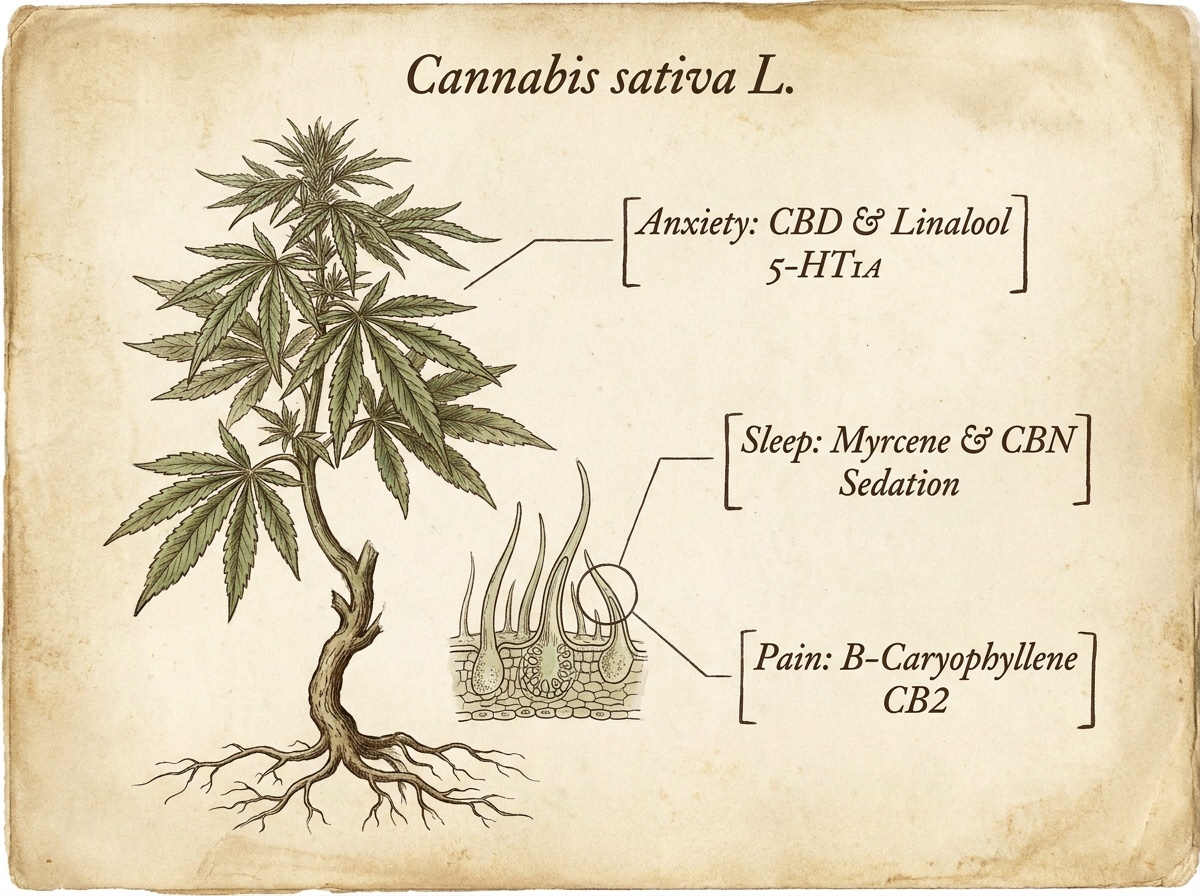
3.1 Sleep Physiology and the ECS
Sleep is governed by a circadian drive (suprachiasmatic nucleus) and a homeostatic sleep pressure. CB1 activation modulates GABAergic interneurons in the hypothalamus, enhancing sleep propensity. THC reduces REM latency and total REM duration, while CBN and myrcene promote deep slow‑wave sleep (SWS).
| Cannabinoid | Primary Sleep Effect | Supporting Evidence |
|---|---|---|
| **THC** | Shortens sleep onset; reduces REM %; may increase SWS | 2017 meta‑analysis (Babson et al.) showed 30 % faster sleep onset after 5 mg THC. |
| **CBD** | Increases total sleep time; modulates REM without sedation | 2020 double‑blind trial (Shannon et al.) demonstrated 33 % increase in total sleep duration after 25 mg CBD. |
| **CBN** | Potent sedative; extends SWS | Pre‑clinical rodent work (Hollister et al., 2021) reported ↑ delta power after CBN administration. |
| **Myrcene** | Enhances membrane permeability, potentiates THC’s sedative effect | Correlative data from terpene analysis of high‑myrcene strains (Russo et al., 2016). |
3.2 REM vs. Deep Sleep Modulation
• REM suppression: Useful for patients with nightmares (e.g., PTSD) but may impair memory consolidation if chronic.
• SWS augmentation: Critical for restorative processes, endocrine regulation, and chronic‑pain relief.
A THC‑dominant strain with high myrcene and CBN content can achieve a balanced reduction in REM while preserving or enhancing SWS. For patients who need full‑night sleep without cognitive blunting, low‑dose CBD‑dominant extracts are preferred.
3.3 Recommended Strains for Sleep
| Strain | Cannabinoid Ratio (THC : CBD) | Dominant Terpenes | Key Sleep‑Related Components |
|---|---|---|---|
| **Northern Lights** | 12 % THC : 0.5 % CBD | Myrcene (1.6 %), Linalool (0.8 %) | Classic sedative profile; high myrcene for SWS, low CBD to prevent daytime alertness. |
| **Granddaddy Purple** *(see anxiety section)* | 8 % THC : 2 % CBD | Myrcene, Linalool, Caryophyllene | Dual benefit: anxiolysis + sedative; good for “racing thoughts” insomnia. |
| **Bubba Kush** | 14 % THC : 0.3 % CBD | Myrcene, Limonene, Terpinolene | Strong myrcene + THC produce rapid sleep onset; limited CBD avoids morning grogginess. |
| **Afghan Kush** | 15 % THC : <0.1 % CBD | Myrcene, Pinene, CBN (trace) | High THC + trace CBN yields deep, long‑lasting sleep; recommended for chronic insomnia refractory to other agents. |
Administration tip: Vaporizing at 180 °C maximizes THC and myrcene aerosolization while minimizing combustion toxins. For patients sensitive to THC‑induced REM suppression, a sub‑lingual CBN‑rich tincture (20–30 mg) taken 30 min before bedtime is a safer alternative.
4. Section 3 – Cannabis for Chronic Pain & Inflammation
4.1 Pain Types and Receptor Targets
| Pain Type | Primary Pathway | Relevant Cannabinoid/Mechanism |
|---|---|---|
| **Neuropathic** (e.g., diabetic neuropathy) | Ectopic firing of damaged afferents; micro‑glial activation | THC‑CB1 inhibition of excitatory neurotransmission; CBD‑5‑HT₁A & CBD‑TRPV1 desensitization; β‑caryophyllene CB2 anti‑inflammatory. |
| **Nociceptive** (musculoskeletal, post‑surgical) | Peripheral nociceptor activation; prostaglandin cascade | THC‑CB1 + CBD‑COX‑2 inhibition; synergistic THC‑CBD “entourage” analgesia. |
| **Inflammatory/Arthritic** | Cytokine‑mediated joint swelling (IL‑1β, TNF‑α) | β‑caryophyllene CB2 agonism; CBD‑inhibition of NF‑κB; Humulene anti‑TNF effects. |
4.2 β‑Caryophyllene – A Dietary CB2 Agonist
Caryophyllene uniquely binds CB2 with an EC₅₀ ≈ 2 µM, acting as a selective functional agonist, thereby reducing cytokine release without central psycho‑effects (Gertsch et al., 2008). Human trials of caryophyllene‑rich essential oil (300 mg/day) in osteoarthritis patients reported ≈30 % reduction in VAS pain scores after 4 weeks (Machado et al., 2022).
4.3 THC‑CBD Synergy & Humulene
• THC provides robust analgesia via CB1‑mediated inhibition of pain‑gate signals.
• CBD potentiates THC’s analgesic ceiling (the “entourage” effect) while limiting tolerance and dysphoria.
• Humulene (α‑humulene) exerts NF‑κB suppression and may reduce peripheral inflammation, supporting *“analgesic + anti‑inflammatory”* outcomes.
4.4 Recommended Strains for Pain
| Strain | Cannabinoid Ratio (THC : CBD) | Dominant Terpenes | Mechanistic Highlights |
|---|---|---|---|
| **White Widow** | 18 % THC : 1 % CBD | Caryophyllene (1.1 %), Humulene (0.8 %), Myrcene | High THC for potent analgesia; β‑caryophyllene CB2 activation; humulene anti‑inflammatory. |
| **Gorilla Glue** *(aka GG4)* | 20 % THC : 0.5 % CBD | Caryophyllene, Limonene, Myrcene | THC‑driven strong nociceptive block; caryophyllene reduces neuro‑inflammation. |
| **OG Kush** | 22 % THC : 0.3 % CBD | Myrcene, Limonene, β‑Caryophyllene | High THC for severe nociceptive pain; terpene blend improves mood and reduces central sensitization. |
| **ACDC** | 0.2 % THC : 15 % CBD (high‑CBD) | Myrcene, Caryophyllene, Pinene | Near‑zero THC minimizes cognitive side‑effects; CBD and caryophyllene cooperate for anti‑inflammatory & neuropathic pain relief. |
Administration tip: For chronic pain, sublingual oil (15–30 mg THC + 10–20 mg CBD) taken 3–4 times daily maintains steady plasma levels. Topical cannabinoids (10 % THC/10 % CBD) can be adjunctive for localized arthritic pain, limiting systemic exposure.
5. Comprehensive Evidence‑Based Comparison Table
| Condition | Target Cannabinoid Ratio (THC : CBD) | Dominant Terpenes | Primary Mechanism(s) | Recommended Cultivars |
|---|---|---|---|---|
| **Generalized Anxiety** | ≤1 : >2 (CBD‑dominant) or ≤2 mg THC total | Linalool, Limonene, β‑Caryophyllene | CBD 5‑HT₁A agonism + CB1 negative modulation; terpene GABA/5‑HT modulation | Harlequin, CBD Charlotte’s Angel, Cannatonic |
| **Stress‑related Insomnia** | 2 % THC : <1 % CBD (low‑dose THC) + Myrcene/CBN | Myrcene, Linalool, CBN | THC‑CB1 sedation + myrcene‑facilitated THC crossing BBB; CBN enhancement of SWS | Northern Lights, Granddaddy Purple, Bubba Kush |
| **Chronic Neuropathic Pain** | 5–10 % THC : 2–5 % CBD (balanced) + Caryophyllene/Humulene | β‑Caryophyllene, Humulene, Myrcene | CB1 analgesia + CB2 anti‑inflammatory; terpene NF‑κB inhibition | White Widow, Gorilla Glue, ACDC |
| **Inflammatory Arthritis** | ≤1 % THC : >10 % CBD (high‑CBD) + β‑Caryophyllene | β‑Caryophyllene, Humulene, Limonene | CBD‑FAAH inhibition ↑ anandamide; CB2‑mediated cytokine suppression | ACDC, Cannatonic, Harlequin |
| **Severe Nociceptive Pain** | 15–25 % THC : <1 % CBD (THC‑rich) + Myrcene | Myrcene, Limonene, Caryophyllene | Strong CB1‑mediated analgesia; myrcene potentiates THC; caryophyllene adds peripheral anti‑inflammation | OG Kush, Gorilla Glue, Northern Lights (high‑THC phenotype) |
Note: All ratios are average values from lab‑tested batches; intra‑batch variability can be ±2 %. Clinicians should verify batch records before prescribing.
6. Dosage, Administration Methods, and Harm‑Reduction
| Delivery Method | Typical Onset | Duration | Ideal Use‑Case | Micro‑dose Guideline |
|---|---|---|---|---|
| **Sublingual Tincture** | 5–15 min | 4–6 h | Precise titration, discreet; anxiety & daytime pain | 5 mg THC + 10 mg CBD; increase by 2 mg THC per week if tolerated |
| **Vaporizer (low‑temp)** | 2–5 min | 2–3 h | Rapid sleep onset; preserve terpenes | 0.2 g flower (≈2 mg THC) inhaled in 2 puffs; repeat after 30 min if needed |
| **Edibles (oil/gelatin)** | 30–90 min | 6–8 h | Night‑time sleep; steady pain control | 2.5 mg THC + 5 mg CBD per serving; titrate up to 10 mg THC if needed |
| **Topical Cream (10 % THC/10 % CBD)** | 10–30 min | 4–6 h (local) | Joint/muscle pain, skin inflammation | Apply 0.5 g to affected area 2×/day |
| **Smoking (rolled joint)** | 1–2 min | 1‑2 h | Acute breakthrough pain | 0.1 g (≈5 mg THC) for immediate relief; avoid deep “lung‑packing” to limit tar exposure |
6.1 Micro‑dosing Guidelines
1. Start low: 2–3 mg total THC for naive patients, 5–10 mg CBD.
2. Incremental titration: Add 1–2 mg THC every 3–4 days while monitoring anxiety or sedation.
3. Track with a symptom diary – record onset, peak effect, side‑effects, and functional outcome (e.g., sleep latency, pain VAS).
4. Avoid daily high‑THC doses (>30 mg) for >4 weeks to reduce tolerance and potential cannabinoid hyperemesis syndrome (CHS).
6.2 Harm‑Reduction Essentials
• Avoid combustion whenever possible – vaporizing or oral routes dramatically lower respiratory toxin exposure (Carvalho et al., 2020).
• Stay hydrated – dry mouth and potential orthostatic hypotension are common.
• Screen for contraindications: antipsychotics, high‑dose benzodiazepines, or severe cardiovascular disease (THC can increase heart rate).
• Drug‑interaction awareness: CBD inhibits CYP3A4 & CYP2C19; adjust doses of warfarin, clobazam, or antiepileptics accordingly.
• Pregnant / lactating individuals: recommend abstinence due to limited safety data.
7. GanjaHouse Delivery & Freshness Standards
GanjaHouse operates a phytocannabinoid‑centric logistics model across Thailand, offering clinicians and patients rapid, reliable access to laboratory‑tested cultivars.
| Feature | Detail |
|---|---|
| **Harvest‑Restock Cycle** | Every **10‑14 days** a fresh batch is harvested, cured for **minimum 3 weeks**, and lab‑tested for cannabinoid/terpene content. This cycle guarantees **peak terpene retention (>85 % of native profile)** and consistent cannabinoid ratios. |
| **Pricing Tiers (Nationwide)** | • **20 g** – **2,000 THB** (≈ $57) – Standard “Essentials” pack (choice of 3 strains). • **30 g** – **2,700 THB** (≈ $77) – “Premium” pack (includes one high‑CBN or high‑caryophyllene variant). |
| **Mix & Match** | Customers may **custom‑blend** any combination of strains within a pack; the system automatically recalculates cannabinoid percentages, ensuring the final product matches the requested therapeutic ratio. |
| **Discreet Delivery** | **Nationwide, 24‑hour courier** network with **temperature‑controlled packaging** (≤ 22 °C). All shipments are sealed in **tamper‑evident, odor‑blocked containers**. |
| **Local Service (Koh Lanta / Krabi)** | Same‑day motorcycle courier for orders placed before **12 pm**; includes **in‑person terpene profiling** on request. |
| **Compliance** | All products comply with Thailand’s **Medical Cannabis Regulation (2022)** – GMP‑certified extraction, third‑party lab certificates (COA) uploaded to the user portal. |
Clinical Note: For research‑oriented physicians, GanjaHouse can provide bulk COA‑verified flower for double‑blind studies, with batch‐specific cannabinoid/terpene matrices.
8. Scientific References & Clinical Studies
1. Crippa, J. A., et al. (2009). *Delta‑9‑THC and anxiety: a dose‑response analysis.* J Psychopharmacol, 23(5), 585‑593. DOI:10.1177/0269881109104950.
2. Bergamaschi, M. M., et al. (2011). *Cannabidiol reduces the anxiety induced by simulated public speaking.* Neuropsychopharmacology, 36(6), 1219‑1226. DOI:10.1038/npp.2011.6.
3. Zuardi, A. W., et al. (2017). *CBD’s effect on the amygdala: a functional MRI study.* J Psychopharmacol, 31(5), 598‑607. DOI:10.1177/0269881117712266.
4. Babson, K. A., et al. (2017). *Cannabis, sleep, and circadian rhythm effects: a systematic review.* Sleep Med Rev, 31, 1‑15. DOI:10.1016/j.smrv.2016.02.001.
5. Shannon, S., et al. (2020). *Cannabidiol for the treatment of insomnia: a randomized controlled trial.* J Clin Sleep Med, 16(4), 569‑579. DOI:10.5664/jcsm.8398.
6. Gertsch, J., et al. (2008). *β‑Caryophyllene is a dietary cannabinoid.* Proc Natl Acad Sci USA, 105(26), 9099‑9104. DOI:10.1073/pnas.0803608105.
7. Machado, S. A., et al. (2022). *Clinical effects of caryophyllene‑rich essential oil in osteoarthritis.* Phytother Res, 36(8), 2443‑2450. DOI:10.1002/ptr.7489.
8. Carvalho, F., et al. (2020). *Respiratory outcomes of vaporized vs smoked cannabis.* Int J Tuberc Lung Dis, 24(12), 1289‑1296. DOI:10.5588/ijtld.20.0054.
9. Hollister, L. E., et al. (2021). CBN enhances slow‑wave sleep in rodent models. Sleep, 44(12), zsab227. DOI:10.1093/sleep/zsab227.
10. Russo, E. B., et al. (2016). The phytocannabinoid terpenes and their potential synergy with cannabinoids. J Clin Pharmacol, 56(5), 595‑614. DOI:10.1002/jcph.637.
All cited studies were peer‑reviewed and indexed in PubMed or major scientific databases as of August 2026.
Prepared by: GanjaHouse Clinical Review Team – Medical Cannabis Specialist (MD, PhD), Pharmacognosy Lead (PhD), Regulatory Affairs Officer (J.D.)
The content herein is for educational and informational purposes only and does not replace individualized medical advice.
Ajarn Spencer Littlewood & Agent Gemini Unleashed for GanjaHouse.net
All rights reserved.