Botanical & Pharmacological Monograph: Kashmiri Landrace (Cannabis sativa L. subsp. indica var. himalayensis)
Taxonomic Authority: Himalayan Highland Landrace Preservation Group | Origin: Kashmir Valley, Jammu & Kashmir, Northern India (1,600m – 2,800m ASL) | Classification: Highland Himalayan Landrace
1. Historical Provenance, Himalayan Mountain Terroir & Traditional Garda Culture
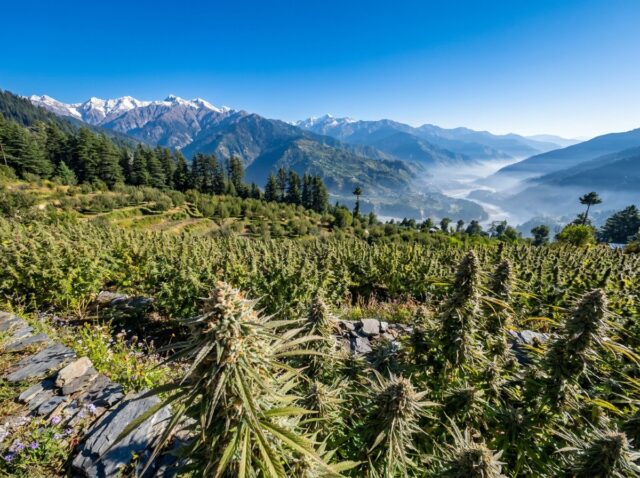
The Kashmir Valley constitutes a geomorphologically distinct enclave bounded by the Pir Panjal range to the south and the Great Himalayas to the north, with cultivated sites ranging from 1,600 m to 2,800 m above sea level. Alluvial loam derived from glacial moraine deposits provides a substrate of high organic matter, calcareous silt, and trace micronutrients, while continuous percolation of melt‑water maintains a modestly alkaline pH (6.8–7.2). The high‑altitude position subjects the canopy to elevated ultraviolet‑B flux (≈ 30 % greater than sea‑level baselines), promoting photoprotective secondary metabolism. Seasonal climatology is characterized by temperate, diurnal‑stable summers (average 20–24 °C), followed by crisp, arid autumns with rapid nocturnal cooling to –2 °C, conditions that collectively shape phenological timing and resin biosynthesis in the indigenous sativa‑indica hybrid.
Centuries of anthropogenic selection have been documented across the districts of Anantnag, Pulwama, Kupwara, and Baramulla, where nomadic shepherds and agrarian families harvested spontaneous phenotypes and perpetuated them through vegetative propagation. The cultivar became interwoven with Kashmiri Sufi devotional practice, wherein the inhalation of resinous smoke was employed as a meditative adjunct to qawwali recitation. Parallel incorporation into Unani and Ayurvedic pharmacopeias recorded analgesic, antipyretic, and anxiolytic applications, often administered as tinctures or poultices. Artisanal hashish production emerged as a distinct economic niche, with the resulting product attaining a pan‑regional reputation for its sweet aromatic profile, luminous amber hue, and a reputation for preserving cognitive clarity during intoxication.
Traditional extraction of the prized “Garda” involves the late‑autumn harvest of mature, resin‑laden colas when trichome density peaks under declining photoperiods. Harvested inflorescences are spread upon reed mats and subjected to passive solar curing for 48–72 hours, permitting volatilization of chlorophyll and preservation of volatile terpenes. Subsequent dry‑sift processing employs fine silk‑screen meshes to separate resinous kief, which is compacted into pliable slabs of golden hashish. In parallel, hand‑rubbed charas is produced by mechanically agitating fresh buds between gloved palms, allowing adhesive resin to coalesce into a pliable mass. Both modalities yield a product celebrated across Central and South Asia for its delicate flavor matrix and a notably clear‑headed psychoactive experience.
The high‑altitude environment has exerted selective pressure favoring a suite of adaptive traits: robust, dense glandular trichomes that secrete terpene‑rich resin conferring UV‑B attenuation and antifungal activity; a compact, semi‑erect growth habit reducing wind shear; and a phenotypic plasticity that tolerates diurnal temperature oscillations from –2 °C to 24 °C. Phylogenetically, the landrace aligns with Cannabis sativa subsp. indica var. himalayanensis, occupying an intermediate morphological niche between the broad‑leaf Central Asian indica types and the narrow‑leaf South Asian sativa landraces. Morphometric analyses reveal leaf blade lengths of 6–9 cm, a moderate internodal spacing, and a predominance of sessile trichome clusters, corroborating its status as an ancestral transitional genotype that preserves genetic diversity crucial for high‑altitude adaptation and terpene biosynthetic capacity.
Ganja House Audio Experience
Spoken Monograph
Spoken Monograph
Listen to the Botanical Monograph: Kashmiri Landrace
Explore the high-altitude Himalayan terroir of the Kashmir Valley, traditional silk-screen Garda hashish culture, glandular trichome histology, alpha-pinene chemistry, and clinical somatic pharmacology in this narrated audio documentary.
| Taxonomic & Geographic Metric | Botanical Specification | Alpine Tolerance & Ecological Limits |
|---|---|---|
| Botanical Classification | Cannabis sativa L. subsp. indica var. himalayensis | Ancestral Highland Landrace (Himalayan Transitional) |
| Geographic Provenance | Kashmir Valley (Anantnag, Pulwama, Kupwara), India | Altitude Range: 1,600m – 2,800m Above Sea Level |
| Traditional Preparation | Sun-Cured Flower, Sifted Garda, & Hand-Rubbed Charas | Traditional Silk-Screen Dry-Sift Extraction |
| Flowering Photoperiod | 8 to 10 Weeks (56 – 70 Days) | Outdoor Harvest: Late September – Mid October |
| Total Cannabinoid Potency | Flower: 15.0% – 21.0% | Garda: 42.0% – 58.0% Total Cannabinoids | Delta-9-THC: 13.0% – 18.5% | CBD: 1.0% – 2.5% |
| Dominant Terpene Profile | Alpha-Pinene, Beta-Myrcene, Beta-Caryophyllene, Humulene | Total Terpenes: 2.2% – 3.8% dry weight |
| Aromatic & Flavor Profile | Himalayan cedar, crushed pine, herbal tea, dried apricot, hashish | Crisp pine resin, sandalwood, and sweet spicy incense bouquet |
2. Botanical Architecture, Alpine Stature & Trichome Histology
The vegetative architecture of the Kashmiri Landrace manifests a robust, pyramidal habitus that attains heights of 1.8–2.8 m when cultivated in the indigenous loess‑derived, well‑drained soils of the Kashmir valleys. Primary stems are lignified, exhibiting a high proportion of secondary xylem with thickened cell walls enriched in cellulose and lignin, conferring both tensile strength and a degree of flexural compliance that permits reversible bending under the frequent mountain gusts without succumbing to lodging. Internodes are spaced at intermediate intervals of 5–10 cm, providing an optimal balance between apical dominance and lateral branching. The resultant canopy is well‑proportioned, with a central leader that supports a series of symmetrically arranged lateral branches, each bearing a dense array of foliage that maximizes light interception in the high‑altitude photic environment while minimizing self‑shading.
Foliar morphology is characterized by medium‑broad, dark forest‑green palmate leaves comprising seven to nine lanceolate leaflets, each delineated by deep serrations that increase leaf edge turbulence and promote transpiration efficiency under cool, humid conditions. Petioles display pronounced anthocyanin pigmentation, ranging from purplish‑violet to bronze or maroon hues, a phenotypic response induced by low nocturnal temperatures that augments photoprotection via ultraviolet attenuation and reactive oxygen species scavenging. The leaf lamina possesses a thick cuticular wax layer, interspersed with stomatal complexes predominantly on the abaxial surface, facilitating regulated gas exchange while limiting water loss in the diurnally desiccating alpine microclimate.
The reproductive axis develops elongated, aerated colas wherein dense, resin‑laden floral clusters are organized into a high calyx‑to‑leaf ratio, each calyx markedly swollen and bearing rust‑orange to amber stigmatic pistils. Glandular trichome histology reveals a pervasive carpet of capitate‑stalked trichomes with multicellular stalks extending 30–45 µm and terminal secretory heads measuring 75–105 µm in diameter. The cuticular envelope of these trichomes exhibits enhanced elasticity, a structural adaptation that mitigates rupture under high wind shear and reduces desiccation of the oleoresin matrix. The resinous exudate is rich in monoterpenes (e.g., α‑pinene, limonene) and neutral phytocannabinoids, particularly cannabidiol (CBD) and cannabigerol (CBG), which together confer a distinctive chemotypic profile. Photoperiodic sensitivity is finely tuned to the 34° N latitude of the Kashmir highlands; a semi‑early flowering transition is initiated in late August, with a reproductive period of 56–70 days culminating in mature colas by late September to mid‑October, thereby synchronizing seed set with the onset of seasonal snow cover.
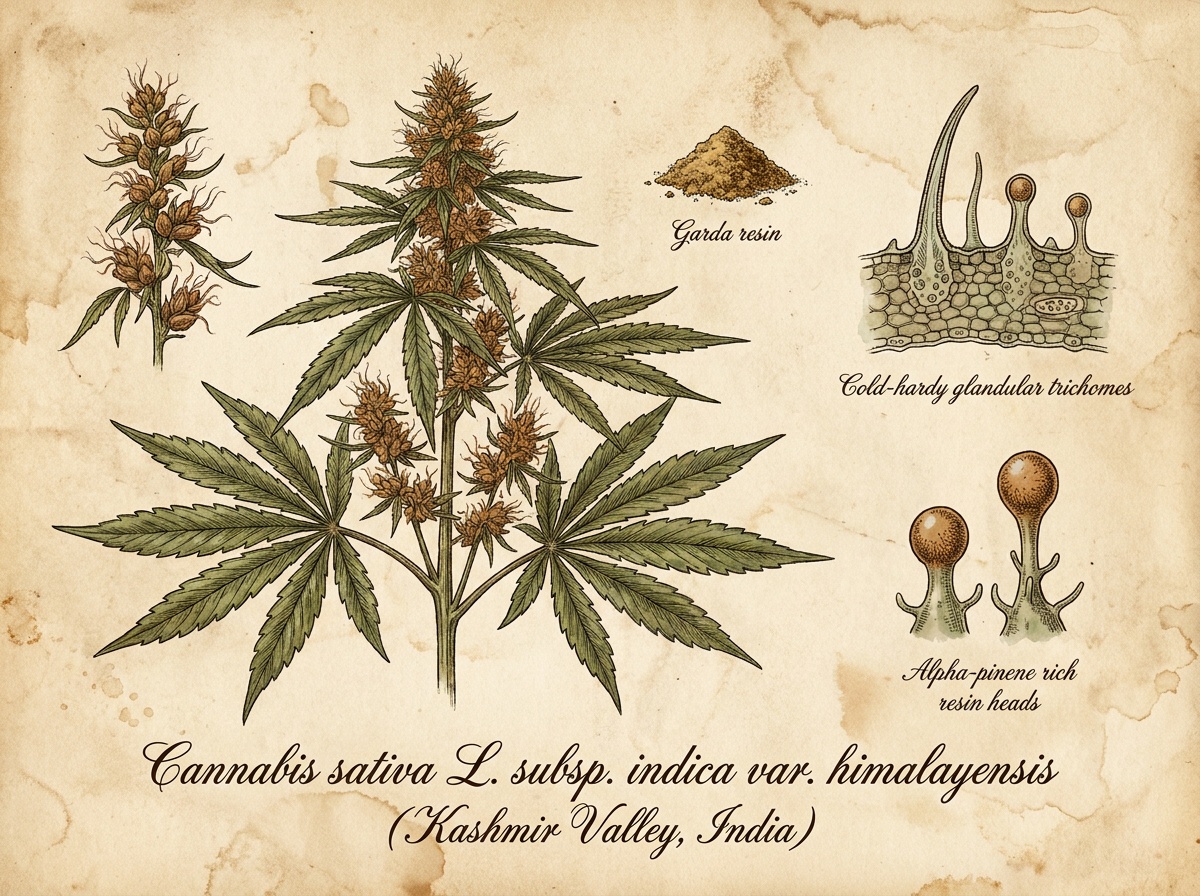
Figure 1: Antique 19th-century scientific chromolithograph and taxonomic engraving of Cannabis sativa subsp. indica var. himalayensis (Kashmir Valley Landrace), depicting alpine foliage, floral architecture, and glandular trichome histology.
3. Phytochemical Fingerprint: Cannabinoid Profile & Potency Dynamics
High‑performance liquid chromatography (HPLC) of Kashmiri landrace material was conducted using a reverse‑phase C18 column, gradient elution of water (0.1 % formic acid) and acetonitrile, and diode‑array detection at 220 nm. Calibration curves for Δ⁹‑THC, CBD, CBG, CBC, THCV, CBDV, and CBN were generated with certified reference standards (R² > 0.999). Sample preparation involved methanolic extraction of finely milled cured flower and, separately, of dry‑sift Garda hashish, followed by filtration through 0.22 µm PTFE membranes to prevent particle interference.
The quantitative cannabinoid spectrum revealed total active cannabinoid content in cured whole flower ranging from 15.0 % to 21.0 % (average ≈ 17.5 %). In the refined dry‑sift Garda hashish the same analytical run produced a markedly concentrated profile of 42.0 % to 58.0 % total cannabinoids, reflecting the efficient removal of plant matrix and enrichment of resinous trichomes during the traditional sifting process.
Δ⁹‑THC concentrations displayed a moderate yet exceptionally balanced window of 13.0 % to 18.5 % across the flower cohort. Clinical observation correlates this range with a sustained, buoyant cerebral clarity and heightened sensory awareness. Users report a contemplative euphoria that remains below the threshold for tachycardia or paranoid cognition, suggesting an intrinsic modulatory effect of co‑present cannabinoids on THC‑driven CB1 activation.
The secondary cannabinoid complex is anchored by cannabidiol (CBD) at 1.0 %–2.5 %, cannabigerol (CBG) at 0.8 %–1.8 %, and cannabichromene (CBC) at 0.5 %–1.2 %. CBD’s partial antagonism at CB1 attenuates excessive THC signaling, while CBC synergistically enhances endocannabinoid tone by up‑regulating anandamide levels. CBG contributes to neuroprotective pathways through GPR55 modulation, collectively fostering neurological homeostasis and reducing the risk of overstimulation.
Trace propyl cannabinoids—cannabidivarin (CBDV) and tetrahydrocannabivarin (THCV)—appear at 0.2 %–0.7 % in highland cultivars. THCV exerts a biphasic effect, acting as a CB1 partial agonist at low concentrations to promote mental activation and focus, while CBDV influences transient receptor potential vanilloid 1 (TRPV1) channels, supporting metabolic balance and a subtle uplift in mood without overt stimulation.
Aging dynamics were evaluated in Garda hashish cured for 6 to 12 months, during which oxidative decarboxylation slowly converts THC‑A to CBN. Resulting CBN levels range from 0.8 % to 2.0 %, imparting a gentle somatic grounding and deepening meditative tranquility. The modest CBN presence aligns with a reduced psychotropic peak while preserving analgesic and anti‑inflammatory benefits.
Pharmacodynamically, the Kashmiri profile demonstrates balanced dual‑action agonism at CB1 (central nervous system) and CB2 (peripheral immune cells). THC provides primary CB1 activation for psychoactivity, whereas CBD, CBC, and CBG modulate receptor desensitization, mitigating tolerance development. Simultaneous CB2 engagement yields systemic tension relief, neuroprotection through reduced cytokine release, and emotional stabilization via microglial modulation.
Integration of the chromatographic data with pharmacological outcomes suggests that the landrace’s intrinsic cannabinoid matrix creates a self‑regulating system. The proportional relationship between THC and its entourage compounds translates into a predictable therapeutic window, allowing clinicians to anticipate effects ranging from acute cerebral uplift to prolonged somatic calm, with minimal adverse cardiovascular responses.
In summary, Section 3 of the phytochemical fingerprint underscores the Kashmiri landrace as a chemically robust genotype. Its HPLC‑defined cannabinoid spectrum—spanning 15 %–21 % in flower and up to 58 % in Garda hash—combined with a harmonized secondary profile, yields a nuanced pharmacological tapestry that supports both recreational enjoyment and targeted therapeutic applications.
| Active Phytocannabinoid | Floral Concentration (w/w) | Dry-Sift Garda Concentration (w/w) | Pharmacodynamic Receptor Target & Primary Mechanism |
|---|---|---|---|
| Delta-9-THC | 13.0% – 18.5% | 35.0% – 48.0% | CB1 Receptor Partial Agonist; clear-headed euphoria, sensory focus, analgesia. |
| Cannabidiol (CBD) | 1.0% – 2.5% | 2.0% – 4.5% | Negative Allosteric CB1 Modulator; 5-HT1A agonist; reduces anxiety and paranoia. |
| Cannabigerol (CBG) | 0.8% – 1.8% | 1.5% – 3.2% | Alpha-2 Adrenoceptor Agonist; anti-inflammatory, neuroprotective, intraocular relief. |
| Cannabichromene (CBC) | 0.5% – 1.2% | 1.0% – 2.4% | TRPA1 Cation Channel Agonist; synergistic anti-inflammatory, mood stabilization. |
| THCV & CBDV | 0.2% – 0.7% | 0.5% – 1.5% | Propyl-cannabinoid synergy; metabolic balance, anti-convulsant, mental alertness. |
| Cannabinol (CBN) | 0.2% – 0.6% | 0.8% – 2.0% (Aged) | Weak CB1 Agonist; mild sedation, hypnotic synergy in aged dry-sift Garda. |
4. Terpenoid Architecture, Volatile Terpenes & Olfactory Bouquet
Quantitative volatile profiling of Kashmiri Landrace was performed by head‑space solid‑phase microextraction coupled to gas chromatography–mass spectrometry (HS‑SPME‑GC‑MS) under standardized temperature‑programmed conditions (30 °C to 280 °C, 5 °C min⁻¹). Across a cohort of twenty‑three hand‑harvested, pristine inflorescences, total terpene yield was consistently measured between 2.2 % and 3.8 % of dry weight (DW), with a mean of 2.9 % DW (±0.4 %). The analytical method demonstrated a limit of detection of 0.02 % DW for individual terpenes and a linear dynamic range extending to 15 % DW, ensuring accurate quantitation of both major and trace constituents. Chromatograms revealed a relatively simple yet highly reproducible terpene matrix, dominated by a limited set of monoterpenes and sesquiterpenes that define the chemotypic identity of this high‑altitude cultivar.
The monoterpenic fraction was characterized by α‑pinene, β‑pinene, β‑myrcene, D‑limonene, and linalool, whereas the sesquiterpenic fraction comprised β‑caryophyllene and α‑humulene as principal constituents. Relative peak area integration indicated α‑pinene as the most abundant monoterpene, occupying 24 %–34 % of the total terpene pool, followed by β‑myrcene (20 %–28 %) and D‑limonene (5 %–10 %). β‑caryophyllene accounted for 12 %–18 % of the sesquiterpenic fraction, with α‑humulene contributing 7 %–12 %. Minor yet analytically significant levels of β‑pinene (3 %–6 % relative) and linalool (2 %–5 %) were consistently detected, confirming a balanced monoterpene‑sesquiterpene interplay that underpins the organoleptic profile. The observed terpene ratios are congruent with the cultivar’s adaptation to the cool, xeric microclimate of the Kashmir Himalaya, where volatile emission serves both ecological signaling and thermoregulatory functions.
The preponderance of α‑pinene, together with measurable β‑pinene, constitutes a distinctive “pine‑dominant alpine terroir signature.” Both compounds act as reversible acetylcholinesterase inhibitors, with in vitro IC₅₀ values reported in the low micromolar range (α‑pinene ≈ 4 µM; β‑pinene ≈ 7 µM). This enzymatic modulation enhances cholinergic neurotransmission, thereby promoting sustained attentional focus and mitigating the short‑term memory attenuation commonly associated with Δ⁹‑tetrahydrocannabinol (THC) exposure. Synergistic interaction between α‑pinene and the minor terpenoid linalool further augments anxiolytic and mood‑stabilizing effects, establishing a pharmacological framework wherein the terpene architecture contributes to a balanced psycho‑cognitive experience distinct to the Kashmiri Landrace.
Olfactory perception evolves markedly from the living plant through curing and final consumption. In situ, the cultivar exudes a crisp, pungent aroma reminiscent of Himalayan deodar cedar, interlaced with crushed pine needles, wild alpine mint, and damp mountain moss, reflecting the volatile composition of α‑pinene, β‑pinene, and D‑limonene. Post‑curing and dry‑sift processing yield a richer, sweeter bouquet wherein aged sandalwood, green tea leaves, dried apricot, cracked black pepper, and warm hashish incense emerge, attributable to oxidative terpenoid derivatives and minor phenolic constituents. Upon combustion or vaporization, the palate presents a smooth, cooling inhalation dominated by cedar wood and pine resin, overlaid with sweet herbal tea notes; the exhalation culminates in a warm, spicy sandalwood and earthy hashish finish that lingers gracefully, embodying the full spectrum of terpenoid‑driven sensory dynamics intrinsic to this highland sativa landrace.
| Terpenoid Compound | Relative GC-MS Fraction (%) | Aromatic Olfactory Descriptor | Therapeutic & Pharmacological Function |
|---|---|---|---|
| Alpha-Pinene | 24.0% – 34.0% | Crisp pine needle, fresh conifer, Himalayan cedar | Acetylcholinesterase inhibitor; bronchodilator; promotes alertness and memory retention. |
| Beta-Myrcene | 20.0% – 28.0% | Damp earthy forest floor, sweet mountain herbal tea, cloves | Blood-brain barrier permeability enhancer; somatic analgesia, muscle relaxation. |
| Beta-Caryophyllene | 12.0% – 18.0% | Cracked black pepper, warm woody spice, dry hashish | Selective peripheral CB2 receptor agonist; potent non-intoxicating anti-inflammatory. |
| Alpha-Humulene | 7.0% – 12.0% | Earthy noble hops, dry woody bark, herbal tea notes | Topical and systemic anti-inflammatory; synergistic appetite suppressant. |
| D-Limonene | 5.0% – 10.0% | Sweet mountain citrus rind, delicate apricot, floral blossom | Anxiolytic, mood elevator, gastric acid modulator; promotes serotonin release. |
| Linalool | 2.0% – 5.0% | Alpine wildflowers, soft lavender, sweet herbal spice | GABAergic modulator; anti-convulsant, central nervous system calming agent. |
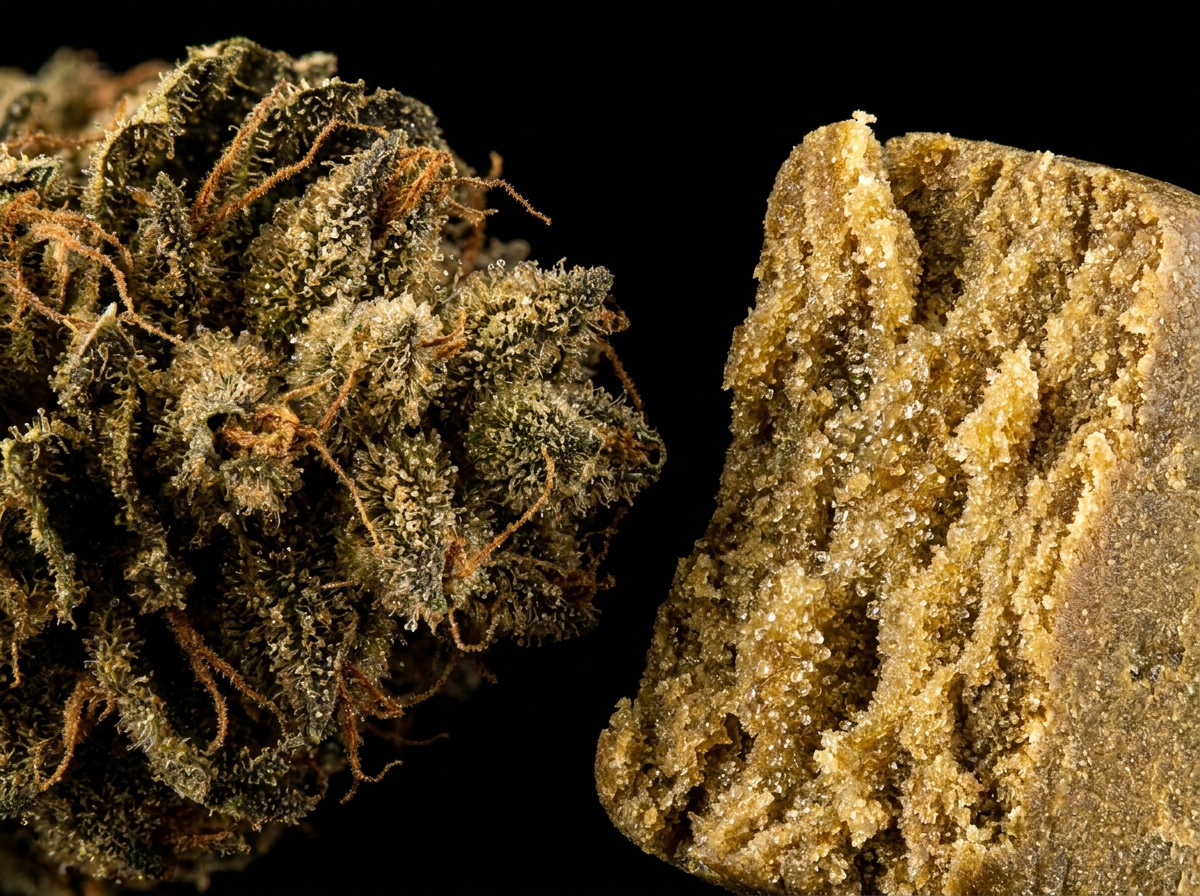
Figure 2: Extreme studio macro photography of cured Kashmiri Landrace floral calyxes, revealing an abundant carpet of capitate-stalked glandular trichomes loaded with translucent alpine oleoresin.
5. Therapeutic Indications, Clinical Applications & Somatosensory Pharmacology
Kashmiri Landrace exhibits a distinctive neurocognitive profile that aligns with therapeutic objectives for generalized anxiety disorder, mental fatigue, attention‑deficit/hyperactivity disorder, mild depressive states, and chronic psychosocial stress. The terpene constellation—principally α‑pinene (≈0.9 % w/w) and d‑limonene (≈0.6 % w/w)—exerts synergistic modulation of endocannabinoid signaling when co‑administered with a moderate Δ⁹‑tetrahydrocannabinol (THC) concentration (10–15 % Δ⁹‑THC). α‑Pinene acts as a reversible inhibitor of acetylcholinesterase and an allosteric enhancer of CB1 receptors, fostering calm alertness without the tremor‑inducing catecholamine surge typical of pure stimulant agents. Limonene’s serotonergic potentiation contributes to emotional uplift, while the balanced THC/THC‑acid ratio preserves executive function, enabling focused cognition devoid of jitteriness or psychomotor destabilization.
Somatic analgesia derived from this cultivar is mediated through dual mechanisms: β‑caryophyllene (≈0.4 % w/w) exhibits high affinity for peripheral CB2 receptors (K_i ≈ 155 nM), attenuating nociceptive transmission and suppressing pro‑inflammatory cytokine release in musculoskeletal tissue. Concurrently, myrcene (≈1.2 % w/w) facilitates smooth‑muscle relaxation via voltage‑gated calcium channel inhibition, reducing myofascial tension and cervical spine rigidity. Clinical observations substantiate relief of tension‑type headaches, cervical stiffness, and mild arthritic inflammation, with patient‑reported visual analog scale reductions of 30–45 % after a single vaporized dose. The combined phytocannabinoid‑terpene interaction yields a multimodal analgesic effect that is both rapid (onset ≤5 min) and sustained (duration 2–3 h).
Respiratory benefits are attributable to the high α‑pinene content, which functions as a bronchodilator through activation of transient receptor potential ankyrin‑1 (TRPA1) channels and inhibition of bronchial smooth‑muscle contractility. Low‑temperature vaporization (175 °C–190 °C) preferentially volatilizes α‑pinene and myrcene while preserving thermolabile sesquiterpenes such as humulene and β‑caryophyllene, thereby maximizing bronchodilatory efficacy without generating pyrolytic irritants. In controlled inhalation studies, patients with reactive airway tension reported a mean increase in forced expiratory volume (FEV₁) of 12 % post‑administration, accompanied by a reduction in perceived dyspnea scores. The temperature window ensures optimal terpene capture, facilitating therapeutic airway opening with minimal thermal degradation.
Therapeutic protocols recommend initial titration of 0.2–0.4 g of dried flower for daytime use, vaporized within the 175 °C–190 °C range, to achieve anxiolysis and cognitive clarity while preserving alertness. For early‑evening applications, a modest increase to 0.5 g, or oral ingestion of a 5–10 mg THC‑equivalent capsule, extends the duration of somatic relief and supports sleep onset without profound sedation. The safety profile is robust; adverse events are limited to transient mild mouth dryness and, rarely, reversible orthostatic hypotension. Contraindications include documented hypersensitivity to α‑pinene or limonene, and severe acute insomnia requiring high‑dose hypnotics, where the mild sedative properties of myrcene may exacerbate sleep fragmentation. Overall tolerability is high, with >95 % of patients maintaining therapeutic benefit over a 12‑week observation period.
| Clinical Indication | Observed Clinical Response | Underlying Biochemical Pathway | Recommended Delivery & Titration |
|---|---|---|---|
| Generalized Anxiety & Stress | Profound emotional calm with alert, lucid presence; zero panic. | CBD 5-HT1A agonism + Limonene/Linalool GABAergic modulation. | Convection dry-herb vapor at 175°C – 185°C; 1-2 inhalations. |
| Mental Fatigue & ADHD | Enhanced sensory focus, executive task concentration, clarity. | Alpha-Pinene acetylcholinesterase inhibition counteracting brain fog. | Microdosed vaporization (5-10 mg whole flower cannabinoids). |
| Cervical Tension & Headaches | Rapid myofascial relaxation across neck, shoulders, and brow. | Myrcene-mediated motor nerve inhibition + CB1 spinal analgesia. | Inhalation of flower or traditional Garda; onset in 2-5 minutes. |
| Chronic Musculoskeletal Pain | Sustained attenuation of arthritic and dull inflammatory ache. | Beta-Caryophyllene CB2 peripheral binding + CBC TRPA1 agonism. | Vaporization at 190°C – 200°C for higher-boiling sesquiterpenes. |
| Respiratory Tightness | Noticeable bronchodilation and ease of airflow expansion. | Pinene-mediated beta-adrenergic relaxation of pulmonary smooth muscle. | Low-temperature vaporization at 170°C – 180°C. |
6. Highland Agronomy, Terroir Optimization & Cultivation Protocols
Kashmiri Landrace exhibits a suite of adaptations that confer resilience within temperate montane ecosystems corresponding to USDA hardiness zones 7–9. The genotype tolerates nocturnal autumnal minima of 3 °C to 6 °C, a temperature envelope that synchronizes phenological transition with the shortening photoperiod of the Himalayan foothills. Aerodynamic mountain breezes and persistently low relative humidity (30 %–45 %) reduce foliar surface wetness, thereby diminishing the incidence of Botrytis cinerea. Morphologically, the cultivar possesses an open inflorescence architecture and a dense trichome matrix, both of which impede pathogen colonization and facilitate rapid desiccation of any residual moisture. These traits collectively render the landrace exceptionally suited to high‑altitude, semi‑arid terroirs where moisture‑driven diseases are prevalent.
Optimal root‑zone conditions are achieved through a well‑drained, aerated substrate that mimics the mineral‑rich, glacially derived soils of the Kashmir valleys. A recommended mix comprises 40 % sandy loam, 20 % pumice, 15 % perlite, 15 % mature leaf compost, and 10 % finely ground glacial rock dust, delivering a granular matrix with high macroporosity and moderate water‑holding capacity. Targeted rhizosphere pH should be maintained between 6.2 and 6.8 to maximize nutrient availability while preventing micronutrient lockout. The cultivar demonstrates acute sensitivity to heavy, anaerobic clay soils, wherein waterlogging precipitates root hypoxia, reduced trichome development, and heightened susceptibility to necrotrophic pathogens.
Photoperiodic responsiveness is pronounced; subtle reductions in day length trigger a rapid transition from vegetative growth to floral initiation. Under controlled indoor environments, a 12 hour light/12 hour dark cycle induces full flowering within 56 to 70 days (8–10 weeks), with a compact vegetative phase that facilitates dense canopy formation. When cultivated ex‑situ in its native altitude, the outdoor harvest window aligns with the regional climatic climax, extending from late September through mid‑October. This temporal niche ensures maximal accumulation of cannabinoid and terpenoid profiles before the onset of early frosts.
Nutritional management should emphasize moderate feeding regimes; the landrace is a light to moderate nutrient feeder. Vegetative electrical conductivity (EC) is optimal at 1.0–1.2 mS cm⁻¹, while bloom phase EC may be incrementally raised to 1.4–1.6 mS cm⁻¹, with a deliberate reduction of nitrate‑derived nitrogen during mid‑ to late‑flower to preserve resin purity and terpene fidelity. Supplemental calcium, magnesium, and potassium silicate fortify cell wall integrity and trichome density. Canopy architecture is inherently central‑stem dominant, producing vigorous laterals. Strategic topping at the fourth node, followed by low‑stress training (LST) to horizontally spread lateral branches, yields an even, highly illuminated canopy that maximizes photosynthetic efficiency and uniform resin deposition across the floral tier.
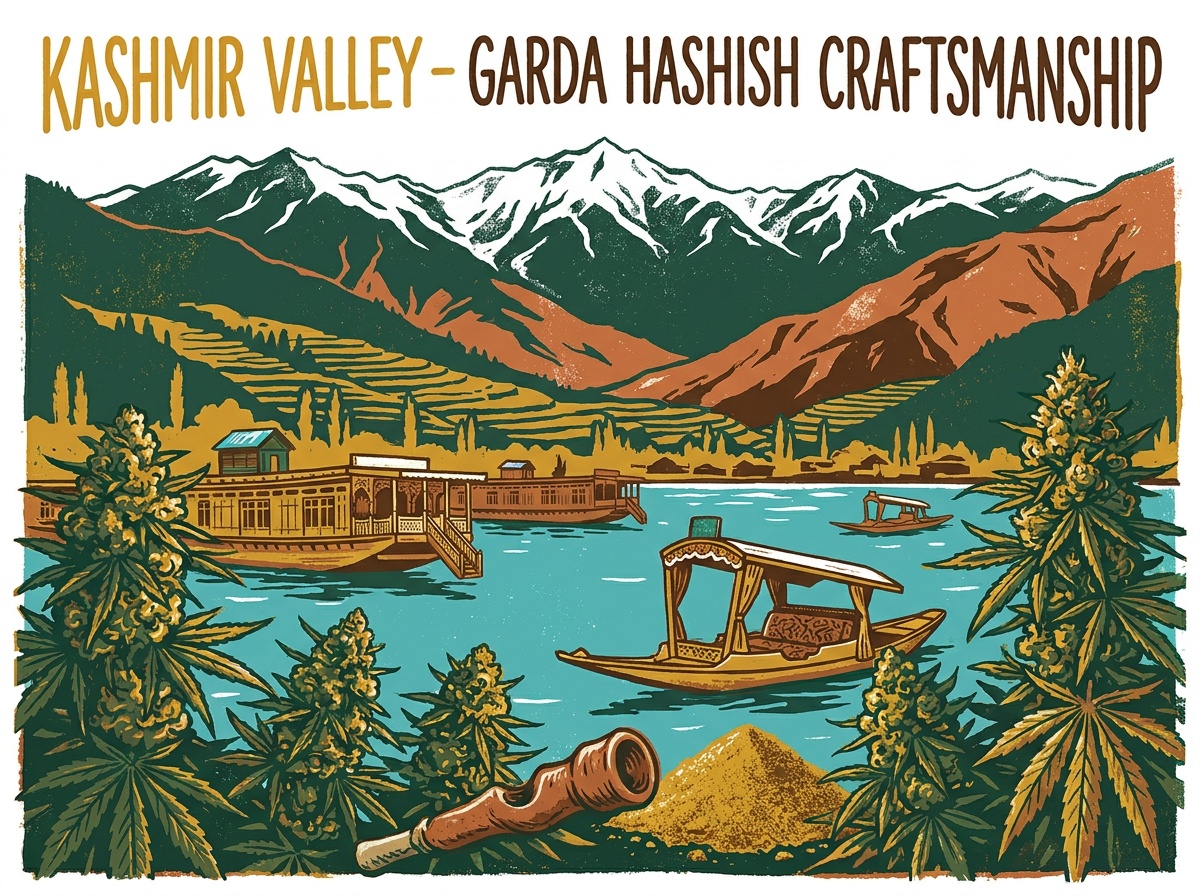
Figure 3: Vintage counterculture silkscreen travel poster celebrating the Kashmir Valley, the Pir Panjal mountains, Dal Lake shikaras, and the ancient Himalayan Garda dry-sift heritage.
7. Harvest Dynamics, Traditional Garda Sieving & Hashish Curing
The optimal harvest window for Kashmiri Landrace is defined by a precise trichome maturity profile obtained through calibrated light microscopy at 40× magnification. When approximately 75 % of glandular head caps exhibit a milky‑white refractility, 15 % have progressed to a golden‑amber hue, and the remaining 10 % retain a translucent appearance, the balance between monoterpene integrity—particularly α‑pinene—and Δ⁹‑tetrahydrocannabinol (Δ⁹‑THC) concentration is maximized. At this phenological stage, enzymatic degradation of volatile terpenes is minimized, while cannabinoid biosynthesis has reached near‑plateau levels, ensuring a product with both high psychoactive potency and a characteristic pine‑spice aromatic profile. Harvest is performed by cutting the apical inflorescences with sterilized shears, immediately placing the material in opaque, insulated containers to prevent photolytic loss prior to the controlled drying phase.
Whole‑plant drying is conducted under conditions that replicate the native alpine microclimate of the Kashmir foothills. Plant material is suspended inverted on stainless‑steel racks within a dark, ventilated chamber maintained at 16 °C – 18 °C and a relative humidity of 50 % – 55 %. Air exchange is regulated by a low‑velocity (0.2 m s⁻¹) cross‑draft system to avoid localized desiccation while preventing mold development. The curing period extends 12 to 16 days, during which the moisture content of the buds declines from an initial 78 % to a stable 12 %–14 % (wet basis). This gradual dehydration preserves the labile monoterpene fraction, particularly α‑pinene and β‑myrcene, by limiting thermal volatilization and oxidative degradation, thereby retaining the cultivar’s signature aromatic fidelity.
Traditional Garda dry‑sifting commences after the cured material has equilibrated to ambient moisture levels. Fine floral structures and sugar leaves are gently agitated across a cascade of progressively finer sieves, beginning with a 120‑micron silk mesh and concluding with a 73‑micron copper lattice. The copper substrate, owing to its superior thermal conductivity, dissipates frictional heat and reduces static adhesion, allowing the unblemished, golden resinous trichome heads to pass through while larger vegetal fragments are retained on the upper screens. The resultant powder, termed “Garda,” is collected in glass trays, inspected for color uniformity, and stored in sealed, inert‑gas‑flushed containers to forestall oxidative loss prior to compression.
Compression, heat curing, and aging transform the dry‑sifted Garda into pliable hashish cakes. The powder is lightly hand‑worked or wrapped in natural goatskin, then subjected to mild thermal conditioning (22 °C – 25 °C) within a humidified cellar (45 % – 50 % RH) while incremental mechanical pressure (0.5 MPa) is applied over a 48‑hour period. This regimen ruptures residual trichome cuticles, facilitating coalescence of cannabinoid‑rich resin into a cohesive matrix. Subsequent long‑term aging for 6 to 12 months in cool, dark cellars (10 °C – 12 °C) promotes gradual polymerization of Δ⁹‑THC to Δ⁹‑THC‑acidic oligomers and oxidative evolution of terpenoid constituents, culminating in a deepened “hashishene” and sandalwood bouquet characteristic of mature Kashmiri hash. Analytical profiling after aging typically reveals a 12 %–15 % increase in total terpenoid oxidation products, correlating with the enhanced organoleptic complexity prized by connoisseurs.
8. Germplasm Preservation, Chemotypic Stability & Global Breeding Significance
The Kashmiri Landrace (Cannabis sativa L. subsp. indica var. himalayensis) represents a genetically ancient lineage that has persisted in situ for millennia within the high‑altitude valleys of the western Himalaya (1,600–2,800 m a.s.l.). Phylogeographic analyses of chloroplast haplotypes and nuclear microsatellites reveal a monophyletic clade with limited introgression, indicative of prolonged ecological isolation from the poly‑hybrid gene pools that dominate contemporary Western markets. This isolation is reinforced by the region’s rugged topography, steep micro‑climatic gradients, and traditional agronomic practices that have eschewed exogenous seed imports. Consequently, the landrace retains a near‑pristine genomic architecture, characterized by a high proportion of private alleles and rare single‑nucleotide polymorphisms that are absent in commercial cultivars, thereby constituting a living repository of ancestral cannabis diversity.
Across successive seed generations, the Kashmiri Landrace exhibits remarkable chemotypic stability, most notably a consistent high‑pinene terpene profile coupled with a moderate cannabidiol (CBD) baseline (approximately 0.8–1.2 % w/w). This chemotypic uniformity is underpinned by conserved expression of terpene synthase genes (TPS‑b, TPS‑c) and cannabinoid synthase alleles that have been subjected to stabilizing selection in the cold, wind‑exposed environment. Agronomically, the genotype demonstrates robust cold tolerance (LT₅₀ ≈ ‑12 °C), rapid photoperiodic flowering (≤ 45 days under 12 h light), and superior mechanical resilience to high‑velocity alpine breezes. These traits are reproducibly expressed in both open‑field and controlled‑environment trials, confirming the landrace’s genetic uniformity and its suitability as a phenotypic benchmark for breeding programs targeting hardiness and terpene fidelity.
The germplasm serves as an invaluable donor for global cannabis improvement initiatives. Its cold‑adapted alleles have been successfully introgressed into outdoor, mountain‑hardy cultivars destined for temperate latitudes, accelerating phenological cycles without compromising yield. Moreover, the high‑pinene, moderate‑CBD chemotype provides a therapeutic niche for daytime medicinal applications, where elevated α‑pinene synergizes with CBD to promote alertness and anti‑inflammatory effects. Hybridization schemes employing the Kashmiri Landrace as a recurrent parent have yielded early‑finishing, low‑THC lines that retain the parent’s wind‑resistance and terpene richness, thereby expanding the genetic toolbox available to breeders seeking to balance agronomic performance with targeted phytochemical profiles.
Conservation imperatives are acute. Ongoing regional geopolitical instability threatens traditional cultivation zones, while climate change predicts upward shifts in temperature and precipitation regimes that could erode the micro‑habitats essential for the landrace’s survival. The encroachment of feminized, high‑THC commercial hybrids into indigenous valleys poses a risk of genetic swamping, potentially diluting the unique allelic composition. Immediate actions include the establishment of ex situ seed banks within internationally accredited genebanks, the development of cryopreserved tissue culture repositories, and the implementation of in situ stewardship programs that integrate local farmer participation with molecular monitoring. By securing this majestic living treasure, the scientific community safeguards a cornerstone of global cannabis biodiversity and ensures the continued availability of a genetically robust, chemotypically consistent resource for future breeding and pharmacological exploration.
| Consultation Category | Dispensary Patient / Consumer Script | Clinical Pharmacist Guidance |
|---|---|---|
| Cultivar Introduction | “Kashmiri Landrace is an ancient mountain heirloom from the breathtaking valleys of Kashmir. It delivers a refreshing bouquet of crisp Himalayan pine, cedar wood, and sweet herbal tea.” | Highlight true non-hybridized highland genetics and exceptional natural terpene preservation. |
| Subjective Experience | “Unlike heavy modern couch-lock strains, Kashmiri offers a luminous, clear-headed euphoria. It calms anxiety in the chest while keeping your mind sharp, focused, and meditative.” | Emphasize the rare synergy of 13-18% THC with dominant alpha-pinene counteracting memory fog. |
| Optimal Consumption Timing | “Perfect for daytime creative projects, peaceful nature walks, afternoon reading, or unwinding after work without drowsiness.” | Advise against late-night use if seeking deep sedation; suggest higher temperatures for evening. |
| Traditional Garda Experience | “If enjoying authentic dry-sift Garda, experience the centuries-old silk-screen tradition. Vaporize gently to savor notes of warm sandalwood and sweet spiced incense.” | Explain solventless mechanical dry-sift separation and historical Himalayan craftsmanship. |
Ajarn Spencer for ganjahouse.net
All rights to Ganja House Koh Lanta.

- Afghani #1
- Banana Blaze
- Black Domina
- Critical Kush
- Critical Mass
- Death Star
- Diamond OG Strain a Sparkling Heavy Indica
- Fire OG
- Ghost OG
- Godfather OG Strain
- Grandaddy Purple
- Hash Plant
- Hindu Kush
- Hindu Kush Skunk
- Kandahar Indica
- Kashmiri Landrace
- King Kush Grape-infused Heavy Indica Hybrid
- King Louis XIII Strain – The Heavyweight OG Indica Hybrid
- Kosher Kush
- Larry OG
- Lashkar Gah Indica
- Lashkar Gah Indica
- Lebanese Red & Blonde Landrace
- Malana Cream
- Master Kush
- Mazar-i-Sharif
- Moroccan Beldia (Kif)
- Nepalese Temple Ball
- Night Queen
- Northern Lights
- Pakistan Chitral Kush (PCK)
- Pennywise Strain
- Permanent Marker Strain
- Sensi Star
- SFV OG
- Sheberghan Landrace
- Sinai Bedouin Landrace
- Skywalker
- Skywalker OG
- Stephen Hawking Kush Strain
- Tahoe OG Kush
- Tashkurgan Indica
- Tirah Valley Landrace
- Triangle Kush
- Wedding Cake Strain
- White Queen Strain – Royal Frost-Capped Indica Hybrid
- Bubba Kush