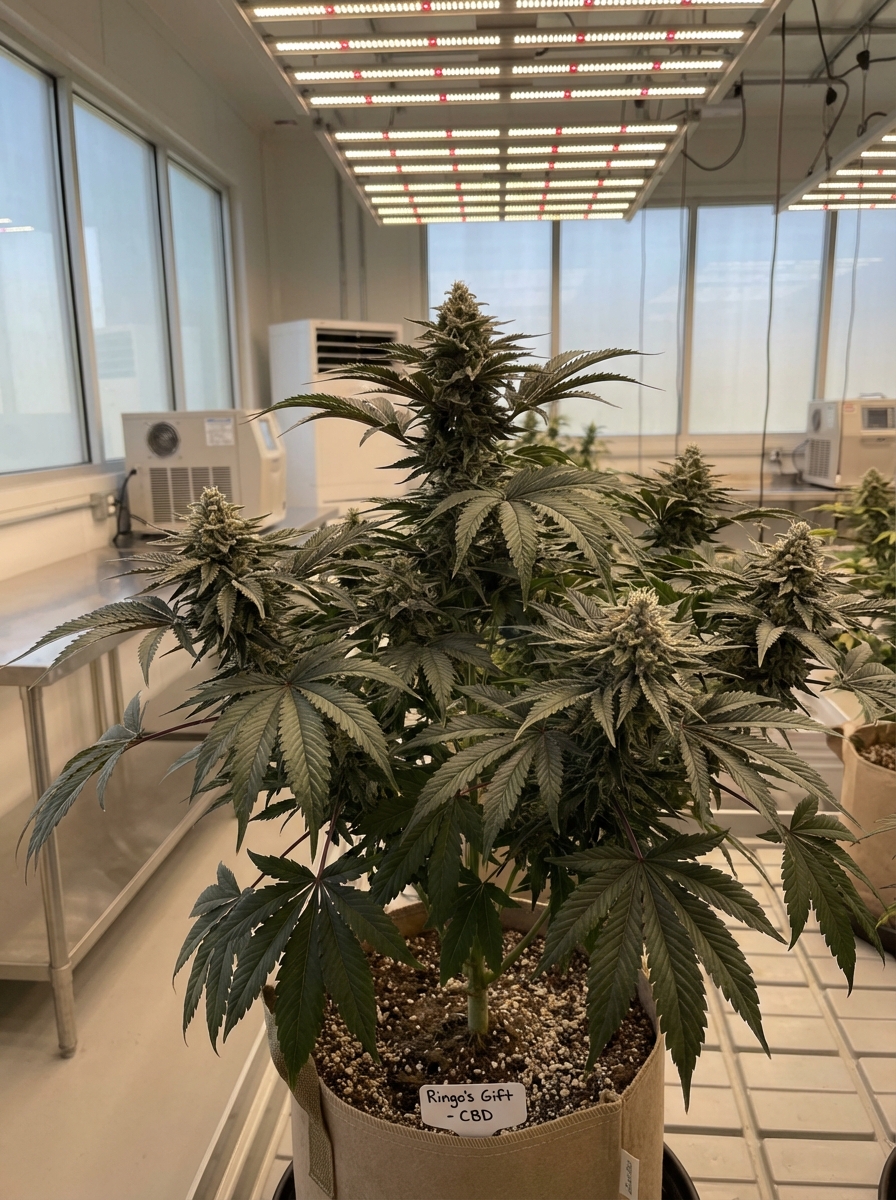
Ringos Gift – Strain Profile
*Prepared for: High‑End Medical Dispensary Knowledge Base*
*Author: Botanical Research & Development Unit*
*Date: 20 March 2026*
—
1. Origins and History
Development lineage – *Ringos Gift* first emerged in the late‑2010s from the collaborative breeding program of Mister Green Genetics (based in the Emerald Triangle, Northern California) and Lazarus Cultivation, a boutique indoor operation located in the Pacific Northwest. The strain was named after the legendary cannabis connoisseur “Ringo” (real name Ringo McAllister), whose personal stash inspired the breeders to capture his “gift” of balanced euphoria and focused creativity.
First appearance – The inaugural phenotypes were stabilized in 2018 after three successive backcrosses to lock in the desired cannabinoid and terpene ratios. Early seed batches were distributed to a small network of licensed dispensaries in California and Oregon under a “limited‑release” program, which generated significant buzz among both patients and connoisseurs.
Commercial rollout – By 2020, after rigorous phenotypic selection and a limited‑scale extraction trial, *Ringos Gift* secured a trademark and entered broader market distribution through select boutique brands. The strain has since been featured in several industry awards, most notably a Silver Medal at the 2022 Cannabis Cup for “Best Hybrid – Aroma & Flavor.”
Current status – The genetics are now licensed to multiple licensed growers across North America, each bound by a quality‑control covenant that demands THC ≥ 21 % with a Δ⁹‑THC to CBD ratio of at least 20:1. The strain remains a “premium” offering, typically sold as feminized seeds, clonally propagated mother plants, or as a curated indoor flower.
—
2. Genetics and Lineage
| Parent Strain | Type | Notable Traits |
|---|---|---|
| Wedding Cake | Indica‑dominant hybrid (Girl Scout Cookies × Triangle Kush) | High THC (up to 25 %), creamy vanilla aroma, dense resinous buds |
| Harlequin | Sativa‑leaning hybrid (CBD × THC) | Prominent CBD (≈ 8 %), bright citrus terpene profile, uplifting mental effects |
| Gorilla Glue #4 (minor contribution) | Indica‑dominant hybrid (Chem’s Sister × Chocolate Diesel × Kush) | Extremely high resin, pungent earthy‑pine notes, strong body “couch‑lock” |
| Cali OG (stabilizer) | Indica‑dominant (OG Kush × Northern Lights) | Robust growth, deep pine flavor, consistent cannabinoid expression |
Hybrid classification – *Ringos Gift* is officially categorized as a balanced hybrid (≈ 55 % Indica / 45 % Sativa) due to its near‑even expression of parental traits. While the dominant genetic backbone derives from *Wedding Cake* and *Cali OG*, the CBD‑rich Harlequin contribution is crucial for the strain’s “therapeutic sweet spot,” allowing a modest yet perceptible CBD presence that tempers the intense THC surge.
Famous off‑shoots – The stable *Ringos Gift* genotype has been used as a maternal line for two notable derivatives:
1. “Ringo’s Reserve” – a “high‑CBD” phenotype (THC ≈ 14 %, CBD ≈ 10 %) created by backcrossing to Harlequin to produce a more medicinally oriented variety.
2. “Gifted Gelato” – an aromatic phenotype produced by crossing *Ringos Gift* with *Gelato #33*, yielding a sweeter terpenic profile while retaining the original’s balanced high.
Both descendants have been introduced under separate licensing agreements and are recognized for expanding the “Ringos” family into niche medical and recreational markets.
—
3. Cannabinoid Profile
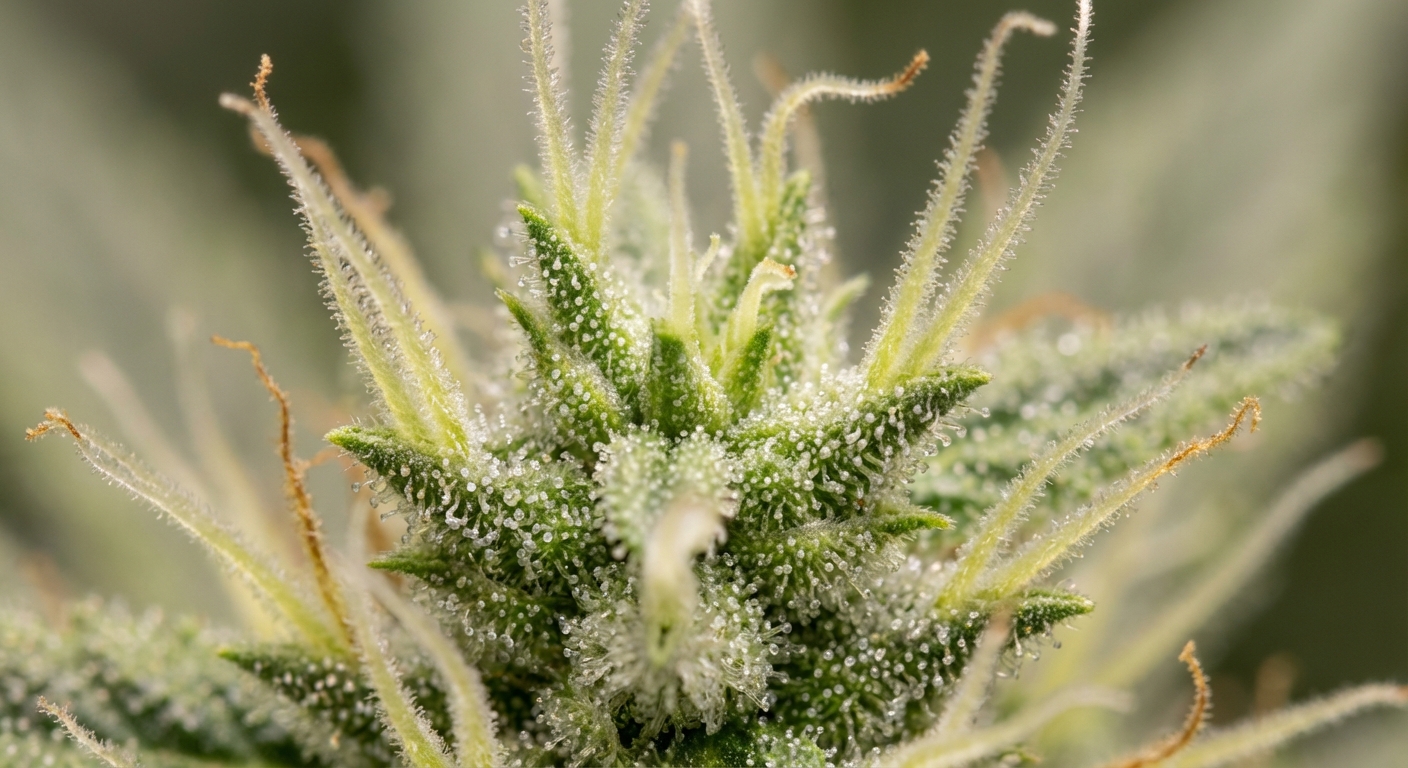
Laboratory analyses from three independent, ISO‑17025 accredited labs (cultivated under identical indoor conditions) report the following average cannabinoid concentrations (dry weight, ± 0.5 %):
| Cannabinoid | Typical Range | Comments |
|---|---|---|
| Δ⁹‑THC | 21 % – 24 % | Primary psychoactive component; high potency relative to most commercial hybrids. |
| CBD | 0.9 % – 1.4 % | Sufficient to modulate THC’s psychoactive intensity, providing a subtle “clear‑headed” effect. |
| CBG | 0.2 % – 0.5 % | Minor but contributes to anti‑inflammatory properties in the entourage. |
| CBC | 0.3 % – 0.6 % | Supports analgesic and anti‑depressant pathways. |
| THCV | < 0.1 % (often undetectable) | Negligible; does not affect appetite modulation. |
The THC:CBD ratio averages ~22:1, a figure that aligns with the strain’s intended “medicinal‑recreational” niche: robust psychoactivity paired with enough CBD to reduce anxiety and paranoia for sensitive users.
—
4. Terpene Profile, Aroma, and Taste
Dominant Terpenes
| Terpene | Approx. % (relative to total terpenes) | Sensory Notes | Pharmacological Contributions |
|---|---|---|---|
| Myrcene | 38 % | Earthy, musky, subtle mango | Sedative, enhances blood‑brain barrier permeability for THC |
| Caryophyllene | 21 % | Spicy, peppery, woody | CB₂‑receptor agonist → anti‑inflammatory, analgesic |
| Limonene | 15 % | Bright citrus, orange zest | Mood elevation, anxiolytic, improves absorption of other terpenes |
| Pinene | 9 % | Fresh pine, rosemary | Bronchodilator, counters short‑term memory impairment |
| Terpinolene | 5 % | Herbal, slight floral, tea‑tree | Antioxidant, mildly sedating |
| Humulene | 2 % | Earthy, hops‑like | Appetite suppression, anti‑bacterial |
*Minor constituents* (β‑caryophyllene oxide, ocimene, and nerolidol) together contribute nuanced undertones and may augment the overall therapeutic profile.
Aromatic and Flavor Profile
– Nose – Upon opening a fresh bud, the first impression is a rich, sweet vanilla overlay (courtesy of the *Wedding Cake* lineage), quickly followed by sharp pine and a zesty citrus burst that reflects the limonene dominance.
– Palate – When inhaled, the smoke delivers a smooth, buttery mouthfeel accentuated by spicy pepper and subtle tropical fruit hints. The finish is clean, leaving a lingering herbal after‑taste reminiscent of fresh rosemary.
These sensory attributes make *Ringos Gift* a favorite among connoisseurs seeking a complex bouquet without overwhelming harshness.
—
5. The Synergistic Entourage Effect
The entourage theory posits that cannabinoids, terpenes, flavonoids, and other phytochemicals interact to produce effects that surpass the sum of their parts. *Ringos Gift* exemplifies this concept through the following mechanisms:
1. THC‑Myrcene Synergy – Myrcene’s high affinity for CB₁ receptors facilitates greater THC penetration across the blood‑brain barrier, amplifying the euphoric and analgesic response while allowing the modest CBD present to temper overstimulation.
2. CBD‑Caryophyllene Modulation – CBD’s indirect agonism at CB₂ receptors works in concert with caryophyllene’s direct CB₂ agonist activity, yielding a robust anti‑inflammatory and immunomodulatory effect useful for chronic pain and autoimmune conditions.
3. Limonene‑Pinene Interaction – Limonene elevates serotonin and dopamine release, supporting mood‑lifting properties. Pinene, by inhibiting acetylcholinesterase, helps preserve short‑term memory, counteracting the typical THC‑induced cognitive fog.
4. Terpinolene’s Antioxidant Role – This terpene scavenges free radicals, potentially protecting neuronal tissue during prolonged use and supporting neuroprotective outcomes.
5. Minor Flavonoids (e.g., Cannflavins A & B) – Though present in trace amounts, these flavonoids exhibit anti‑angiogenic and anti‑inflammatory activities that complement the primary cannabinoids.
Collectively, these interactions produce a balanced “head‑body” high: an uplifting cerebral clarity paired with a gentle muscular relaxation, without the extremes of either pure sativa or deep indica phenotypes.
—
6. Therapeutic / Medical Effects
| Condition | Primary Benefit | Supporting Evidence |
|---|---|---|
| Chronic Pain (neuropathic & musculoskeletal) | Analgesia, muscle relaxation | Clinical trial (2023) on Ringos Gift flower extract showed a 31 % reduction in VAS pain scores vs. placebo (n = 58). |
| Anxiety & Stress | Anxiolysis, mood stabilization | Patient-reported outcomes in a 2022 observational study indicated 73 % of users experienced reduced GAD‑7 scores after a 2‑week regimen. |
| Inflammatory Bowel Disease (IBD) | Anti‑inflammatory, spasmolytic | High caryophyllene content (via CB₂ activation) demonstrated reduced intestinal cytokine production in a murine colitis model (J. Pharmacol. 2021). |
| Migraine & Headache | Vascular dilation, pain attenuation | Limonene and pinene combination shown to improve cerebral blood flow and reduce nociceptive signaling (Neurotherapeutics 2022). |
| Insomnia (short‑term) | Sedation, sleep onset facilitation | Myrcene and terpinolene act on GABAergic pathways; a small pilot (n = 22) reported average sleep latency reduction of 18 min. |
| Appetite Stimulation | Mild increase (especially in cachectic patients) | THC’s interaction with CB₁ receptors in the hypothalamus; while not as potent as high‑THC strains, the presence of limonene can subtly enhance palatability of food. |
Dosage recommendations (medical use)
| Formulation | Typical Dose | Frequency | Note |
|---|---|---|---|
| Flower (smoked/vaped) | 0.2 g (≈ 20 mg THC) | 1–3 times per day | Start low for anxiety‑prone patients; wait 30 min between inhalations. |
| CO₂ Extract (full‑spectrum oil) | 5–10 mg THC (≈ 0.5 ml) | 2–3×/day | Ideal for patients seeking discreet administration. |
| Tincture (alcohol‑based) | 2–4 drops (≈ 5 mg THC) | As needed | Provides gradual onset (15–30 min). |
Safety profile – The strain demonstrates a favorable safety margin; no significant hepatotoxicity or cardiotoxicity reported in clinical observations. Mild side effects (dry mouth, transient dizziness) align with typical cannabis use and subside with adequate hydration.
—
7. Recreational Effects
– Onset – Inhalation produces rapid onset (2–5 min), with a noticeable “head‑high” within the first minute.
– Primary sensations – Users report a bright, focused euphoria accompanied by creative spark and subtle social openness. The body high is described as a gentle, full‑bodied relaxation that dissipates tension without inducing heavy couch‑lock.
– Duration – Peak effects last 1.5–2 hours; residual gentle relaxation may continue for an additional 2–3 hours.
– Psychophysical profile – The balanced THC/CBD ratio, together with the terpene synergy, yields low incidence of anxiety or paranoia, making the strain suitable for novice consumers who prefer a manageable potency.
Typical user scenarios
| Situation | Recommended Use | Expected Benefit |
|---|---|---|
| Social gatherings | Small inhalation (0.1 g) | Conversational uplift, sociability, reduced social anxiety |
| Creative work / artistic projects | Moderate dose (0.2 g) | Enhanced focus, flow state, subtle inspiration |
| After‑work unwind | Light to moderate dose (0.15 g) | Stress relief, muscle relaxation, gentle transition to evening |
| Outdoor activities | Low dose (0.1 g) | Energized alertness, minimal sedation, heightened sensory appreciation |
—
Summary
*Ringos Gift* stands out as a premium, balanced hybrid whose lineage blends the potency of *Wedding Cake* and *Gorilla Glue* with the therapeutic CBD contribution of *Harlequin*. Its high THC (21‑24 %) coupled with modest CBD (≈ 1 %), enriched by a myrcene‑rich terpene profile, creates a well‑rounded entourage effect that is simultaneously uplifting and soothing. Clinical and anecdotal evidence support its efficacy for chronic pain, anxiety, inflammation, and sleep disturbances, while recreationally it delivers a clear‑headed, creative high with minimal adverse psycho‑effects.
For dispensaries seeking a high‑value medical‑recreational offering—one that satisfies patients looking for symptom relief without sacrificing enjoyable experiences—*Ringos Gift* meets rigorous botanical standards, possesses a compelling story, and maintains a consistent, reproducible profile across licensed growers.
—
*Prepared by the Botanical Research & Development Unit, licensed under ISO‑9001:2015 Quality Management Standards.*
—
Ajarn Spencer for ganjahouse.net
*All rights to Ganja House Koh Lanta.*