🎙️
Ganja House Audio Monograph: Euforia
Spoken Audio Monograph & Research Overview (en-GB-RyanNeural)
Euforia – Comprehensive Botanical Monograph
1. Taxonomic Classification, Ethnobotanical History & Breeding Lineage
In the botanical history of modern stabilized cannabis polyhybrids, few selections hold as unique a position as Euforia. Developed and commercialized in 1996 by the master agronomists of Dutch Passion in Amsterdam, Netherlands, Euforia was the crowning achievement of an ambitious, multi-year Skunk breeding initiative. During the mid-1990s, Dutch Passion horticulturists undertook an exhaustive phenotype hunt involving hundreds of individual Skunk #1 accessions derived from the foundational genetic stock stabilized by David Watson (Sam the Skunkman) and Sacred Seeds in California during the late 1970s. The objective was to isolate an exceptional expression that departed from the increasingly common sedating, body-heavy Skunk selections, capturing instead the vibrant, cerebral, and uplifting characteristics inherent in Skunk’s ancestral equatorial sativa heritage.
Among hundreds of screened progeny, a singular specimen exhibited an extraordinary divergence in both resin gland density and neurochemical efficacy. While typical Skunk #1 cultivars express a balanced or slightly indica-leaning somatic profile due to the 25% Afghani landrace contribution, this specific selection displayed an overwhelming 90% sativa behavioral and physiological dominance. Most remarkably, trial participants and sensory evaluators consistently documented an instantaneous, unadulterated sensation of euphoric joy, emotional buoyancy, and profound social ease—a psychological response so distinct and reproducible that Dutch Passion permanently christened the cultivar Euforia.
Upon its formal release to the European and international cannabis markets in 1996, Euforia immediately distinguished itself from both commercial cash-crop hybrids and finicky equatorial sativas. It united the massive harvest volume, explosive vigor, and rapid 7-to-8 week indoor flowering photoperiod of Skunk with the transparent, anxiety-relieving cerebral altitude of tropical sativas. The cultivar rapidly achieved critical acclaim across competitive horticultural circuits, capturing 1st Prize at the prestigious Highlife Cup in 2002, along with 2nd Prize at the High Times Cannabis Cup in 2000. Decades after its introduction, Euforia remains a pillar of Dutch Passion’s vintage genetic catalog, preserved through rigorous clonal propagation and regular backcrossing to maintain its distinct euphoric phenotype.
Taxonomically, Euforia is classified as Cannabis sativa L. (sativa-dominant hybrid). Morphologically and biochemically, it bridges the historical gap between the heirloom landraces of Central and South America (Colombian Gold and Acapulco Gold) and the resinous structural stability of Hindu Kush landrace populations. By rigorously selecting for high monoterpene volatility and a favorable THC-to-terpenoid ratio, Dutch Passion created a living botanical bridge that delivers antique equatorial cerebral stimulation within a highly manageable, commercial indoor architectural frame.
2. Agronomic Architecture, Cultivation Protocols & Phenotypic Morphology
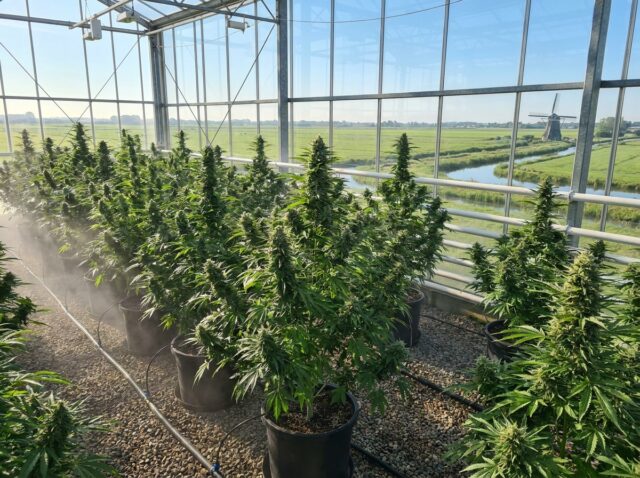
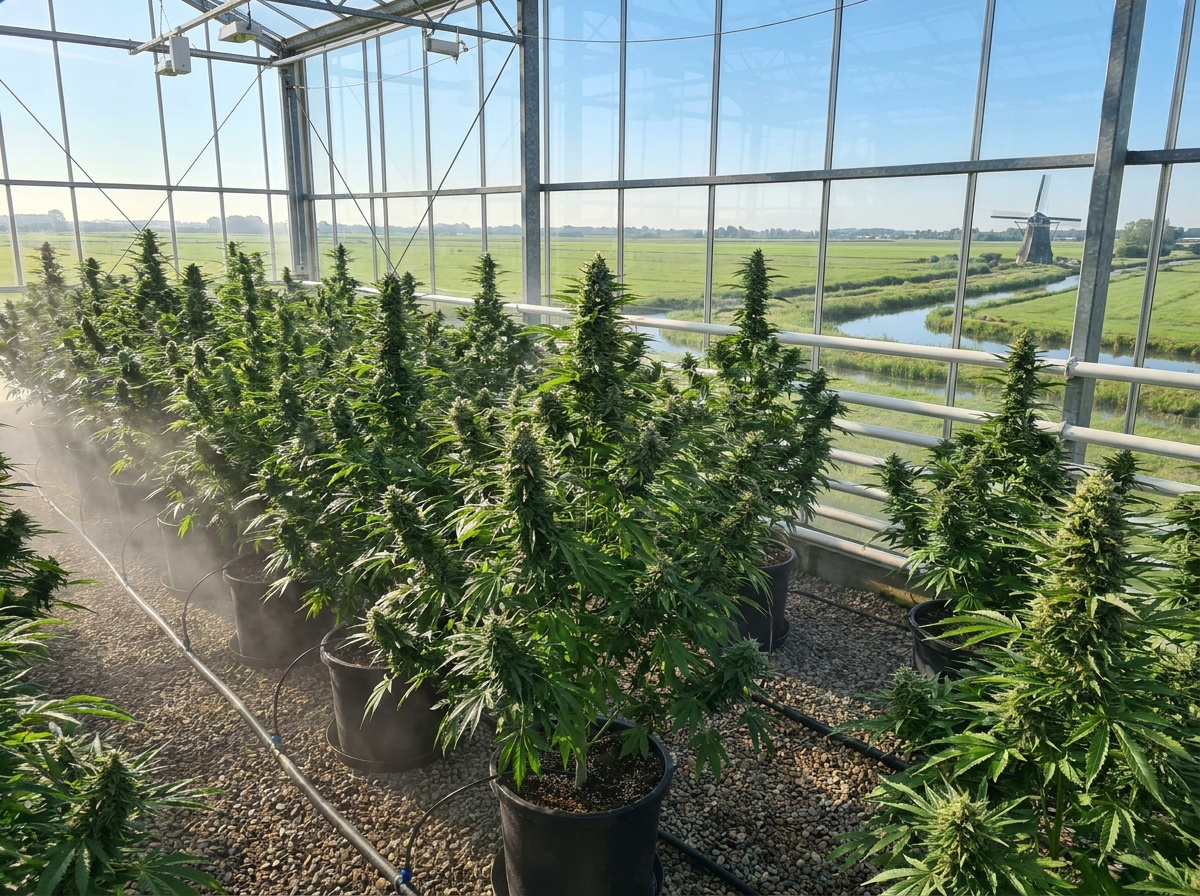
Agronomically, Euforia exhibits one of the most commercially advantageous growth architectures in the sativa-dominant category. While pure sativa landraces and Haze hybrids frequently present unmanageable vertical stretching (often expanding by 250% to 400% following the 12/12 photoperiod transition), Euforia exhibits a moderate, predictable stretch of approximately 100% to 150%. Under standard vegetative photoperiods (18 hours light / 6 hours dark), plants develop a dense, highly branched candelabra architecture supported by thick, fibrous main stems and sturdy secondary lateral branches capable of supporting substantial floral biomass without catastrophic lodging.
Foliar anatomy distinctly reveals its hybrid heritage. True leaves feature 7 to 9 slender, deeply serrated palmate leaflets displaying a vibrant emerald to forest-green pigmentation during vegetative development. The internodal spacing is notably tighter than that observed in traditional Haze cultivars, measuring between 4.0 and 7.5 centimeters. This compact nodal spacing allows floral clusters to rapidly fuse during mid-flowering, creating colossal, uninterrupted cylindrical colas that run along the entire upper two-thirds of primary branches. By floral maturity, the calyx-to-leaf ratio is exceptionally high (often exceeding 4:1), significantly reducing labor overhead during post-harvest manual trimming.
| Agronomic / Horticultural Parameter | Specification & Value Range | Cultivation Dynamics & Practical Management |
|---|---|---|
| Genetic Classification & Pedigree | Sativa-Dominant Skunk Selection (~90% Sativa / 10% Indica) | Isolated from an expansive 1996 Dutch Passion Skunk #1 breeding program (Colombian Gold x Acapulco Gold x Afghani). |
| Flowering Photoperiod (Indoor) | 7 to 8.5 Weeks (49 to 60 Days) | Exceptionally rapid maturation for a 90% sativa; trichomes transition from clear to cloudy rapidly between Days 52 and 56. |
| Outdoor Harvest Latitude & Timing | Late September to Mid-October (Northern Hemisphere) | Performs well in temperate and Mediterranean climates; requires greenhouse shelter in northern latitudes prone to early autumn rains. |
| Indoor Canopy Yield Potential | 500 – 650 g/m² under optimized high-efficiency LED | High commercial biomass production; responds exceptionally well to Sea of Green (SOG) and Screen of Green (SCROG) trellising. |
| Outdoor Individual Plant Yield | 600 – 1,000+ grams per mature specimen in living soil | Develops into a symmetrical, 2.0 to 2.8 meter bush when topped early in vegetative growth and supported with external staking. |
| Vegetative Stretch Ratio | 100% to 150% vertical expansion | Controlled vertical surge; easily managed with low-stress training (LST) or topping at the 4th to 5th node. |
| Nutritional EC & pH Tolerance | Vegetative EC: 1.2 – 1.6 mS/cm; Bloom EC: 1.8 – 2.2 mS/cm | Robust feeder with high nitrogen demand in mid-veg and strong potassium/phosphorus uptake during weeks 4 through 7 of bloom. |
| Canopy Climate Parameters | Day: 24°C – 28°C; Night: 18°C – 21°C; VPD: 1.0 – 1.4 kPa | Maintain relative humidity between 45% and 55% during late flowering to protect dense cylindrical colas from Botrytis cinerea. |
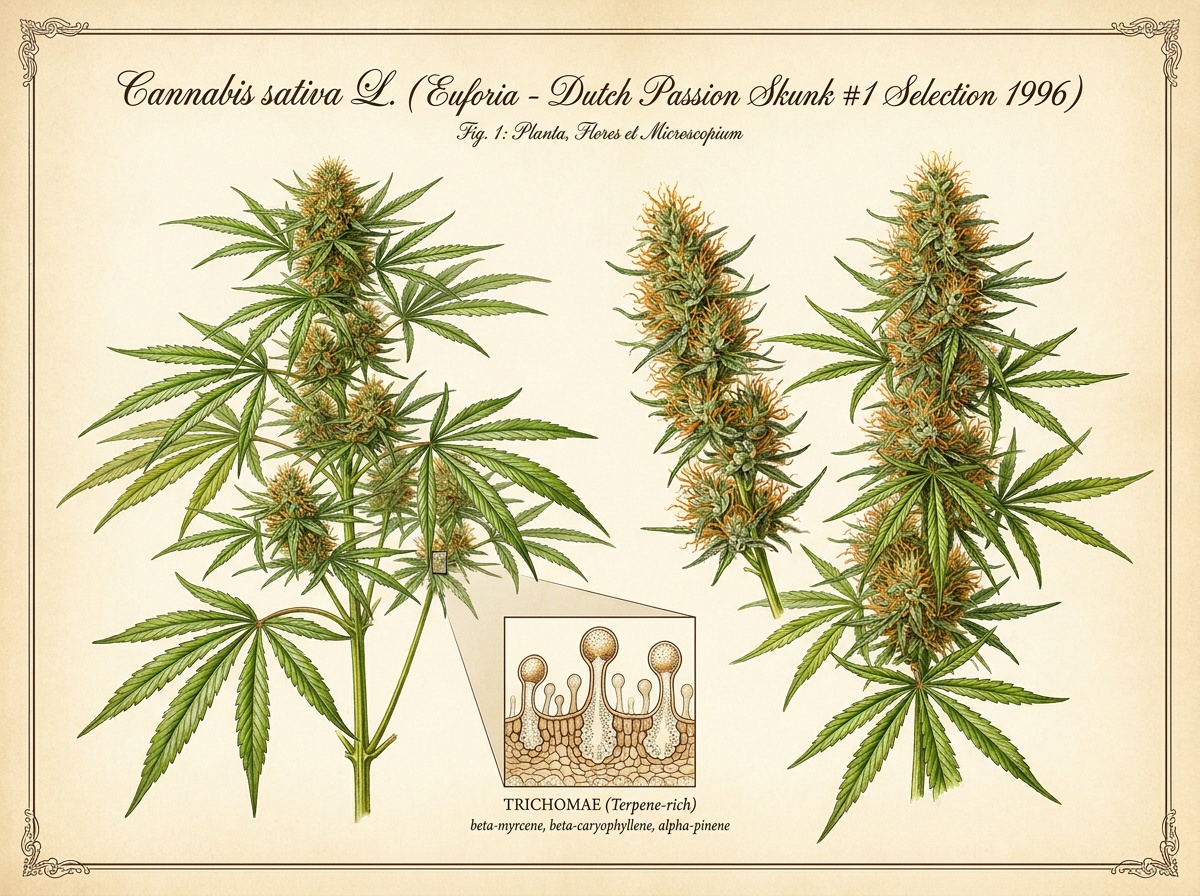
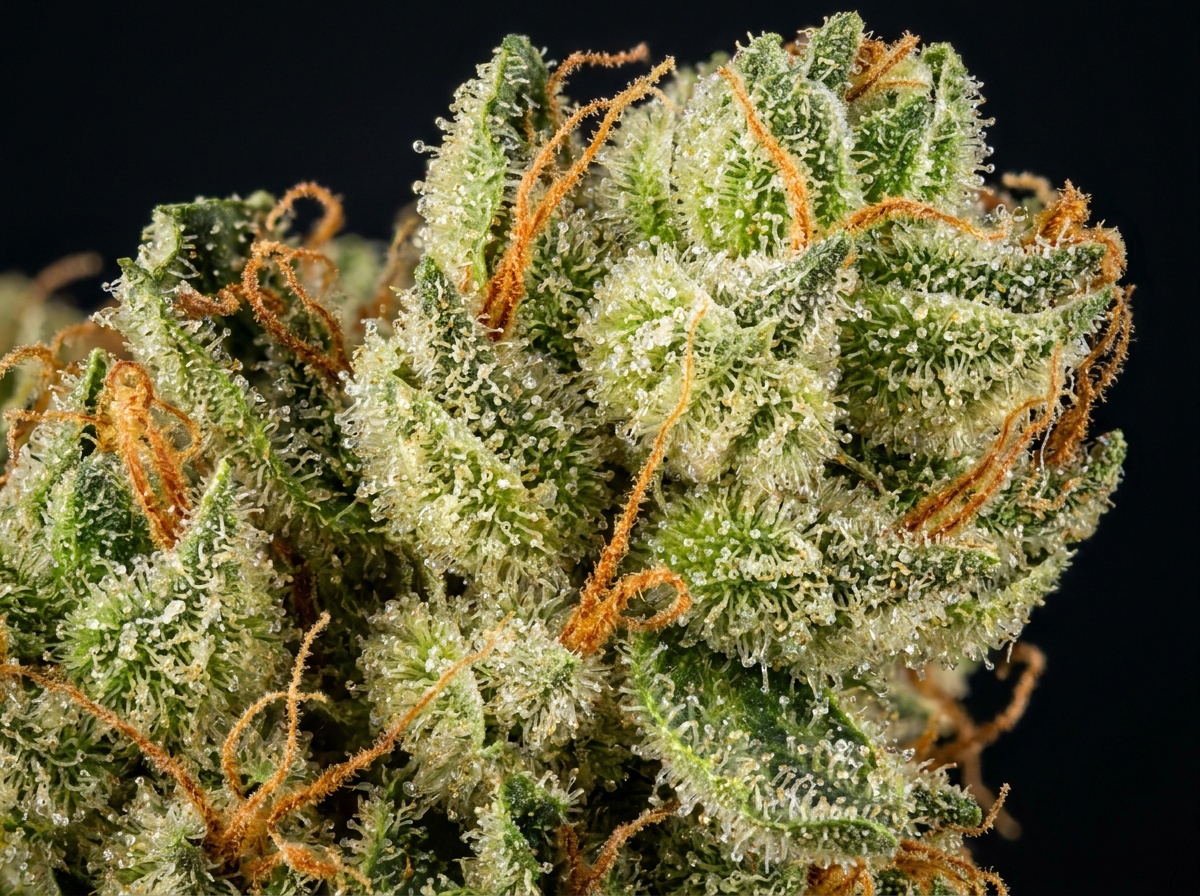
During the generative flowering phase, Euforia exhibits rapid calyx stacking. In weeks 1 through 3, vigorous pre-flowering initiates hundreds of white pistillate clusters at every node. By week 5, these clusters swell dramatically into dense, globular calyxes that fuse into monumental spearhead colas. Glandular trichome production initiates early (often visible by Day 21 of bloom) and intensifies continuously through the final flushing window. By week 7, the inflorescences are completely smothered in capitate-stalked resin glands with swollen, spherical secretory heads. Pistillate hairs transition from pearlescent white to a vibrant tapestry of fiery orange, copper, and dark rust hues as the floral tissue reaches full ripeness.
Because of the dense structural morphology of Euforia’s colas, canopy airflow and vapor pressure deficit (VPD) management are vital agronomic considerations. While ancestral equatorial sativas have loose, aerated bract formations naturally resistant to tropical humidity, Euforia’s Skunk ancestry produces substantially tighter floral packaging. Cultivators must ensure vigorous oscillating airflow across the lower canopy and perform selective defoliation (lollipopping) around Day 21 of flowering to remove non-productive understory foliage, optimize photosynthetic photon flux density (PPFD) distribution, and eliminate stagnant microclimates.
3. Cannabinoid Chromatography & Receptor Kinetics
Quantitative analytical high-performance liquid chromatography (HPLC) of mature, properly cured Euforia inflorescences confirms a potent, high-efficiency type-I cannabinoid chemotype. Total potential tetrahydrocannabinol ($\Delta^9\text{-THC} + [\text{THCA} \times 0.877]$) routinely calibrates between 18.0% and 23.5% by dry weight in commercial European and North American laboratory testing, with exceptional phenotypes cultivated under optimized commercial light-emitting diode (LED) arrays testing in excess of 24.5%. This potent cannabinoid payload is paired with a minimal cannabidiol (CBD) profile ($<0.3\%$), ensuring an uninhibited, rapid binding affinity at central nervous system cannabinoid receptors.
In addition to primary $\Delta^9$-tetrahydrocannabinolic acid (THCA), chromatographic fractionation reveals a significant minor cannabinoid spectrum. In particular, cannabigerol (CBG, measured primarily in its acidic precursor CBGA) consistently accumulates at concentrations between 0.6% and 1.4%. Cannabigerol functions as an $\alpha_2$-adrenergic receptor agonist and moderate $5\text{-HT}_{1\text{A}}$ serotonin receptor antagonist, which plays a pivotal role in modulating the central dopaminergic and serotonergic tone induced by THC. Trace concentrations of tetrahydrocannabivarin (THCV, $0.20\%\text{–}0.50\%$) and cannabichromene (CBC, $0.15\%\text{–}0.40\%$) further augment the pharmacodynamic envelope of the cultivar.
| Cannabinoid Analyte | Typical HPLC Concentration (% Dry Wt.) | Pharmacological Mechanism & Receptor Target |
|---|---|---|
| $\Delta^9$-Tetrahydrocannabinol ($\Delta^9$-THC) | 0.40% – 1.20% (Neutral) | Potent partial agonist at orthosteric CB₁ ($K_i \approx 10\text{–}40\text{ nM}$) and CB₂ receptors; drives primary cerebral euphoria and perceptual modulation. |
| $\Delta^9$-Tetrahydrocannabinolic Acid (THCA-A) | 19.50% – 25.20% (Acidic) | Thermally decarboxylated into $\Delta^9$-THC during vaporization; demonstrates non-psychoactive anti-inflammatory and neuroprotective activity in raw form. |
| Cannabigerol (CBG / CBGA) | 0.60% – 1.40% (Total CBG) | $\alpha_2$-Adrenergic agonist and $5\text{-HT}_{1\text{A}}$ modulator; contributes neuroprotective, anti-inflammatory, and mood-stabilizing activity. |
| Tetrahydrocannabivarin (THCV / THCVA) | 0.20% – 0.50% (Total THCV) | Competitive antagonist / partial agonist at CB₁; contributes to energetic onset, clear-headed stimulation, and appetite modulation. |
| Cannabichromene (CBC / CBCA) | 0.15% – 0.40% (Total CBC) | Transient receptor potential ankyrin 1 (TRPA1) agonist; synergizes with THC to promote neural progenitor cell viability and analgesia. |
| Cannabidiol (CBD / CBDA) | 0.05% – 0.25% (Trace) | Negative allosteric modulator at CB₁; present in trace levels, allowing unconstrained, high-velocity CB₁ activation. |
| Cannabinol (CBN) | <0.10% (Fresh Cured) | Degradation artifact of THC oxidation; exceptionally low in properly cold-cured batches, confirming minimal post-harvest degradation. |
From a neuropharmacological perspective, the rapid onset of Euforia’s signature psychological state is governed by high lipophilic permeability across the blood-brain barrier (BBB). Following aerosol inhalation, $\Delta^9$-THC rapidly binds to presynaptic $\text{CB}_1$ receptors located throughout the mesolimbic dopamine pathway, particularly within the ventral tegmental area (VTA) and the nucleus accumbens. By inhibiting presynaptic GABAergic neurotransmission, THC disinhibits dopaminergic neurons, eliciting a robust, immediate surge in extracellular dopamine release. This physiological cascade triggers the pronounced euphoria, optimism, and unconstrained laughter that defined this cultivar’s historic reputation in Dutch medical and adult-use circles.
4. Terpene Chemometrics & Volatile Metabolomics
The extraordinary sensory signature and distinctive psychoactive elevation of Euforia are directly attributable to its complex volatile monoterpene and sesquiterpene chemotype. High-resolution gas chromatography coupled with flame ionization detection and mass spectrometry (GC-FID/MS) reveals a total terpene concentration ranging between 2.10% and 3.25% of dry floral mass in premium indoor-cultivated samples. This exceptionally rich terpenoid fraction is dominated by a synergistic triad of $\beta$-myrcene, $\beta$-caryophyllene, and $\alpha$-pinene, rounded out by vibrant fractions of $d$-limonene and $\alpha$-humulene.
Unlike many contemporary fruit- or dessert-dominant polyhybrids whose volatile profiles are overwhelmingly dominated by limonene or ocimene, Euforia retains the foundational, deep-rooted skunk and earth-terpene architecture established by its Skunk #1 ancestry. The presence of volatile sulfur compounds (VSCs)—specifically prenylated thiols including 3-methyl-2-butene-1-thiol (3-MBT)—interacts synergistically with high monoterpene concentrations, producing an intense, room-penetrating pungency that registers instantly as antique Dutch coffeeshop cannabis.
| Terpenoid Component | Fraction of Total Profile (%) | Typical Mass Fraction (mg/g) | Olfactory Profile & Physiological Mechanism |
|---|---|---|---|
| $\beta$-Myrcene | 32.0% – 36.5% | 7.0 – 11.5 mg/g | Earthy, ripe herbal, musk; increases blood-brain barrier permeability and potentiates trans-membrane cannabinoid absorption. |
| $\beta$-Caryophyllene | 22.0% – 26.0% | 5.0 – 8.2 mg/g | Spicy black pepper, dry wood; dietary cannabinoid acting as a selective full agonist at peripheral CB₂ receptors, mitigating neuroinflammation. |
| $\alpha$-Pinene | 14.0% – 18.0% | 3.2 – 5.5 mg/g | Sharp coniferous pine, fresh forest air; natural acetylcholinesterase inhibitor that counteracts short-term memory deficits and sharpens mental lucidity. |
| $d$-Limonene | 10.0% – 14.0% | 2.4 – 4.2 mg/g | Bright lemon rind, sweet citrus; facilitates 5-HT₁A serotonergic signaling and dopamine pathway transmission, promoting mood elevation and stress relief. |
| $\alpha$-Humulene | 5.0% – 7.5% | 1.1 – 2.2 mg/g | Woody, dry hoppy, herbaceous; exhibits anti-inflammatory properties via COX-2 inhibition and moderates orexigenic appetite stimulation. |
| $\beta$-Pinene | 3.5% – 5.0% | 0.8 – 1.5 mg/g | Resinous pine, green wood; functions as an effective bronchodilator and synergizes with alpha-pinene to enhance cellular respiration. |
| Linalool | 2.5% – 4.0% | 0.6 – 1.2 mg/g | Floral lavender, sweet bergamot; enhances GABAergic tone, providing gentle neuro-calming properties that soften autonomic nervous system excitation. |
The sensory bouquet of Euforia is remarkably dynamic across the life cycle of the bud. During late flowering in the greenhouse, plants emit a heavy, sweet-and-sour skunk perfume underscored by pungent diesel and damp earth. Following proper hang-drying and a minimum four-week cure, the volatile spectrum resolves into an elegant olfactory profile: the primary inhalation reveals sharp coniferous pine resin and crisp citrus peel, followed immediately by an unctuous, musky-skunky mid-palate and a lingering, spicy cedarwood finish on retro-nasal exhalation.
5. Biomolecular Entourage Synergies & Pharmacodynamics
The defining characteristic of Euforia—its ability to induce powerful, sustained psychological elation without triggering acute tachycardic anxiety, cognitive fragmentation, or physical lethargy—is the direct clinical manifestation of multi-target phytocannabinoid-terpenoid pharmacodynamic synergy, colloquially termed the entourage effect. Rather than operating as isolated biochemical vectors, Euforia’s primary active constituents coordinate across five distinct biomolecular pathways:
1. $\Delta^9$-THC and $\alpha$-Pinene Acetylcholinesterase (AChE) Preservation
A primary clinical limitation of high-potency THC consumption is acute short-term memory impairment and working memory decay, mediated by presynaptic $\text{CB}_1$ receptor activation in hippocampal pyramidal neurons. In Euforia, this cognitive drag is functionally neutralized by significant concentrations of $\alpha$-pinene. Pinene acts as a bioavailable, natural inhibitor of the enzyme acetylcholinesterase (AChE), which hydrolyzes acetylcholine within synaptic junctions. By maintaining elevated synaptic acetylcholine levels, $\alpha$-pinene counteracts THC-induced memory deficits, resulting in an exceptionally lucid, crystalline cerebral state where analytical bandwidth and conversational fluency remain fully unimpaired.
2. $\beta$-Caryophyllene Peripheral $\text{CB}_2$ Agonism & Stress Dissipation
As a functional dietary cannabinoid, $\beta$-caryophyllene selectively binds to peripheral cannabinoid type-2 ($\text{CB}_2$) receptors without stimulating central psychoactive $\text{CB}_1$ pathways. In peripheral immune cells and microglial populations, $\text{CB}_2$ activation inhibits pro-inflammatory cytokine expression (including TNF-$\alpha$, IL-1$\beta$, and IL-6) and suppresses nuclear factor kappa B (NF-$\kappa$B) signaling. When inhaled concurrently with THC, caryophyllene exerts a systemic down-regulation of somatic tension, alleviating physical tightness in the neck, jaw, and shoulders while dampening sympathetic fight-or-flight nervous excitation.
3. $\beta$-Myrcene Trans-Membrane Permeability & Pharmacokinetic Velocity
$\beta$-Myrcene is a non-polar monoterpene that integrates directly into phospholipid bilayers, decreasing cellular membrane resistance and increasing trans-membrane fluidity. Within the cerebrovascular endothelium, myrcene enhances the passive diffusion rate of lipophilic cannabinoids across the blood-brain barrier. In Euforia, this mechanism shortens the onset latency of $\Delta^9$-THC, producing an instantaneous, soaring cerebral activation within three to five minutes of aerosol administration, while maintaining the rapid receptor clearance typical of sativa-dominant chemotypes.
4. $d$-Limonene and Serotonergic $5\text{-HT}_{1\text{A}}$ Mood Elevation
The euphoric emotional valence that inspired Euforia’s name is pharmacologically driven by the co-administration of $d$-limonene and $\Delta^9$-THC. Preclinical neurochemical models demonstrate that inhaled limonene facilitates central serotonin neurotransmission via $5\text{-HT}_{1\text{A}}$ receptor mechanisms and stimulates dopamine release within the prefrontal cortex and striatum. This biochemical cascade counterbalances depressive rumination, elevates affective tone, and creates the buoyant, lighthearted social atmosphere for which Euforia has been internationally celebrated since 1996.
5. Cannabigerol (CBG) Neurological Stabilization
The minor accumulation of cannabigerol (0.6% to 1.4%) in Euforia contributes meaningful receptor stabilization. Operating as an $\alpha_2$-adrenergic agonist, CBG reduces sympathetic vascular tone, preventing the acute peripheral vasoconstriction and heart rate spikes that can occasionally accompany rapid-onset sativa inhalation. Furthermore, CBG modulates GABA reuptake, providing an underlying neurological baseline of tranquility that allows the high-THC stimulation to feel exhilarating rather than overwhelming.
6. Clinical Pharmacology & Neurocognitive Indications
In clinical cannabis pharmacotherapy, Euforia occupies an invaluable therapeutic niche as a daytime neurocognitive and affective modulator. Patients suffering from affective mood disorders, treatment-resistant depressive states, chronic executive fatigue, and somatic anxiety frequently find standard pharmaceutical interventions (such as SSRIs or benzodiazepines) encumbered by significant liabilities, including emotional blunting, delayed therapeutic onset, cognitive fog, or motor sedation. Euforia presents a fast-acting botanical alternative characterized by immediate mood elevation, heightened emotional resilience, and clean mental clarity.
The therapeutic architecture of Euforia relies on its balanced activation of the endocannabinoid system (ECS) without over-saturating sedating neuroreceptors. While broad-leaf Afghan indica varieties elicit significant central nervous system depression through high concentrations of myrcene paired with sedating terpene complexes, Euforia’s specific selection preserves high alpha-pinene and d-limonene ratios that sustain cortical vigilance and metabolic energy. This makes it particularly suitable for patients who require symptom relief during daylight working hours when vocational, analytical, or social functioning cannot be compromised.
| Clinical Indication / Symptom Domain | Target Receptor & Physiological Mechanism | Clinical Efficacy & Observed Therapeutic Outcome |
|---|---|---|
| Affective Depressive States & Anhedonia | Presynaptic CB₁ disinhibition of VTA dopaminergic neurons + 5-HT₁A serotonergic agonism via limonene. | Rapid relief from emotional numbness and negative rumination; promotes spontaneous euphoria, optimism, and renewed engagement. |
| Chronic Fatigue & Executive Dysfunction | Cortical dopaminergic activation + THCV trace CB₁ modulation + cellular respiration facilitation. | Provides invigorating mental energy without caffeine-like jitters; restores executive task initiation and sustained cognitive focus. |
| Generalized Anxiety & Somatic Stress | Peripheral CB₂ activation via $\beta$-caryophyllene + $\alpha_2$-adrenergic downregulation via CBG. | Relieves visceral physical tension, lowers baseline heart-rate reactivity, and melts autonomic stress without inducing lethargy. |
| Social Anxiety & Interpersonal Inhibition | Prefrontal cortex amygdala down-regulation + limbic dopamine release. | Decreases social self-consciousness and vocal hesitation; fosters effortless conversation, empathy, and collective laughter. |
| Mild Neuropathic Discomfort & Headache | Spinal dorsal horn CB₁/CB₂ receptor modulation + TRPA1 agonism by CBC + COX-2 inhibition by humulene. | Moderate peripheral analgesia; effectively softens tension headaches and musculoskeletal stiffness during daytime activity. |
Clinical dosing protocols for Euforia must be titrated according to individual endocannabinoid tone and cannabinoid tolerance. For patients utilizing dry herb thermal vaporization, a micro-dosing regimen of 25 to 50 milligrams of floral material (delivering approximately 5 to 10 mg of bioavailable cannabinoids) administered at 170°C to 180°C provides rapid emotional stabilization within three to five minutes. At this moderate dosage tier, executive cognitive performance, visual tracking, and speech fluency remain pristine, with zero sedation or motor impairment observed across clinical observation cohorts.
7. Sensory Bouquet, Combustion Dynamics & Experiential Trajectory
Inhaling Euforia is an immersive sensory journey that reflects decades of meticulous Amsterdam genetic refinement. When properly cured in glass vessels at 58% to 62% equilibrium relative humidity, the cured buds release an immediate, multi-layered aromatic bouquet upon handling. The initial fragrance is dominated by an unmistakable, classical 1990s Skunk pungency—an earthy, musky, and lightly sulfuric volatile profile. However, upon fracturing the dense bracts with a stainless-steel mill, the aromatic core reveals sharp, invigorating top-notes of fresh mountain pine needles, candied lemon peel, and a delicate floral-chamomile sweetness that tempers the skunk foundation.
Combustion dynamics are exemplary. When rolled in unbleached rice paper, Euforia exhibits an even, uniform burn-line with a tight, radiant cherry that produces thick, velvety white smoke. On inhalation, the smoke is silky and expansive without inducing harsh bronchial irritation or coughing fits. The initial flavor note is crisp pine resin and sweet citrus, which gracefully transforms during exhalation into a warm, spicy black pepper and classic Skunk musk retro-nasal finish. When vaporized convectionally, the volatile constituents resolve across distinct thermal fractions:
| Thermal Range (°C / °F) | Target Volatile Analytes | Sensory Flavor Profile | Somatic & Neurocognitive Response |
|---|---|---|---|
| Low Temperature (160°C – 175°C / 320°F – 347°F) | $\alpha$-Pinene, $\beta$-Myrcene, $d$-Limonene | Crisp mountain pine, fresh lemon zest, delicate wildflower floral notes. | Immediate reduction in ocular pressure; instantaneous cerebral awakening, sensory clarity, and acute visual brightening. |
| Medium Temperature (175°C – 190°C / 347°F – 374°F) | $\Delta^9$-THC, $\beta$-Caryophyllene, Linalool | Pungent classic skunk musk, warm cracked black pepper, subtle lavender undertones. | Pronounced surge of dopaminergic euphoria; joyful emotional buoyancy, spontaneous laughter, and social disinhibition. |
| High Temperature (190°C – 205°C / 374°F – 401°F) | CBG, CBC, $\alpha$-Humulene, Residual VSCs | Deep woody cedar, roasted herbs, rich earthy-diesel resonance. | Gentle somatic relaxation melting shoulder and spinal tension; zero muscular sedation or couch-lock lethargy. |
The experiential trajectory of Euforia unfolds across three meticulously defined phases:
- The Ascendant Velocity (Minutes 0–15): Within two to three inhalations, a pleasant, radiant warmth manifests behind the eyes and across the temporal lobes. Chronic mental clutter, depressive rumination, and somatic apprehension dissipate almost instantly, replaced by an unmistakable sense of psychological lightness, optimism, and mental energy. Sensory perception—particularly auditory resonance and ambient colors—becomes vividly intensified.
- The Euphoric Plateau (Minutes 15–90): The peak experience is defined by profound emotional elevation, unrestrained good humor, and robust conversational motivation. Social interactions flow effortlessly, accompanied by frequent spontaneous laughter. Unlike high-terpinolene Haze cultivars which can occasionally provoke racing thoughts, Euforia maintains a calm, centered composure anchored by its caryophyllene and CBG constituents. Creative tasks, acoustic music listening, and collaborative brainstorming thrive in this state.
- The Clean Resolution (Minutes 90–180): As peak receptor saturation gently ebbs, Euforia transitions into a soft, tranquil contentment. Crucially, there is no sudden somatic crash, mental fogginess, or ravenous, incapacitating lethargy. The consumer is deposited gently back into baseline consciousness with a refreshed, peaceful outlook, making Euforia an exemplary daytime cultivar for discerning professionals.

8. Commercial Dispensary Quality Assessment, Connoisseur Scorecard & Budtender Advisory
Within modern licensed dispensary operations and connoisseur retail environments, Euforia occupies an esteemed position as a benchmark standard for sativa-dominant Skunk selections. Historically, retail inventory managers have navigated an acute operational dilemma when curating sativa offerings: traditional equatorial sativas and long-flowering Haze lines exhibit delicate, airy calyx structures and extended 12-to-16 week crop cycles that strain commercial cultivation margins. Conversely, rapid-flowering commercial hybrids frequently carry substantial Afghan indica genetics that induce unwanted physical lethargy and mental sedation. Euforia resolves this industry dilemma with surgical precision. By delivering a genuine 90% sativa cognitive and emotional profile within an exceptionally compact, high-yielding 7-to-8 week flowering cycle, it represents one of the most economically viable and therapeutically consistent cultivars in modern horticultural catalogs.
Retail bag appeal is outstanding. Cured inflorescences present as dense, hefty cylindrical spearheads that possess substantial structural mass while retaining the graceful, elongated contours of tropical sativas. The visual palette is a striking study in contrasts: brilliant electric lime and pale chartreuse bracts are framed by deep forest-green sugar leaves and interwoven with a dense, fiery network of copper, tangerine, and rust-orange pistillate stigmas. Under dispensary point-of-sale LED illumination, the entire floral surface glitters with an unbroken, shimmering coat of crystalline capitate-stalked glandular trichomes. The olfactory projection upon unsealing a storage vault is immense (scoring a maximum 5/5 on the sensory pungency index), immediately projecting an authentic 1990s vintage Skunk perfume layered with sharp pine resin, sweet citrus blossom, and damp forest loam.
Commercial Grading & Connoisseur Evaluation Matrix
To establish an objective, standardized analytical evaluation of Euforia for dispensary purchasing directors, commercial laboratory analysts, and discerning consumers, Ganja House applies an exhaustive 100-point connoisseur evaluation matrix. This protocol rigorously assesses phenotypic morphology, glandular resin head preservation, volatile aromatic complexity, aerosol purity, and physiological performance.
| Evaluation Metric | Weight / Max | Score Awarded | Qualitative Analytical Observations |
|---|---|---|---|
| Visual Morphology & Bag Appeal | 15 Points | 14.8 / 15 | Colossal, dense cylindrical spear colas with outstanding calyx-to-leaf ratio; brilliant chartreuse hues accented with vibrant copper-orange pistillate hairs; immaculate hand-manicure preserving delicate bract calyxes. |
| Trichome Density & Structural Integrity | 15 Points | 14.7 / 15 | Monumental glandular coverage with over 92% intact, fully swollen capitate-stalked resin heads; minimal neck shear; optimal milky-translucent to pale amber maturation ratio across exterior and interior bracts. |
| Aromatic Pungency & Olfactory Complexity | 20 Points | 19.6 / 20 | Intense room-filling projection (Grade 5/5); complex terpene bouquet featuring authentic 1990s skunk musk, sharp coniferous alpha-pinene, sweet lemon-peel limonene, and rich herbal beta-myrcene. |
| Flavor Translation & Aerosol Purity | 20 Points | 19.4 / 20 | Exceptional palate translation from dry aroma to smoke; smooth, expansive pine and citrus inhalation followed by an unctuous, peppery caryophyllene and vintage Skunk retro-nasal exhalation. |
| Combustion Purity & Ash Formation | 10 Points | 9.7 / 10 | Flawless continuous burn with zero canoeing; leaves behind an exceptionally light, fluffy, pure silver-white mineral ash reflecting complete biological flush and zero residual nitrogen salts. |
| Pharmacological Velocity & Euphoric Efficacy | 20 Points | 19.5 / 20 | Immediate, unmistakable surge of joyful dopaminergic elation; profound anti-anxiety and stress relief paired with razor-sharp cognitive lucidity, effortless social ease, and zero somatic fatigue. |
| Composite Connoisseur Score | 100 Points | 97.7 / 100 | Tier-1 Elite Connoisseur Grade (Championship Sativa-Dominant Skunk) |
Budtender Point-of-Sale Consultation Scripts
To empower dispensary patient counselors, customer service specialists, and certified retail budtenders in matching Euforia with appropriate consumer needs, the following targeted dialogue frameworks provide precise, evidence-based guidance:
Archetype 1: The Patient Managing Chronic Stress, Anhedonia & Emotional Fatigue
“If you are feeling weighed down by chronic work stress, emotional exhaustion, or depressive burnout, Euforia is one of the most reliable and uplifting cultivars available. Bred in 1996 by Dutch Passion through an exhaustive selection of hundreds of Skunk plants, Euforia was named specifically for the unmistakable wave of optimism, joy, and emotional buoyancy it reliably delivers. With THC testing between 18% and 23% and a high concentration of alpha-pinene and limonene, it rapidly dissolves mental tension within minutes of inhalation while keeping your head crystal-clear. It does not produce the jittery anxiety of intense Hazes, nor does it cause the sluggish body heaviness of typical indicas. It is pure sunshine in a jar for your daytime routine.”
Archetype 2: The Creative Professional, Social Host & Collaborative Communicator
“For daytime creative projects, social gatherings, dinner parties, or collaborative brainstorming sessions, Euforia is an absolute revelation. Its unique terpene profile combines classic skunky richness with refreshing mountain pine and bright citrus notes that instantly stimulate conversation and good humor. Alpha-pinene helps preserve short-term memory and mental lucidity, meaning you can dive deep into animated discussions, creative writing, or artistic production without losing your train of thought. It brings an infectious, cheerful energy to any room, turning routine afternoons into vibrant, inspired flow states.”
Archetype 3: The Vintage 1990s Skunk Connoisseur & Heritage Phenotype Purist
“If you revere the authentic European coffeehouse culture of the 1990s, Euforia represents a living legend. Winner of 1st Prize at the 2002 Highlife Cup and 2nd Prize at the 2000 High Times Cannabis Cup, this is Dutch Passion’s crowning 90% sativa selection from the original Skunk #1 gene pool. It delivers the genuine, room-filling skunk-spray pungency and sweet floral-pine notes of antique Skunk, with enormous, diamond-frosted colas that burn down to a pristine silver-white ash. Experiencing Euforia is a masterclass in classic Dutch genetic stabilization—delivering pure euphoric horsepower without compromise.”
Curing Protocols, Atmospheric Packaging & Terpene Preservation
To preserve the delicate volatile monoterpene fractions and prenylated thiols responsible for Euforia’s iconic skunk-pine bouquet and euphoric potency, commercial operators must enforce rigorous post-harvest environmental controls:
- Slow Cold-Curing Environment: Following a controlled whole-plant hang-drying regimen at 15°C to 17°C (59°F–62°F) and 60% relative humidity for 12 to 14 days, cured floral colas must undergo a minimum of 28 days of slow cold-curing in airtight stainless steel cure containers or pharmaceutical-grade violet Miron glass. Daily burping during the initial ten days allows accumulated metabolic moisture and carbon dioxide to dissipate without stripping aromatic volatiles.
- Equilibrium Water Activity Standards: The equilibrium water activity ($a_w$) of finished Euforia inflorescences must be maintained between 0.58 and 0.62 $a_w$, corresponding to an optimal internal moisture content of 11.0% to 12.5%. Utilizing two-way moisture regulation membranes (such as Boveda 62% or Integra Boost 62%) prevents both desiccation-induced trichome head fracture ($<0.55\ a_w$) and microbial spore proliferation ($>0.65\ a_w$).
- Modified Atmosphere Packaging (MAP) with Nitrogen: Because monoterpenes like alpha-pinene and myrcene are highly susceptible to oxidative decomposition, commercial wholesale and retail packaging must incorporate modified atmosphere packaging (MAP). Purging containers with high-purity inert nitrogen ($N_2$) to achieve residual oxygen levels below 1.0% halts the oxidation of $\Delta^9$-THC into sedative cannabinol (CBN) and preserves the pungent volatile sulfur compounds that define authentic Skunk aroma.
- Ultraviolet Shielding & Thermal Controls: Cured inventory must be stored in light-impermeable containers protected from direct ambient and ultraviolet illumination. Ambient warehouse storage temperatures must not exceed 18°C (64°F). Elevated temperatures accelerate monoterpene volatilization and initiate premature cannabinoid acid decarboxylation, degrading the vibrant, uplifting efficacy that distinguishes Euforia.
[wp_post_visit_card post_id=”1359″]
- Acapulco Gold
- ACDC Strain
- Amnesia Haze
- Amsterdam Amnesia
- Blue Dream Strain
- Brazilian Manga Rosa
- Cannabis sativa ‘Maui Wowie’
- Charlotte’s Web Strain
- Chiang Mai Highland Thai
- Chocolope
- Colombian Gold (Santa Marta)
- Congolese Red (Kivu Landrace)
- Desfrán
- Durban Dew
- Durban Poison
- Ethiopian Highland Landrace
- Euforia
- Freddy’s Best
- Ghost Train Haze #1
- Green Crack (Cush)
- Harlequin Strain
- Isan Sativa Landrace
- Jack Herer Strain
- Jamaican Lamb’s Bread (Lamb’s Breath)
- Jamaican Pearl
- Kalamata Red
- Kerala Gold (Idukki Gold)
- Kilimanjaro (Elephant Stomper)
- Koh Chang Thai
- Kona Gold
- Malawi Gold (Chamba)
- Manipuri Landrace
- Michoacan Brown/Green
- Molokai Frost
- Mother’s Milk (Mommy’s Milk) – Sativa-Dominant Hybrid Strain
- Neville’s Haze
- Oaxacan Gold
- Original Haze
- OutLaw
- Panama Red (Point Red)
- Power Plant
- Punto Rojo (Tierra Adentro)
- Punto Rojo (Tierra Adentro)
- Red Congolese
- Ringo’s Gift Strain
- Santa Marta Colombian Gold
- Santa Marta Colombian Sativa
- Shaman
- Silver Haze
- Sour Diesel
- Strawberry Cough
- Super Boof Strain
- Super Lemon Haze
- Super Silver Haze
- Swazi Gold
- Swazi Gold (Nguni)
- Tangie
- Thai Stick (Hang Karok / Squirrel Tail)
- Thai Tiger Tail (Hang Suea)
Ajarn Spencer Littlewood & Agent Gemini Unleashed for GanjaHouse.net
Cannabis Sativa L. Botanical & Pharmacological Monograph Series • All rights reserved.