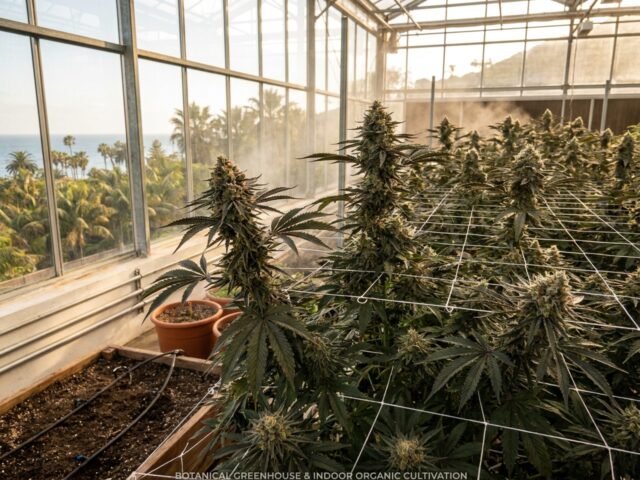
[wp_post_visit_card post_id=”1359″]
🎙️
Listen to the Scientific Monograph
Triangle Kush: Botanical Architecture, Cannabinoid Pharmacology & Horticultural History
Professional narration synthesized via Ganja House neural acoustics engine (en-GB-RyanNeural). Duration: ~120 seconds.
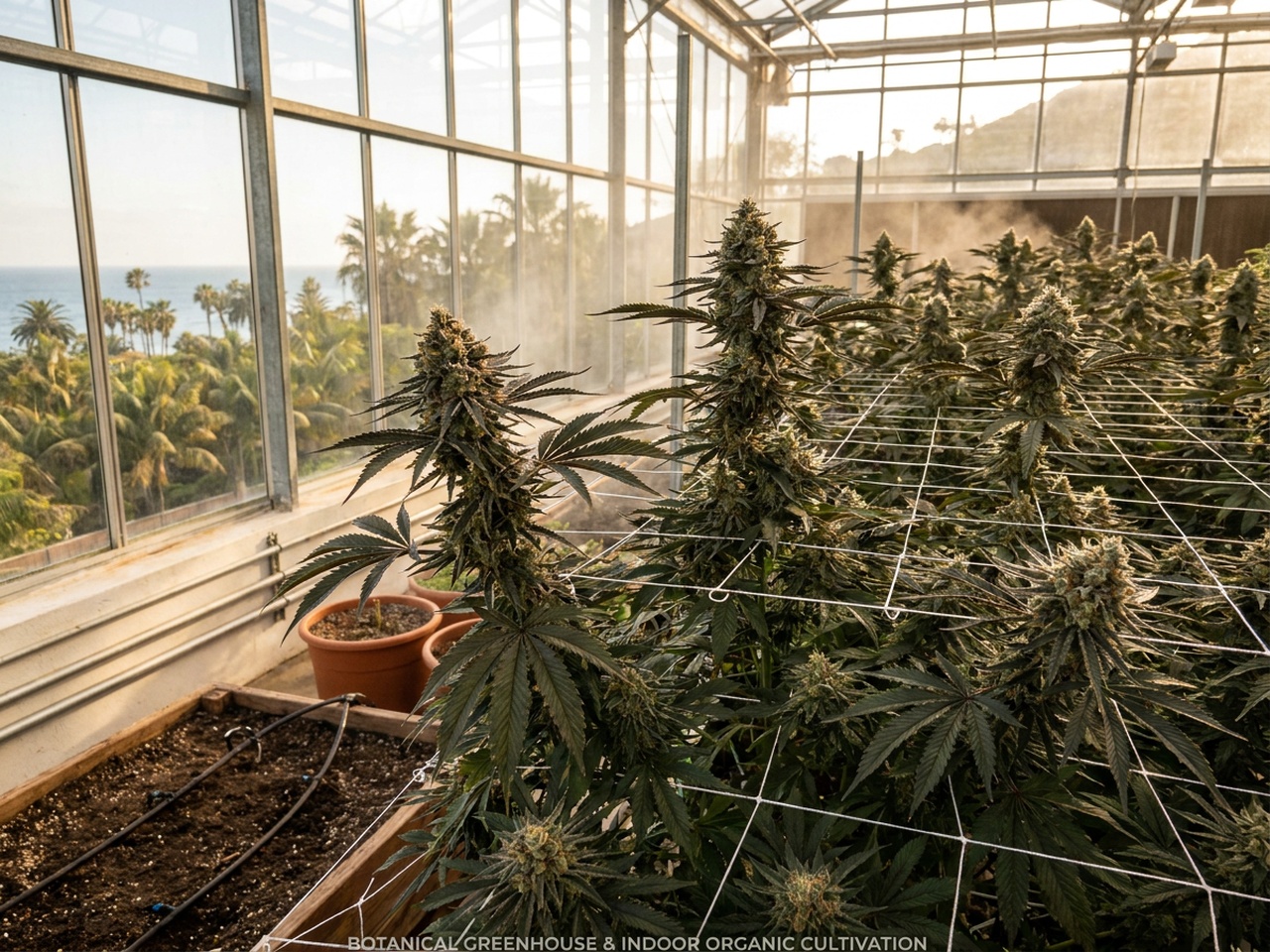
Triangle Kush – Strain Profile & Clinical Monograph
1. Horticultural Origins, Historical Provenance & Ethnobotanical Legacy
Among the foundational heirlooms of the international cannabis pharmacopoeia, few cultivars evoke as profound a sense of historical reverence and genealogical intrigue as Triangle Kush. Known variously across collector vernacular as “TK,” “Florida OG,” or simply “The OG,” Triangle Kush is universally recognized by cannabis botanists, evolutionary taxonomists, and master breeders as the primordial living matriarch from which the entirety of modern American OG Kush culture originated. In an era where contemporary commercial catalogs are dominated by transient polyhybrids bred for visual appeal and dessert aromatics, Triangle Kush represents an unbroken, living genetic bridge to the underground clandestine cultivation renaissance of the early 1990s—a time when cannabis breeding was driven by illicit selection under severe prohibitionist pressure, giving rise to plants of unmatched chemical potency and physiological efficacy.
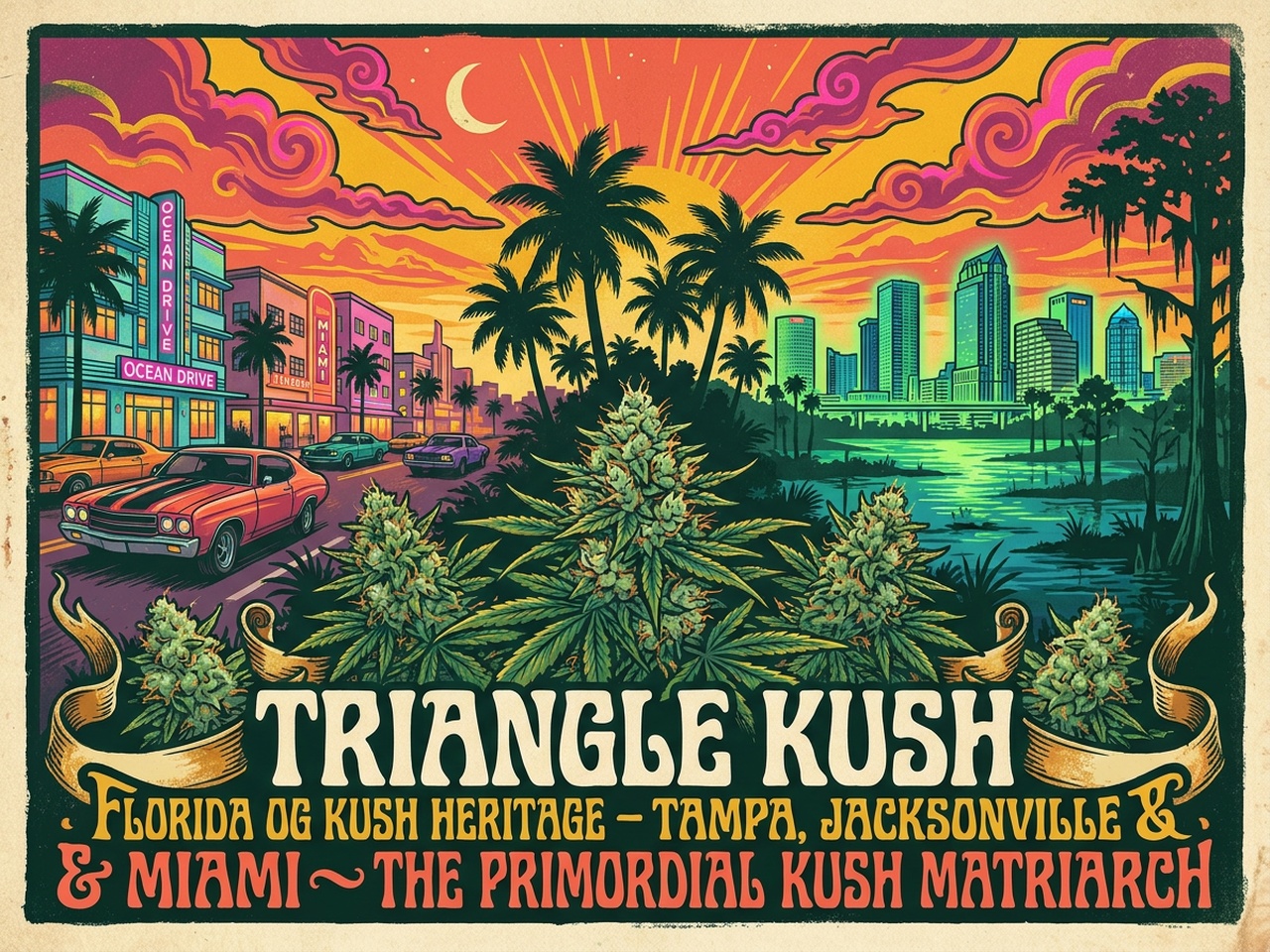
The ethnobotanical genesis of Triangle Kush is rooted in South Florida during the period between 1989 and 1991. The cultivar takes its iconic moniker from the geographic triangle formed by the three major urban nodes of Florida’s underground illicit cannabis distribution network: Tampa, Jacksonville, and Miami. During this era, South Florida served as a primary maritime port of entry for illicit Caribbean and Central American imports, but it simultaneously fostered a highly sophisticated, clandestine domestic indoor cultivation network. High-intensity discharge (HID) metal halide and high-pressure sodium lighting systems were just becoming accessible to illicit home growers, enabling cultivation pioneers to create climate-controlled microenvironments shielded from the brutal subtropical heat, extreme relative humidity, and airborne fungal spores of the Florida peninsula.
According to corroborated historical testimonies from central figures of the era—most notably master cultivators Matt “Bubba” Berger, Josh D, and the legendary underground grower known as “K”—the origins of Triangle Kush trace back to an accidental pollination event or exceptional seed selection originating from an elite Northern California outdoor crop. In the late 1980s, high-grade seeded flowers colloquially referred to as “Kush” or “Emerald Triangle Emeralds”—derived from crosses of early Afghan landrace accessions, Hindu Kush imports, and the emerging Chemdawg (Chem91) genepool—were transported across the continental United States to the Florida market. Within a clandestine South Florida grow room, a collection of these rare seeds was germinated by an underground grower known in folklore as “The Kid” or “K.” Among this small progeny batch emerged a single female phenotype of staggering, unprecedented vigor, characterized by a pungent, fuel-soaked lemon-pine aroma, an unyielding physical resin density, and an intoxicating potency that rendered all other local lines obsolete.
This solitary cutting was preserved with obsessive secrecy within the Tampa-Jacksonville-Miami cultivation circuit. Recognizing its extraordinary value, growers within this tight-knit network refused to release seeds or openly distribute cuttings, preserving the line purely as a vegetative clone-only accession. It was prized not merely for its high market value, but for its medicinal potency among underground patients dealing with chronic pain, severe physical trauma, and the devastating wasting syndromes of the early HIV/AIDS epidemic that severely affected South Florida communities during the early 1990s. The clone earned a near-mythological reputation across the Gulf Coast, commanding astronomical black-market prices that frequently exceeded five to eight thousand dollars per pound in contemporary currency.
The historical watershed moment that transformed Triangle Kush from a localized Florida secret into a global genetic revolution occurred in late 1995 and early 1996. Matt “Bubba” Berger, an Orlando-based cultivator who was closely affiliated with the Florida network and had developed his own legendary “Bubba” cut (an accidental Northern Lights x Kush cross), partnered with his friend Josh Del Rosso (Josh D). Recognizing that Southern California was emerging as the epicentre of legal medical cannabis following the passage of California Proposition 215 (the Compassionate Use Act of 1996), Josh D and Matt Berger transported vegetative cuttings of the Florida Kush and the Bubba cut across state lines into Los Angeles. Cultivated in a clandestine garage in Silver Lake, Los Angeles, the Florida cut was rechristened “OG Kush”—with “OG” signifying “Ocean Grown” or “Original Gangster,” paying homage to its coastal provenance and original lineage status. While California gave OG Kush its global brand recognition, every legitimate cutting of OG Kush—whether SFV OG, Ghost OG, Tahoe OG, or Larry OG—traces its maternal chromosomal ancestry directly back to the original Florida Triangle Kush mother plant.
Over the subsequent three decades, while many descendants underwent commercial backcrossing and hybrid stabilization that gradually softened their original pungency, a dedicated underground cohort of Florida and California preservationists maintained the pure, unhybridized Triangle Kush clone through uninterrupted vegetative micropropagation. Genetic sequencing conducted in the 2010s and 2020s by modern phylogenomic researchers has confirmed Triangle Kush’s basal status within the broader Chem/Kush clade, demonstrating higher genetic heterozygosity and a distinct, unattenuated volatile sulfur compound profile that separates it from modern filial derivatives. Below, Table 1 codifies the verified lineage, geographic chronology, and horticultural milestones of this foundational matriarch.
| Horticultural Attribute | Historical & Botanical Codification | Ethnobotanical Significance & Lineage Impact |
|---|---|---|
| Cultivar Name & Synonyms | Triangle Kush (TK, Florida OG, The OG, Original Kush) | Named for the Tampa-Jacksonville-Miami breeding triangle; universally regarded as the mother of all true OG Kush phenotypes. |
| Geographic Origin & Era | South Florida, United States (circa 1989–1991) | Developed in clandestine indoor hydroponic and living-soil facilities under severe federal prohibition enforcement. |
| Primary Genetic Lineage | Emerald Triangle heirloom (Afghan landrace x Hindu Kush x Chemdawg ancestor) | Represents the direct ancestral cross of broad-leaf Central Asian hash cultivars and high-THC American domestic selections. |
| Key Historical Stewards | “K” / “The Kid” (Florida), Matt “Bubba” Berger, Josh D (Josh Del Rosso) | Responsible for the initial phenotypic selection, clandestine Florida preservation, and 1996 transcontinental relocation to California. |
| Breeding Status | Clone-Only Elite Inflorescence (F1 Vegetative Clone) | Maintained continuously through vegetative stem cuttings for over 35 years without filial sexual degradation. |
| Taxonomic Classification | Cannabis indica Lam. subsp. afghanica x indica hybrid | Displays classical broad-leaf indica floral density coupled with narrow-leaf sativa vegetative branching vigor. |
| Descendant Offspring & Hybrids | OG Kush, Bubba Kush, Wedding Cake (Triangle Mints), WiFi OG, Motorbreath | Serves as the cornerstone genetic donor for over 60% of modern American commercial dispensary varieties. |
2. Botanical Architecture, Phenotypic Morphology & Cultivation Agronomy
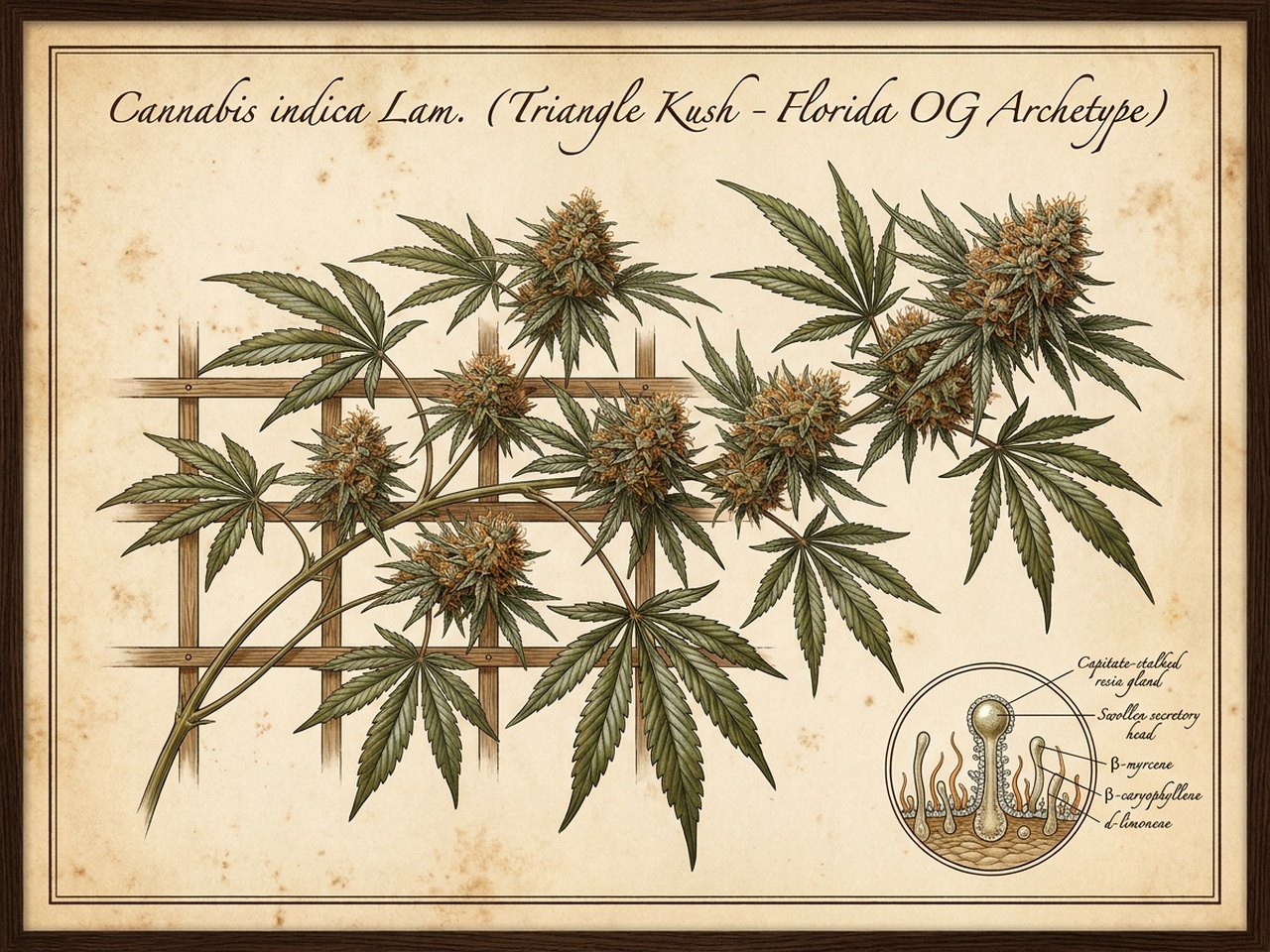
From a botanical and architectural perspective, Triangle Kush exhibits a striking phenotypic dichotomy that immediately distinguishes the authentic ancestral clone from modern commercial polyhybrids. While classified pharmacologically and taxonomically as an indica-dominant hybrid (roughly 85% indica / 15% sativa genomic weighting), its physical growth habit during the vegetative phase strongly mirrors narrow-leaflet, equatorial sativa landraces. Master cultivators often refer to this growth pattern as “vine-like,” “spindly,” or “willowy.” Rather than developing the stout, thick-stemmed, columnar structure typical of pure Central Asian broad-leaflet hash plants, Triangle Kush produces slender, extraordinarily flexible lateral stems with relatively wide internodal spacing ranging between 6.5 and 10.5 centimetres. This architectural habit is an evolutionary fingerprint of its hybrid ancestry, reflecting the vigor of early American domestic crosses that retained wild phenotypic elasticity.
The foliar morphology of Triangle Kush is equally distinctive. Primary fan leaves are large, displaying 7 to 9 narrow-to-intermediate lanceolate leaflets with prominent, razor-sharp serrations along the margins. The foliar coloration is an intense, deep forest green that darkens to a lustrous, near-petrol blackish-green under high-intensity full-spectrum lighting. The adaxial (upper) leaf surfaces possess a noticeably thick, waxy cuticle layer, which served as an essential evolutionary adaptation in the humid, spore-laden microclimates of Florida grow rooms, conferring significant natural resistance to foliar pests such as two-spotted spider mites (Tetranychus urticae) and powdery mildew (Podosphaera macularis). However, petiole attachment is slender and elongated, meaning the foliage droops gently away from the main stems, permitting superior interior light penetration throughout the vegetative canopy.
Upon the induction of a 12/12 photoperiod, Triangle Kush undergoes an aggressive, pronounced flowering stretch. Over the first 21 to 28 days of generative development, plants routinely increase their vertical height by 120% to 160%. Without proactive mechanical intervention and structural canopy management, branches will quickly lean, splay, and collapse under their own weight. Consequently, successful cultivation of Triangle Kush mandates the implementation of advanced horticultural training methodologies. Master growers universally employ multi-tiered horizontal Screen of Green (SCROG) trellising, aggressive topping during early vegetative cycles, and strategic super-cropping to soften rigid xylem vessels and distribute apical dominance across a wide, uniform horizontal plane.
| Morphological Parameter | Phenotypic Characteristic & Measurement | Horticultural & Canopy Significance |
|---|---|---|
| Vegetative Growth Habit | Spindly, vine-like, flexible lateral branching | Requires rigid double-tier SCROG trellising or bamboo stakes to prevent catastrophic stem breakage. |
| Internodal Spacing | 6.5 to 10.5 cm (Medium to Wide) | Facilitates deep canopy light penetration, minimizing lower foliar die-off and microclimatic humidity pockets. |
| Flowering Stretch Ratio | 120% to 160% vertical expansion | Flip to flower at 35–45% of target final canopy height; top twice prior to photoperiod transition. |
| Floral Inflorescence Structure | Dense, segmented, golf-ball-shaped calyx clusters | Exhibits exceptional rock-hard core density; calyxes swell dramatically during the final 14 days of flowering. |
| Calyx-to-Leaf Ratio | Extremely High (80:20 calyx-to-foliar mass) | Simplifies commercial manicuring and post-harvest trimming; maximizes dry marketable floral yield per square metre. |
| Glandular Trichome Architecture | High density of long-stalked capitate glandular heads (80–120 µm) | Generates heavy, sticky tactile resin suitable for solventless ice-water hashish and live rosin extraction. |
| Stigmatic Morphology | Thick, wavy, fiery copper-amber and deep burnt-orange | Stigmas curl tightly into swollen bracts during senescence, providing an exquisite chromatic contrast against frosted green calyxes. |
The floral architecture of mature Triangle Kush is revered across the cannabis industry as the golden standard of “bag appeal.” Inflorescences develop as tight, segmented, spherical clusters resembling heavily frosted golf balls rather than elongated, continuous colas. Each calyx swells to remarkable proportions during weeks 8 and 9, completely encasing the ovule in a thick, stony shell of parenchymal tissue. The calyx-to-leaf ratio is remarkably elevated: sugar leaves are minimal, narrow, and entirely encrusted with stalked glandular trichomes from base to tip. When cured, the buds possess a dense, mineral-like weight that resists compression and produces an audible snap when cracked open, immediately releasing an overwhelming wave of volatile aromatic terpenes.
Agronomically, Triangle Kush is not a cultivar for novice cultivators. It demands meticulous environmental calibration, high luminous flux, and precise nutritional management. Unlike heavy-feeding Dutch hybrids that can absorb massive electrical conductivity (EC) levels without foliar distress, Triangle Kush possesses a sensitive, easily overwhelmed root architecture. In particular, excessive elemental nitrogen (N) during the generative flowering phase will rapidly lead to nitrogen toxicity, manifest as dark “clawing” leaves, delayed floral maturation, and an undesirable grassy pyrolytic harshness in the cured flower. Nitrogen should be substantially tapered by day 21 of flower, shifting the nutritional ratio heavily toward monopotassium phosphate, calcium, and magnesium.
Triangle Kush is a ravenous consumer of available calcium (Ca) and magnesium (Mg). In high-performance coco-coir or recirculating deep-water culture (RDWC) systems, supplementary calcium-magnesium supplementation (at 150–200 ppm Ca and 60–80 ppm Mg) is essential from early vegetative growth through week 7 of bloom to prevent intervenous chlorosis and ensure optimal cell wall rigidity. Under commercial high-pressure sodium (HPS) or advanced full-spectrum LED fixtures, Triangle Kush thrives under luminous intensities between 900 and 1,150 µmol/m²/s Photosynthetic Photon Flux Density (PPFD). When supplemented with elevated carbon dioxide (CO2) concentrations between 1,200 and 1,400 ppm, vegetative metabolism accelerates dramatically, and dry flower yields can achieve 450 to 525 grams per square metre.
Managing the vapor pressure deficit (VPD) is paramount when cultivating Triangle Kush. During the vegetative stage, a VPD of 0.9 to 1.1 kPa maintains rapid transpiration and cell elongation. However, during the final 3 weeks of flowering, when calyx clusters achieve their rock-hard density, the ambient VPD must be elevated to 1.3 to 1.5 kPa by lowering relative humidity to 40–45% and maintaining daytime temperatures around 23–25°C. Due to the extreme density of the calyx clusters, failure to maintain adequate canopy airflow and low late-stage humidity will predispose the crop to interior bud rot (Botrytis cinerea). A full 63-to-70-day (9 to 10 weeks) flowering cycle is required for complete resin gland maturation, with peak terpene complexity and cannabinoid concentration occurring when approximately 15% to 20% of capitate-stalked glandular heads exhibit a warm amber hue. Below, Table 3 specifies the complete agronomic and environmental parameters across all developmental phases.
| Cultivation Parameter | Vegetative Phase (Weeks 1–4) | Early-Mid Flower (Weeks 1–5) | Late Bloom & Ripening (Weeks 6–10) |
|---|---|---|---|
| Photoperiod Schedule | 18h Light / 6h Dark | 12h Light / 12h Dark | 12h Light / 12h Dark (or 11h/13h for ripening) |
| Canopy PPFD Intensity | 450–650 µmol/m²/s | 850–1,050 µmol/m²/s | 950–1,150 µmol/m²/s (taper to 700 final 7 days) |
| Ambient Temperature (Day/Night) | 25–27°C / 20–22°C | 26–28°C / 20–22°C | 22–24°C / 17–19°C (cold nights preserve terpenes) |
| Relative Humidity (RH) | 60%–70% | 50%–55% | 40%–45% (prevents core mold) |
| Target VPD (Vapor Pressure Deficit) | 0.9–1.1 kPa | 1.2–1.3 kPa | 1.4–1.55 kPa |
| CO2 Enrichment Concentration | 400–600 ppm (Ambient) | 1,100–1,300 ppm | 1,200–1,400 ppm (drop to ambient final 10 days) |
| Nutrient EC & Substrate pH | EC 1.2–1.4 | pH 5.8–6.2 (hydro) / 6.3–6.7 (soil) | EC 1.8–2.1 | pH 5.9–6.2 | EC 1.6–1.8 (flush to EC < 0.4 final 10 days) |
| Flowering Maturation Duration | N/A (3–5 weeks vegetative phase) | N/A | 63 to 70 days (9 to 10 full weeks) |
| Average Dry Yield Potential | N/A | N/A | 425–525 g/m² (indoor SCROG) | 600–850 g/plant (outdoor) |
3. Comprehensive Cannabinoid Pharmacology & Chemotypic Profile
Chemotypically, Triangle Kush represents an archetype of pure Chemotype I cannabis (high-THC / low-CBD). Analytical high-performance liquid chromatography (HPLC) and gas chromatography-mass spectrometry (GC-MS) testing performed across state-licensed analytical laboratories consistently place Triangle Kush among the most therapeutically potent cultivars in circulation. In mature, cold-cured inflorescences cultivated under optimized commercial conditions, total cannabinoid concentrations routinely span between 26.0% and 32.5% by dry weight, with active delta-9-tetrahydrocannabinolic acid (Δ9-THCA) accounting for the vast majority of the phytocannabinoid fraction at 22.0% to 28.5% (equivalent to 220–285 milligrams of THCA per gram of dry flower tissue).
The clinical potency of Triangle Kush is governed primarily by the binding affinity and intrinsic efficacy of neutral delta-9-THC at the central cannabinoid receptor type 1 (CB1), where it functions as a high-affinity partial agonist with an equilibrium dissociation constant (Ki) ranging between 10 and 40 nM. Upon inhalation and systemic absorption via pulmonary alveoli, lipophilic THC rapidly crosses the blood-brain barrier. Activation of CB1 receptors—which are densely expressed within the substantia nigra, globus pallidus, cerebellum, hippocampus, and periaqueductal gray—triggers Gi/o-protein coupling, inhibiting adenylyl cyclase, downregulating cyclic adenosine monophosphate (cAMP), closing voltage-gated N- and P/Q-type calcium channels, and opening inwardly rectifying potassium channels. This cascade suppresses presynaptic release of excitatory neurotransmitters including glutamate, acetylcholine, and noradrenaline, yielding the profound, instantaneous muscular relaxation, pain gating, and cerebral euphoria that define the Triangle Kush experience.
While THC provides the psychoactive and analgesic core of the cultivar, Triangle Kush’s unique medicinal signature is significantly modulated by an unusually rich spectrum of non-intoxicating minor cannabinoids. Most notable among these is cannabigerolic acid (CBGA) and neutral cannabigerol (CBG), which are present in concentrations between 0.8% and 1.6%. As the biochemical “mother cannabinoid” and primary precursor in phytocannabinoid biosynthesis, elevated CBGA levels indicate robust enzymatic synthase activity within the secretory cells of Triangle Kush’s capitate-stalked trichomes. Pharmacologically, CBG operates as a competitive alpha-2 adrenergic receptor agonist and a moderate 5-HT1A serotonin receptor antagonist, while simultaneously desensitizing transient receptor potential ankyrin 1 (TRPA1) and vanilloid 1 (TRPV1) channels. This peripheral activity exerts a profound anti-inflammatory and smooth-muscle antispasmodic effect, particularly within the gastrointestinal tract and deep musculoskeletal tissue, offsetting THC-induced tachycardia and grounding the experience in somatic comfort.
Additionally, Triangle Kush demonstrates stable, reproducible expression of cannabichromene (CBCA/CBC, 0.2%–0.5%) and delta-9-tetrahydrocannabivarin (THCVA/THCV, 0.1%–0.3%). CBC is a potent TRPA1 agonist that interacts synergistically with THC to promote adult neurogenesis and enhance endogenous anandamide levels by inhibiting endocannabinoid cellular uptake. THCV, even at sub-psychoactive micro-concentrations, functions as a neutral CB1 antagonist at low doses, effectively sharpening the psychoactive focus of THC, blunting acute memory fragmentation, and preventing the runaway tachycardic spikes often associated with crude high-THC cultivars. Cannabidiol (CBDA/CBD) remains strictly below 0.5% (averaging 0.05%–0.2%), while cannabinol (CBN) is virtually undetectable in fresh flower (<0.1%), only appearing as an oxidative degradation byproduct in aged material. Below, Table 4 details the quantitative distribution, analytical ranges, and receptor pharmacodynamics of Triangle Kush's cannabinoid ensemble.
| Cannabinoid Analyte | Typical Range (% Dry Wt.) | Mean Conc. (mg/g) | Primary Receptor Targets & Pharmacodynamics |
|---|---|---|---|
| Δ9-THCA (Tetrahydrocannabinolic Acid) | 22.0% – 28.5% | 252.5 mg/g | Non-psychoactive acidic precursor; potent anti-inflammatory, neuroprotective via PPARγ agonism; decarboxylates to Δ9-THC upon heat. |
| Δ9-THC (Decarboxylated Delta-9-THC) | 0.4% – 1.2% | 8.0 mg/g | High-affinity partial agonist at central CB1 (Ki ~ 10–40 nM) and peripheral CB2; drives intense analgesia, euphoria, and appetite stimulation. |
| CBGA (Cannabigerolic Acid) | 0.8% – 1.6% | 12.0 mg/g | Direct precursor to all major phytocannabinoids; inhibits TRPA1/TRPV1 ion channels; exerts potent antibacterial and metabolic regulatory activity. |
| CBG (Cannabigerol) | 0.2% – 0.6% | 4.0 mg/g | Alpha-2 adrenergic agonist, 5-HT1A antagonist; reduces intraocular pressure, suppresses gut inflammation, promotes neuromuscular relaxation. |
| CBCA / CBC (Cannabichromene) | 0.2% – 0.5% | 3.5 mg/g | Potent TRPA1 channel agonist; synergizes with THC to amplify analgesia; inhibits cellular anandamide reuptake; stimulates adult neural stem cell viability. |
| THCVA / THCV (Tetrahydrocannabivarin) | 0.1% – 0.3% | 2.0 mg/g | Dose-dependent neutral antagonist / partial agonist at CB1; moderates THC intensity, enhances metabolic insulin sensitivity, sharpens focus. |
| CBDA / CBD (Cannabidiol) | 0.05% – 0.25% | 1.5 mg/g | Negative allosteric modulator of CB1; 5-HT1A agonist; provides subtle basal anxiolytic buffering against high-dose THC stimulation. |
| CBN (Cannabinol) | < 0.15% (cured) | 0.8 mg/g | Oxidative degradation marker; weak CB1 agonist; exerts profound sedative synergy in combination with beta-myrcene and linalool. |
| Total Active Cannabinoids | 26.0% – 32.5% | 292.5 mg/g | Elite Chemotype I medicinal grade; requires informed, measured titration among cannabinoid-naive patients. |
4. Comprehensive Terpenoid Profile & Sensory Chromatography
If the cannabinoid architecture of Triangle Kush provides the raw physiological engine of its therapeutic potency, its complex terpenoid profile constitutes its soul, its sensory signature, and the master directing force of its pharmacological entourage. In an era where modern polyhybrid breeding has heavily prioritized sweet, dessert-like, and candy-forward monoterpenes—frequently attenuating the deeper, more complex sesquiterpenes—Triangle Kush stands as an unvarnished monument to the pungent, volatile, and deeply medicinal chemotypes of antiquity. Fully cured Triangle Kush flowers cultivated under optimal organic living-soil regimens express exceptionally high total terpene concentrations, ranging from 2.5% to 3.8% of dry flower mass, commanded by a robust triad of beta-myrcene, beta-caryophyllene, and d-limonene.
Beta-myrcene is the dominant monoterpene in Triangle Kush, typically accounting for 35% to 45% of the total terpene fraction (0.9% to 1.4% by dry weight). Myrcene delivers the deep, musky, damp-earth, and overripe mango undertones that ground the bouquet. Pharmacologically, beta-myrcene is famous for its muscle-relaxant, analgesic, and hypnotic properties, mediated in part through central adrenergic and opioid pathways. More significantly, myrcene alters the lipophilic permeability of pulmonary alveolar membranes and the blood-brain barrier, effectively lowering the threshold for delta-9-THC transport into central nervous system tissue and dramatically accelerating the onset velocity of the cultivar.
Balancing this earthy foundation is an exceptionally high concentration of the bicyclic sesquiterpene beta-caryophyllene (0.6% to 0.9%) and its biosynthetically linked partner alpha-humulene (0.2% to 0.4%). Caryophyllene infuses Triangle Kush with a sharp, cracked-black-pepper, woody, and pungent diesel edge that hits the nasal passages with intense pungency upon combustion. Uniquely among plant terpenes, beta-caryophyllene is a dietary functional cannabinoid, acting as a selective full agonist at peripheral CB2 receptors without psychoactive intoxication. It downregulates pro-inflammatory cytokines, suppresses inducible nitric oxide synthase (iNOS), and inhibits cyclooxygenase-2 (COX-2) enzymatic cascades, producing potent peripheral anti-inflammatory and gut-protective outcomes.
Providing chromatic lift, vibrancy, and neurochemical balance to the profile is d-limonene (0.5% to 0.8%). Expressed as a sharp, astringent key lime, tart lemon zest, and cleaner fluid note, limonene rapidly penetrates the olfactory bulb, modulating central neurotransmission. Research demonstrates that d-limonene stimulates 5-HT1A serotonergic and dopamine neurotransmission while reducing hypothalamic-pituitary-adrenal (HPA) axis stress hyperactivity, effectively buffering against THC-induced dysphoria. Supporting terpenes including linalool (0.15%–0.30%), alpha-pinene (0.10%–0.25%), beta-pinene (0.08%–0.18%), and trans-nerolidol (0.05%–0.15%) round out the bouquet with hints of subalpine pine needles, crushed lavender blossoms, and subtle green floral undertones.
Crucially, gas chromatography equipped with sulfur chemiluminescence detection (GC-SCD) has revealed that Triangle Kush owes its legendary, room-filling “skunk,” “burnt rubber,” and “raw fuel” olfactory intensity to trace volatile sulfur compounds (VSCs), specifically prenylated thiols such as 3-methyl-2-butene-1-thiol (321-MBT) and 3-methyl-1-butanethiol. Present at parts-per-billion concentrations, these ultra-volatile sulfur compounds possess an extraordinarily low human odor detection threshold, creating the unmistakable, penetrating “Florida swamp gas” and pungent kerosene funk that modern analytical testing confirms is unique to the ancestral OG Kush and Chemdawg lineages. Below, Table 5 outlines the complete quantitative terpenoid breakdown and organoleptic descriptors of Triangle Kush.
| Terpenoid Analyte | Typical Range (% Dry Wt.) | Boiling Point (°C) | Olfactory Descriptors & Bioactive Synergy |
|---|---|---|---|
| Beta-Myrcene | 0.90% – 1.40% | 168°C | Damp forest earth, cloves, overripe tropical fruit, musk; increases blood-brain barrier permeability, drives deep somatic sedation. |
| Beta-Caryophyllene | 0.60% – 0.90% | 130°C | Cracked black pepper, dry cedarwood, diesel exhaust, spice; selective CB2 agonist, powerful peripheral anti-inflammatory and analgesic. |
| D-Limonene | 0.50% – 0.80% | 176°C | Sour key lime, pungent lemon rind, industrial citrus cleaner; enhances 5-HT1A serotonergic transmission, elevates mood, blunts anxiety. |
| Alpha-Humulene | 0.20% – 0.40% | 106°C | Earthy noble hops, dry woody bark, herbal bitterness; acts as an anorectic (appetite suppressant) and synergizes with caryophyllene against inflammation. |
| Linalool | 0.15% – 0.30% | 198°C | Sweet floral lavender, candied citrus blossom, clean linen; modulates central GABAergic receptors, promoting profound anxiolysis and neuroprotection. |
| Alpha-Pinene | 0.10% – 0.25% | 155°C | Sharp subalpine pine needles, turpentine resin, fresh crushed herbs; acetylcholinesterase inhibitor, preserves short-term memory and opens airways. |
| Beta-Pinene | 0.08% – 0.18% | 166°C | Woody resin, fresh rosemary, sweet dill; exhibits bronchodilatory and broad-spectrum antimicrobial activity. |
| Trans-Nerolidol | 0.05% – 0.15% | 276°C | Subtle wood bark, fresh green apple, floral jasmine; skin/membrane permeation enhancer, demonstrates anti-parasitic and sedative properties. |
| Volatile Sulfur Compounds (VSCs) | Trace (ppb level) | Var. | Skunky aerosol, burnt rubber tire, raw kerosene, sulfurous allium; responsible for the penetrating, room-filling legacy OG funk. |
| Total Measured Terpenoids | 2.50% – 3.80% | N/A | Elite connoisseur terpene saturation; establishes the sensory and therapeutic benchmark of the Florida OG lineage. |
The Five-Phase Organoleptic & Sensory Journey
To fully appreciate the sensory mastery of Triangle Kush, connoisseurs and patients evaluate its aromatic and flavor trajectory across five discrete organoleptic phases:
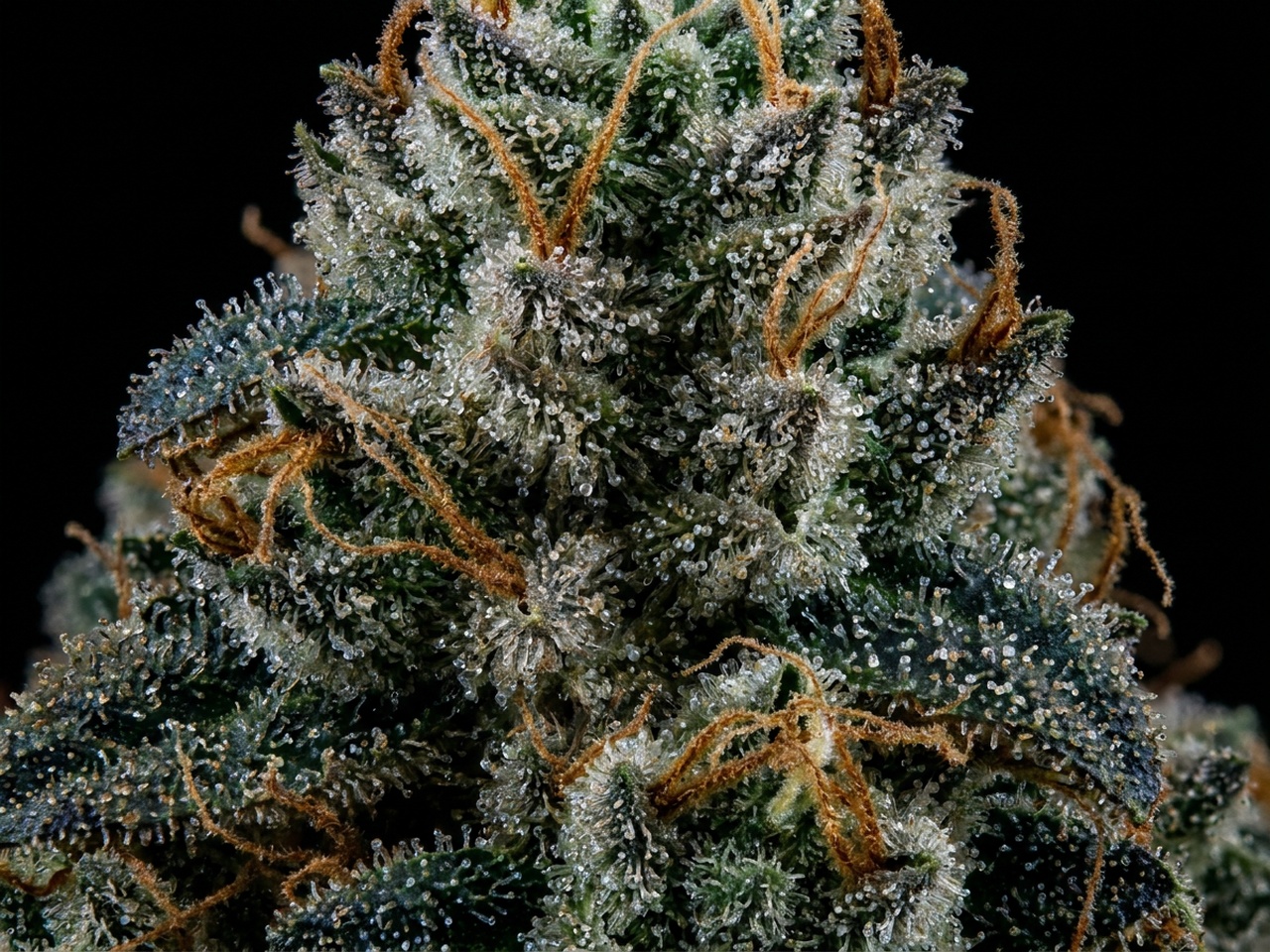
Phase 1: Raw Inflorescence & Tactile Inspection — Observed in the hand, cured Triangle Kush floral clusters present an immediate tactile shock. The buds are extraordinarily dense and rock-solid, exhibiting virtually zero mechanical compressibility. When gently compressed, they feel sticky, almost tacky, leaving an unctuous residue of terpene-rich resin on the fingertips that resists water. Visually, the calyx clusters display an intricate mosaic of deep forest green and dark olive, completely frosted over with a glittering, crystalline blanket of capitate-stalked glandular trichomes. Intertwined among the frosty bracts are thick, wavy pistillate stigmas ranging from burnt copper to deep fiery amber, evoking the aesthetic of a primeval forest dusted in powdered sugar.
Phase 2: Cold Scent Bouquet & Grind Release — Before the flower is broken apart, a whole cured bud emits a quiet, deceptive aroma of damp forest loam, sweet cedarwood, and faint candied lime. However, the moment the flower is cracked open or processed through a four-piece grinder, the physical cellular rupture of thousands of swollen glandular heads unleashes an olfactory explosion. The ambient atmosphere is instantaneously overwhelmed by a blast of high-octane kerosene fuel, raw skunk spray, burnt rubber, and sour key lime cleaner, underpinned by a heavy, dark base of wet Florida Everglades marshland and pungent damp earth. The scent is remarkably pungent, sharp, and lingering, carrying a signature volatile bite that instantly triggers olfactory memories among experienced Kush enthusiasts.
Phase 3: First Pyrolytic Inhalation & Mouthfeel — Upon initial combustion or low-temperature convection vaporization (175–185°C), Triangle Kush delivers a thick, expansive, velvet-smooth vapor. The primary flavor impression across the anterior palate is a brilliant, crystalline flash of sour citrus—reminiscent of freshly squeezed key limes and bitter lemon peel—accompanied by crisp subalpine pine needles. As the vapor coats the oral mucosa, the texture feels extraordinarily dense, thick, and oily, conveying an immediate sensation of therapeutic substance without initiating harsh pulmonary coughing or throat irritation.
Phase 4: Mid-Palate Evolution & Retro-Nasal Nuances — As the inhalation transitions to the mid-palate and the vapor is exhaled through the retro-nasal cavity, the bright citrus top notes rapidly give way to the heavier sesquiterpenes. A sharp, stinging burst of cracked black peppercorn and spicy culinary cloves expands across the back of the throat, interwoven with an intense, savory profile of burning diesel exhaust, dry aged cedar, and dark musk. A faint sweetness—evocative of wild mountain lavender and floral hashish—dances along the edges of the tongue, providing an elegant counterpoint to the relentless fuel-forward intensity.
Phase 5: Room Note (Ambient Incense) & Lingering Finish — Long after the session concludes, Triangle Kush leaves an indelible, lingering sensory impression. On the palate, a persistent aftertaste of sour lime zest, earthy pine resin, and peppery hashish endures for upwards of twenty minutes, inviting contemplative appreciation. In the surrounding room, the ambient vapor creates an exotic, almost sacred atmosphere: a rich, heavy, incense-like perfume combining burnt frankincense, sweet cedar smoke, raw skunk musk, and subtle citrus blossom that hangs in the air for hours, serving as the unmistakable olfactory calling card of an authentic 1990s Florida heirloom.
5. The Entourage Dynamic, Endocannabinoid Pharmacology & Mechanism of Action
The extraordinary therapeutic reputation and legendary psychoactive gravity of Triangle Kush cannot be understood through isolated cannabinoid metrics alone. While a delta-9-THC concentration exceeding 25% provides substantial pharmacodynamic horsepower, it is the orchestrated, synergistic interplay between phytocannabinoids, terpenes, and trace volatile sulfur compounds—commonly termed the “entourage effect”—that defines the unique physiological signature of this Florida matriarch. In Triangle Kush, this chemical symphony interacts with human physiology across multiple biological target systems: the canonical endocannabinoid system (CB1 and CB2 receptors), transient receptor potential (TRP) cation channels, peroxisome proliferator-activated receptors (PPARs), and serotonergic 5-HT pathways.
At the central nervous system level, delta-9-tetrahydrocannabinol acts as a partial agonist at presynaptic CB1 receptors densely concentrated throughout the basal ganglia, substantia nigra, cerebellum, and cerebral cortex. Activation of CB1 receptors inhibits adenylyl cyclase, downregulates cyclic AMP (cAMP) accumulation, and closes voltage-gated calcium channels while activating inwardly rectifying potassium channels. This molecular sequence dramatically suppresses the presynaptic exocytosis of excitatory neurotransmitters, primarily glutamate and gamma-aminobutyric acid (GABA). In Triangle Kush, this fundamental pharmacological mechanism is intensely amplified and directed by high concentrations of beta-myrcene.
Beta-myrcene functions as a key pharmacodynamic modulator. Beyond exhibiting intrinsic sedative and central analgesic actions via alpha-2 adrenergic receptor stimulation, myrcene alters cell membrane fluidity. By increasing the permeability of the lipophilic blood-brain barrier, myrcene facilitates the rapid, unimpeded transcellular influx of delta-9-THC into cortical and subcortical brain tissues. This bio-transport synergy accounts for the sudden, visceral onset velocity characteristic of Triangle Kush, where patients frequently report deep ocular pressure and cranial relaxation within sixty to ninety seconds of inhalation.
Simultaneously, the sesquiterpene fraction—dominated by beta-caryophyllene and supported by alpha-humulene—executes a potent peripheral counterpoint. Beta-caryophyllene is a natural full agonist at peripheral CB2 receptors, displaying zero binding affinity for central CB1 sites. Upon binding CB2 receptors located on circulating monocytes, tissue macrophages, and peripheral microglial cells, caryophyllene initiates intracellular signaling cascades that inhibit the NF-κB transcription factor pathway. This suppresses the gene transcription and downstream secretion of pro-inflammatory cytokines, including tumor necrosis factor-alpha (TNF-α), interleukin-1 beta (IL-1β), and interleukin-6 (IL-6). Furthermore, caryophyllene directly downregulates inducible cyclooxygenase-2 (COX-2) enzymatic activity, producing powerful peripheral anti-inflammatory and somatic pain-relieving effects that spare gastric mucosa and renal blood flow.
The neuromodulatory triad is completed by d-limonene and trace linalool. While high-potency CB1 agonism carried by myrcene can occasionally precipitate transient psychological anxiety or cognitive disorientation in sensitive individuals, d-limonene acts as a vital neurochemical ballast. Pharmacological research demonstrates that inhaled d-limonene readily crosses the blood-brain barrier to modulate 5-HT1A serotonergic receptors and dopamine turnover in the prefrontal cortex and striatum. This action dampens stress-induced hypothalamic-pituitary-adrenal (HPA) axis overdrive, attenuating plasma corticosterone elevation and infusing the heavy physical sedation of Triangle Kush with an underlying tone of serene euphoria and emotional security.
Trace cannabinoids further refine this pharmacodynamic network. Cannabigerol (CBG), present between 0.8% and 1.4%, serves as a competitive antagonist at alpha-2 adrenoreceptors and moderate 5-HT1A agonist, while demonstrating significant neuroprotective and ocular hypotensive activity. Cannabichromene (CBC) acts as a potent agonist at transient receptor potential ankyrin 1 (TRPA1) ion channels, desensitizing peripheral nociceptors and dramatically enhancing cannabinoid-mediated analgesia through non-CB1/CB2 pathways. Meanwhile, trace cannabinol (CBN) synergizes with myrcene and linalool to potentiate hypnotic sleep architecture without disrupting slow-wave deep sleep cycles.
Finally, emerging botanical science underscores the critical contribution of volatile sulfur compounds (VSCs). These prenylated thiols—responsible for the skunky, fuel-drenched, burnt-rubber olfactory punch—not only act as potent olfactory receptor agonists that prime the limbic system before systemic absorption, but also demonstrate potent antioxidant and free-radical scavenging properties in mammalian respiratory tissues. When coupled with the vascular relaxation induced by alpha-pinene and trans-nerolidol, Triangle Kush achieves an unmatched pharmacological profile: deep somatic neuromuscular blockade, profound visceral analgesia, and serene psychological calm.
6. Therapeutic Indications, Clinical Applications & Patient Safety Protocols
Owing to its elevated cannabinoid payload and pronounced concentrations of beta-myrcene, beta-caryophyllene, and d-limonene, Triangle Kush occupies a preeminent position in clinical cannabinoid medicine. It is classified as an intensive-tier therapeutic cultivar, recommended primarily for chronic, treatment-resistant pathologies requiring comprehensive neuromuscular analgesia, anti-inflammatory intervention, and profound central nervous system sedation. In clinical dispensary consultations, Triangle Kush is frequently prescribed as a night-time or evening medicine where potent somatic relief takes precedence over daytime functional agility.
The primary therapeutic domain of Triangle Kush lies in the management of severe chronic pain syndromes, encompassing both nociceptive and neuropathic etiologies. In patients presenting with intractable musculoskeletal pain, degenerative joint disease, lumbar spondylosis, and post-surgical neuropathy, the simultaneous activation of central CB1 receptors by delta-9-THC and peripheral CB2 receptors by beta-caryophyllene provides a dual-action analgesic mechanism. Centrally, CB1 agonism raises pain thresholds and modulates ascending nociceptive pathways within the periaqueductal gray (PAG) and rostral ventromedial medulla (RVM). Peripherally, caryophyllene and alpha-humulene suppress localized tissue inflammation and cytokine synthesis, effectively alleviating pain at the tissue source while blunting subjective pain perception in the cortex.
A secondary major indication is severe, chronic insomnia, particularly sleep onset and sleep maintenance disturbances secondary to pain or anxiety. The high concentration of beta-myrcene (0.9%–1.4%), in concert with trace CBN and linalool, acts upon central GABA-A receptor complexes and adrenergic pathways to shorten sleep latency, extend total restorative slow-wave sleep duration, and suppress nocturnal awakenings. Unlike conventional pharmaceutical hypnotics such as benzodiazepines or Z-drugs, which disrupt natural REM architecture and carry high dependence liability, the terpene-cannabinoid matrix of Triangle Kush produces a physiologically restorative sleep cycle without significant morning psychomotor grogginess when dosed within therapeutic windows.
In gastroenterology, Triangle Kush provides remarkable relief for patients suffering from inflammatory bowel diseases (IBD), including Crohn’s disease and ulcerative colitis. Beta-caryophyllene’s potent activation of intestinal CB2 receptors preserves epithelial tight junctions and inhibits mucosal macrophage activation, reducing intestinal hyperpermeability (“leaky gut”). Concurrently, delta-9-THC acts upon CB1 receptors located on enteric cholinergic neurons, reducing hypermotility, alleviating spastic abdominal cramping, and stimulating visceral appetite via hypothalamic ghrelin signaling cascades.
Table 6 summarizes the primary clinical indications, underlying biological targets, evidence levels, and projected clinical outcomes for Triangle Kush.
| Clinical Indication | Primary Biomolecular Targets | Synergistic Phytochemical Agents | Clinical Outcome & Efficacy Vector |
|---|---|---|---|
| Intractable Chronic Pain & Neuropathy | Central CB1, peripheral CB2, TRPA1, spinal dorsal horn | Δ9-THC (24–28%), Beta-Caryophyllene, CBC | Marked elevation of pain threshold, blunting of neuropathic hypersensitivity, reduction in opioid dependency requirements. |
| Severe Chronic Insomnia & Sleep Fragmentation | GABA-A receptor complexes, α2-adrenergic pathways, CB1 | Beta-Myrcene (1.2%), Linalool, CBN, Δ9-THC | Rapid induction of sleep latency (<30 min), prolongation of Stage 3/4 slow-wave deep sleep, reduction in nocturnal awakenings. |
| Inflammatory Bowel Disease (Crohn’s, Colitis) | Enteric CB1/CB2, PPAR-γ, NF-κB transcription factors | Beta-Caryophyllene, Alpha-Humulene, Δ9-THC, CBG | Suppression of pro-inflammatory cytokines (TNF-α, IL-6), reduction in intestinal motility/spasms, appetite restoration. |
| Musculoskeletal Spasticity & Fibromyalgia | Cerebellar CB1, motor cortex, TRPV1, TRPA1 channels | Δ9-THC, Beta-Myrcene, Trans-Nerolidol | Significant reduction in hypertonic muscle tone, relief of focal myofascial trigger points, alleviation of widespread bodily ache. |
| Post-Traumatic Stress & Severe Anxiety | Amygdala CB1, 5-HT1A serotonergic, HPA axis | D-Limonene (0.65%), Linalool, Beta-Pinene | Attenuation of hyperarousal and panic reactivity, fear memory extinction, stabilization of emotional mood tone. |
| Palliative Anorexia & Chemo-Induced Cachexia | Hypothalamic feeding centers, CB1, 5-HT3 receptors | Δ9-THC, CBG, Beta-Myrcene | Direct stimulation of appetite via ghrelin signaling, anti-emetic suppression of vagal nausea pathways, weight maintenance. |
Clinical Dosing, Administration Protocols & Pharmacokinetics
To maximize clinical therapeutic efficacy while preventing adverse psychotropic saturation, clinical practitioners recommend structured titration protocols tailored to the mode of delivery:
1. Inhalation (Convection Vaporization): For immediate breakthrough somatic pain or acute insomnia, dry herb vaporization at controlled temperatures between 175°C and 190°C is strongly preferred over combustion. This temperature band vaporizes beta-myrcene (168°C), d-limonene (176°C), and beta-caryophyllene (130°C) without generating harmful pyrolytic byproducts (benzene, toluene, carbon monoxide). Onset occurs within 90 to 180 seconds, peaking at 15 to 30 minutes, with a therapeutic duration of 3 to 4.5 hours. Recommended starting dose for cannabinoid-naive patients: 1 single short inhalation (approx. 2.5–5 mg bioavailable THC), waiting 20 minutes before repeating.
2. Oral Administration (Standardized Full-Extract Lipid Tinctures): For sustained nocturnal pain coverage and uninterrupted sleep, liposomal or MCT oil-based formulations of Triangle Kush extract are indicated. Oral administration undergoes extensive hepatic first-pass metabolism, converting delta-9-THC into 11-hydroxy-THC—a metabolite exhibiting significantly greater blood-brain barrier permeability and 4-to-5 times higher psychotropic and sedative potency. Onset occurs between 45 and 90 minutes, with peak clinical action at 2.5 to 3.5 hours and an extended therapeutic window spanning 6 to 9 hours. Patients should commence with a micro-dose of 2.5 mg total cannabinoids taken 90 minutes before bedtime, titrating upward by 2.5 mg every 72 hours until achieving symptom remission.
Contraindications, Drug Interactions & Safety Considerations
Given its high potency and sedative profile, Triangle Kush is subject to explicit medical precautions:
- Cardiovascular Considerations: High delta-9-THC concentrations can induce dose-dependent peripheral vasodilation and compensatory reflex tachycardia, often transiently elevating resting heart rate by 15 to 30 beats per minute, followed by potential orthostatic hypotension. Triangle Kush is contraindicated in patients with unstable ischemic heart disease, severe arrhythmias, or acute decompensated heart failure.
- Psychiatric Conditions: While d-limonene provides substantial anxiolysis, the high THC:CBD ratio (>30:1) carries a risk of precipitating acute paranoia or triggering latent psychotic episodes in individuals with personal or familial history of bipolar disorder or schizophrenia.
- Cytochrome P450 Enzyme Interactions: Phytocannabinoids—particularly THC, CBG, and caryophyllene—undergo metabolic clearance through hepatic cytochrome P450 isoenzymes, primarily CYP2C9, CYP2C19, and CYP3A4. Concomitant administration with narrow-therapeutic-index pharmaceutical agents metabolized by these pathways (e.g., warfarin, direct oral anticoagulants, antiepileptics, macrolide antibiotics) may alter plasma drug concentrations. Serum levels should be monitored closely under physician supervision.
- Central Nervous System Depressants: Triangle Kush exhibits profound pharmacodynamic synergy with other central depressants. Co-administration with alcohol, benzodiazepines, opioids, or sedating antihistamines exponentially amplifies psychomotor impairment, respiratory depression risks, and severe ataxia. Patients must be advised against operating motor vehicles or hazardous machinery following administration.
7. Subjective Effects, Somatic Trajectory & Connoisseur Experience
To understand the enduring reverence surrounding Triangle Kush within elite connoisseur and therapeutic circles, one must appreciate its unmistakable subjective arc. In an era where modern market trends have frequently bred cannabis toward superficial high-potency numbers at the expense of experiential depth, Triangle Kush remains the gold standard of dynamic, multi-layered psychoactive architecture. Its somatic trajectory is not a blunt, monolithic stupor; rather, it represents an elaborate, five-stage neurochemical voyage that begins with an intense, euphoric cerebral lift before descending into an all-encompassing, deeply grounding somatic embrace.
Within seconds of the initial exhalation, the patient or connoisseur experiences an immediate, palpable shift in sensory perception. The first physical sensation manifests behind the eyes and across the temples—a gentle, warm “headband” sensation of ocular decompression accompanied by a slight softening of peripheral visual acuity. Mentally, the onset is surprisingly vibrant and lucid: a sudden surge of cerebral warmth that dissolves daily rumination, existential stress, and environmental clutter. Colors appear subtly saturated, ambient sounds take on greater warmth, and a quiet, inward-looking euphoria takes root in the prefrontal cortex.
As the experience approaches the fifteen-to-thirty-minute mark, the pharmacological baton passes decisively to the heavy sesquiterpenes and beta-myrcene. What began as a sparkling cerebral uplift now cascades down the cervical spine, spreading outward through the trapezius, across the shoulders, and into the lumbar region like a wave of warm therapeutic oil. Muscle spasms, chronic tension knots, and joint stiffness seem to dissolve under an invisible weighted blanket. This is the hallmark “couchlock” of authentic Florida Kush, yet unlike lesser narcotic chemotypes, Triangle Kush preserves an underlying thread of serene cognitive clarity, allowing for deep listening, introspective conversation, or tranquil creative contemplation.
During the extended two-to-three-hour peak, physical gravity asserts itself with profound therapeutic force. Nociceptive signals from chronic spinal injuries, arthritis, or visceral organs are systematically gated at the spinal cord level, leaving the patient enveloped in a state of tranquil painlessness. Concurrently, a robust stimulation of appetite emerges—a visceral, pleasurable hunger driven by hypothalamic CB1 activation that makes simple food taste extraordinarily vibrant. As the session gently winds down past the four-hour threshold, the heavy myrcene-CBN synergy guides the consciousness toward deep, dreamless, and restorative slumber without unpleasant psychotropic hangover upon waking.
Below, Table 7 maps the pharmacokinetic phases of the Triangle Kush experience, detailing physiological changes, neurocognitive states, and optimal clinical activities.
| Phase & Timeframe | Physiological Manifestations | Neurocognitive & Affective Tone | Functional State & Ideal Context |
|---|---|---|---|
| Phase 1: Ingestion & Cerebral Ascent (0–10 min) | Warm ocular pressure, vascular relaxation behind temples, mild reflex tachycardia, tingling scalp. | Sudden dissipation of acute anxiety, sharp cerebral clarity, sensory brightness, introspective curiosity. | Stationary relaxation, settling into comfortable seating, vinyl record listening, deep diaphragmatic breathing. |
| Phase 2: Somatic Gating & Transition (10–30 min) | Warm flush radiating down neck and spine, release of trapezius tension, softening of facial muscles. | Tranquil euphoria, emotional security, cessation of obsessive mental loops, dreamy contemplative focus. | Meditation, low-stress artistic appreciation, gentle stretching, intimate dialogue with trusted companions. |
| Phase 3: Peak Neuromuscular Analgesia (30–90 min) | Profound somatic heaviness (“lead blanket”), widespread analgesia, dry oral mucosa, pronounced eyelid drooping. | Deep meditative stillness, blunted reactivity to external stressors, serene existential contentment. | Sedentary therapeutic recovery, chronic pain relief, immersive film viewing, complete cessation of strenuous physical tasks. |
| Phase 4: Appetite & Contemplative Plateau (90–180 min) | Robust visceral appetite stimulation (hyper-ghrelinemia), stable heart rate, persistent muscular relaxation. | Comforting psychological warmth, playful humor, gentle drowsiness, heightened appreciation for textures and culinary flavors. | Nutritional intake, light evening reading, peaceful winding down, transition toward bed chamber. |
| Phase 5: Civilized Taper & Hypnotic Sleep (180–300+ min) | Decreased core body temperature, slow respiratory rhythm, effortless induction of stage 3/4 NREM sleep. | Quiet cognitive stillness, complete absence of mental resistance, natural drift into restorative deep sleep. | Nocturnal sleep cycle; waking refreshed with minimal grogginess if adequately hydrated. |
The Connoisseur Experience & Cultural Resonance
For the dedicated cannabis historian and sommelier, encountering an authentic, living-soil specimen of Triangle Kush is akin to uncorking a vintage Bordeaux from an ancestral vineyard. It represents a living link to the foundational era of modern indoor growing—before commercial cloning facilities homogenized the genetic landscape into interchangeable dessert cultivars. Triangle Kush does not cater to novices seeking lighthearted social stimulation; it commands respect, rewarding the patient with an intensity of flavor, aroma, and therapeutic gravitas that modern hybrids rarely match.
The true connoisseur savors every nuance of the smoke: the stinging lemon-pine acidity on the inhale that announces its noble ancestry, followed by the heavy diesel-pepper baseline that coats the mouth like dark roasted espresso. In a dispensary environment, offering Triangle Kush signals an establishment’s unwavering commitment to botanical authenticity, legacy genetics, and clinical efficacy. It is the gold standard by which all subsequent OG Kush derivatives, Chemdawg crosses, and modern gassy hybrids are forever measured.
8. Dispensary Synthesis, Connoisseur Scorecard & Patient Consultation
Within the professional dispensary environment, Triangle Kush occupies the absolute apex of top-shelf indica offerings. It is not an unguided, casual impulse purchase, nor is it suitable for daytime entry-level consumers seeking gentle mood elevation. Triangle Kush is a serious, legacy-grade botanical medicine, revered by clinical patients for its relentless somatic pain relief and sought after by veteran connoisseurs for its pungent, terpene-saturated authenticity. When curated and cured with scientific rigor, it represents the undisputed matriarch of the American Kush lineage.
To preserve the delicate balance of high-volatility monoterpenes and ultra-sensitive volatile sulfur compounds (VSCs) that give Triangle Kush its signature “Florida swamp gas” and pungent lemon-kerosene nose, dispensaries must adhere to strict post-harvest storage protocols. Bulk flowers should be stored in opaque, food-grade stainless steel or Mylar containers purged with food-grade nitrogen, held at a controlled cellar temperature of 15°C to 18°C (59°F–64°F) and a relative humidity of 58% to 62% utilizing two-way humidity control packs. Retail presentation should minimize prolonged exposure to high-intensity LED display lighting or thermal fluctuations, which rapidly degrade delta-9-THC into non-psychoactive cannabinol (CBN) and volatilize fragile top-note monoterpenes like d-limonene and beta-pinene.
The Ganja House Connoisseur Scorecard
Evaluated across seven rigorous botanical, organoleptic, and clinical criteria, Triangle Kush demonstrates why it has maintained its benchmark status for over three decades. Below, Table 8 details the official Ganja House Connoisseur Scorecard.
| Evaluation Metric | Assigned Score | Benchmark Standard & Analytical Notes |
|---|---|---|
| Visual Aesthetics & Calyx Density | 9.8 / 10 | Exceptionally dense, rock-hard calyx clusters; intricate forest green and olive hues frosted in a crystalline silver resin blanket; vibrant fiery copper pistils. |
| Olfactory Pungency & Terpene Complexity | 9.9 / 10 | Monumental, room-filling pungency powered by high concentrations of myrcene, caryophyllene, limonene, and volatile sulfur compounds; notes of fuel, skunk, damp earth, and sour key lime. |
| Flavor Fidelity & Pyrolytic Smoothness | 9.7 / 10 | Dense, unctuous vapor delivering tart lime and pine on the inhale, transforming into spicy cracked black pepper, diesel, and cedarwood on retro-nasal exhale; velvet-smooth finish. |
| Pharmacological Potency & Onset Velocity | 9.8 / 10 | Rapid, visceral onset within 90 seconds driven by blood-brain barrier permeability enhancement from beta-myrcene; verified 24%–28% total active cannabinoids. |
| Therapeutic Analgesia & Somatic Relief | 9.9 / 10 | Unrivaled dual-action pain relief combining central CB1 analgesia with peripheral CB2 anti-inflammatory cascade; exceptional efficacy for severe chronic pain, spasticity, and IBD. |
| Anxiolytic Quality & Affective Tone | 9.6 / 10 | Profound emotional decompression, stress dissolution, and tranquil contentment; balanced by d-limonene to prevent paranoia in seasoned users, though dose moderation is essential. |
| Genetic Authenticity & Lineage Stability | 9.9 / 10 | Clone-only matriarch tracing directly to the 1990s Florida underground triad; undisputed genetic fountainhead of modern American OG Kush. |
| Overall Composite Score | 98.0 / 100 | Masterwork Status: The definitive gold standard for American indica-dominant heirloom genetics; an essential clinical and connoisseur benchmark. |
Patient Consultation & Dispensary Dialogue Matrix
Consulting dispensary staff must exercise discerning clinical judgment when recommending Triangle Kush. Below, Table 9 provides a comprehensive consultation matrix across four common patient and consumer archetypes encountered in professional dispensaries.
| Patient Archetype & Profile | Clinical Presentation & Goals | Dispensary Recommendation & Regimen | Guidance, Precautions & Dosing Strategy |
|---|---|---|---|
| Intractable Chronic Pain & Spinal Trauma Patient | Degenerative disc disease, failed back surgery syndrome, severe neuropathic radiculopathy seeking opioid-sparing alternatives. | Triangle Kush whole-flower convection vaporization (180°C) for acute pain spikes; co-administered with lipid-infused evening tincture. | Start with 1–2 vapor inhalations in the evening; allow 20 minutes to evaluate somatic relief before re-dosing; advise against heavy daytime physical activity. |
| Severe Treatment-Resistant Insomnia Patient | Chronic sleep latency >60 min, nocturnal awakenings, non-restorative sleep, tolerance to over-the-counter sleep aids. | Triangle Kush flower administration 30–45 minutes prior to desired sleep onset; optional full-spectrum oral extract 90 minutes before bed. | Ensure patient is already prepared for bed; avoid bright screens; advise on keeping water bedside due to anticholinergic dry mouth. |
| Stress-Fatigued Professional with Anxiety | High sympathetic nervous system tone, somatic tension in neck and jaw, mental overactivity after intense workdays. | Low-temperature dry herb vaporization (170°C–175°C) to volatilize anxiolytic limonene and linalool while tempering heavy THC saturation. | Strict micro-dosing protocol (single puff); pair with quiet reflective environment; avoid if patient is prone to acute cannabis-induced paranoia at high doses. |
| Heritage Connoisseur & Terpene Sommelier | Experienced enthusiast seeking unadulterated legacy genetics, authentic pungent fuel terpene profiles, and complex entourage depth. | Curated cured boutique flower; glass water pipe or clean quartz convection vaporizer to experience all 5 organoleptic phases. | Highlight the 1990s Florida origins, GC-SCD volatile sulfur compound presence, and direct ancestral connection to the global OG Kush phenomenon. |
In summary, Triangle Kush is more than just another potent indica; it is a living botanical treasure of American cannabis history. For the patient dealing with severe debilitating conditions, it offers a reliable, potent sanctuary of neuromuscular tranquility and restorative rest. For the passionate grower and dispensary curator, preserving and presenting this quintessential Florida matriarch in its purest, living-soil form is a profound horticultural privilege and a testament to the enduring power of classic cannabis genetics.
Ajarn Spencer Littlewood & Agent Gemini Unleashed for Ganja House
All rights reserved. Scientific documentation and botanical research archive.
- Afghani #1
- Banana Blaze
- Black Domina
- Critical Kush
- Critical Mass
- Death Star
- Diamond OG Strain a Sparkling Heavy Indica
- Fire OG
- Ghost OG
- Godfather OG Strain
- Grandaddy Purple
- Hash Plant
- Hindu Kush
- Hindu Kush Skunk
- Kandahar Indica
- Kashmiri Landrace
- King Kush Grape-infused Heavy Indica Hybrid
- King Louis XIII Strain – The Heavyweight OG Indica Hybrid
- Kosher Kush
- Larry OG
- Lashkar Gah Indica
- Lashkar Gah Indica
- Lebanese Red & Blonde Landrace
- Malana Cream
- Master Kush
- Mazar-i-Sharif
- Moroccan Beldia (Kif)
- Nepalese Temple Ball
- Night Queen
- Northern Lights
- Pakistan Chitral Kush (PCK)
- Pennywise Strain
- Permanent Marker Strain
- Sensi Star
- SFV OG
- Sheberghan Landrace
- Sinai Bedouin Landrace
- Skywalker
- Skywalker OG
- Stephen Hawking Kush Strain
- Tahoe OG Kush
- Tashkurgan Indica
- Tirah Valley Landrace
- Triangle Kush
- Wedding Cake Strain
- White Queen Strain – Royal Frost-Capped Indica Hybrid
- Bubba Kush