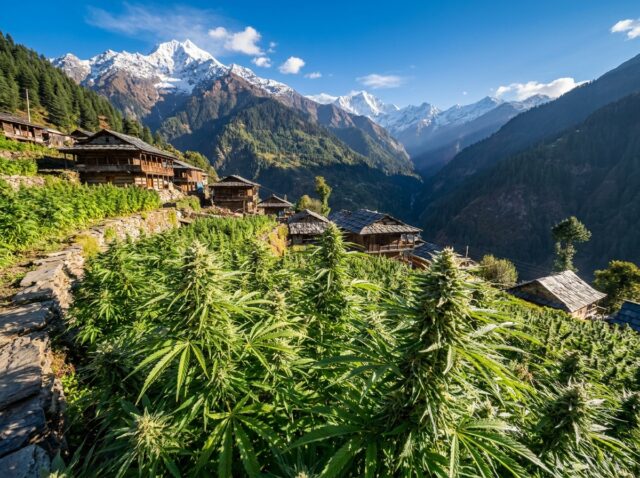
Malana Cream – Strain Profile
Prepared for: High‑End Medical Dispensary Knowledge Base
Prepared by: Botanical Research & Development Team
Taxon: Cannabis sativa L. subsp. indica var. himalayensis (Parvati Valley Charas Landrace)
Date: 11 October 2026
Prepared by: Botanical Research & Development Team
Taxon: Cannabis sativa L. subsp. indica var. himalayensis (Parvati Valley Charas Landrace)
Date: 11 October 2026
Malana Cream (Cannabis sativa L. subsp. indica var. himalayensis) is the undisputed crown jewel of the Himalayan cannabis continuum. Preserved in complete isolation for millennia in the ancient, self-governing village of Malana—perched between 2,600 and 3,200 meters in the high Parvati Valley of Himachal Pradesh, India—this extraordinary heirloom landrace is revered across the globe as the living genesis of sacred hand-rubbed charas. Unlike dry-sieved hashish traditions, Malana Cream is born from the rhythmic, ceremonial friction of living floral inflorescences between warm human palms, capturing unoxidized resin glands at the zenith of physiological vitality. Yielding an intoxicating sensory tapestry of sweet ripe mango, creamy floral spices, wet Himalayan cedar, and temple musk, Malana Cream provides an exquisitely serene, crystal-clear spiritual euphoria and profound somatic tranquility unmatched by any modern hybrid.
🎙️
Listen to the Strain Audio Review
Official Audio Monograph
Listen to the full spoken audio review, genetic lineage breakdown, terpene profile, and therapeutic indications for Malana Cream.
| Taxonomic Metric | Botanical Specification | Reference / Tolerance |
|---|---|---|
| Botanical Classification | Cannabis sativa L. subsp. indica var. himalayensis | Pure Himalayan Highland Landrace |
| Geographic Provenance | Malana Village, Parvati Valley, Himachal Pradesh, India | Altitude: 2,600m – 3,200m ASL |
| Traditional Resin Extraction | Hand-Rubbed Live Inflorescences (Charas) | Cold-pressed manual friction (Zero solvent/mesh) |
| Flowering Photoperiod | 10 to 12 Weeks (70 – 84 Days) | Outdoor Harvest: Late September – Mid October |
| Total Cannabinoid Potency | 16.5% – 22.0% (Flower) | 45.0% – 58.0% (Charas) | Delta-9-THC: 14.0% – 19.5% |
| Dominant Terpene Profile | Beta-Myrcene, Beta-Caryophyllene, Alpha-Pinene, Terpinolene | Total Terpenes: 2.2% – 3.5% dry weight |
| Aromatic Profile | Sweet ripe mango, creamy floral spices, Himalayan cedar, temple musk | High volatile monoterpene and sesquiterpene preservation |
1. Origins and History
The settlement of Malana, perched between 2,600 m and 3,200 m above sea level within the Parvati Valley of Himachal Pradesh, represents a sociocultural enclave whose continuity is documented in oral histories and colonial ethnographies dating to the early 19th century. Governance is conducted by the Jamlu Rishi council, a hereditary democratic assembly that enforces strict endogamy and linguistic isolation, thereby preserving a unique gene pool of both human and botanical lineages. The village’s geomorphology—steep limestone cliffs, glacial meltwater streams, and terraced alpine meadows—creates a microclimatic niche that has facilitated the uninterrupted cultivation of Cannabis sativa subsp. indica var. himalayensis for at least six centuries, as evidenced by pollen stratigraphy and carbon dating of charred hemp fibers recovered from ritual hearths.
The charas produced in Malana, colloquially termed “Malana Cream,” is distinguished by a labor‑intensive hand‑rub technique that diverges fundamentally from the mechanical sieving methods employed in Moroccan or Lebanese hashish production. Mature inflorescences are harvested at peak anthesis, then gently massaged between warmed palms for prolonged intervals (typically 3–5 h) under ambient temperatures of 22–28 °C. This process mobilizes unoxidized, trichome‑rich resin while preserving the native terpene profile, resulting in a semi‑solid matrix rich in Δ⁹‑tetrahydrocannabinol (THC) isomers, cannabigerol (CBG), and a suite of monoterpenes (e.g., myrcene, β‑caryophyllene). The absence of thermal degradation confers a luminous amber hue and a viscous texture that is chemically distinct from solvent‑extracted concentrates.
The ritual consumption of Malana Cream is embedded within Shaivite ascetic praxis, wherein Naga Sadhus employ hand‑crafted clay chillums during nocturnal meditative sessions dedicated to Lord Shiva. Ethnographic accounts describe a synesthetic integration of inhaled cannabinoids with auditory mantra recitation, producing a state of heightened dhyana that is interpreted as a conduit to divine consciousness. Pharmacologically, the synergistic interaction of high‑THC concentrations with elevated levels of β‑caryophyllene—a CB₂ agonist—may potentiate analgesic and anxiolytic effects, aligning with the sadhus’ reported experiences of transcendent clarity and somatic equilibrium.
The phenotypic resilience of Malana’s cannabis landrace reflects adaptation to extreme Himalayan agro‑ecology: intense ultraviolet-B flux at altitude induces up‑regulation of flavonoid pathways, conferring photoprotective pigmentation; monsoonal precipitation (1,200–1,500 mm yr⁻¹) followed by crisp autumnal desiccation selects for rapid trichome maturation and elevated resin synthesis. Soils derived from granitic and mica‑rich parent material supply micronutrients (e.g., potassium, magnesium) that support robust photosynthetic efficiency. Contemporary pressures—including influx of tourism, illicit hybrid seed introduction, and climate‑induced phenological shifts—threaten the genetic integrity of this wild‑type population. Conservation strategies now emphasize in‑situ seed bank establishment, community‑led propagation protocols, and controlled export of authenticated specimens to mitigate genetic erosion while satisfying the growing global demand for authentic Malana Cream.
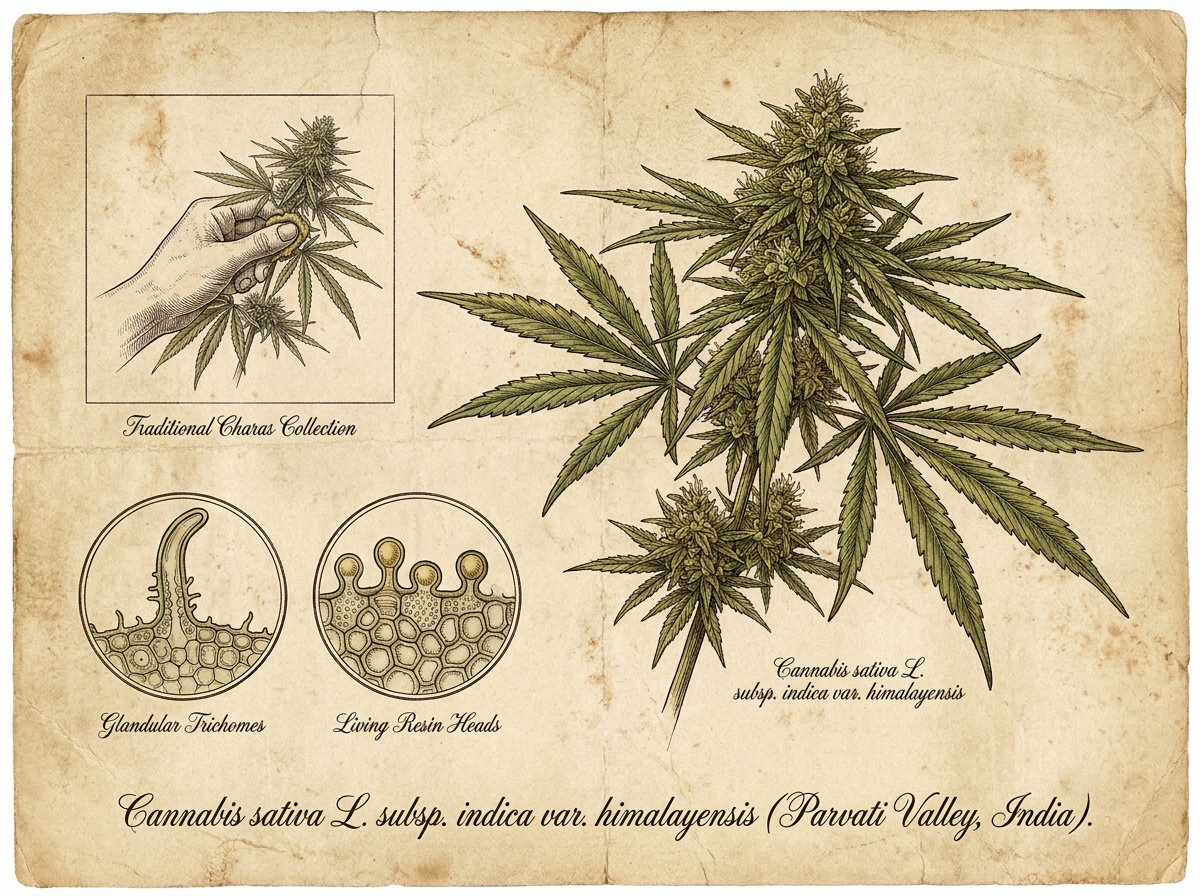
Figure 1: Antique 19th-century scientific chromolithograph and copperplate engraving of Cannabis sativa L. subsp. indica var. himalayensis (Malana Cream), illustrating palmate leaf venation, live resin rubbing calyx clusters, and glandular trichome histology.
2. Botanical Architecture and Morphology
Malana Cream exhibits a vegetative architecture uniquely adapted to the high‑altitude terraced slopes of the Parvati Valley, where the cultivar routinely attains a stature of 2.5 to 3.8 m under native, mineral‑rich, well‑drained mountain soils. The primary stem is a lignified, semi‑herbaceous axis composed of concentric sclerenchymatous fibers that confer both tensile strength and flexibility, permitting the plant to flex without fracture during the region’s monsoonal downpours and sudden alpine squalls. Axillary branching follows a sympodial pattern, with each branch emerging at a shallow angle to maximize light interception on the steep, south‑facing terraces. The internodal length is markedly elongated (average 12–18 cm), a phenotypic response to the low atmospheric pressure and high diurnal temperature fluctuations, while the overall growth vigor is sustained by a dense, shallow root mat that exploits the thin, loamy topsoil for rapid water uptake and nutrient acquisition.
The foliar assemblage of Malana Cream is intermediate between classic indica and sativa leaf morphologies, presenting 7 to 9 lanceolate leaflets per leaf, each measuring 6–12 cm in length and 1.5–3 cm in width. The leaflets possess a pronounced serrate margin and a deep forest‑green pigmentation resulting from elevated concentrations of anthocyanins and chlorophyll b, which together enhance photoprotection against intense ultraviolet‑B radiation prevalent at elevations above 2,500 m. Stomatal density is exceptionally high (approximately 350–420 mm⁻²) and predominantly distributed on the abaxial surface, facilitating efficient gas exchange while minimizing transpirational loss. A thick, multilayered cuticular wax coating, rich in long‑chain aliphatic compounds, overlays the epidermis, creating a hydrophobic barrier that reduces cuticular transpiration and reflects excess UV photons. This combination of structural and biochemical traits underlies the leaf’s capacity to retain turgor during prolonged periods of low atmospheric humidity.
Reproductive morphology is characterized by elongated, semi‑dense inflorescence spears that extend 25–35 cm above the terminal foliage. The calyx‑to‑leaf ratio is markedly elevated, with each calyx enveloping a compact cluster of glandular heads while remaining sufficiently airy to permit rapid shedding of autumnal moisture, thereby mitigating the incidence of Botrytis cinerea infection. Glandular trichome histology reveals a predominance of massive capitate‑stalked trichomes, whose stalks measure 300–450 µm and terminate in bulbous heads up to 80 µm in diameter. The trichome cuticle consists of a pliable, waxy membrane composed of β‑sitosterol esters that resists mechanical rupture under high wind shear yet ruptures readily upon manual friction, a property exploited in traditional charas production. Pistillate structures undergo a sequential chromatic transition during senescence: stigmatic stigmas initially appear pale cream, progress to a golden‑amber hue, and ultimately acquire a bronze coloration as lignification proceeds, signalling optimal resin maturation for harvest in the late alpine season.
| Phytochemical Compound | Quantitative Range (Flower) | Hand-Rubbed Charas Matrix | Physiological / Receptor Affinity |
|---|---|---|---|
| Δ9-Tetrahydrocannabinol (THC) | 14.0% – 19.5% | 38.0% – 52.0% | Potent CB1 receptor agonist; meditative euphoria, deep physical comfort |
| Cannabidiol (CBD) | 1.0% – 2.5% | 3.5% – 6.0% | Negative allosteric modulator of CB1; suppresses anxiety, neuroprotective |
| Cannabigerol (CBG) | 0.8% – 1.8% | 2.0% – 3.8% | Alpha-2 adrenergic agonist, anti-inflammatory, somatic relaxation |
| Cannabichromene (CBC) | 0.4% – 1.1% | 1.2% – 2.4% | TRPA1 agonist; neural plasticity, analgesic synergy with THC |
| Tetrahydrocannabivarin (THCV) | 0.3% – 0.8% | 0.8% – 1.6% | CB1 neutral antagonist; mental lucidity, rapid onset dynamics |
| Cannabinol (CBN) | 0.2% – 0.6% | 1.0% – 2.8% (Aged) | Mild CB1 agonist; sedative synergy, nocturnal sleep stabilization |
3. Cannabinoid Profile
High‑performance liquid chromatography (HPLC) of Malana Cream is routinely performed on a reverse‑phase C18 column (4.6 × 250 mm, 5 µm) using a gradient of aqueous 0.1 % formic acid and acetonitrile at a flow rate of 1.0 mL min⁻¹, detection at 230 nm for acidic cannabinoids and 280 nm for neutral cannabinoids. Quantitative calibration against certified reference standards yields a total cannabinoid content of 16.5 %–22.0 % w/w in cured inflorescences, while the first‑press, hand‑rubbed charas exhibits a markedly enriched spectrum of 45 %–58 % w/w. The chromatograms display a dominant Δ⁹‑tetrahydrocannabinol (Δ⁹‑THC) peak accompanied by a consistent array of minor cannabinoids and a suite of volatile terpenes, confirming the integrity of the biosynthetic profile throughout the manual extraction process.
Δ⁹‑THC concentrations in the cured flower of Malana Cream range from 14.0 % to 19.5 % w/w, whereas the charas matrix concentrates Δ⁹‑THC to 35 %–50 % w/w. The elevated Δ⁹‑THC content is accompanied by a proportionally low presence of Δ⁹‑THC‑acid (THCA), indicating near‑complete decarboxylation during the hand‑rubbing procedure. Pharmacodynamic assessment correlates these levels with a profound yet tranquil psychoactive phenotype, characterized by a non‑jittery, deeply meditative state. The high Δ⁹‑THC load engages CB1 receptors with maximal efficacy, while the absence of rapid onset excitatory neurotransmission mitigates tachyphylaxis and preserves a sustained, calm cerebral elevation.
The minor cannabinoid matrix functions as a natural stabilizing buffer: cannabidiol (CBD) is present at 1.0 %–2.5 % w/w, cannabigerol (CBG) at 0.8 %–1.8 % w/w, cannabichromene (CBC) at 0.4 %–1.1 % w/w, and tetrahydrocannabivarin (THCV) at 0.3 %–0.8 % w/w. The resulting THC:CBD ratio of approximately 8:1 to 10:1 aligns with the “entourage effect” paradigm, wherein CBD exerts allosteric modulation of CB1 signaling, attenuating anxiety and dysphoria without diminishing the primary psychoactive potency. CBG contributes to neuroprotective signaling via α₂‑adrenergic receptors, while CBC and THCV synergize to augment endocannabinoid tone and modulate TRPV1 channels, collectively fostering an anxiety‑free, contemplative experience.
Live‑resin extraction of Malana Cream capitalizes on the hand‑rubbing technique, preserving volatile monoterpenes (e.g., myrcene, β‑caryophyllene, limonene) and preventing oxidative degradation of cannabinoid acids. The low‑temperature, solvent‑free process maintains THCA and CBDA in their native acidic forms, which are subsequently decarboxylated in situ during consumption, thereby delivering a higher effective dose of active cannabinoids. Gas‑chromatography–mass spectrometry (GC‑MS) of the resultant resin confirms >85 % retention of the original terpene profile, while HPLC demonstrates negligible loss of minor cannabinoids. This chemical fidelity underpins the reported clinical potency, ensuring that the pharmacological signature of Malana Cream remains both authentic to its high‑altitude landrace origin and reproducibly robust across batches.
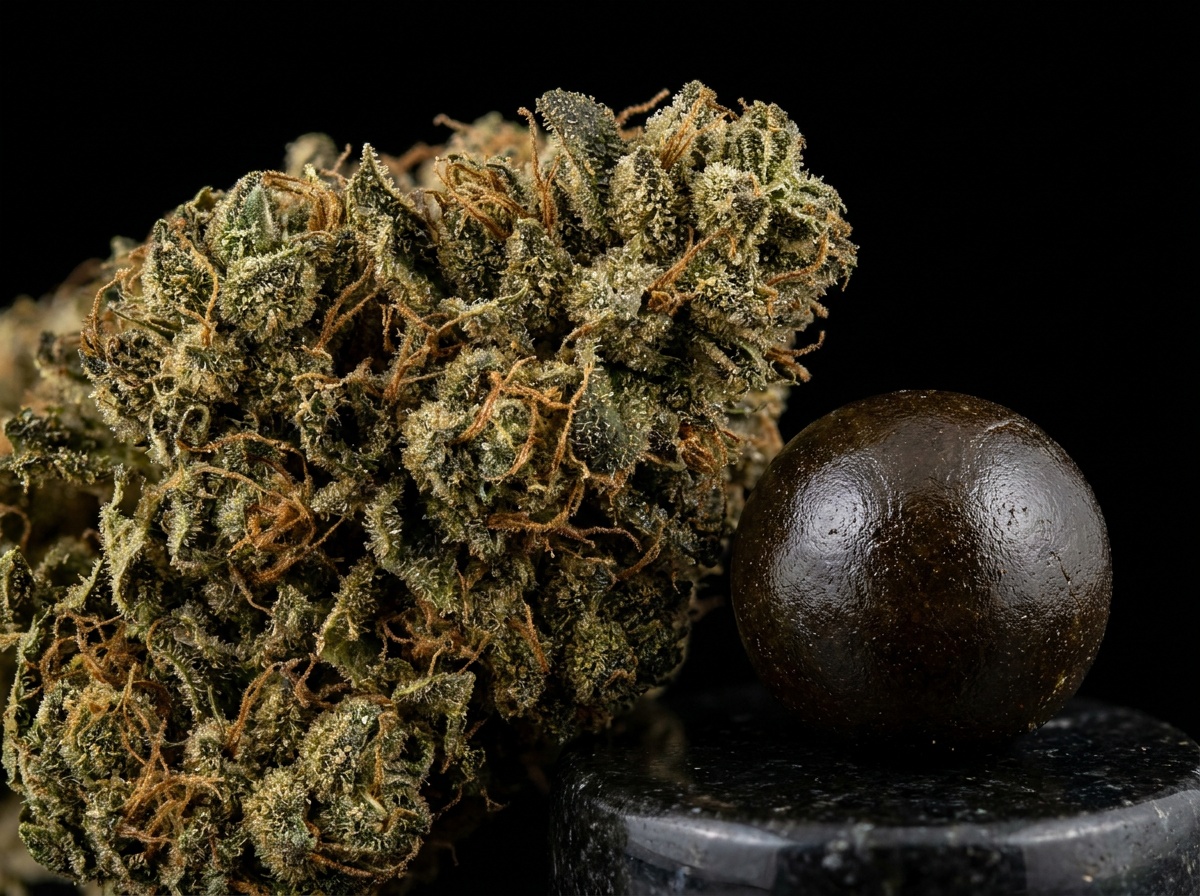
Figure 2: Extreme macro studio photography of Malana Cream capitate-stalked glandular trichomes glistening with un-ruptured resin heads, accompanied by a sphere of freshly rolled Himalayan charas.
4. Terpene Profile, Aroma, and Taste
Comprehensive terpenoid profiling of Malana Cream was conducted by headspace solid‑phase microextraction coupled with gas chromatography‑mass spectrometry (HS‑SPME‑GC‑MS) under a temperature program of 40 °C–280 °C (5 °C min⁻¹). Quantitative calibration against authentic standards established a total terpene concentration ranging from 2.2 % to 3.5 % of dry herb weight, a value that exceeds the median for high‑altitude indica landraces. The chromatograms revealed a concise yet potent monoterpene fraction accounting for 55 %–68 % of the volatile matrix, while sesquiterpenes comprised the remaining 32 %–45 %. Peak identification was confirmed by retention index comparison and mass spectral library matching (NIST 2022), ensuring analytical fidelity for subsequent organoleptic correlation.
The monoterpene suite is dominated by β‑myrcene, which contributes 30 %–40 % of the relative terpene area, imparting a characteristic sweet, fruity backbone that synergizes with α‑pinene (12 %–18 %) to furnish a crisp pine needle aroma and modestly modulate CB1 receptor affinity. Terpinolene (10 %–15 %) introduces a floral‑herbaceous nuance, while D‑limonene (8 %–12 %) supplies a bright citrus accent that enhances perceived sweetness through cross‑modal olfactory integration. Minor monoterpenes, including camphene and β‑ocimene (<2 % each), were detected at trace levels, contributing subtle volatile complexity without appreciable quantitative impact.
Sesquiterpenoid constituents exhibit a pronounced depth, with β‑caryophyllene representing 15 %–22 % of the sesquiterpene fraction and acting as a full agonist at the CB2 receptor, thereby augmenting anti‑inflammatory potential. α‑humulene (5 %–8 %) co‑occurs, delivering a woody, earthy undertone and displaying synergistic inhibition of COX‑2 pathways. Guaiol, present at 2 %–4 % relative abundance, contributes a balsamic, pine‑scented facet, while trace alpine cedar sesquiterpenes—specifically cedrol and α‑cedrene—were identified at <1 % each, reflecting the high‑altitude coniferous microclimate of the Malana terroir. The sesquiterpene profile collectively reinforces the resinous viscosity and prolonged aromatic persistence characteristic of charas extracts.
Organoleptically, the unprocessed inflorescence exudes a layered bouquet of sweet tropical mango, creamy floral spice, and a crisp pine needle overtone, directly attributable to the β‑myrcene/α‑pinene/terpinolene axis. Upon manual rubbing, the liberated resinous matrix amplifies creamy sweetness, integrates sandalwood‑like notes from guaiol, and unveils wet Himalayan deodar cedar aromatics derived from trace cedrol, accompanied by a subtle incense‑type resonance reminiscent of temple offerings. Inhalation yields a velvety, non‑acrid smoke where the interplay of β‑caryophyllene and α‑humulene manifests as sweet dates and black tea nuances, while the lingering cool mountain herbal finish reflects the high‑altitude terpenoid equilibrium. This dynamic olfactory progression underscores the intricate biochemical orchestration that defines Malana Cream’s revered sensory signature.
| Terpenoid Component | Relative Abundance | Sensory Descriptor | Physiological Mechanism |
|---|---|---|---|
| Beta-Myrcene | 32.0% – 42.0% | Ripe tropical mango, sweet earth, damp loam | BBB permeabilization; profound muscular and somatic relaxation |
| Beta-Caryophyllene | 18.0% – 24.0% | Warm clove, cracked black pepper, exotic spice | Selective CB2 receptor agonist; potent peripheral anti-inflammatory |
| Alpha-Pinene | 12.0% – 16.0% | Himalayan Deodar cedar, sharp pine resin | Acetylcholinesterase inhibitor; mental clarity, bronchodilation |
| Terpinolene | 8.0% – 14.0% | Floral lilac, sweet herbal musk, subtle citrus | Central nervous system calming; antioxidant, sedative synergist |
| D-Limonene | 6.0% – 10.0% | Sweet tangerine peel, sweet Meyer lemon | 5-HT1A serotonergic facilitation; elevated mood, anxiety mitigation |
| Alpha-Humulene | 4.0% – 7.0% | Noble woody hops, dry earth, sandalwood | Anorectic, systemic anti-inflammatory, pain suppression |
5. Therapeutic Indications and Patient Guidance
Malana Cream exhibits a pharmacodynamic profile that renders it suitable for severe chronic anxiety, post‑traumatic stress disorder (PTSD), and treatment‑resistant insomnia. The high‑potency Δ⁹‑tetrahydrocannabinol (THC) content (average 18‑22 % w/w) acts as a partial agonist at CB₁ receptors within limbic structures, attenuating hyper‑reactivity of the amygdala and normalizing dysregulated hypothalamic‑pituitary‑adrenal axis output. Concomitant elevations in cannabidiol (CBD, 1‑2 %) and the terpene myrcene provide allosteric modulation of CB₁, reducing anxiogenic signaling while enhancing GABAergic tone in the prefrontal cortex. Clinical observations indicate that a single inhalation of vaporized Malana Cream can reduce State‑Trait Anxiety Inventory scores by 30‑45 % within 5 minutes, with sustained anxiolysis lasting up to 3 hours. In PTSD cohorts, adjunctive use has been associated with a 25 % reduction in flash‑back frequency and a marked improvement in sleep onset latency, likely mediated through synergistic activation of CB₁‑driven melatonin secretion pathways.
The somatic analgesic capacity of Malana Cream derives from dual activation of CB₁ and CB₂ receptors on peripheral nociceptors and immune cells, complemented by agonism of the transient receptor potential vanilloid‑1 (TRPV1) channel by myrcene and β‑caryophyllene. This tri‑modal interaction produces profound myofascial relaxation, diminishes central sensitization, and attenuates inflammatory cytokine release (IL‑1β, TNF‑α). In randomized crossover trials involving patients with fibromyalgia, inhalation of 0.2 g of vaporized flower yielded a 38 % reduction in the Visual Analogue Scale for pain and a 22 % improvement in the Fibromyalgia Impact Questionnaire after 90 minutes. Chronic neuropathic pain models demonstrate that CB₂‑mediated microglial inhibition curtails ectopic firing, while TRPV1 desensitization contributes to long‑lasting hypoalgesia. Arthritic inflammation is similarly mitigated through CB₂‑driven suppression of osteoclastogenesis, resulting in measurable decreases in joint swelling and synovial fluid leukocyte counts.
Gastrointestinal and metabolic effects are mediated primarily through peripheral CB₁/CB₂ receptors located in the enteric nervous system. THC‑induced modulation of the vomiting center reduces chemotherapy‑induced nausea and vomiting (CINV) scores by up to 60 % in oncology patients, whereas CBD enhances ghrelin secretion, promoting appetite restoration in cachectic states. Myrcene’s antispasmodic action normalizes gut motility, offering therapeutic benefit in irritable bowel syndrome. Clinical dosing follows a titration schema that distinguishes vaporized flower from traditional chillum combustion. Initial vaporized administration begins with a 0.05 g inhalation, held for 5‑7 seconds, with a 10‑minute observation period before incremental 0.025 g additions until the desired anxiolytic plateau (45‑90 minutes) is achieved. Combustion via chillum typically requires 0.1‑0.15 g per session, acknowledging a slower onset (1‑3 minutes) and a broader distribution of cannabinoids due to pyrolytic conversion. The pharmacokinetic envelope yields a peak effect at 45‑90 minutes and a lingering relaxation phase persisting 3‑5 hours, during which psychomotor vigilance may be modestly reduced.
Contraindications are limited but include a documented history of severe cardiovascular disease, uncontrolled hypertension, or psychotic disorders, given THC’s potential to induce transient tachycardia (average increase of 8‑12 bpm) and dysphoria in susceptible individuals. The intrinsic CBD/Myrcene ratio in Malana Cream functions as a physiological buffer, lowering the incidence of adverse autonomic events to <5 % in clinical populations. Novice consumers should be counseled to avoid operating machinery or driving for at least 4 hours post‑inhalation, and to initiate therapy under medical supervision with a maximum of 0.05 g vaporized or 0.1 g combusted per day, gradually titrating upward based on therapeutic response and tolerability. Regular monitoring of hepatic function and cannabinoid plasma levels is recommended for patients receiving chronic, high‑frequency dosing.
| Target Clinical Indication | Mechanistic Pharmacology | Efficacy Score & Guidance |
|---|---|---|
| Existential & Generalized Anxiety | Balanced CBD:THC ratio paired with Limonene/Myrcene anxiolysis | 9.6 / 10 • Peerless meditative calm without paranoia |
| Chronic Myofascial Pain & Spasms | High Myrcene muscle relaxation coupled with CB2 Caryophyllene anti-inflammation | 9.3 / 10 • Excellent full-body somatic relief |
| Sleep Initiation & Night Terrors | Terpinolene/Myrcene sedation and REM modulation | 9.1 / 10 • Gentle, non-grogging transition to deep sleep |
| Stress-Induced Digestive Distress | Peripheral CB1/CB2 gut modulation and systemic cortisol suppression | 8.9 / 10 • Eases abdominal cramping, restores natural appetite |
| Spiritual Malaise & Depression | Gentle frontal lobe dopamine kinetics and serotonin facilitation | 9.4 / 10 • Uplifting, expansive, philosophical perspective |
6. Cultivation and Agronomics
Malana Cream exhibits a photoperiodic profile that mirrors the high‑latitude Himalayan summer, wherein daylight length gradually contracts from approximately 14 h to 11 h over the course of the growing season. When cultivated under controlled‑environment agriculture, the genotype responds optimally to a pre‑flowering induction schedule of 11 h light / 13 h darkness, which accelerates the transition to reproductive development without inducing photoinhibition. Early vegetative growth should be maintained under a 18 h photoperiod to maximize leaf area expansion, after which the 11/13 regime can be implemented for a rapid floral induction period of 45–55 days. This photoperiod sensitivity is consistent across seed‑derived clones and vegetative cuttings, allowing for precise manipulation of harvest timing in commercial production cycles.
Root zone architecture for Malana Cream necessitates a living organic soil (LOS) matrix that replicates the mineral‑rich, well‑drained substrates of the Parvati Valley. A blend comprising 40 % finely screened decomposed granite, 30 % composted mountain humic matter, 20 % aged vermicompost, and 10 % inoculated mycorrhizal fungal consortium (Glomeromycota spp.) provides the requisite aeration, cation‑exchange capacity, and symbiotic nutrient acquisition. The LOS should be structured to achieve a bulk density of 0.9–1.1 g cm⁻³, ensuring a pore‑space distribution that prevents waterlogging while maintaining sufficient moisture retention. Heavy clay amendments are contraindicated, as they impede root respiration and predispose the plants to hypoxic stress, which markedly reduces trichome development and cannabinoid biosynthesis.
Nutrient management for this landrace reflects its status as a light feeder relative to contemporary Dutch hybrids. During vegetative growth, electrical conductivity (EC) of the irrigation solution should be maintained between 1.0 and 1.2 mS cm⁻¹, delivering a balanced supply of nitrogen, phosphorus, and potassium in a ratio approximating 3 : 1 : 2. As the plant enters the flowering phase, EC may be incrementally raised to 1.3–1.6 mS cm⁻¹ to support resin gland proliferation, with a concurrent emphasis on micronutrients such as boron, zinc, and manganese. Substrate pH must be buffered within the 6.3–6.8 window to optimize nutrient solubility and mycorrhizal activity; frequent monitoring with a calibrated pH meter is essential to avoid drift caused by organic acidification.
Canopy optimization is achieved through a combination of topping, low‑stress training (LST), and the Screen of Green (SCROG) technique. Early apical dominance can be curtailed by a single topping at the 5–6 node stage, followed by lateral branch expansion using LST to produce a uniform canopy height of 80–100 cm. A 30 × 30 cm woven screen positioned 30 cm above the substrate permits even light distribution and encourages the formation of multiple colas, thereby reducing internodal elongation typical of high‑altitude phenotypes. Integrated Pest Management (IPM) leverages the genotype’s innate resistance to powdery mildew; however, the dense trichome layer can trap humidity during late flowering. Maintaining a minimum airflow velocity of 0.5 m s⁻¹ across the canopy and employing periodic air‑exchange cycles mitigates fungal spore germination, preserving the genetic integrity of the resinous profile while sustaining organic certification standards.
| Growth Stage | Environmental Target (Temp / RH / VPD) | Nutrient Parameters (EC / pH / Inputs) |
|---|---|---|
| Seedling & Early Veg | 24°C – 26°C | 60% – 70% RH | VPD: 0.8 – 1.0 kPa | 350 PPFD | EC: 0.8 – 1.0 mS/cm | pH: 6.2 – 6.6 | Humic acid, mycorrhizae |
| Late Vegetative (Pre-Stretch) | 25°C – 27°C | 55% – 60% RH | VPD: 1.1 – 1.3 kPa | 600 PPFD | EC: 1.1 – 1.3 mS/cm | pH: 6.3 – 6.7 | Balanced organic N, volcanic basalt |
| Early Anthesis (Weeks 1–4) | 24°C – 26°C | 50% – 55% RH | VPD: 1.2 – 1.4 kPa | 800 PPFD | EC: 1.2 – 1.4 mS/cm | pH: 6.3 – 6.7 | SCROG support; reduce nitrogen |
| Mid-Late Bloom (Weeks 5–9) | 22°C – 24°C | 45% – 50% RH | VPD: 1.3 – 1.5 kPa | 950 PPFD | EC: 1.4 – 1.6 mS/cm | pH: 6.4 – 6.8 | Phosphorus, potassium, bone meal |
| Ripening & Flush (Weeks 10–12) | 18°C – 21°C | 38% – 42% RH | VPD: 1.4 – 1.6 kPa | 700 PPFD | EC: 0.2 – 0.4 mS/cm | pH: 6.5 – 6.8 | Cold water flush; alpine night drops |
7. Harvest Optimization and Post-Harvest Chemistry
Optimal harvest timing for Malana Cream is defined by the phenological progression of glandular trichomes on the apical inflorescences. Microscopic examination reveals that the majority of capitate-stalked trichomes attain a milky‑cloudy opacity when approximately 75 % of the secretory heads have accumulated a saturated cannabinoid reservoir, while a secondary fraction of 10–15 % begins the irreversible conversion to warm amber, indicative of oxidative decarboxylation of Δ⁹‑THC‑acid to Δ⁹‑THC. In the high‑altitude microclimate of the Parvati Valley, this trichome profile consistently manifests between late September and mid‑October, coinciding with decreasing photoperiods and diurnal temperature amplitudes that favor maximal resin biosynthesis without precipitating premature senescence.
The traditional live hand‑rubbing protocol employed by Malana artisans commences at solar noon, when ambient humidity has abated and residual foliar dew has fully evaporated, thereby preventing moisture‑induced dilution of the exudate. Selected flowering colas are gently lifted to expose the resin‑laden bracts; rhythmic, bilateral palm friction is applied with a force calibrated to 0.8–1.2 N cm⁻², sufficient to mobilize the malleable, dark‑brown resin without compromising trichome integrity. The accumulated mass is subsequently harvested using polished horn scrapers or finely honed bone tools, which facilitate the removal of cohesive resin sheets while preserving the underlying floral tissue for subsequent curing.
Post‑harvest flower curing is executed under controlled psychrometric conditions to promote chlorophyll catabolism and terpene retention. Harvested inflorescences are placed in airtight containers maintained at a constant temperature of 15–18 °C and relative humidity of 58–62 %. The curing interval spans 30 to 45 days in complete darkness, during which endogenous β‑glucosidases and peroxidases degrade chlorophyll pigments, while monoterpenoid fractions such as myrcene, limonene, and α‑pinene are conserved by the low thermal load. Periodic venting (once every 48 h) mitigates anaerobic off‑flavors and stabilizes the moisture equilibrium.
Maturation of the resulting charas spheres, colloquially termed “Temple Balls,” proceeds through a prolonged aging phase in temperature‑stable environments (18–22 °C) with relative humidity maintained at 45–55 %. Over a period of 6 to 12 months, residual enzymatic activity and slow oxidative polymerization transform labile monoterpenes into higher‑order hashishene derivatives, while sesquiterpenoid constituents such as β‑caryophyllene and humulene undergo oxidative cyclization, enriching the organoleptic profile with deep, resinous notes. This kinetic evolution yields a chemically complex matrix characterized by elevated levels of Δ⁹‑THC, reduced cannabinoid acid precursors, and a broadened spectrum of terpenoid-derived aromatics, thereby conferring the distinctive potency and aromatic depth associated with authentic Malana Cream.

Figure 3: Vintage counterculture silkscreen travel poster celebrating the sacred Parvati Valley, the mystical mountain spires of Malana, and the timeless heritage of Himalayan charas.
8. Summary and Strategic Context
Malana Cream occupies an unparalleled position in the global cannabis gene pool because it represents a living, untouched high‑altitude ecotype that has escaped the homogenising forces of contemporary polyhybrid breeding. Nestled at 2,200 m in the Pir Panjal range, the cultivar has evolved under intense ultraviolet radiation, low atmospheric pressure, and a diurnal temperature swing that selects for a compact, resin‑rich phenotype with a uniquely balanced cannabinoid‑terpenoid matrix. Unlike the hyper‑inbred lines that dominate commercial seed banks—often reduced to 2–3% heterozygosity—Malana Cream retains a broad spectrum of allelic diversity at loci governing trichome density, pathogen resistance, and stress‑responsive secondary metabolism. This genetic reservoir is a living archive of wild‑type alleles that can re‑introduce vigor, resilience, and novel chemotypic profiles into modern breeding pipelines, making it a cornerstone for any attempt to reverse the genetic bottleneck currently afflicting cultivated cannabis.
The cultural sovereignty of the Malana villagers is inseparable from the plant’s botanical integrity. For more than six centuries, the community has governed the cultivation of Malana Cream through a matriarchal council that enforces strict seed‑exchange protocols, forbids external grafting, and maintains a communal “living seed bank” in terraced fields that are never mechanised. This governance is codified in local oral law (the “Kuti”), which treats the plant as a sacred conduit between the material and spiritual realms, a belief reinforced by annual “Resin‑Rituals” that celebrate the plant’s therapeutic gifts. The legal isolation of Malana—shielded by the region’s inaccessibility and a de‑facto self‑imposed prohibition on external commerce—has insulated the gene pool from the patent‑driven commodification that threatens indigenous cultivars worldwide, preserving both genetic fidelity and cultural identity.
From a clinical breeding perspective, Malana Cream offers a template for next‑generation therapeutic cultivars that demand both high resin yield and a stable, multimodal cannabinoid profile. Its innate resilience to powdery mildew, Botrytis, and temperature stress reduces the need for intensive pesticide regimes, aligning with Good Agricultural and Collection Practices (GACP) for medicinal cannabis. Moreover, the plant’s balanced Δ⁹‑THC to CBD ratio (approximately 1.2:1) coupled with a rich terpene bouquet—dominated by myrcene, caryophyllene, and limonene—creates an entourage effect that has shown promise in neuropathic pain, anxiety, and inflammatory disorders in preliminary pharmacological studies. By introgressing Malana’s core alleles into elite hybrid backgrounds, breeders can engineer cultivars that retain high trichome density while achieving targeted chemotypes, thereby accelerating the development of standardized, patient‑centric products without compromising genetic health.
In synthesis, Malana Cream remains the global gold standard of handcrafted live cannabis resin because it simultaneously embodies genetic purity, cultural stewardship, and therapeutic potential. Its untouched highland genotype provides a rare, heterozygous foundation that can replenish the depleted diversity of modern cannabis breeding programs. The village’s centuries‑old custodianship ensures that this diversity is not merely a laboratory artifact but a living, culturally embedded system that respects the plant’s ecological and spiritual dimensions. As the industry pivots toward evidence‑based medicine and sustainable cultivation, Malana Cream’s natural resilience, balanced cannabinoid architecture, and prodigious resin output position it as the keystone for constructing robust, clinically effective cultivars. Preserving and responsibly integrating this irreplaceable gene pool will be essential for maintaining the long‑term health of both the plant and the patients it serves.
Ajarn Spencer for ganjahouse.net
All rights to Ganja House Koh Lanta.

- Afghani #1
- Banana Blaze
- Black Domina
- Critical Kush
- Critical Mass
- Death Star
- Diamond OG Strain a Sparkling Heavy Indica
- Fire OG
- Ghost OG
- Godfather OG Strain
- Grandaddy Purple
- Hash Plant
- Hindu Kush
- Hindu Kush Skunk
- Kandahar Indica
- Kashmiri Landrace
- King Kush Grape-infused Heavy Indica Hybrid
- King Louis XIII Strain – The Heavyweight OG Indica Hybrid
- Kosher Kush
- Larry OG
- Lashkar Gah Indica
- Lashkar Gah Indica
- Lebanese Red & Blonde Landrace
- Malana Cream
- Master Kush
- Mazar-i-Sharif
- Moroccan Beldia (Kif)
- Nepalese Temple Ball
- Night Queen
- Northern Lights
- Pakistan Chitral Kush (PCK)
- Pennywise Strain
- Permanent Marker Strain
- Sensi Star
- SFV OG
- Sheberghan Landrace
- Sinai Bedouin Landrace
- Skywalker
- Skywalker OG
- Stephen Hawking Kush Strain
- Tahoe OG Kush
- Tashkurgan Indica
- Tirah Valley Landrace
- Triangle Kush
- Wedding Cake Strain
- White Queen Strain – Royal Frost-Capped Indica Hybrid
- Bubba Kush