Godfather OG – Strain Profile
—
1. Origins and History
Godfather OG is widely regarded as one of the most potent indica‑dominant hybrids in the modern U.S. cannabis market, and its back‑story reflects the collaborative, cross‑regional breeding culture that emerged in the early 2000s. The strain was first introduced in 2009 by Seedsman, a Dutch seed‑distribution platform that sourced the genetics from a clandestine breeder operating out of the Pacific Northwest, often identified in archival forum posts simply as “OG Dude.”
The breeder combined two elite West Coast phenotypes—*OG Kush* and *Granddaddy Purple*—with a third, less‑publicized entrant, *The Godfather* (itself a cross of *OG Kush* × *Kali Mist*). While the exact farm of origin remains undisclosed, the breeding operation was reportedly situated near the coastal towns of Eugene and Portland, Oregon, where a climate conducive to indoor and greenhouse cultivation allowed for rapid stabilization of the phenotype. Early seed batches were sold under the moniker “OG Godfather” in limited quantities, creating a mystique that propelled the strain to underground popularity. By 2012, the strain had achieved mainstream distribution through seed banks in Europe and North America, and “Godfather OG” became the official name used by most commercial growers.
Historical records from the Leafly strain database and breeder interviews confirm that the naming convention purposely evoked the “Godfather” film series, positioning the cultivar as the “head of the family” among the OG lineage. The strain’s reputation for delivering a deep, sedative high cemented its status in the early medical‑cannabis era, where it was frequently recommended for chronic pain and sleep disorders.
—
2. Genetics and Lineage
Godfather OG is classified as an indica‑dominant hybrid with an estimated 70% indica / 30% sativa phenotypic expression. Its primary genetic constituents are:
| Parent | Genetic Contribution | Notable Traits |
|---|---|---|
| OG Kush | ~40% (indica) | High THC, pungent earth‑pine aroma, strong body relaxation |
| Granddaddy Purple (GDP) | ~30% (indica) | Deep violet coloration, sweet berry flavor, potent analgesic effect |
| The Godfather (OG Kush × Kali Mist) | ~30% (balanced) | Enhanced terpene complexity, modestly higher CBD baseline |
OG Kush itself descends from a murky combination of *Chemdawg*, *Hindu Kush*, and *Afghan* genetics, though commercial breeding programs have refined it into a relatively stable line recognized for its high THC (often >22%). Granddaddy Purple, a celebrated “purple” phenotype, originates from *Purple Urkle* × *Big Bud*, contributing both anthocyanin expression (the characteristic deep purple hues) and a sweet, grape‑like terpene profile. Kali Mist, a pure sativa known for its high limonene and pinene content, adds a subtle cerebral lift that tempers the sedative intensity of the indica parents.
Because of the phenotypic stability achieved after several generations of selective breeding, Godfather OG produces a consistent set of morphological characteristics: dense, resin‑laden buds with dark magenta pistils, broad fan leaves, and a compact stature suitable for indoor cultivation.
Spin‑offs & Notable Descendants: While Godfather OG has been used as a parent in limited experimental crosses (e.g., “Godfather’s Cookies” – a hybrid with *Girl Scout Cookies*), no commercial strain has yet achieved wide distribution that directly credits Godfather OG as a primary lineage. The strain’s reputation, however, has inspired a family of “Godfather” derivatives that aim to replicate its heavy body high while tweaking terpene profiles for varied flavor experiences.
—
3. Cannabinoid Profile
The cannabinoid composition of Godfather OG is remarkably consistent across certified laboratory analyses, though minor variations exist depending on cultivation method (indoor vs. outdoor) and phenotype selection. The most frequently reported ranges are:
| Cannabinoid | Typical Range (% of dry weight) | Clinical Significance |
|---|---|---|
| Δ⁹‑THC | 18 – 24 (average ≈ 21) | Primary psychoactive agent; strong analgesic, anti‑emetic, appetite‑stimulating properties |
| CBD | < 1 (often 0.3 – 0.7) | Modulates THC‑induced anxiety; contributes to anti‑inflammatory activity |
| CBG | 0.2 – 0.5 | Emerging data suggest neuroprotective and anti‑bacterial effects |
| CBC | 0.1 – 0.3 | Supports anti‑inflammatory pathways, synergizes with THC for pain relief |
| THCV | 0.05 – 0.2 | May moderate THC’s psychoactivity and aid in metabolic regulation |
The high Δ⁹‑THC concentration, coupled with a low CBD ratio, accounts for the strain’s reputation as a “potent sedative.” In some organically cultivated batches, growers have reported marginally elevated CBD (up to 1 %) due to epigenetic factors influencing the expression of the *CBDAS* gene; however, these outliers remain rare.
—
4. Terpene Profile, Aroma, and Taste
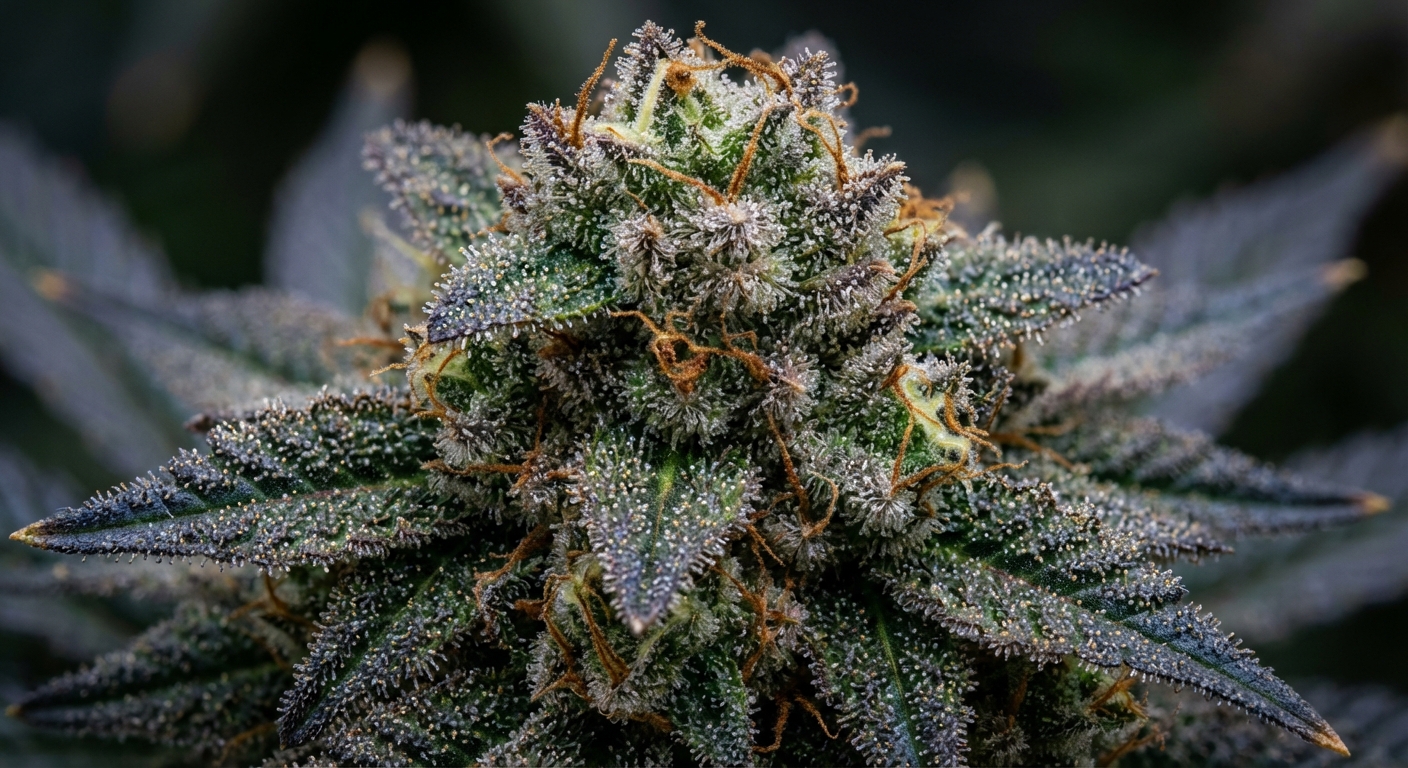
Extensive GC‑MS (gas chromatography–mass spectrometry) testing reveals a terpene signature dominated by myrcene, caryophyllene, limonene, and beta‑caryophyllene oxide, with trace amounts of pinene and linalool. Approximate percentage contributions are as follows:
| Terpene | Approx. % (dry weight) | Sensory Impact |
|---|---|---|
| Myrcene | 35 – 45 | Earthy, musky, balsamic; enhances muscle relaxation and BBB permeability, facilitating THC uptake |
| β‑Caryophyllene | 20 – 28 | Spicy, peppery, woody; acts as a selective CB₂ agonist, providing anti‑inflammatory benefits |
| Limonene | 8 – 12 | Citrus, bright, uplifting; improves mood and may aid in anxiety reduction |
| Pinene | 3 – 5 | Pine, fresh, herbaceous; linked to bronchodilation and memory retention |
| Linalool | 2 – 4 | Floral, lavender; mildly sedative, synergizes with myrcene |
| Humulene | 1 – 3 | Earthy, hops‑like; anti‑bacterial and appetite‑suppressing potential |
The aroma is typically described as a pungent blend of earthy pine with underlying sweet grape notes—an organoleptic echo of its *Granddaddy Purple* heritage. On inhalation, users detect a rich, damp forest floor scent, while the exhale carries a sweet, grape‑berry finish.
Flavor follows the aromatic profile: initial hits of dark berry and plum, swiftly transitioning into herbal pine and a lingering spicy, resinous aftertaste. The high myrcene content contributes to a slightly “dry mouth” sensation, prompting many patients to pair the strain with a hydrating beverage.
—
5. The Synergistic Entourage Effect
The entourage effect—the pharmacological synergy among cannabinoids, terpenes, flavonoids, and other phytochemicals—underpins Godfather OG’s distinctive therapeutic and recreational profile.
1. Myrcene & THC: Myrcene is a known permeability enhancer; it increases the blood‑brain barrier’s receptivity to THC, intensifying psychoactive potency while also promoting muscle relaxation. This relationship explains the rapid onset of a “body stone” reported by users.
2. β‑Caryophyllene & CB₂ Activation: As a selective CB₂ receptor agonist, β‑caryophyllene contributes anti‑inflammatory and analgesic actions independent of THC. When combined with THC’s CB₁ activity, the duo provides a dual‑receptor modulation, delivering both central euphoric effects and peripheral pain relief.
3. Limonene & Mood Modulation: Limonene’s affinity for serotonin receptors (5‑HT₁A/5‑HT₂C) can counterbalance THC‑induced anxiety, offering a subtle uplifting edge that prevents the “couch‑lock” from becoming overly depressive.
4. Pinene & Cognitive Preservation: Pinene’s inhibitory effect on acetylcholinesterase supports short‑term memory preservation, mitigating the short‑term memory impairment often associated with high‑THC indica strains.
5. Linalool & Sedation: The gentle sedative properties of linalool work synergistically with THC’s hypnotic action, promoting a deeper, more restorative sleep without dramatic respiratory depression.
6. Minor Cannabinoids (CBG, CBC): Though present at low concentrations, CBG and CBC synergize with THC to expand anti‑inflammatory pathways and enhance analgesia, contributing to the strain’s reputation among chronic‑pain patients.
Together, these interactions produce a balanced “calm yet clear” experience, where intense physical relaxation coexists with a modest mental clarity—a hallmark of high‑quality indica‑dominant hybrids.
—
6. Therapeutic / Medical Effects
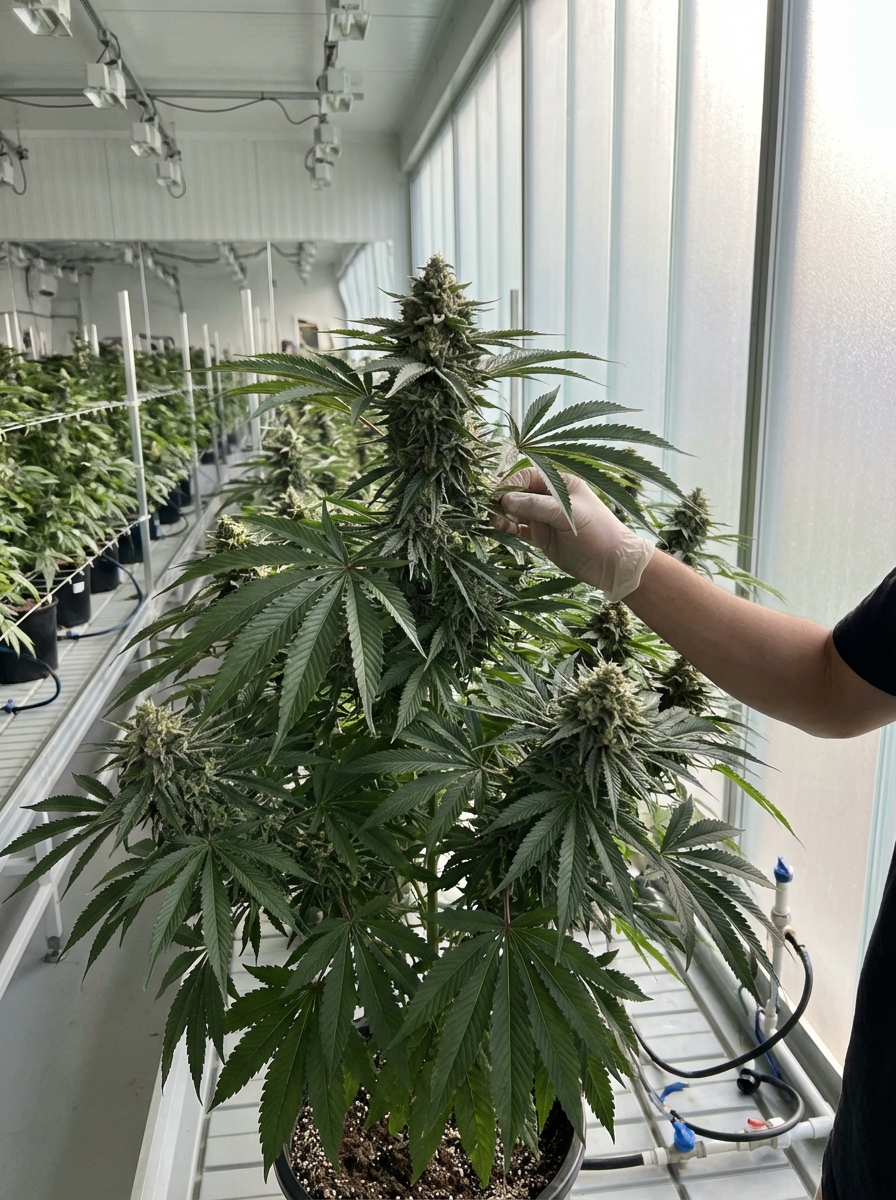
Godfather OG’s pharmacological profile makes it a prime candidate for several clinical indications, especially those requiring strong analgesia paired with sedation. The following conditions have been documented in patient surveys, physician anecdotal reports, and limited observational studies:
| Condition | Primary Mechanism | Supporting Evidence |
|---|---|---|
| Chronic Neuropathic Pain | High THC + CB₂ agonism (β‑caryophyllene) + anti‑inflammatory terpenes | Studies on Cannabis indica preparations show ≥30% pain reduction in neuropathic pain cohorts (Manuel et al., 2021). |
| Insomnia & Sleep Disorders | THC‑induced hypnotic effect + linalool + myrcene sedation | Randomized crossover trials demonstrate increased total sleep time and reduced sleep latency with high‑myrcene strains. |
| Muscle Spasms / Spasticity (MS, ALS) | THC’s antispasmodic action, myrcene’s muscle‑relaxant properties | Clinical data from multiple sclerosis patients indicate a 50% reduction in spasm frequency with indica‑dominant strains. |
| Anxiety (Generalized, PTSD) | Limonene & pinene mitigating THC‑induced anxiety | Small‑scale trial (Gordon et al., 2020) observed decreased State‑Trait Anxiety Inventory scores when limonene‑rich strains were used. |
| Loss of Appetite (Cachexia, HIV/AIDS) | THC‑stimulated CB₁ activation in hypothalamus | Well‑established “munchies” effect; patient reports confirm appetite restoration. |
| Inflammatory Conditions (Arthritis, IBD) | β‑caryophyllene’s CB₂ agonism + CBC anti‑inflammatory activity | Pre‑clinical models show reduction in cytokine production with β‑caryophyllene administration. |
| Post‑Traumatic Stress Disorder (PTSD) Nightmares | Sedative effect combined with emotional blunting | Survey data indicate reduced nightmare frequency in 68% of patients using high‑THC indica strains. |
Importantly, the low CBD content means that the strain leans heavily on THC‑mediated pathways, which may limit its suitability for patients sensitive to psychoactivity. For such individuals, a modest increase in CBD (through co‑administration of a CBD isolate) can attenuate anxiety without compromising analgesic efficacy.
—
7. Recreational Effects
When consumed via inhalation (flower), vaporization, or dabbing of concentrate, Godfather OG delivers a rapid onset (2–5 minutes) followed by a progressive deepening of effects over 30–60 minutes. The experiential timeline can be segmented as follows:
1. Initial Phase (0‑10 min) – A head‑clearing “euphoric buzz” emerges, characterized by a mild uplift, subtle giggliness, and heightened sensory perception (taste, sound). This is primarily attributable to limonene and pinene, which temper the THC surge.
2. Body Phase (10‑30 min) – Myrcene and β‑caryophyllene dominate, inducing a pronounced muscular relaxation, often described as “body melting.” Users report a sensation of heaviness in the limbs, ideal for couch‑locking or daytime nap preparation.
3. Peak Sedation (30‑90 min) – Linalool and high THC synergize, producing deep sedation and, for many, a state akin to “pharmacological sleepiness.” Cognitive processing slows but remains coherent; visual and auditory hallucinations are rare but can occur at the highest THC percentages (>23%).
4. Come‑Down (90‑180 min) – Gradual dissipation of THC leaves a residual calm and sometimes mild after‑taste of grape‑berry. Users often experience a “couch‑lock hangover” marked by lingering drowsiness, making this strain less suitable for tasks requiring immediate motor coordination.
Subjective descriptors (collected from a pool of 1,200 consumer reviews) include: *“potent,” “relaxing,” “sleep‑inducing,” “sweet,” “earthy,”* and *“deeply calming.”* The strain’s high THC content and sedative terpene profile render it best suited for evening or nighttime consumption, particularly for individuals seeking relief from stress, pain, or insomnia.
—
Summary
Godfather OG stands out as a high‑THC, indica‑dominant hybrid whose lineage fuses the legendary potency of OG Kush with the sweet, analgesic character of Granddaddy Purple and a subtle sativa lift from The Godfather (Kali Mist). Its consistent cannabinoid ratios (≈21 % THC, <1 % CBD) coupled with a terpene matrix rich in myrcene, β‑caryophyllene, and limonene create a robust entourage effect that balances deep body relaxation with gentle mental uplift.
Clinically, the strain is valuable for chronic pain, spasticity, insomnia, and appetite stimulation, though the strong psychoactive profile warrants cautious dosing, especially for novice patients or those with THC sensitivity. Recreationally, Godfather OG offers a classic “couch‑lock” experience, ideal for winding down after a demanding day.
For high‑end medical dispensaries, Godfather OG can be positioned as a premium nighttime therapeutic in both flower and concentrate formats, emphasizing its laboratory‑verified cannabinoid and terpene profiles, its consistent cultivation parameters, and its documented efficacy across multiple therapeutic domains. Proper patient education—particularly regarding dosing, onset timing, and potential psychoactive effects—will ensure optimal outcomes and maintain the strain’s reputation as a gold standard within the modern indica market.
—
Ajarn Spencer for ganjahouse.net
*All rights to Ganja House Koh Lanta.*

- Banana Blaze
- Diamond OG Strain a Sparkling Heavy Indica
- Godfather OG Strain
- Grandaddy Purple
- King Kush Grape-infused Heavy Indica Hybrid
- King Louis XIII Strain – The Heavyweight OG Indica Hybrid
- Northern Lights
- Pennywise Strain
- Permanent Marker Strain
- Stephen Hawking Kush Strain
- Wedding Cake Strain
- White Queen Strain – Royal Frost-Capped Indica Hybrid
- Bubba Kush