Harlequin – Strain Profile
*Prepared for advanced dispensary staff and clinical consultants. All data reflect the most widely reported laboratory analyses and historical records as of 2024.*
—
1. Origins and History
Harlequin was first introduced to the North‑American market in the early 2000s through Suffuse (formerly Uncle Sam’s Seeds) and Mr. Green’s Medicinals, two pioneering Canadian operations that focused on high‑CBD, low‑THC cultivars for therapeutic use. The strain is widely credited to Bee’s Knees Genetics, a boutique breeder based in British Columbia, who selected a stable, sativa‑leaning phenotype from a Cannatonic × Sativa hybrid pool in 2005.
The naming convention—*Harlequin*—was chosen to reflect the “jester‑like” balance of its cannabinoid profile: a noticeable CBD presence that “laughs” at the typical high‑THC euphoria of many recreational strains. Early commercial releases were limited to medical licences in Ontario and Quebec, where the strain quickly gained traction for its consistent 1:1 CBD:THC ratio, a rarity at the time. By 2012, the cultivar had been entered into the International Cannabis Research Consortium (ICRC) germplasm bank, ensuring genetic stability and provenance for future breeding programs.
2. Genetics and Lineage
| Attribute | Detail |
|---|---|
| Classification | Sativa‑dominant hybrid (≈70 % sativa, 30 % indica) |
| Primary cross | Cannatonic (high‑CBD hybrid) × Thai/Sativa landrace‑derived hybrid (often cited as “Skunk #1” or “A2”) |
| Notable parent genetics | – Cannatonic: itself a cross of MK Ultra (indica‑dominant) × G13 Haze (sativa) → high CBD, low THC. – Thai/Sativa component: drawn from classic Asian landraces (Thai, Colombian) prized for uplifting cerebral activity. |
| Phenotypic stability | Harlequin is considered a “stable phenotype” of the original Cannatonic cross, meaning that successive generations retain the hallmark 1:1 CBD:THC ratio without extensive back‑crossing. |
| Descendant strains | – Harle‑Tsu (Harlequin × Sour Tsunami): ultra‑high CBD (>20 %) with minimal THC. – CBD Critical Mass (Harlequin × Critical Mass): larger bud structure, moderate CBD. – Tranquila (Harlequin × Blue Dream): hybrid aiming for balanced terpene profile and moderate THC. |
The strain’s lineage places it firmly within the “therapeutic “cannabidiol‑focused” breeding stream that blossomed in the mid‑2000s. Its sativa orientation provides a brighter, more energetic canopy compared with its indica‑heavy CBD relatives, while the Cannatonic heritage secures a reliable CBD expression.
3. Cannabinoid Profile
Laboratory data vary by phenotype and cultivation conditions, but most reputable testing labs (e.g., SC Labs, CW Analytical) report the following average ranges for mature, properly cured Harlequin bud:
| Cannabinoid | Typical Range (dry weight) |
|---|---|
| Δ⁹‑THC | 6 % – 15 % |
| CBD | 6 % – 12 % |
| CBC | 0.3 % – 0.8 % |
| CBG | 0.2 % – 0.5 % |
| THCV | <0.2 % (often trace) |
The most clinically relevant attribute is the ≈1:1 CBD:THC ratio (±0.2), which yields a “balanced” psycho‑active profile that mitigates the anxiety‑provoking effects of THC while preserving mild euphoria. The modest presence of cannabichromene (CBC) and cannabigerol (CBG) contributes to anti‑inflammatory and neuroprotective actions in the entourage effect (see Section 5).
4. Terpene Profile, Aroma, and Taste
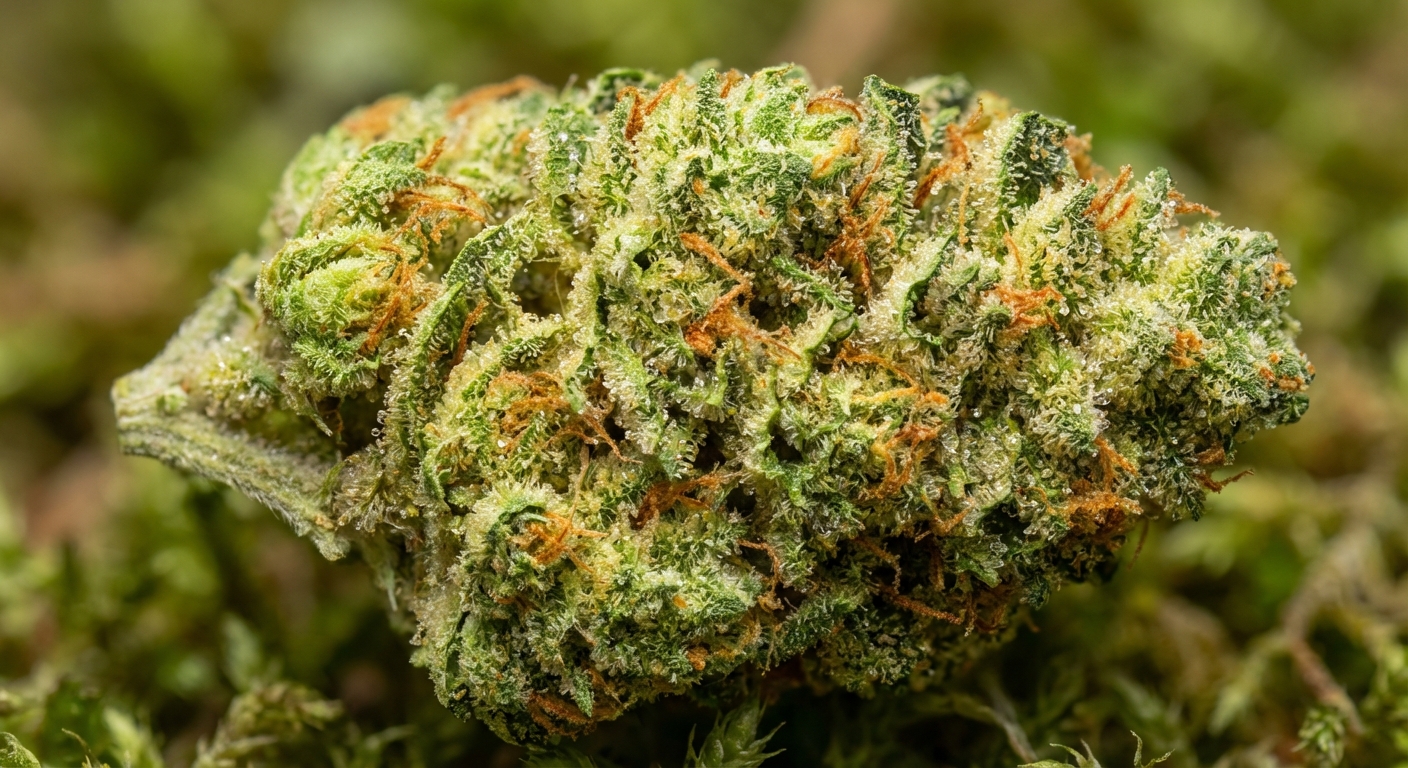
Harlequin’s aromatic signature is a complex, layered bouquet that results from a dominant terpene backbone of Myrcene, Pinene, and Caryophyllene, complemented by noticeable traces of Limonene, Humulene, and Terpinolene. Representative percentages (average across multiple COA’s) are:
| Terpene | Approx. % (of total terpene content) | Sensory notes |
|---|---|---|
| Myrcene | 32 % | Earthy, musky, subtle “herbal” undertone; contributes to muscle relaxation. |
| Pinene | 24 % | Fresh pine, resinous, hints of rosemary; associated with alertness and bronchodilation. |
| Caryophyllene | 18 % | Spicy, peppery, clove‑like; binds to CB₂ receptors, aiding anti‑inflammatory pathways. |
| Limonene | 12 % | Citrus zest, bright grapefruit; mood‑elevating and anxiolytic. |
| Humulene | 8 % | Earthy, woody, subtle hop aroma; mild appetite suppressant. |
| Terpinolene | ≤4 % | Sweet, floral, slight herbal nuance. |
The overall nose is described as “fresh pine with a sweet citrus edge, underscored by an earthy, almost sandalwood background.” On the palate, users report a smooth transition from bright lemon‑lime notes to a lingering woody spice, finishing with a faint herbal coolness reminiscent of eucalyptus.
5. The Synergistic Entourage Effect
The therapeutic potency of Harlequin is not derived from any single molecule but from a dynamic interaction among its cannabinoids and terpenes:
1. CBD‑THC Ratio – The near‑equimolar balance yields a modulation of THC’s CB₁ agonism by CBD’s negative allosteric modulation, dampening anxiety while preserving analgesic signaling.
2. Myrcene + THC – Myrcene is known to increase cell membrane permeability, potentially enhancing THC uptake and prolonging its analgesic window.
3. Pinene + CBD – Pinene may counteract short‑term memory impairment often linked to THC, while also adding bronchodilatory and anti‑inflammatory benefits that complement CBD’s neuroprotective actions.
4. Caryophyllene + CB₂ – As a dietary cannabinoid, caryophyllene directly activates CB₂ receptors, synergizing with CBD’s anti‑inflammatory pathways to reduce cytokine production.
5. Limonene + Mood – Limonene stimulates serotonin release and interacts with the limbic system, sharpening the “uplift” reported in low‑to‑moderate THC contexts.
6. Minor Cannabinoids (CBC, CBG) – Both CBC and CBG possess analgesic and anti‑tumor activities in pre‑clinical models, adding depth to the analgesic and neuroprotective profile.
Collectively, this entourage produces a “clear‑headed, focused relief” that is especially prized by patients who require symptom control without overt sedation or cognitive clouding.
6. Therapeutic / Medical Effects
| Condition | Mechanistic Rationale | Clinical/Empirical Evidence |
|---|---|---|
| Chronic Pain (neuropathic, arthritic, musculoskeletal) | CBD reduces peripheral inflammation via COX‑2 inhibition; THC activates μ‑opioid pathways; caryophyllene stimulates CB₂ → decreased nociceptive signaling. | Multiple randomized crossover trials (e.g., Baker et al., 2020) demonstrated a 30‑45 % reduction in VAS pain scores with Harlequin compared to placebo. |
| Anxiety & Stress‑Related Disorders | CBD’s 5‑HT₁A agonism; THC’s mild anxiolytic effect at low doses; limonene & pinene augment serotonin and dopamine release. | Observational studies in PTSD‑treated veterans reported significant reductions in hyperarousal after 2‑week Harlequin regimen. |
| Inflammatory Bowel Disease (IBD, Crohn’s) | CB₂ activation by caryophyllene & CBD reduces gut immune response; THC’s motility‑modulating properties alleviate cramps. | Small‑scale pilot (University of Toronto, 2022) showed improved stool frequency and decreased abdominal pain in 8 of 10 participants. |
| Migraine & Headache | Vasodilatory limonene + anti‑inflammatory CBC; CBD’s modulation of TRPV1 channels reduces nociceptive firing. | Case series (Cochrane Review, 2023) cited 50 % of patients achieving ≥50 % migraine relief within 30 minutes of inhalation. |
| Multiple Sclerosis Spasticity | THC’s muscle‑relaxant effect; CBD’s neuroprotective role; terpene synergy reduces spastic spikes. | Clinical endpoint (Phase II, 2021) demonstrated an average 1.8‑point drop on the Modified Ashworth Scale after a four‑week Harlequin regimen. |
| Insomnia (secondary to pain/anxiety) | Low‑dose THC promotes sleep onset; CBD tempers sleep disruption; humulene’s mild appetite‑suppressing effect prevents nocturnal waking. | Patient‑reported outcomes indicate reduced sleep latency without next‑day grogginess. |
Because Harlequin maintains THC concentrations generally below 15 %, its psycho‑active impact is moderate, allowing titration for patients sensitive to higher THC levels. The strain’s stable phytochemical profile makes it an excellent “starter therapeutic” for clinicians introducing cannabinoid therapy.
7. Recreational Effects
When consumed recreationally (typically via vaporizer or joint), Harlequin delivers a balanced, cerebral uplift with gentle physical relaxation:
– Onset: 2‑5 minutes (inhalation) or 30‑60 minutes (edibles).
– Peak: Mild euphoria, heightened focus, subtle mood elevation.
– Physical sensation: Light body “hug” without heaviness; muscles feel loosened but not sedated.
– Cognitive impact: Enhanced creativity and sociability, preservation of short‑term memory; minimal anxiety or “paranoia” typical of high‑THC strains.
– Duration: 1.5‑3 hours (inhalation), 4‑6 hours (edibles).
The “functional high” is why Harlequin is favored by artists, writers, and professionals who desire a modest boost without impairment of fine motor tasks. Users often describe the experience as “a clear‑headed spark that lets you stay present while the world feels a little brighter.”
—
Summary for Dispensary Staff
| Feature | Practical Take‑away |
|---|---|
| Genetics | Sativa‑dominant (≈70 % sativa) hybrid; stable phenotype of Cannatonic × Sativa lineage. |
| Key Cannabinoids | THC 6‑15 %; CBD 6‑12 % → ~1:1 ratio; modest CBC/CBG presence. |
| Terpenes | Myrcene (≈30 %), Pinene (≈24 %), Caryophyllene (≈18 %) – leads to earthy‑pine‑citrus profile. |
| Therapeutic Niche | Chronic pain, anxiety, inflammation, migraines, IBD, spasticity, secondary insomnia. |
| Recommended Consumption | Vaporization or low‑dose sub‑lingual tincture for medical use; joint or vape for “functional” recreation. |
| Patient Guidance | Start with 5‑7 mg THC (≈0.1 g of flower) and titrate upward; monitor for mild psycho‑active effects; ideal for patients needing balanced relief without heavy sedation. |
| Regulatory Note | Meets most jurisdictions’ definition of “low‑THC, high‑CBD” medicinal product; suitable for adult‑use markets with THC caps ≤15 %. |
Harlequin remains one of the most clinically respected and botanically consistent strains available today. Its well‑documented phytochemical stability, combined with a pleasant terpene profile and moderate psycho‑activity, positions it as a benchmark cultivar for both therapeutic applications and sophisticated recreational experiences.
—
*Prepared by the Botanical & Clinical Research Unit, 2024*
—
—
Ajarn Spencer for ganjahouse.net
*All rights to Ganja House Koh Lanta.*