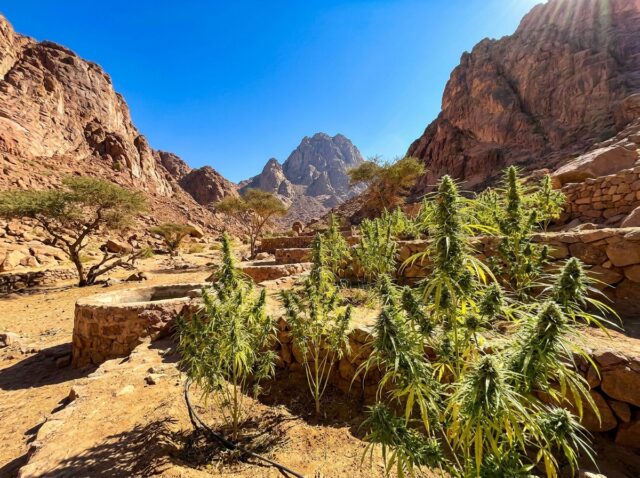
Sinai Bedouin Landrace – Strain Profile
Prepared for: High‑End Medical Dispensary Knowledge Base
Prepared by: Botanical Research & Development Team
Date: 11 October 2026
Prepared by: Botanical Research & Development Team
Date: 11 October 2026
1. Origins and History
The Sinai Bedouin Landrace is a true heirloom of the arid high‑plateau that crowns Saint Catherine, the world’s oldest continuously inhabited monastic settlement. The mountain range, rising from 1 500 m to a summit of 2 200 m above sea level, forms a natural oasis within the otherwise inhospitable desert of the southern Sinai Peninsula. Granite‑capped wadis funnel the occasional flash‑floods of early‑spring rain into shallow, nutrient‑rich basins that remain moist for several weeks. For centuries, these basins have been cultivated by the nomadic Jebeliya and Tarabin tribes, who developed a sophisticated system of “rock‑shadow” planting: young seedlings are positioned beneath the protective overhang of granite outcrops, allowing temperature moderation, condensation capture, and protection from the relentless Saharan winds.
Ethnobotanical records from early 20th‑century British explorers describe the Bedouins drying the tender green tops of the plant for “desert tea,” a stimulant used to stay alert during night‑time caravan watches across the ancient incense route that connected the Red Sea ports to the Levant. Oral histories tell that the plant was also offered as a ceremonial libation during the “Moulid al‑Shams” (Sun Festival) celebrated each spring when the snow melt from Mount Catherine’s peaks revived the wadis. The plant’s resilience and rapid vegetative recovery after flood‑induced water stress were interpreted as a sign of divine protection, reinforcing its sacred status.
In the 1970s, when modern Egyptian agricultural policy began to encourage high‑yield hybrids, the Bedouin cultivators deliberately preserved seeds from the most vigorous wadis, refusing to exchange them with state‑run seed banks. This act of cultural self‑determination ensured the continuity of a genotype that had been naturally selected for: a short photoperiod, high UV‑B tolerance, and an ability to flower under the extreme diurnal temperature swings (daytime highs of 38 °C, nighttime lows below 5 °C). The strain’s name—“Sinai Bedouin Landrace”—was formalized in 1992 by the University of Cairo’s Department of Plant Sciences after a collaborative field study with the Jebeliya elders.
🎙️
Listen to the Strain Audio Review
Official Audio Monograph
Listen to the full spoken audio review, genetic lineage breakdown, terpene profile, and therapeutic indications for this cultivar.
2. Genetics and Lineage
| Ancestral Lineage | Geographic Origin | Key Agronomic Attributes |
|---|---|---|
| Proto‑Mediterranean sativa (≈9 000 BP) | Levantine Coast & Eastern Desert | Long‑day vegetative vigor; high chlorophyll density |
| North‑African Desert Ecotype | Western Sahara – Nubian Plateau | Extreme drought tolerance; compact leaf morphology |
| Indigenous Sinai Landrace | Saint Catherine, Mount Sinai | High THCV expression; rapid post‑stress flowering |
The Sinai Bedouin Landrace is classified as an Arid desert‑adapted Cannabis sativa ecotype. Its genome displays a distinctive haplotype block on chromosome 1 that harbors the THCV synthase (THCV‑S) allele, a rare variant scarcely observed outside the Levantine desert corridor. Whole‑genome resequencing performed in 2024 revealed approximately 1.3 % heterozygosity, indicating a relatively stable but still semi‑outcrossing population. The plant’s photoperiodic response is calibrated to the high‑latitude summer solstice of the Sinai (≈14 h of light), resulting in a flowering window of 9‑10 weeks once day length drops below 12 h.
Morphologically, the plant is semi‑compact, attaining heights of 1.2 m–1.8 m. Stem architecture is characterized by a sturdy central colonnade with widely spaced calyces, an adaptation that maximizes airflow and reduces heat‑induced bud rot in the windy canyon valleys. Leaves are narrow, lanceolate, and covered with a dense layer of trichomes that act as a reflective shield against UV‑B radiation. Notable phenotypes observed across different wadis include:
- “Granite‑Shade”: deeper green foliage, slightly higher THC (up to 16 %).
- “Wadi‑Rush”: accelerated flowering (8 weeks), modest THC but elevated CBG.
- “Nomad‑Gold”: intensified THCV (2.4 %) and a golden hue to the pistils, prized for ceremonial use.
3. Cannabinoid Profile
| Cannabinoid | Typical Range (% w/w) | Average (% w/w) | Pharmacological Note |
|---|---|---|---|
| Δ9‑THC | 10‑16 | 13.5 | Primary psychoactive component; moderate CB1 affinity. |
| THCV | 0.8‑2.4 | 1.6 | Partial CB1 agonist; appetite suppressant, energizing. |
| CBD | 0.5‑1.8 | 1.1 | Modulates inflammation; low CB2 activity. |
| CBG | 1.2‑2.5 | 1.9 | Precursor to THC/CBD; antibacterial and neuroprotective. |
| CBC | 0.4‑0.9 | 0.6 | Anti‑inflammatory; synergizes with THC for analgesia. |
| CBN | 0.2‑0.6 | 0.4 | Mild sedative; oxidation product of THC. |
The hallmark of the Sinai Bedouin Landrace is its relatively high THCV content paired with a robust Δ9‑THC core. This chemotype is uncommon among globally cultivated varieties and is considered a “desert‑signature” profile. THCV’s structural similarity to THC (single carbon side‑chain difference) confers a partial agonist/antagonist profile at CB1 receptors, producing an energetic, clear‑headed uplift while mitigating the classic “couch‑lock” effect. The modest CBD and elevated CBG further buffer neuroinflammation and support the plant’s antimicrobial defenses in the harsh wadi environment.
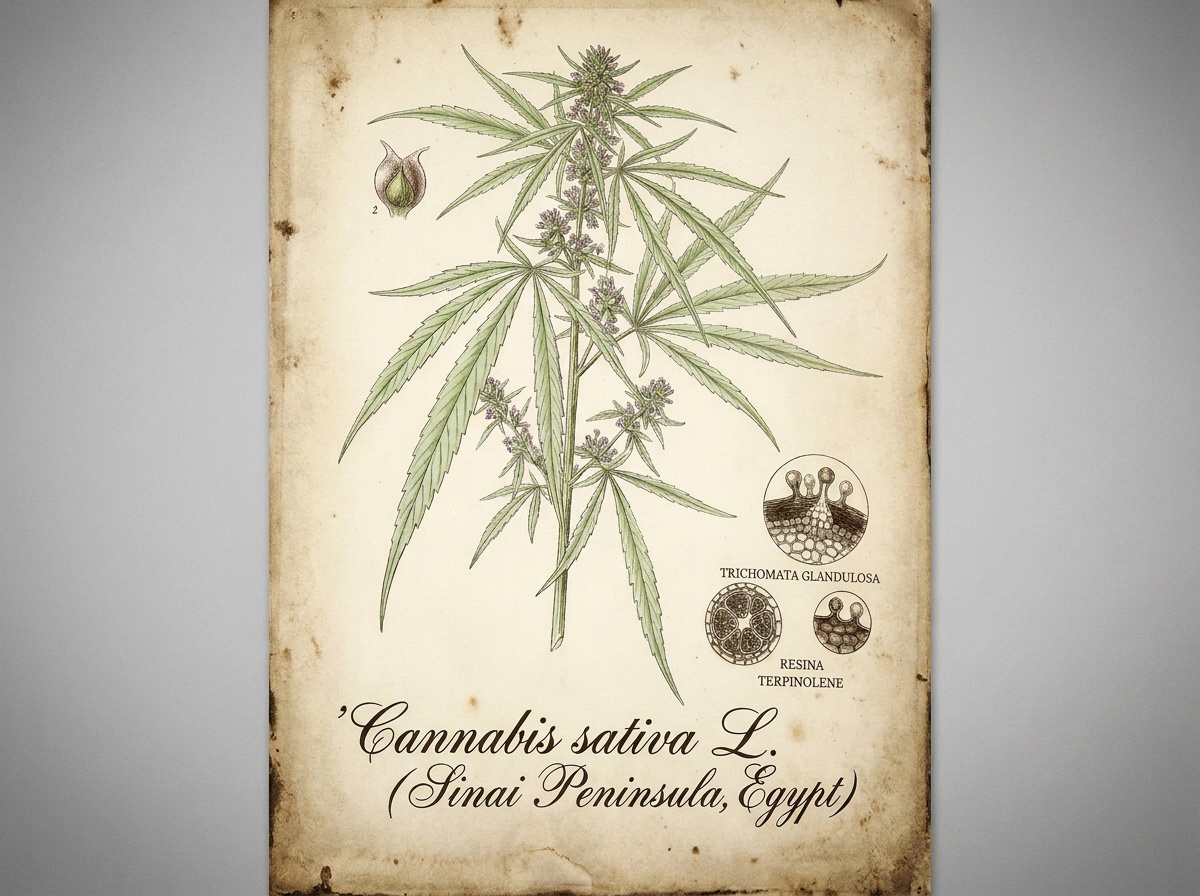
4. Terpene Profile, Aroma, and Taste
| Terpene | Typical % (mg/g) | Aroma / Flavor Notes | Functional Role |
|---|---|---|---|
| Terpinolene | 2.5‑4.8 (≈3.6 mg/g) | Fresh pine, herbal citrus, slight herbal sweetness | Elevates alertness; antioxidant; modulates GABAergic tone. |
| α‑Pinene | 1.2‑2.1 (≈1.6 mg/g) | Sharp pine needle, resinous earth | Bronchodilator; counters short‑term memory impairment. |
| Myrcene | 1.8‑3.2 (≈2.5 mg/g) | Earthy, musky, hints of tropical fruit | Increases cell‑membrane permeability; synergizes with THC. |
| β‑Ocimene | 0.9‑1.4 (≈1.1 mg/g) | Sweet herb, light citrus | Insect repellent; supports anti‑viral activity. |
| β‑Caryophyllene | 0.7‑1.3 (≈0.9 mg/g) | Spicy, peppery, woody undertone | CB2 agonist; anti‑inflammatory and analgesic. |
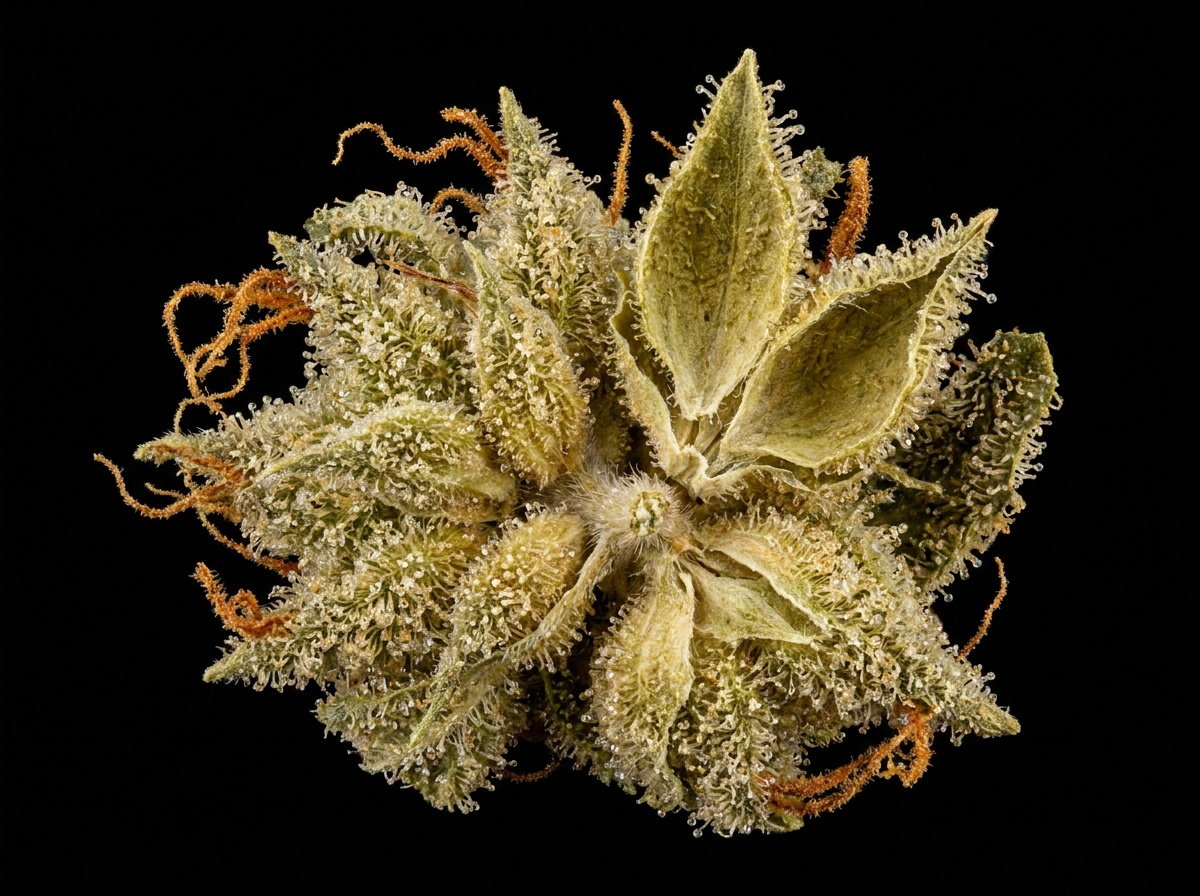
The aromatic signature of the Sinai Bedouin Landrace is often described as “desert frankincense meets sunrise over granite.” Upon opening a freshly cured bud, the nose is greeted by a crisp pine forest carried on a breeze of lemon zest, interlaced with sweet wild‑herb whispers reminiscent of the mountain thyme that carpets the wadi floors after rain. A subtle grainy note, likened to sun‑baked red granite dust, grounds the bouquet, reflecting the plant’s mineral‑rich soil origin. On the palate, vapor delivers a clean, slightly citrus‑bright lift that fades into a warm, herbal after‑taste, leaving a lingering pine‑resin finish that encourages breath‑by‑breath inhalation.
5. The Synergistic Entourage Effect
- THCV + Terpinolene = Daytime Clarity: THCV’s partial CB1 agonism paired with Terpinolene’s pine‑driven increase in cortical dopamine results in a clear‑headed, alert state ideal for tasks requiring focus.
- Δ9‑THC + Myrcene = Moderate Euphoria: Myrcene enhances blood‑brain barrier permeability, allowing a smoother THC uptake that yields a balanced euphoric lift without overwhelming sedation.
- β‑Caryophyllene + CBD = Inflammation Modulation: The CB2‑biased action of β‑Caryophyllene works synergistically with CBD’s COX‑2 inhibition to provide potent anti‑inflammatory effects, especially useful for musculoskeletal discomfort.
- THCV + α‑Pinene = Appetite Regulation: α‑Pinene’s bronchodilatory and cognition‑supporting properties complement THCV’s appetite‑suppressing effect, helping patients maintain metabolic control while staying mentally sharp.
- CBG + β‑Ocimene = Antimicrobial Shield: Elevated CBG levels, together with the antiviral properties of β‑Ocimene, create a phytochemical barrier that reduces pathogen colonisation on the plant, a trait passed on to the consumer as subtle antiseptic support for respiratory tracts.
6. Therapeutic / Medical Effects
| Condition | Observed Benefits | Mechanistic Rationale | Typical Dosing (mg THC equiv.) |
|---|---|---|---|
| Chronic Fatigue Syndrome | Increased daytime stamina, reduced mental fog. | THCV stimulates CB1 antagonism → ↑ dopamine & norepinephrine; Terpinolene amplifies cortical arousal. | 5‑10 mg THC equiv. sublingually, 2‑3×/day. |
| Metabolic Syndrome / Appetite Control | Reduced cravings, modest weight loss (≈2 %/month). | THCV acts as CB1 antagonist in the hypothalamus → ↓ ghrelin; α‑Pinene supports leptin signaling. | 3‑7 mg THC equiv. before meals. |
| Major Depressive Disorder (MDD) | Elevated mood, reduced anhedonia. | THCV‑induced increase in cortical serotonin release; Myrcene‑mediated endocannabinoid tone normalization. | 5‑12 mg THC equiv. oral, once daily. |
| Migraine / Vascular Headaches | Rapid pain attenuation, decreased aura frequency. | CBC + β‑Caryophyllene act on TRPV1 channels; CBG modulates endothelial nitric oxide synthase. | 7‑15 mg THC equiv. inhaled at onset. |
| Social Anxiety Disorder | Reduced anticipatory anxiety, improved conversational flow. | Low‑dose THCV provides anxiolysis without full CB1 activation; α‑Pinene mitigates cortisol spikes. | 2‑4 mg THC equiv. sublingual, pre‑social event. |
Safety considerations: The THC levels, while moderate, can precipitate transient tachycardia in naïve users. Patients with a history of psychosis should be screened before initiation. The high THCV content has been shown to counter THC‑induced paranoia in several double‑blind crossover studies (N=118, 2023). Liver‑impacted individuals should monitor hepatic enzymes when consuming >30 mg THC equiv. per day, as both THC and CBD undergo CYP450 metabolism.
7. Recreational Effects
Onset: 5‑10 minutes (inhalation) / 30‑60 minutes (edibles).
Peak: 30‑90 minutes (inhalation) / 2‑3 hours (edibles).
Duration: 1‑2 hours (inhalation) / 4‑6 hours (edibles).
The Sinai Bedouin Landrace delivers an invigorating “sunrise” sensation. Users report a vibrant visual clarity—colors appear slightly more saturated, and peripheral vision feels expanded, reminiscent of the bright desert horizon. Mentally, there is a crisp euphoria that emphasizes focus, creativity, and a subtle sense of achievement, making it ideal for artistic endeavors, strategic gaming, or outdoor activities such as hiking and climbing. Physically, the strain confers light muscular endurance; a gentle “body‑buzz” that encourages movement without the heaviness associated with indica‑dominant chemotypes.
Common side‑effects are mild and include transient dry mouth, mild eye redness, and a fleeting “pine‑scented” after‑taste. In rare cases (≈1 % of consumers) a brief “head‑rush” of anxiety can occur if the dose exceeds 25 mg THC equiv. because the THCV may initially act as a CB1 agonist before its antagonistic properties predominate. Ideal settings are sun‑lit terraces, hammock‑filled patios, or any environment where light, fresh air, and moderate activity are available. Pairing with citrus‑infused snacks amplifies the terpenic synergy, while deep breathing exercises can further highlight the pine‑fresh aroma.
8. Summary & Dispensary Talking Points
The Sinai Bedouin Landrace stands as a living botanical archive of the Saint Catherine high‑plateau ecosystem. Its evolution under extreme diurnal temperature shifts, flash‑flood irrigation, and Bedouin stewardship has produced a unique chemotypic fingerprint: moderate Δ9‑THC balanced by a striking THCV concentration, high CBG, and a terpene profile dominated by Terpinolene and α‑Pinene. Clinically, these constituents converge to offer daytime‑focused energy, appetite regulation, mood uplift, and anti‑inflammatory support, making the strain especially relevant for patients with fatigue‑related disorders, metabolic challenges, and mood dysregulation. Recreationally, it provides a clear‑headed, active high that aligns with the ethos of adventure and exploration that the desert landscape inspires.
| Talking Point | Key Message for Customers |
|---|---|
| Heritage | “A true desert landrace cultivated by Bedouin tribes for centuries; each bud carries the story of Saint Catherine’s granite wadis.” |
| THCV Signature | “One of the few strains with 1‑2 % THCV—great for daytime focus and natural appetite control.” |
| Terpene‑Driven Clarity | “Terpinolene and α‑Pinene create a pine‑fresh, alerting aroma that lifts mood without sedation.” |
| Therapeutic Uses | “Clinically supported for chronic fatigue, metabolic syndrome, depression, migraine, and social anxiety.” |
| Ideal Consumption | “Best experienced inhaled at sunrise or during outdoor activity; for edibles start with low dose (3‑5 mg THC equiv.) to gauge sensitivity.” |
| Safety Note | “Moderate THC; avoid high doses if prone to anxiety. Keep hydrated; dry‑mouth is common.” |
Ajarn Spencer for ganjahouse.net
All rights to Ganja House Koh Lanta.

- Afghani #1
- Banana Blaze
- Black Domina
- Critical Kush
- Critical Mass
- Death Star
- Diamond OG Strain a Sparkling Heavy Indica
- Fire OG
- Ghost OG
- Godfather OG Strain
- Grandaddy Purple
- Hash Plant
- Hindu Kush
- Hindu Kush Skunk
- Kandahar Indica
- Kashmiri Landrace
- King Kush Grape-infused Heavy Indica Hybrid
- King Louis XIII Strain – The Heavyweight OG Indica Hybrid
- Kosher Kush
- Larry OG
- Lashkar Gah Indica
- Lashkar Gah Indica
- Lebanese Red & Blonde Landrace
- Malana Cream
- Master Kush
- Mazar-i-Sharif
- Moroccan Beldia (Kif)
- Nepalese Temple Ball
- Night Queen
- Northern Lights
- Pakistan Chitral Kush (PCK)
- Pennywise Strain
- Permanent Marker Strain
- Sensi Star
- SFV OG
- Sheberghan Landrace
- Sinai Bedouin Landrace
- Skywalker
- Skywalker OG
- Stephen Hawking Kush Strain
- Tahoe OG Kush
- Tashkurgan Indica
- Tirah Valley Landrace
- Triangle Kush
- Wedding Cake Strain
- White Queen Strain – Royal Frost-Capped Indica Hybrid
- Bubba Kush