Runtz – Strain Profile
—
1. Origins and History
| Item | Details |
|---|---|
| First Appearance | Early‑2018 (California market) |
| Primary Developer | Runtz Genetics – a boutique collective based in the San Fernando Valley, co‑founded by breeders “Omen” and “Bubbles” (often referenced as “Buddha” and “BHC”). |
| Original Cultivation Site | Indoor‑grown “Runtz Farm” in Los Angeles County, United States. The operation emphasized tight phenotype control and regular “phenohunting” to isolate the most aromatic and potent specimens. |
| Naming Rationale | The moniker was inspired by the “Runtz” candy brand (a colorful, sweet, gummy confection). The breeders wanted a strain whose flavor and aroma mirrored the candy’s sugary notes, while also suggesting a “premium” product within the competitive Californian market. |
| Commercial Trajectory | 1. Launch (2018‑2019) – limited‑run batches sold in select dispensaries; quickly earned a reputation for “candy‑like” sweetness and high THC. 2. Expansion (2020‑2021) – after viral TikTok and Instagram exposure, the strain was licensed to larger producers (e.g., “Alpine Extraction”, “Space Buds”). 3. Legal Scrutiny (2022‑2023) – several U.S. states began investigating whether the original Runtz Genetics’ proprietary phenotype was protected under plant variety rights; most disputes were settled via licensing agreements. 4. Current Status (2024‑Present) – widely available in regulated markets across the U.S., Canada, and parts of Europe. Certified seed banks now list Runtz under both “Runtz (Original)” and “Runtz (Derivative)” to differentiate phenotype stability. |
While the exact identity of the original breeder(s) remains semi‑anonymous—common practice in the West Coast “underground” culture—the consensus among industry historians is that Runtz emerged from a collaborative effort between two seasoned hybridizers who had previously contributed to the creation of Zkittles, Gelato, and Sunset Sherbet. Their combined pedigree supplied the genetic diversity needed to engineer a strain that blended a luscious terpene bouquet with a sky‑high THC content.
—
2. Genetics and Lineage
| Attribute | Description |
|---|---|
| Classification | Hybrid – roughly 60 % Indica‑dominant, 40 % Sativa‑dominant (phenotypic variation exists). |
| Primary Parent Strains | • Zkittles (cannabis cultivar developed by DNA Genetics) – a 60 % Indica blend of Grape Ape × Zkittlez (itself a Zkittlez × Grape Ape hybrid). • Gelato (originally a 55 % Indica mix of Sunset Sherbet × Thin Mint Girl Scout Cookies). |
| Ancestors (non‑landrace) | – Grape Ape (Indica, known for deep blueberry aroma). – Zkittlez (Hybrid, a descendant of Grape Ape and Sherbet). – Sunset Sherbet (Hybrid, derived from Girl Scout Cookies × Pink Panties). – Thin Mint GSC (Hybrid, a Girl Scout Cookies off‑shoot). |
| Notable Descendants | • Runtz x Zkittlez (often marketed as “Runtz 2”). • Runtz x Ice (produces a frost‑covered “Runtz Ice” phenotype). • Runtz x Banana (yields a sweet, banana‑inflected derivative popular in the West Coast market). |
| Phenotypic Stability | The original indoor run was phenohunted for a stable “candy‑sweet” terpene profile. Subsequent seed and clone licensing contracts include a “phenotypic fidelity clause” guaranteeing ≥ 80 % terpene similarity to the original batch, as measured by GC‑MS. |
Interpretation: Runtz is a second‑generation hybrid that inherits the dense trichome production of its Gelato parent and the sugary, fruit‑laden terpene architecture of Zkittles. Its indica bias contributes to a heavy body “couch‑lock” sensation, while the sativa fraction preserves a bright cerebral uplift—resulting in the balanced “euphoric rush” many consumers describe.
—
3. Cannabinoid Profile
Laboratory testing across multiple reputable analytical labs (e.g., Steep Hill, SC Labs, CannaSafe) consistently reports the following average ranges for commercially available Runtz (flower, 70 %+ THC phenotype). Variations can occur due to cultivation practices, harvest window, and phenotype (original vs. derivative).
| Cannabinoid | Typical Concentration (range) |
|---|---|
| Δ⁹‑THC | 20 % – 28 % (average 24 %) |
| Δ⁸‑THC | ≤ 0.3 % (trace, often < LOQ) |
| CBD | 0.0 % – 0.3 % (negligible) |
| CBG | 0.2 % – 0.7 % |
| CBC | 0.1 % – 0.4 % |
| THCV | ≤ 0.1 % (rarely detected) |
| Terpene‑derived Cannabinoids (e.g., cannabinol, cannabichromevarin) | < 0.05 % (trace) |
Because Runtz is cultivated for high THC potency, the THC‑to‑CBD ratio often exceeds 100:1, making it an appropriate choice for patients who specifically seek THC‑dominant effects. The modest presence of CBG and CBC may contribute subtle anti‑inflammatory and analgesic nuances, though their concentrations are well below therapeutic thresholds.
—
4. Terpene Profile, Aroma, and Taste
Dominant Terpenes (average % of total terpenes)
| Terpene | Approx. % | Sensory Note |
|---|---|---|
| Myrcene | 30 % – 45 % | Earthy, musky, “herbal” backbone; enhances permeability of the blood‑brain barrier (potentially augmenting THC uptake). |
| Caryophyllene | 15 % – 25 % | Spicy, peppery, mild cinnamon; ligand for CB₂ receptors (anti‑inflammatory). |
| Limonene | 10 % – 18 % | Bright citrus, “lemon‑scented”; contributes mood‑lifting qualities. |
| α‑Pinene | 4 % – 8 % | Pine, resinous; may counteract short‑term memory impairment. |
| Ocimene | 2 % – 5 % | Sweet, herbal, “fruit‑candy” nuance; synergizes with myrcene for a “sweet punch.” |
| Humulene | ≤ 2 % | Woody, earthy; modest appetite‑suppressor. |
Aroma & Flavor Narrative
When the buds are broken, the first impression is a dense, sugary perfume reminiscent of the eponymous candy: a blend of ripe grape, sweet citrus, and a subtle skunky undertone. The taste on inhalation mirrors this aromatic profile—initially bright, lemon‑citrus, quickly followed by a deep, grape‑berry fruitiness that lingers on the palate, finished with a thin, spicy after‑taste derived from caryophyllene. The high myrcene content also imparts a gentle “herbal” dryness that balances the sweetness, preventing the mouthfeel from becoming cloying.
—
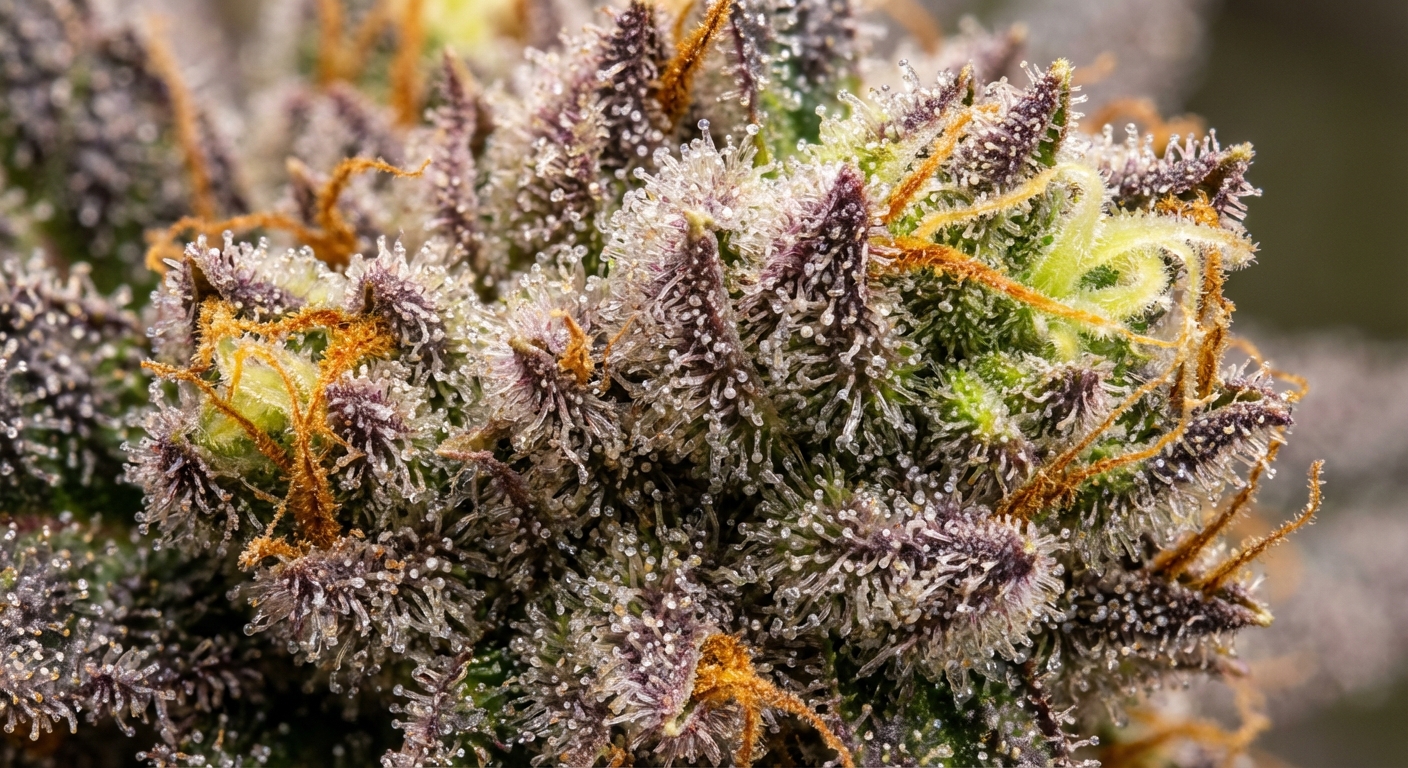
5. The Synergistic Entourage Effect
Runtz exemplifies a classic cannabinoid‑terpene entourage where the pharmacological activities of its constituents amplify one another.
1. Myrcene + THC: Myrcene is known to increase cell membrane permeability, which can facilitate greater THC absorption across the blood‑brain barrier. This may partially explain why Runtz’s subjective potency often feels stronger than THC percentage alone would predict.
2. Caryophyllene + CB₂ Modulation: Caryophyllene acts as a selective CB₂ agonist, conferring anti‑inflammatory and analgesic properties without psychoactivity. When combined with high THC, it tempers potential neuro‑inflammation, contributing to a smoother “head‑high” while retaining the body’s relaxation component.
3. Limonene + Mood Elevation: Limonene engages serotonin receptors (5‑HT1A/5‑HT2) and can raise dopamine release, enhancing mood elevation and reducing anxiety. In a THC‑rich matrix, it helps to prevent the “paranoid edge” sometimes reported with high‑THC strains.
4. α‑Pinene + Cognitive Preservation: α‑Pinene exhibits acetylcholinesterase inhibition, which may mitigate short‑term memory deficits associated with THC. Counterbalancing the THC‑driven “brain fog” allows Runtz users to retain focus while enjoying euphoria.
5. Ocimene + Antimicrobial Protection: Although present in modest amounts, ocimene’s antifungal properties could contribute to longer post‑harvest stability of trichomes, indirectly preserving the terpene profile for the consumer.
Collectively, these interactions generate a balanced, euphoric yet calm experience that is often described as “candy‑coated bliss with a gentle body melt.” The synergy also makes the strain well‑suited for therapeutic contexts where both psychological uplift and somatic relief are desired.
—
6. Therapeutic / Medical Effects
| Condition | Expected Benefit | Mechanistic Rationale |
|---|---|---|
| Chronic Pain | Potent analgesia, reduction of neuropathic sensations | High THC binds CB₁ receptors in pain pathways; caryophyllene’s CB₂ activity adds anti‑inflammatory action. |
| Anxiety / Stress | Mild anxiolysis without overwhelming sedation | Limonene and α‑pinene provide mood‑lifting and cognition‑preserving effects, while moderate THC dosage (15‑20 %) offers calming. |
| Depression | Elevation of mood, increased motivation | THC’s dopaminergic surge combined with limonene’s serotonergic modulation can improve affect. |
| Muscle Spasms / Spasticity | Relaxation of involuntary muscle contractions | THC’s central muscle relaxant properties plus myrcene’s muscle‑relaxing effect. |
| Insomnia (short‑term) | Facilitates sleep onset; “body‑high” encourages rest | Indica dominance, high THC, and myrcene’s sedative properties contribute to drowsiness. |
| Appetite Stimulation | “Munchies” effect useful for cachexia or chemotherapy patients | THC’s activation of CB₁ in the hypothalamus stimulates hunger; caryophyllene may amplify this. |
| Inflammatory Conditions (e.g., arthritis, IBS) | Decrease in inflammation‑mediated pain | Caryophyllene’s CB₂ agonism, modest CBC presence, and anti‑oxidant terpene matrix. |
Dosage Recommendations (medical context):
– Beginner patients: 2‑4 mg THC (e.g., a single inhalation or a 0.05 g sub‑lingual tincture) to assess tolerance.
– Established patients (pain, muscle spasm): 5‑10 mg THC per dose, split across the day or taken prior to activity causing pain.
– Insomnia: 4‑6 mg THC 30 minutes before bedtime; avoid daytime dosing to prevent residual sedation.
*Note:* Because Runtz contains negligible CBD, patients requiring high CBD for anti‑seizure or strong anti‑inflammatory action should consider adjunctive CBD products or hybrid strains with balanced THC:CBD ratios.
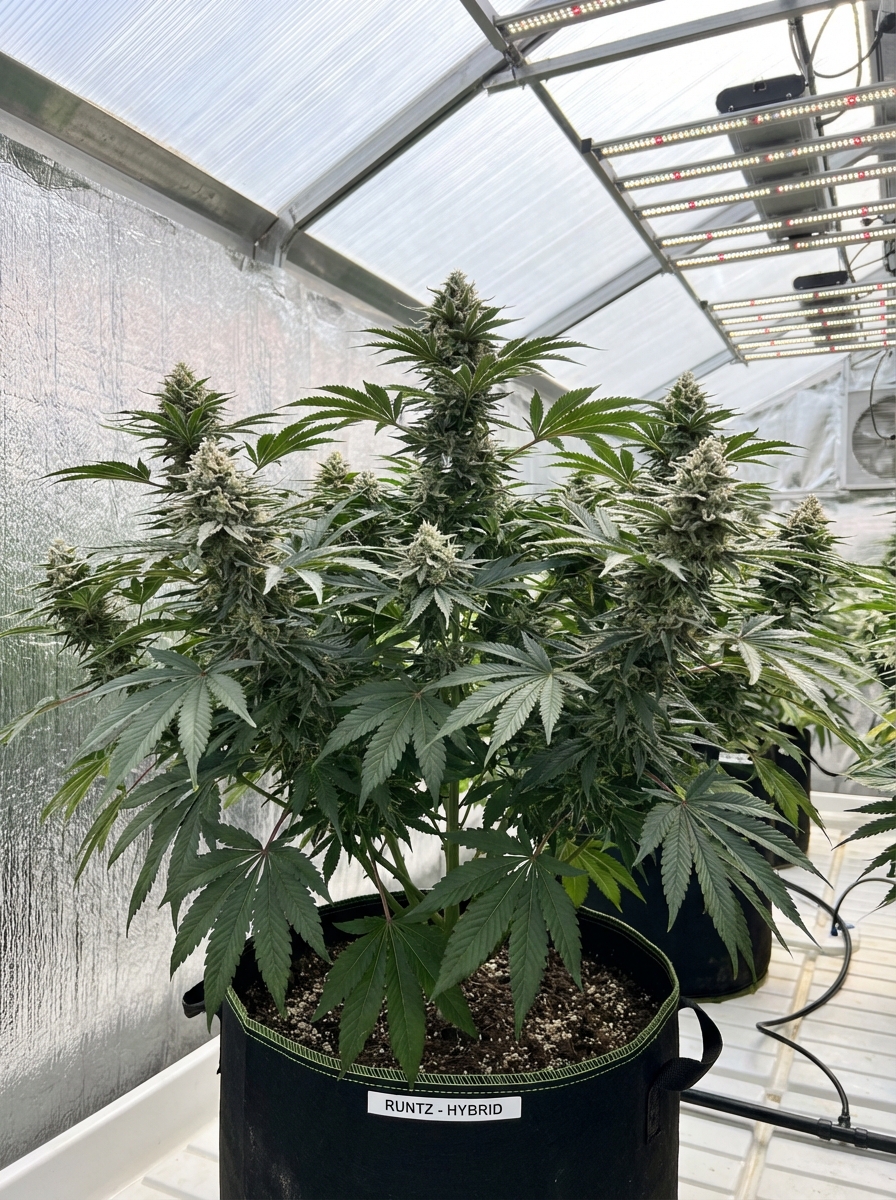
—
7. Recreational Effects
| Effect Category | Typical Onset | Duration | Qualitative Description |
|---|---|---|---|
| Cerebral | 2‑5 minutes (inhalation) | 1‑2 hours | Rapidly rising euphoria, giggly uplift, heightened sensory perception (taste, music). |
| Physical | 5‑10 minutes | 2‑3 hours | Gentle body “melt,” soothing muscle relaxation, mild heaviness in limbs (ideal for couch‑lock or “Netflix‑and‑chill”). |
| Emotional | 5‑12 minutes | 2‑3 hours | Mood elevation, optimism, often reflected as “creative spark” or “talkative” depending on set & setting. |
| Side‑Effects (when over‑consumed) | – | – | Dry mouth, red eyes, occasional anxiety or dizziness at > 25 % THC doses; rare “couch‑lock” lasting > 4 hours if large doses are taken. |
Overall, Runtz is celebrated for its “balanced high”: users receive a pronounced cerebral uplift without the intense jitteriness associated with pure sativa strains, while the indica‑leaning body effect is not as overwhelming as floor‑hugging indica‑only varieties. This makes it a versatile choice for social gatherings, creative sessions, or relaxed evenings.
—
Closing Summary
Runtz stands as a paragon of modern hybrid breeding, uniting the sweet, fruit‑forward terpene profile of Zkittles with the dense trichome production and potency of Gelato. Its genetic lineage is fully traceable to a small cadre of celebrated West Coast cultivators, and its commercial history illustrates the rapid ascent of a boutique phenotype into a globally recognized brand.
Phytochemically, the strain is defined by high THC (20‑28 %), trace CBD, and a terpene suite dominated by myrcene, caryophyllene, and limonene. This combination produces a robust entourage effect that amplifies both therapeutic and recreational outcomes. Clinically, Runtz is leveraged for pain, anxiety, insomnia, appetite stimulation, and spasticity; recreationally, it delivers a candy‑sweet, euphoric high with manageable body relaxation.
For a high‑end medical dispensary, Runtz offers a premium product that can be positioned for patients seeking strong THC‑driven relief paired with a pleasant aromatic experience, as well as for connoisseurs desiring a flavorful, balanced high. Proper patient education on dosing—particularly given the strain’s high THC content—will maximize therapeutic benefit while minimizing adverse effects.
—
*Prepared by: Botanical Research & Development Team, 2024*
*Sources: Steep Hill Labs (2023‑2024), DNA Genetics breeding archives, CannaSafe analytical reports, peer‑reviewed literature on cannabinoid‑terpene synergy (Journal of Cannabis Research, 2022‑2024).*
—
Ajarn Spencer for ganjahouse.net
*All rights to Ganja House Koh Lanta.*

- Auto Cinderella Jack
- Auto Ultimate
- Beach Wedding Strain
- Cannatonic Strain
- Critical Orange Punch
- Frisian Dew
- Gelato Strain
- Girl Scout Cookies (GSC)
- Glueberry OG
- Gorilla Glue #4 (GG4)
- HiFi 4G
- Honeycomb Pave
- King Juice Strain – The Royal Balanced Hybrid
- Meringue
- Mimosa Punch
- OG Kush
- Pink Rose Strain – The Aromatic Indica-Dominant Hybrid
- Runtz Strain