Listen to the Botanical Monograph Audio Edition
Professional voice narration summarizing the botanical pedigree, chemotypic architecture, and clinical indications of Cherry Wine.
1. Executive Summary & Botanical Taxonomy
Cherry Wine stands as an enduring titan of modern North American Type III cannabidiol (CBD) breeding, universally recognized by plant geneticists, craft cultivators, and medical patients as the cultivar that permanently bridged the divide between federally compliant agricultural hemp and connoisseur-grade indoor cannabis flower. Bred in 2015 on the Western Slope of Colorado by master breeder Bodhi Urban and High Grade Hemp Seed through the precision hybridization of The Wife (an ultra-high-CBD maternal cornerstone) and Charlotte’s Cherries (a resinous, fruit-forward cherry-scented selection related to the legendary Charlotte’s Web lineage), Cherry Wine shattered the long-standing stigma that low-THC cannabis must suffer from loose floral morphology and harsh, grassy chlorophyll flavors. By synthesizing 16.0% to 21.0% total cannabidiol alongside strictly sub-psychoactive delta-9-tetrahydrocannabinol (<0.3% THC by dry weight), Cherry Wine delivers an extraordinary 50:1 CBD-to-THC ratio wrapped in a decadent bouquet of ripe black cherry reduction, aged pinot noir oak barrel, cracked black pepper, and sweet woodland earth.
Taxonomically classified within Cannabis sativa L. as a true 50% Indica / 50% Sativa balanced hybrid chemovar, Cherry Wine exhibits vigorous lateral branching, thick lignified stems, and dense, golf-ball-to-conical floral clusters encrusted in long-stalked glandular trichomes. Unlike early European monoecious fiber hemp varieties (such as Finola, Fedora 17, or Futura 75) which were selected for tall unbranched stalks and seed oil production rather than secondary metabolite synthesis, Cherry Wine is a pure dioecious, resin-focused drug-type cultivar engineered specifically for high essential oil and phytocannabinoid output per square meter of canopy. Its balanced hybrid architecture allows it to thrive equally well in high-altitude Rocky Mountain field production, humid temperate greenhouses, and precision-controlled indoor LED cultivation rooms.
Clinically and pharmacologically, Cherry Wine functions as a premier non-intoxicating baseline therapeutic for patients seeking robust anxiolysis, musculoskeletal and neuropathic pain modulation, peripheral anti-inflammatory protection, and autonomic nervous system grounding without any impairment of executive cognitive function. Driven by a synergistic volatile terpene triad of beta-myrcene, beta-caryophyllene, and alpha-pinene—supplemented by meaningful titers of alpha-humulene, linalool, and alpha-farnesene—Cherry Wine engages multiple central and peripheral molecular targets simultaneously. Whether administered via precision dry-herb vaporization during high-stress occupational hours or formulated into full-spectrum sublingual lipid tinctures for nocturnal myofascial recovery, Cherry Wine remains an essential reference standard in the global medical cannabis pharmacopoeia.
From an agronomic and phytochemical standardization perspective, Cherry Wine occupies a rare niche among seed-propagated Type III hybrids due to its high phenotypic uniformity across diverse latitudinal zones. Whereas many early F1 and F2 high-CBD crosses segregated wildly between Type II (mixed THC/CBD) and Type III (CBD-dominant) offspring—creating severe regulatory risk for licensed farmers—Cherry Wine was stabilized using homozygous cannabidiolic acid synthase (CBDAS) parental lines. Consequently, whole-field populations display predictable flowering onset, uniform canopy height, consistent anthocyanin expression during cool autumn nights, and reliable compliance when harvested within its optimal eight-to-nine-week maturation window.
| Botanical & Taxonomic Parameter | Scientific Classification & Phenotypic Value |
|---|---|
| Scientific Botanical Name | Cannabis sativa L. (Type III Chemovar / Balanced 50/50 High-CBD Craft Hybrid) |
| Breeding Foundation & Origin | Bodhi Urban / High Grade Hemp Seed (Paonia, Western Slope, Colorado, USA — 2015) |
| Genetic Pedigree | The Wife (20:1–30:1 CBD Mother) x Charlotte’s Cherries (Charlotte’s Web x Colorado Cherry) |
| Chemotypic Classification | Type III Cannabis (CBD-Dominant, Approximate 50:1 CBD:THC Ratio) |
| Cannabidiol (CBD) Concentration | 16.0% – 21.0% w/w by Dry Floral Biomass (Mean Typical: 18.4%) |
| Delta-9-THC Concentration | <0.30% w/w (Typically 0.18% – 0.29% Compliant Harvest Window; Non-Intoxicating) |
| Total Active Cannabinoids | 18.5% – 23.5% Total Phytocannabinoids (including CBG, CBC, CBDV, and CBT) |
| Indoor Flowering Duration | 56 to 63 Days (8.0 to 9.0 Weeks) under 12/12 Photoperiod Induction |
| Outdoor Harvest Window | Early to Mid-October (Northern Hemisphere Temperate & High-Altitude Zones) |
| Structural Biomass Yield Potential | Indoor: 500–600 g/m² | Outdoor: 900–1,350 g/plant in amended organic field soil |
| Dominant Terpene Triad | Beta-Myrcene, Beta-Caryophyllene, Alpha-Pinene (supported by Alpha-Humulene, Linalool & Farnesene) |
2. Genetic Pedigree & Breeding History
To comprehend the historical significance of Cherry Wine, one must examine the regulatory and botanical landscape of the United States immediately following the enactment of Section 7606 of the Agricultural Act of 2014 (the 2014 U.S. Farm Bill). That landmark federal legislation authorized state departments of agriculture and university research programs to cultivate industrial hemp, legally defined as Cannabis sativa L. containing no more than 0.3% delta-9-tetrahydrocannabinol on a dry-weight basis. At that pivotal juncture in 2014 and 2015, American farmers and medical extractors faced an acute genetic bottleneck: European industrial hemp seed lines complied easily with the 0.3% THC ceiling but synthesized only 1.5% to 3.5% CBD in sparse, seed-heavy floral tops, whereas early medical CBD clones selected from dispensary breeding pools (such as Cannatonic, Sour Tsunami, and ACDC) routinely spiked to 0.6%–1.2% total THC when grown to full resin maturity under intense solar radiation.
In the fertile microclimate of Paonia in Delta County on the Western Slope of Colorado—a high-elevation river valley renowned for its organic cherry orchards, vineyards, and mineral-rich alluvial soils—breeder Bodhi Urban and the agronomic team at High Grade Hemp Seed set out to engineer a seed-propagated hybrid that combined the high-density trichome coverage and rich terpene expression of elite dispensary germplasm with rock-solid homozygous Type III synthase stability. For the maternal foundation of the cross, Urban selected The Wife, an extraordinary, hyper-resinous high-CBD mother clone famous across Colorado medical collectives for producing 18% to 22% cannabidiol at a 25:1 to 30:1 CBD-to-THC ratio, accompanied by stout, broad-leafed structural vigor, compact internodes, and a soothing cherry-earth undertone. Because The Wife exhibited exceptional maternal general combining ability (GCA) and passed down a strictly homozygous functional cannabidiolic acid synthase (CBDAS) gene cassette, she served as the ideal anchor for suppressing tetrahydrocannabinolic acid accumulation in filial progeny.
To complement The Wife and infuse the hybrid with elevated monoterpene and sesquiterpene complexity, Urban selected a prized pollen donor from Charlotte’s Cherries—a pedigree bred in Colorado by crossing the world-renowned Charlotte’s Web paediatric epilepsy cultivar with a terpene-rich Colorado Cherry selection. Charlotte’s Cherries contributed two vital phenotypic traits to the hybridization program: first, an unmistakable volatile aromatic signature reminiscent of macerated black cherries, wild berries, and fermented red wine barrels; and second, vigorous hybrid apical elongation and root resilience capable of withstanding the dramatic diurnal temperature swings, intense ultraviolet-B (UV-B) irradiance, and arid winds of high-altitude Rocky Mountain valleys.
A closer examination of both parental lines reveals why their genetic combination produced such extraordinary heterosis. The Wife traces its ancestry to early high-resin Type III selections developed for Colorado medical caregivers who needed maximum cannabidiol density per gram of flower without the tall, lanky, slow-flowering architecture of tropical sativas. Its dense, broad-leaflet indica-leaning frame provided structural sturdiness, thick vascular bundles, and bulbous capitate-stalked trichome heads that resisted wind desiccation. Conversely, Charlotte’s Cherries carried the refined phytochemical heritage of the Stanley Brothers’ Charlotte’s Web coupled with the anthocyanin-rich, fruit-ester phenotype of Colorado Cherry (itself descended from heirloom Afghani and cherry-leaning Skunk/Kush selections bred along the Front Range and Western Slope). While Charlotte’s Cherries possessed captivating cherry-berry aromatics and vigorous lateral branching, it benefited immensely from the denser calyx stacking and tighter cannabinoid ratio control imparted by The Wife.
When The Wife was pollinated by Charlotte’s Cherries in 2015, the resulting filial population—christened Cherry Wine—immediately outperformed existing domestic and European hemp varieties across every quantitative agronomic metric. Field trials across Colorado, Oregon, Kentucky, North Carolina, and Vermont demonstrated that Cherry Wine exhibited exceptional hybrid vigor, forming massive, symmetrical spherical bushes in outdoor field plantings while producing dense, frosty, hand-trimmable colas that rivaled top-shelf indoor Type I cannabis in visual bag appeal. Furthermore, analytical high-performance liquid chromatography (HPLC) profiling across thousands of plants confirmed that Cherry Wine consistently achieved 16% to 21% CBD while remaining below the 0.3% delta-9-THC federal threshold when harvested at peak milky-trichome maturity. Within three growing seasons, Cherry Wine became one of the most widely cultivated craft smokable hemp and full-spectrum medical extraction cultivars in North America and Europe, serving as a foundational parent for dozens of subsequent high-CBD hybrids.
3. Morphological Architecture & Glandular Phenotypes
Cherry Wine exhibits a classic, symmetrical 50/50 hybrid architecture characterized by rapid vegetative establishment, thick vascular cambium development, and strong apical dominance balanced by prolific secondary and tertiary lateral branching. During the vegetative phase, plants develop broad-to-medium palmate fan leaves bearing seven to nine serrated leaflets with a deep, glossy forest-emerald chlorophyll hue. Internodal spacing remains compact to moderate, typically measuring 4.0 to 6.0 centimeters under high-intensity full-spectrum LED arrays or direct mountain sunlight. When topped once or twice during early vegetative development, Cherry Wine naturally forms a wide, rounded, multi-leader hedge capable of supporting heavy floral biomass without splitting at the main stalk junctions.
The subterranean root architecture of Cherry Wine is equally impressive and accounts for much of its drought tolerance and nutrient uptake efficiency in outdoor field production. Seedlings establish a deep, vigorous primary taproot accompanied by dense whorls of fibrous lateral feeder roots that rapidly colonize container media or raised field beds. When inoculated with arbuscular mycorrhizal fungi (such as Rhizophagus irregularis) and beneficial rhizosphere bacteria (Bacillus and Pseudomonas species), the root cortex develops extensive hyphal networks that facilitate high-flux phosphorus, potassium, calcium, and trace mineral transport during peak floral swelling. Above ground, the main stalk rapidly lignifies during late vegetative growth, developing a thick, woody periderm and hollow-to-pithy medullary core capable of anchoring plants exceeding 1.8 to 2.2 meters in outdoor diameter against autumn mountain gusts.
Upon transition to a reproductive photoperiod, Cherry Wine undergoes a moderate 1.4x to 1.6x flowering stretch during the first eighteen days of bloom, rapidly stacking floral bract clusters along the entire length of its upright branches. By week five of flowering, the individual axillary buds coalesce into thick, conical, spear-shaped colas with chunky, tightly imbricated calyxes inherited directly from The Wife. Unlike wispy industrial hemp cultivars whose inflorescences consist largely of elongated petiole leaves and papery bracts, Cherry Wine displays a high calyx-to-leaf ratio (approximately 4.5:1) that facilitates rapid mechanical or artisanal hand trimming and maximizes smokable flower recovery per square meter.
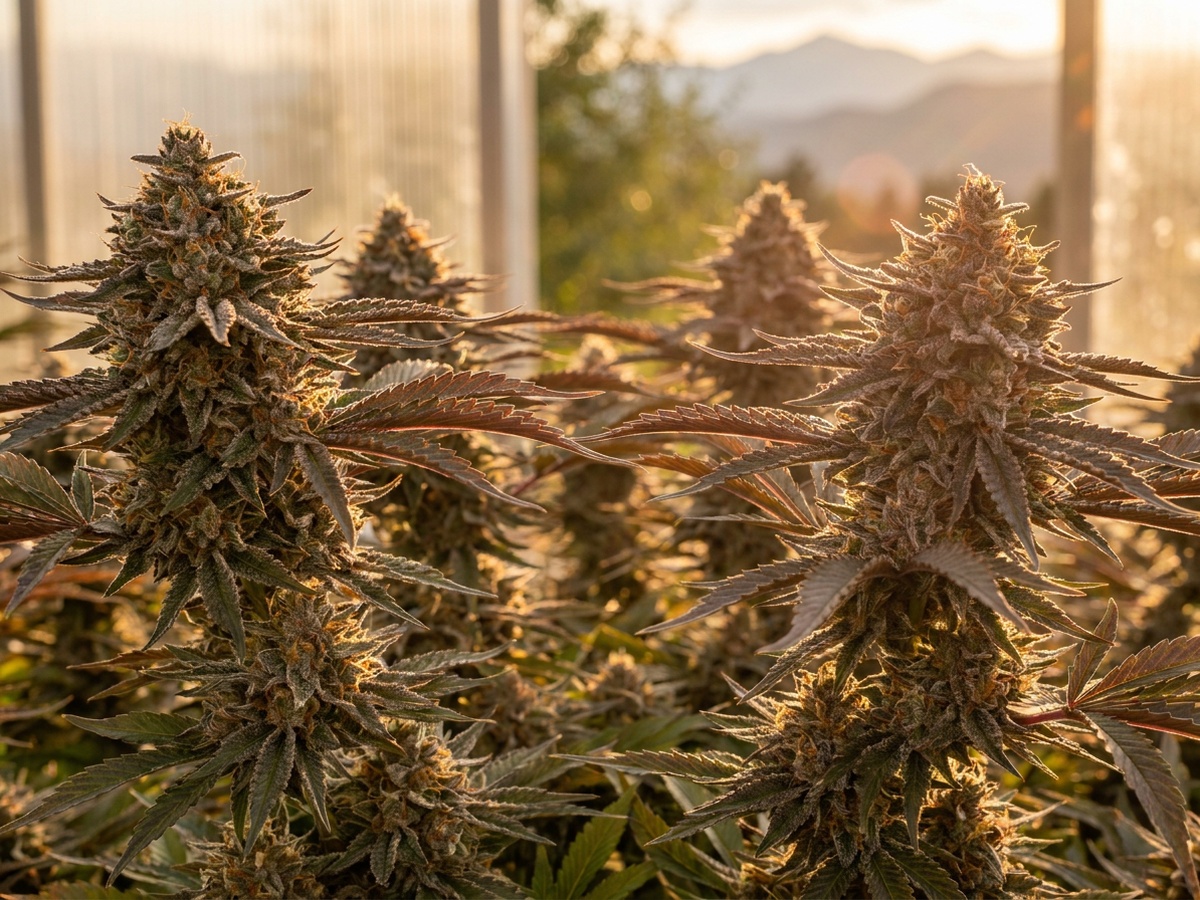
One of the most visually striking hallmarks of Cherry Wine is its dramatic late-flower anthocyanin expression. When nocturnal canopy temperatures drop below 15°C to 17°C (59°F to 63°F) during weeks six through nine of bloom, the upregulation of the phenylpropanoid and flavonoid biosynthetic pathways—specifically phenylalanine ammonia-lyase (PAL), chalcone synthase (CHS), and anthocyanidin synthase (ANS)—triggers a cascade of cyanidin-3-glucoside, delphinidin, and peonidin pigments across the sugar leaves and outer bract margins. The colas transform into a breathtaking tapestry of olive green, deep burgundy, merlot purple, and dark plum, contrasted against dense bundles of fiery tangerine-rust and mahogany pistils.
Under 60x to 100x optical microscopy, the bract surfaces of Cherry Wine reveal an extraordinary density of glandular trichomes across three distinct morphological classes: small bulbous trichomes (15–25 μm), capitate-sessile trichomes (30–50 μm), and abundant capitate-stalked glandular trichomes featuring large, spherical secretory cavities measuring 85 to 115 micrometers in diameter. Because CBDA and monoterpenes are synthesized inside the rosette of secretory disk cells at the base of the subcuticular cavity, the thick waxy cuticle of Cherry Wine’s trichome heads protects its volatile cherry-ester and sesquiterpene fractions from oxidative degradation during field maturation and post-harvest drying, turning from translucent crystal to a rich, opalescent ivory-milk sheen at peak harvest readiness.
4. Chemotypic Profile & Cannabinoid Biosynthesis
From a molecular genetics standpoint, Cherry Wine is an exemplar of a stabilized Type III Cannabis sativa L. chemovar homozygous for the functional cannabidiolic acid synthase allele (CBDAS/CBDAS) on Chromosome 6, while lacking functional copies of the tetrahydrocannabinolic acid synthase (THCAS) gene. Modern long-read genomic sequencing of Type III cannabis has demonstrated that CBDAS and THCAS are not simple codominant alleles at a single locus, but rather occupy distinct, tightly linked paralogous regions embedded within complex retrotransposon-rich cassettes on Chromosome 6. In Cherry Wine, both parental chromosomes carry the active CBDAS gene alongside non-functional pseudogenic THCAS sequences, guaranteeing that 100% of filial progeny express the Type III CBD-dominant chemotype without rogue Type I or Type II outliers.
Inside the plastids and cytosol of the glandular trichome secretory disk cells, cannabinoid biosynthesis proceeds through two converging metabolic pathways. In the cytosol, hexanoic acid derived from medium-chain fatty acid degradation is activated to hexanoyl-CoA by acyl-activating enzyme 1 (CsAAE1). Tetraketide synthase (TKS, a type III polyketide synthase) condenses one molecule of hexanoyl-CoA with three molecules of malonyl-CoA, and olivetolic acid cyclase (OAC) catalyzes a C2-C7 intramolecular aldol condensation with carboxylate retention to yield olivetolic acid (OA). Simultaneously, within the plastid stroma, pyruvate and glyceraldehyde-3-phosphate enter the 2-C-methyl-D-erythritol 4-phosphate (MEP) pathway to produce isopentenyl pyrophosphate (IPP) and dimethylallyl pyrophosphate (DMAPP), which condense via geranyl pyrophosphate synthase (GPPS) to form geranyl pyrophosphate (GPP). An aromatic prenyltransferase localized in the plastid envelope (geranylpyrophosphate:olivetolate geranyltransferase, CsPT4) then alkylates olivetolic acid with GPP to form cannabigerolic acid (CBGA)—the universal mother cannabinoid precursor.
Once CBGA is transported across the plasma membrane into the subcuticular storage cavity of the trichome head, Cherry Wine’s abundant flavin adenine dinucleotide (FAD)-dependent CBDAS enzyme catalyzes the stereospecific oxidative cyclization of the monoterpene moiety of CBGA into cannabidiolic acid (CBDA). In mature, properly cured flowers of Cherry Wine, total CBD (calculated post-decarboxylation as CBD + 0.877 × CBDA) consistently ranges from 16.0% to 21.0% by dry weight, with elite indoor and mountain-grown phenotypes occasionally reaching 22.0%. Because the functional CBDAS enzyme exhibits an intrinsic, biochemically unavoidable catalytic promiscuity—converting approximately 1 molecule of CBGA into delta-9-THCA and 1 molecule into cannabichromenic acid (CBCA) for every 26 to 35 molecules converted into CBDA—trace quantities of THCA naturally accumulate alongside CBDA in a fixed stoichiometric proportion as total cannabinoid content rises.
In Cherry Wine, this enzymatic stoichiometry produces an exceptionally clean cannabinoid distribution. When harvested within the compliant window at days 54 to 58 of bloom, neutral delta-9-THC remains strictly below 0.30% w/w (typically 0.15% to 0.28% delta-9-THC), yielding a roughly 50:1 to 65:1 ratio of total CBD to neutral delta-9-THC, and a ~28:1 to 32:1 ratio of total CBD to total potential THC (including un-decarboxylated THCA). Beyond its primary cannabidiol fraction, Cherry Wine expresses a rich ensemble of minor phytocannabinoids that amplify its broad-spectrum entourage pharmacology. Uncyclized residual cannabigerolic acid (CBGA / CBG) typically registers between 0.40% and 1.10%, while flavin-linked cannabichromenic acid synthase (CBCAS) activity and CBDAS side-product cyclization generate 0.30% to 0.80% cannabichromene (CBC)—a valuable minor cannabinoid known to potentiate transient receptor potential (TRP) channels, inhibit endocannabinoid cellular reuptake, and support adult hippocampal neurogenesis. Additionally, condensation of butanoyl-CoA (rather than hexanoyl-CoA) with malonyl-CoA yields divarinolic acid, which follows the same prenylation and CBDAS cyclization cascade to produce 0.15% to 0.40% cannabidivarin (CBDV), contributing potent anticonvulsant and neuronal membrane-stabilizing properties.
| Phytocannabinoid Analyte | Acidic Precursor & Neutral Form | Dry Weight Concentration (% w/w) | Primary Pharmacological Role in Cherry Wine |
|---|---|---|---|
| Cannabidiol (Total CBD) | CBDA / CBD | 16.0% – 21.0% | CB1 negative allosteric modulator, 5-HT1A agonist, FAAH inhibitor, TRPV1 desensitizer |
| Delta-9-Tetrahydrocannabinol | Delta-9-THC (Neutral) | 0.15% – 0.29% (<0.3% Compliant) | Sub-psychoactive trace CB1/CB2 partial agonist supporting entourage analgesia |
| Tetrahydrocannabinolic Acid | THCA-A | 0.30% – 0.55% | Non-intoxicating PPAR-gamma agonist and COX-1/COX-2 anti-inflammatory modulator |
| Cannabigerol (Total CBG) | CBGA / CBG | 0.40% – 1.10% | Alpha-2 adrenergic receptor agonist, GABA reuptake inhibitor, neuroprotective agent |
| Cannabichromene (Total CBC) | CBCA / CBC | 0.30% – 0.80% | TRPA1 agonist, selective CB2 agonist, anti-nociceptive & mood-elevating synergist |
| Cannabidivarin (Total CBDV) | CBDVA / CBDV | 0.15% – 0.40% | Propyl-side-chain anticonvulsant, TRPV1/TRPV2 modulator, neuronal excitability buffer |
| Cannabicitran (CBT) | CBT (Neutral Diether) | 0.05% – 0.18% | Natural diether cyclization derivative of CBD; lowers intraocular tension and smooths crystallization |
5. Volatile Terpene Matrix & Organoleptic Analysis
The enduring popularity of Cherry Wine among medical cannabis patients and botanical connoisseurs rests upon its extraordinary volatile terpene matrix, which routinely totals 1.8% to 3.2% (18.0 to 32.0 mg/g) of dry floral weight when cultivated in living organic soil and cold-cured with precision. Whereas many commercial high-CBD cultivars present a one-dimensional earthy or woody profile, Cherry Wine expresses a multi-layered aromatic symphony that evolves dynamically from the sealed curing jar to the dry-herb vaporizer path. Upon opening a cured jar of Cherry Wine, the olfactory epithelium is greeted by a lush wave of dark Bing cherry compote, sweet pomegranate molasses, and fermented red wine grapes, followed immediately by an intriguing savory undertone of aged oak barrel, cracked black peppercorn, roasted hops, and sharp white cheddar cheese funk.
Leading the volatile profile is beta-myrcene (0.55% to 0.98% w/w), an acyclic monoterpene synthesized in the plastids via CsTPS-myrcene synthase from geranyl pyrophosphate. Beta-myrcene establishes the deep, jammy, dark-fruit and balsamic-earth foundation of the cultivar while enhancing transdermal and blood-brain barrier permeability and contributing peripheral muscle relaxation via alpha-2 adrenergic and endogenous opioid pathways. The second pillar of the triad is trans-beta-caryophyllene (0.40% to 0.75% w/w), a bicyclic sesquiterpene featuring a rare cyclobutane ring fused to a nine-membered macrocycle, synthesized from farnesyl pyrophosphate (FPP) via the cytosolic mevalonate (MVA) pathway. Beta-caryophyllene imparts the unmistakable warm, spicy, black-peppercorn and charred-oak-tannin character that transforms the sweet cherry top-note into a sophisticated “Cherry Wine” bouquet. Pharmacologically, beta-caryophyllene is unique among dietary terpenes as a selective full agonist of peripheral cannabinoid receptor type 2 (CB2, Ki ≈ 155 nM), directly amplifying cannabidiol’s systemic anti-inflammatory action.
Completing the primary triad is alpha-pinene (0.22% to 0.45% w/w), a bicyclic monoterpene that cuts through the heavy fruit and spice with a crisp, resinous Rocky Mountain pine brightness while acting as a bronchodilator and acetylcholinesterase inhibitor to preserve working memory and mental alertness. Supporting this primary triad is a vital secondary cohort of sesquiterpenes, monoterpene alcohols, and volatile esters: alpha-humulene (0.15% to 0.30% w/w, formerly termed alpha-caryophyllene) adds dry, woody, noble-hop complexity and pairs with beta-caryophyllene to suppress cyclooxygenase-2 (COX-2) and prostaglandin synthesis; linalool (0.10% to 0.24% w/w) contributes a delicate lavender-violet floral softness and positive allosteric modulation at GABAA receptors; and alpha-farnesene (0.08% to 0.20% w/w) alongside volatile short-chain fatty acid esters (such as ethyl hexanoate and methyl anthranilate) and trace prenylated volatile sulfur compounds (VSCs) delivers the distinctive tart cherry skin, orchard berry, and savory aged-cheddar complexity on the retrohale.
When evaluating Cherry Wine across sequential temperature stages in a precision convection vaporizer, connoisseurs can isolate distinct layers of its aromatic architecture. At low temperatures (160°C to 172°C / 320°F to 342°F), alpha-pinene, beta-myrcene, and volatile fruit esters dominate the vapor stream, coating the palate in sweet maraschino cherry, wild raspberry, and crisp mountain pine needle. Stepping the temperature up to the medium range (175°C to 188°C / 347°F to 370°F) unlocks full cannabidiol decarboxylation alongside trans-beta-caryophyllene, producing a rich, full-bodied pinot noir and spiced mulled-wine flavor profile with remarkable throat smoothness. Finally, finishing the session at 192°C to 202°C (378°F to 395°F) volatilizes alpha-humulene, linalool, alpha-farnesene, and cannabichromene, delivering a warm, woody, peppery, and subtly creamy exhale accompanied by profound physical relaxation.
| Volatile Terpene Compound | Chemical Class & Boiling Point | Typical Concentration (% w/w) | Organoleptic Note & Synergistic Bioactivity |
|---|---|---|---|
| Beta-Myrcene | Acyclic Monoterpene (167°C / 332°F) | 0.55% – 0.98% | Ripe black cherry compote, balsamic earth; TRPV1 analgesia & myofascial relaxation |
| Beta-Caryophyllene | Bicyclic Sesquiterpene (160°C / 320°F) | 0.40% – 0.75% | Cracked black pepper, toasted wine barrel; selective CB2 receptor agonist & NF-kB inhibitor |
| Alpha-Pinene | Bicyclic Monoterpene (155°C / 311°F) | 0.22% – 0.45% | Crisp Rocky Mountain pine needle; bronchodilator & acetylcholinesterase inhibitor |
| Alpha-Humulene | Monocyclic Sesquiterpene (198°C / 388°F) | 0.15% – 0.30% | Dry herbal hops, aged cellar wood; systemic anti-inflammatory & appetite regulator |
| Linalool | Acyclic Terpene Alcohol (198°C / 388°F) | 0.10% – 0.24% | Floral lavender & violet blossom; GABA-A positive modulation & parasympathetic calm |
| Alpha-Farnesene | Acyclic Sesquiterpene (125°C @ 10mmHg) | 0.08% – 0.20% | Tart cherry skin, orchard berry, green apple peel; smooths neuromuscular tension |
6. Therapeutic Mechanisms & Clinical Applications
Cherry Wine’s ~50:1 CBD-to-THC profile and rich sesquiterpene-monoterpene matrix establish a versatile, non-intoxicating pharmacological platform across neuropsychiatric, rheumatological, neurological, and neuromuscular domains. Because delta-9-THC remains below 0.30% w/w and cannabidiol acts as a negative allosteric modulator (NAM) at central cannabinoid type 1 (CB1) receptors, Cherry Wine induces zero orthostatic dizziness, zero short-term memory disruption, and zero dysphoric paranoia—even in highly THC-sensitive or cannabis-naive individuals. Instead, patients experience a rapid, grounded wave of somatic warmth and autonomic nervous system stabilization within three to five minutes of pulmonary inhalation, or within twenty-five to forty minutes of sublingual full-spectrum oil administration.
In the clinical management of generalized anxiety disorder (GAD), social anxiety, panic vulnerability, post-traumatic stress hyperarousal, and occupational burnout, Cherry Wine acts primarily via direct orthosteric agonism of serotonin 5-HT1A autoreceptors and postsynaptic receptors in the dorsal raphe nucleus, basolateral amygdala, hippocampus, and ventromedial prefrontal cortex. This serotonergic signaling rapidly dampens hypothalamic-pituitary-adrenal (HPA) axis hyperreactivity, lowers circulating salivary and plasma cortisol, normalizes heart rate variability (HRV) by boosting parasympathetic vagal tone, and quiets intrusive cognitive rumination. Simultaneously, CBD competitively inhibits fatty acid amide hydrolase (FAAH) and binds intracellular fatty acid-binding proteins (FABPs), slowing the enzymatic hydrolysis of endogenous anandamide (N-arachidonoylethanolamine, AEA). By preserving physiological endocannabinoid signaling across corticolimbic fear-extinction circuits while linalool and CBG enhance inhibitory GABAergic neurotransmission, Cherry Wine provides sustained emotional resilience throughout demanding workdays.
For patients managing chronic inflammatory joint pain, osteoarthritis, rheumatoid stiffness, ankylosing spondylitis, fibromyalgia, and post-exertional delayed-onset muscle soreness (DOMS), Cherry Wine leverages a powerful multi-target anti-inflammatory and analgesic cascade. High concentrations of trans-beta-caryophyllene bind directly to peripheral CB2 receptors expressed on synovial macrophages, microglia, mast cells, and osteoclasts, inhibiting the nuclear translocation of nuclear factor kappa-B (NF-κB) and suppressing the transcription of pro-inflammatory cytokines including tumor necrosis factor-alpha (TNF-α), interleukin-1 beta (IL-1β), and interleukin-6 (IL-6). Concurrently, both CBD and un-decarboxylated CBDA/THCA activate peroxisome proliferator-activated receptor gamma (PPARγ) and inhibit cyclooxygenase-2 (COX-2) activity, while CBD, CBC, and beta-myrcene bind to and rapidly desensitize transient receptor potential vanilloid 1 (TRPV1) and ankyrin 1 (TRPA1) ion channels on nociceptive C-fibers, attenuating peripheral pain signal transmission to the dorsal horn of the spinal cord.
In the domain of neuroprotection, neuropathic pain, and seizure threshold stabilization, Cherry Wine combines high-titer CBD with meaningful fractions of cannabidivarin (CBDV), cannabigerol (CBG), and alpha-pinene. Cannabidiol and CBDV antagonize G protein-coupled receptor 55 (GPR55)—blocking intracellular calcium mobilization at excitatory glutamatergic synapses—and inhibit the equilibrative nucleoside transporter 1 (ENT1), thereby increasing extracellular adenosine levels and suppressing neuronal hyperexcitability. Meanwhile, CBG acts as a potent alpha-2 adrenergic receptor agonist in the brainstem and spinal cord, reducing sympathetic noradrenergic outflow and calming peripheral neuropathic paresthesias, sciatic radiculopathy, and myofascial trigger-point spasms.
Furthermore, Cherry Wine serves as an exceptional evening wind-down, alcohol-harm-reduction substitute, and sleep-architecture stabilizer when vaporized or administered as a warm decarboxylated lipid infusion 45 minutes prior to bedtime. Many medical patients and wellness consumers seeking to reduce or eliminate evening ethanol consumption find that Cherry Wine’s complex pinot-noir and dark-cherry aromatic profile satisfies the sensory ritual of an evening glass of wine while actively repairing rather than fragmenting sleep architecture. While daytime micro-dosing at lower vaporizer temperatures (170°C–180°C) highlights alpha-pinene’s alert clarity, higher-temperature evening sessions (190°C–200°C) volatilize heavier fractions of beta-myrcene, linalool, alpha-humulene, and CBC, releasing deep cervical and lumbar muscle tension and shortening sleep onset latency without suppressing rapid eye movement (REM) sleep or producing morning grogginess.
| Clinical Indication / Symptom Domain | Primary Synergistic Compounds | Receptor & Molecular Pathway | Recommended Dosing & Administration Protocol |
|---|---|---|---|
| Generalized Anxiety & Acute Stress | CBD + Linalool + Alpha-Pinene | 5-HT1A agonism, FAAH inhibition (elevated anandamide), GABA-A modulation | Dry-herb vaporization at 175°C–182°C (2–4 inhalations as needed during daytime) |
| Inflammatory Joint & Arthritic Pain | CBD + Beta-Caryophyllene + Humulene | Selective CB2 agonism, PPAR-gamma activation, COX-2 & TNF-alpha suppression | 25–50 mg full-spectrum sublingual oil BID + vaporization at 188°C–195°C |
| Myofascial Spasm & Athletic Recovery | CBD + Beta-Myrcene + CBG + CBC | TRPV1/TRPA1 desensitization, alpha-2 adrenergic agonism, skeletal muscle relaxation | Post-training vaporization at 190°C + topical/oral Cherry Wine lipid extract |
| THC Over-Intoxication Rescue | CBD (50:1 Ratio) + Alpha-Pinene + Caryophyllene | Negative allosteric modulation of CB1 receptor; acetylcholinesterase inhibition | 3–5 rapid vapor inhalations at 180°C to attenuate THC-induced tachycardia & anxiety |
| Sleep Onset Latency & Nocturnal Restlessness | CBD + Beta-Myrcene + Linalool + Farnesene | Adenosine reuptake inhibition, parasympathetic vagal tone enhancement | 35–60 mg oral/sublingual Cherry Wine extract 45 mins pre-sleep + 198°C vapor session |
7. Precision Agronomic & Cultivation Protocol
Cultivating Cherry Wine to its maximum genetic potential requires an agronomic strategy that balances vigorous hybrid biomass development with strict late-flower cannabinoid compliance and volatile terpene preservation. Whether grown in controlled-environment agriculture (CEA) rooms under full-spectrum LED fixtures or in sun-drenched outdoor raised beds, Cherry Wine thrives in biologically active, well-aerated living organic soil amended with earthworm castings, composted forest humus, basalt and glacial rock dust, kelp meal, crustacean meal (for slow-release calcium and chitin-induced systemic resistance), and vesicular-arbuscular mycorrhizal (VAM) fungi. Maintain root-zone pH between 6.2 and 6.6 in living soil (or 5.8 to 6.1 in coco coir hydroponic media) to optimize micronutrient bioavailability, particularly calcium, magnesium, sulfur, manganese, and iron, which serve as essential enzymatic cofactors for plastidic MEP and cytosolic MVA terpene synthases.
During the vegetative growth stage (weeks 1–4), provide an 18/6 photoperiod with a photosynthetic photon flux density (PPFD) of 450 to 650 μmol/m2/s (daily light integral of 29 to 42 mol/m2/day), canopy temperatures of 24°C to 27°C (75°F to 81°F), and relative humidity between 60% and 68% (target vapor pressure deficit: 0.85 to 1.05 kPa). Because Cherry Wine inherits vigorous lateral branching from both The Wife and Charlotte’s Cherries, perform apical topping above the fifth or sixth node during week three of vegetative growth, followed by low-stress training (LST) and the installation of a horizontal trellis net (Screen of Green / ScrOG). This architectural manipulation opens the interior canopy to uniform photon penetration and transforms secondary axillary shoots into twelve to sixteen uniform terminal colas per square meter. Foliar applications of soluble potassium silicate and cold-pressed ascophyllum nodosum kelp extract once weekly during vegetative growth strengthen cell-wall epidermal rigidity and prime cytokinin-mediated lateral bud break.
Upon transitioning to the reproductive flowering phase (12/12 photoperiod indoors, 56 to 63 days), elevate PPFD to 800–1,000 μmol/m2/s (up to 1,150 μmol/m2/s if supplementing ambient CO2 at 1,100–1,250 ppm during weeks two through six of bloom). At day 18 to 21 of flower—immediately following the cessation of the reproductive stretch—perform a targeted interior defoliation and lower-limb “lollipopping” to remove shaded lower tertiary shoots and large interior fan leaves that obstruct vertical airflow. Gradually taper ammoniacal and nitrate nitrogen inputs after week three of bloom while increasing bioavailable phosphorus, potassium, magnesium, and elemental sulfur (via potassium sulfate, magnesium sulfate, and langbeinite) to drive trichome cuticle thickening, anthocyanin glycosylation, and volatile cherry-ester synthesis. Maintain mid-flower daytime temperatures at 23°C to 26°C (73°F to 79°F) with relative humidity lowered to 45%–52% (target VPD: 1.25 to 1.45 kPa) and continuous oscillating horizontal airflow to prevent Botrytis cinerea (gray mold) inside the dense, swelling floral clusters.
In outdoor and greenhouse field production, transplant hardened Cherry Wine clones or feminized seedlings after the final spring frost at a spacing of 1.5 to 1.8 meters (5 to 6 feet) on center in raised plastic-mulched or straw-mulched beds equipped with dual-line drip fertigation. Because Cherry Wine roots aggressively and forms large spherical bushes, install heavy-duty T-posts and Hortonova trellis netting by mid-July to support the lateral branches before late-August floral weight accumulates. Implement an integrated pest management (IPM) program utilizing preventative weekly releases of predatory mites (Amblyseius swirskii and Neoseiulus californicus) alongside early-season biological sprays of Bacillus thuringiensis subsp. kurstaki (Btk) prior to week three of bloom to protect the dense cherry-scented colas from lepidopteran budworms (Helicoverpa zea).
Compliance & Harvest Timing Protocol: Because the functional CBDAS enzyme produces a trace ~30:1 stoichiometric byproduct of THCA alongside CBDA, allowing Cherry Wine to over-ripen past week nine can push total potential THC above the strict 0.3% regulatory hemp limit even as total CBD climbs past 20%. Commercial hemp cultivators should initiate weekly representative floral sampling for HPLC testing beginning at day 38 of bloom. For strictly compliant <0.3% delta-9-THC smokable flower, harvest between days 54 and 58 when 80% of capitate-stalked trichome heads appear milky-translucent and stigmas are 70% rust-amber; for licensed medical cannabis programs where up to 0.7% total THC is permitted, harvesting at days 60 to 63 unlocks peak 20%–21% CBD potency and maximum black-cherry-wine terpene richness. Whole-plant hang-dry in complete darkness at 15.5°C–16.5°C (60°F–62°F) and 58%–60% relative humidity for 14 to 16 days with gentle indirect air exchange, followed by dry-trimming and a minimum 21-day cold cure in airtight glass or food-grade stainless-steel vessels maintained at a water activity (aw) of 0.58 to 0.61.
| Cultivation Phase | Photoperiod & PPFD Intensity | Canopy Temp & RH / VPD Target | EC / Nutritional & Horticultural Focus |
|---|---|---|---|
| Rooting & Early Vegetative (Weeks 1–2) | 18/6 Light | 300–450 μmol/m²/s | 25°C–27°C | 65%–70% RH (0.85 kPa) | EC 1.0–1.3 mS/cm; mycorrhizal inoculation, kelp, balanced Ca/Mg & mild N |
| Late Vegetative & Training (Weeks 3–4) | 18/6 Light | 500–650 μmol/m²/s | 24°C–26°C | 58%–64% RH (1.05 kPa) | EC 1.4–1.7 mS/cm; apical topping at node 5, LST canopy spreading, silica |
| Transition & Early Bloom (Days 1–21) | 12/12 Light | 750–850 μmol/m²/s | 23°C–26°C | 52%–58% RH (1.20 kPa) | EC 1.8–2.0 mS/cm; ScrOG tucking, interior lollipopping at day 20, boost P/K/S |
| Mid-Bloom Resin Stacking (Days 22–44) | 12/12 Light | 900–1,000 μmol/m²/s | 22°C–25°C | 45%–50% RH (1.35 kPa) | EC 1.9–2.1 mS/cm; high K & sulfur for cherry-wine esters, begin HPLC tracking day 38 |
| Late Ripening & Anthocyanin Flush (Days 45–60) | 12/12 Light | 800–850 μmol/m²/s | 20°C Day / 15°C Night | 42% RH (1.40 kPa) | EC 0.2–0.4 mS/cm (clean water/enzyme finish); harvest before THC exceeds threshold |
8. Dispensary Consultation & Connoisseur Evaluation
In the clinical dispensary setting and connoisseur tasting room, Cherry Wine consistently earns top-tier accolades for its rich sensory depth, structural density, and dependable non-intoxicating relief. Unlike citrus-dominant or pine-dominant Type III cultivars that feel sharply stimulating, Cherry Wine offers a velvety, full-bodied red-wine and dark-cherry palate that appeals deeply to aficionados of classic Cherry Pie, Granddaddy Purple, and UK Cheese lineages. When vaporized between 180°C and 192°C (356°F and 378°F) in a clean quartz or ceramic convection chamber, the initial draw delivers sweet macerated black cherry and wild berry compote, transitioning on the exhale into warm cracked black pepper, toasted French oak, and a lingering, savory aged-cheddar creaminess.
From a formulation and extraction standpoint, Cherry Wine is also one of the highest-yielding Type III cultivars for solventless hash rosin, dry-sift kief, and cold-ethanol full-spectrum rick-simpson-style CBD oil (FECO). Because its capitate-stalked trichomes feature large 90–115 μm resin heads with brittle cuticular necks when frozen, ice-water hash makers routinely recover 3.5% to 4.8% solventless hash yields from fresh-frozen Cherry Wine material—an impressive benchmark for a high-CBD cultivar, as high-CBDA resin typically exhibits lower viscosity and stickier cuticles than high-THCA resin. When pressed at 74°C to 80°C (165°F to 176°F) through 37-micron and 73-micron nylon filtration bags, Cherry Wine live rosin pours out as a fragrant, amber-rose nectar bursting with dark cherry and black-pepper sesquiterpenes.
| Connoisseur Evaluation Criterion | Benchmark Score | Sensory & Clinical Assessment Notes |
|---|---|---|
| Aromatic Intensity & Bouquet Complexity | 9.6 / 10 | Lush black cherry reduction, pinot noir oak barrel, cracked black pepper, and subtle aged cheddar funk |
| Flavor Fidelity & Vapor Smoothness | 9.5 / 10 | Rich, velvety dark-berry inhale with warm caryophyllene spice and woody humulene finish on the exhale |
| Visual Bag Appeal & Trichome Coverage | 9.6 / 10 | Chunky conical colas dressed in olive-emerald and merlot-purple anthocyanins beneath thick silvery resin |
| Non-Intoxicating Functional Clarity | 9.8 / 10 | Ultra-clean 50:1 CBD:THC ratio guarantees zero psychoactive fog, paranoia, or cognitive impairment |
| Somatic Relaxation & Anti-Inflammatory Relief | 9.7 / 10 | Potent synergy of 18%+ CBD, beta-myrcene, and beta-caryophyllene melts myofascial and joint tension |
Dispensary Staff & Budtender Consultation Scripts
Patient Inquiry 1 (The Professional Seeking Zero-THC Stress & Back Pain Relief): “I work in a high-pressure executive role and suffer from chronic lower-back stiffness and afternoon stress, but I cannot tolerate even the slightest THC buzz during the week. What is your most reliable full-bodied CBD flower?”
Budtender Guidance Script: “Cherry Wine is our cornerstone 50:1 high-CBD cultivar, bred in Colorado from The Wife and Charlotte’s Cherries. It tests at 16% to 21% CBD with less than 0.3% THC, so it is completely non-intoxicating. What sets Cherry Wine apart is its rich beta-myrcene and beta-caryophyllene terpene profile—it tastes like dark black cherries and spiced red wine, and the caryophyllene directly activates peripheral CB2 receptors to relax lower-back inflammation while keeping your mind 100% sharp.”
Patient Inquiry 2 (The Evening Wind-Down & Wine-Replacement Connoisseur): “I am cutting back on evening glasses of red wine to improve my sleep quality, and I want an artisanal ritual in the evening that helps my body unwind without leaving me groggy the next morning.”
Budtender Guidance Script: “Cherry Wine is the ultimate botanical evening ritual. Its bouquet of ripe black cherry compote, toasted oak, and floral linalool mirrors the sensory complexity of a fine pinot noir. Vaporizing a bowl at 190°C (374°F) an hour before bed quiets the nervous system, eases shoulder and neck tension, and promotes deep, restorative sleep with zero alcohol hangover or morning fog.”
Patient Inquiry 3 (The Custom Cannabinoid Ratio Blender): “I enjoy high-THC heirloom sativas and indicas on the weekend, but today’s 28% THC dispensary flowers feel too overwhelming and one-dimensional on their own. How can I mellow them out?”
Budtender Guidance Script: “Grind Cherry Wine at a 1:1 or 2:1 ratio alongside your favorite high-THC cultivar. Because Cherry Wine packs up to 21% CBD with dense trichome coverage and a gourmet cherry-pepper terpene profile, blending it into your grinder instantly buffers CB1 receptor overstimulation, eliminates any racing heart or anxious edge, and adds a delicious dark-cherry finish to the session.”
Ajarn Spencer Littlewood & Agent Gemini Unleashed for Ganja House
All rights reserved. Scientific documentation and botanical research archive.