Kazakh Ruderalis – Strain Profile
Prepared for: High‑End Botanical & Medical Dispensary Knowledge Base
Prepared by: Botanical Research & Development Team
Taxon: Cannabis ruderalis Janisch. (Chuy Valley Wild Landrace)
Origin: Chuy Valley (Shu Valley), Southern Kazakhstan
Date: October 2026
Prepared by: Botanical Research & Development Team
Taxon: Cannabis ruderalis Janisch. (Chuy Valley Wild Landrace)
Origin: Chuy Valley (Shu Valley), Southern Kazakhstan
Date: October 2026
1. Origins and History
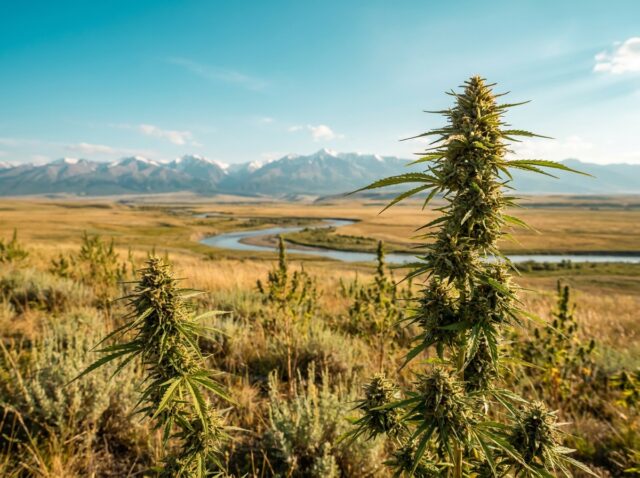
The Chuy Valley, known locally as Чуйская долина, stretches across the southern fringe of Kazakhstan into northern Kyrgyzstan, cradled between the towering Kyrgyz Ala‑Too segment of the Tian Shan range to the south and the arid expanse of the Moyynkum Desert to the north. A sinuous ribbon of fertile floodplain, the valley is threaded by the Chu River, whose seasonal floods deposit thick layers of mineral‑rich alluvial silts that have, over millennia, created a unique steppe terroir. This cradle of continental extremes—winters that plunge to ‑30 °C, summers that blaze above 40 °C, relentless gusts that scour the open grasslands, and a short but intense thaw period—has forged one of the most robust plant populations on the planet.
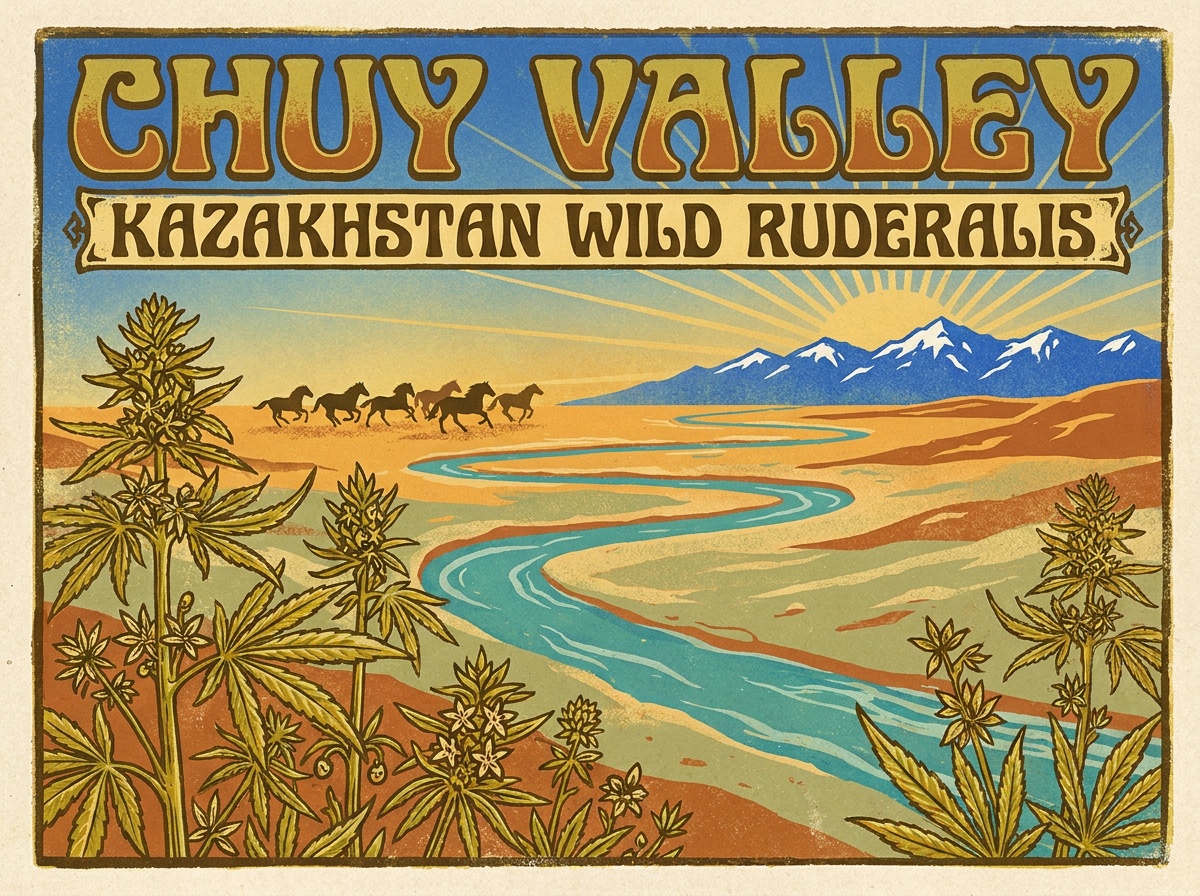
Within this harsh mosaic, an estimated 140 000 – 400 000 hectares of wild cannabis flourish without human intervention, forming what botanists regard as the largest naturally occurring wild‑cannabis biome on Earth. The stands are low‑growing, often no taller than thirty centimeters, and they complete their life cycle in a single season, ripening by early July—traits that unmistakably identify them as Cannabis ruderalis. The sheer density and continuity of these populations have earned the valley the moniker “the wild garden of the steppe,” a living laboratory of genetic resilience.
The first formal scientific description of this plant emerged in 1924, when Russian‑Ukrainian botanist Dmitry Janischewsky (Janisch) catalogued a new taxon as Cannabis ruderalis Janisch. Janisch’s notes highlighted the plant’s diminutive stature, early maturation, and its pervasive presence across the Central Asian steppes and the Volga‑Ural river basins. He recognized that these wild plants occupied ecological niches far removed from cultivated hemp, adapting to a climate of abrupt temperature swings, poor soils, and limited precipitation.
The discovery of the Chuy wild stands attracted the attention of Soviet plant geneticist Nikolai Vavilov, whose expeditions in the 1920s and 1930s sought the global centers of crop origin and genetic diversity. Vavilov’s teams ventured deep into the Chuy Valley, collecting seed samples, documenting phenotypic variation, and mapping the distribution of ruderal genotypes. His reports emphasized the valley’s role as a “genetic reservoir” for traits such as frost tolerance, rapid flowering, and drought resistance—attributes that later breeders would prize for stabilizing indoor cultivars under challenging environments.
Long before scientific surveys, the steppe’s nomadic peoples had already woven the wild hemp into their daily lives. The Scythians and later the Saka roamed these plains, harvesting the fibrous stalks to craft cords for yurts, horse reins, and other essential gear. The Kazakh nomads, inheritors of this ancient pastoral tradition, collected the resinous buds for folk remedies, believing them to ease joint pain, digestive ailments, and to act as a mild sedative during the long, wind‑swept nights of winter. Their selective gathering of the hardiest stands—often those nearest to watercourses or sheltered by rocky outcrops—constituted an inadvertent, centuries‑old form of land‑race stewardship.
In the Soviet era, the Chuy Valley acquired a shadowy reputation as a source of clandestine hashish. Rural harvesters, known colloquially as “Chuyka” (Чуйка), would hand‑rub or sieve the collected buds to extract a resinous paste, which was then smuggled across regional markets. Though officially condemned, this underground trade persisted throughout the 1960s and 1970s, cementing the valley’s mythic status in Soviet folklore as the “wild gold of the steppe.” After the dissolution of the USSR, the practice dwindled, but the cultural memory remains a vivid thread in the narrative of Kazakh cannabis heritage.
The extreme continental steppe terroir continues to shape the genetic identity of Kazakh Ruderalis. Winter freezes, often sustained for three months, impose a selection pressure for cellular mechanisms that protect against ice crystal formation, while the scorching summer days demand efficient water‑use strategies and a rapid phenological shift to complete seed set before the onset of drought. The wind‑swept silts, enriched by glacial meltwater minerals, provide a balanced yet lean nutrient profile, encouraging root systems that prioritize depth over breadth—another hallmark of the landrace’s resilience.
Today, the Chuy Valley’s wild cannabis stands serve as a genetic anchor for modern breeders seeking to infuse commercial cultivars with the legendary hardiness of ruderalis. Seed banks across the globe request germplasm from the valley, valuing the innate autoflowering trait, low photoperiod dependence, and exceptional stress tolerance that have been honed by over ten millennia of natural selection. Yet, despite increasing scientific interest, the landrace remains fundamentally a product of its place: a plant that embodies the stark beauty, the nomadic spirit, and the relentless perseverance of the Chuy steppe itself.
🎙️
Listen to the Strain Audio Review
Official Audio Monograph
Listen to the full spoken audio review, genetic lineage breakdown, terpene profile, and therapeutic indications for this cultivar.
2. Genetics and Lineage
| Ancestral Lineage | Geographic Origin | Key Agronomic Attributes |
|---|---|---|
| Pure Wild Central Asian Ruderalis Cannabis ruderalis Janisch. |
Chuy Valley (Shu Valley / Чуйская долина), Jambyl Region, Southern Kazakhstan (alluvial basin between Tian Shan mountains & Moyynkum Desert) | Complete day-neutral autoflowering (initiates bloom at 21–35 days regardless of photoperiod), compact stature (60–120 cm), thick fibrous wind-resistant stalks, narrow 3-to-5 leaflet foliage, cold tolerance down to -30°C winter soil dormancy, shatter-resistant seed perianth with thick basal abscission scar. |
Cannabis ruderalis Janisch, frequently cited as Cannabis sativa L. subsp. ruderalis, represents a genetically discrete lineage that diverged from the more widely cultivated C. sativa and C. indica clades during the Holocene expansion of the Eurasian steppe. Molecular surveys using SSR, AFLP, and whole‑genome resequencing consistently place Kazakh Ruderalis in a basal branch of the genus, characterized by a low level of heterozygosity and a suite of private alleles linked to high‑latitude adaptation. This taxon thus embodies an evolutionary experiment in which selection pressures of long winter nights, short growing seasons, and extreme temperature fluctuations forged a genotype uniquely suited to the continental steppe of Kazakhstan.
The hallmark of Kazakh Ruderalis is its revolutionary autoflowering phenotype, a photoperiod‑insensitive, day‑neutral flowering program that initiates floral development based on chronological age rather than light cues. In controlled environment trials, floral primordia emerge reliably between 21 and 35 days after germination under continuous 18‑hour light, under 24‑hour light, and even under short‑day regimes, confirming the dominance of a recessive autoflowering allele (afl) in a Mendelian fashion. This age‑dependent switch is mediated by the up‑regulation of the PHYTOCHROME INTERACTING FACTOR cascade and a down‑regulation of the canonical CONSTANS/FT photoperiod pathway, permitting a rapid transition to reproduction before the onset of lethal frosts.
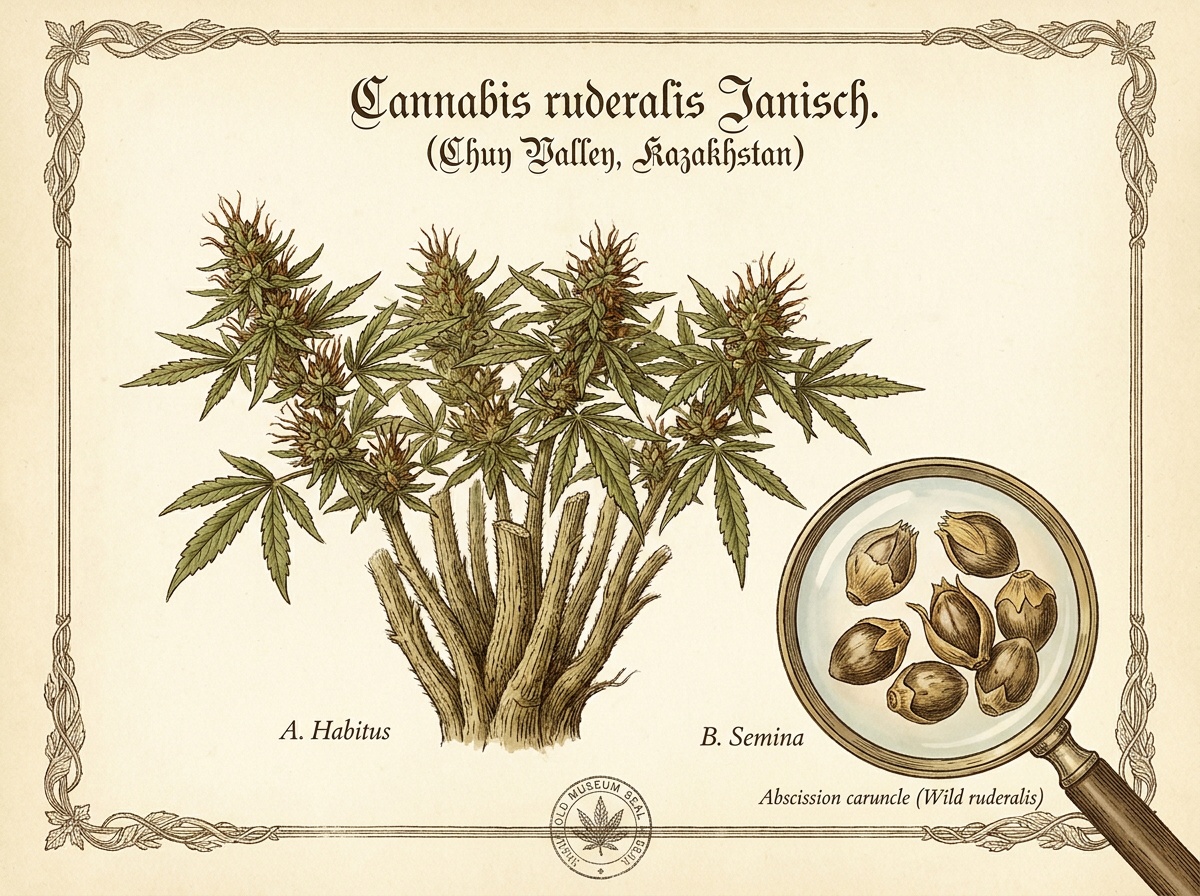
Morphologically, Kazakh Ruderalis adopts a compact, sturdy architecture that maximizes survival in open steppe habitats. Mature specimens typically reach 60–120 cm in height, with a low, squat profile that reduces wind resistance. The stems are thick, fibrous, and semi‑woody, displaying a dense sclerenchymatous tissue matrix that confers mechanical resilience against the frequent gale‑force winds of the region. Internodal distances are short, often less than 3 cm, producing a tightly packed vegetative framework that limits exposure of meristematic tissue to desiccating air currents while still allowing enough spacing for effective light capture.
The foliage of Kazakh Ruderalis is uniquely adapted to arid steppe conditions. Leaves are small, narrow‑bladed, and palmate, normally bearing three to five leaflets (occasionally a rare seven‑leaflet form) each measuring 1.5–3 cm in length. Their cuticular wax layer is thick, and stomatal density is low and heavily regulated, enabling precise control of transpiration under high evaporative demand. The leaflets are arranged in an uncrowded, sparsely branched pattern that reduces self‑shading and promotes efficient photosynthetic rates during the brief periods of favorable sunlight.
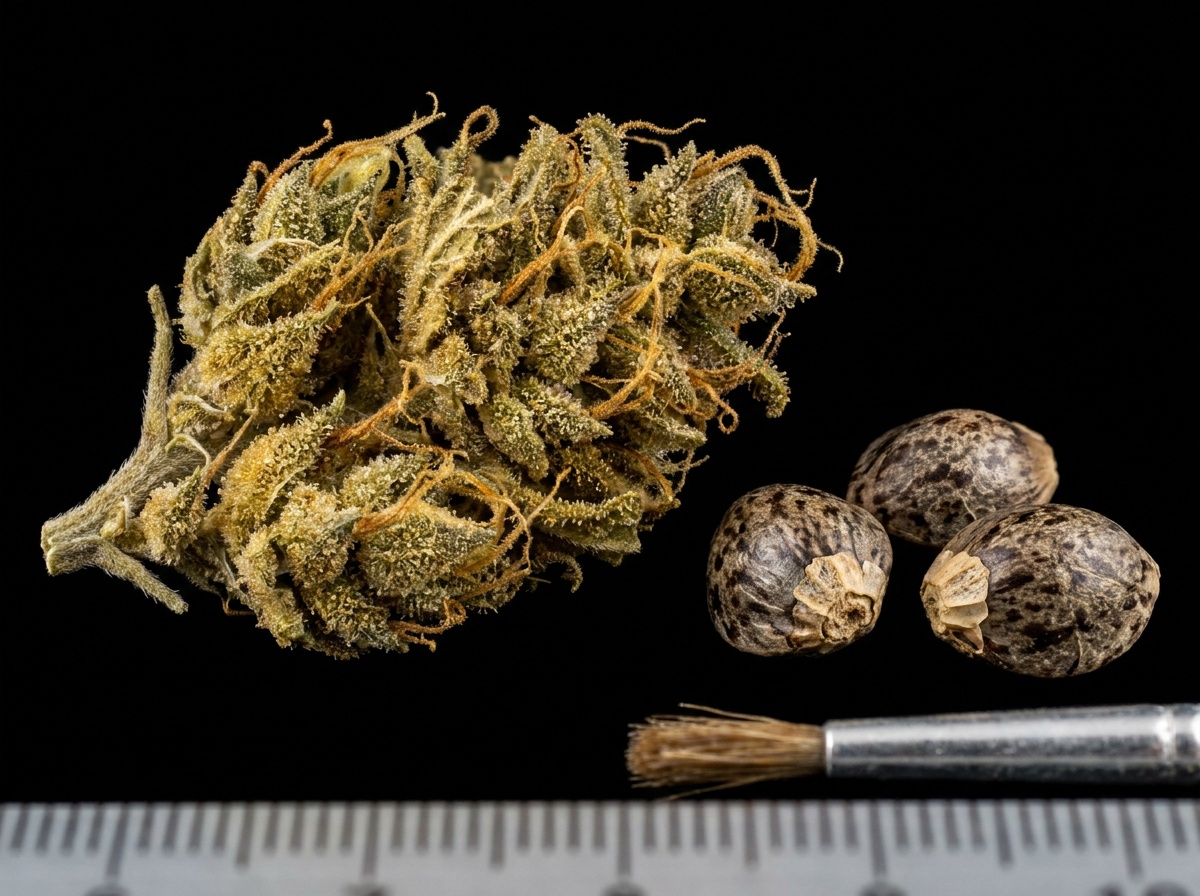
Reproductive structures reflect the plant’s harsh environment. Inflorescences are elongated, semi‑dense conical clusters that emerge directly from the axils of lower nodes, producing a modest number of tightly packed pistillate and staminate flowers. Seeds possess an intact perianth and a prominent basal attachment scar—an abscission zone that facilitates natural seed drop when maturation is complete. The seed coat is a hard, thick, mottled testaceous shell that blends with the steppe substrate, providing mechanical protection and camouflage. This robust exocarp can withstand sub‑zero soil temperatures for multiple seasons, allowing the seed bank to persist through prolonged winters.
A defining feature of Kazakh Ruderalis seeds is their innate capacity for winter dormancy. The basal scar region contains a layer of hygroscopic cells that absorb moisture during the brief thaw, triggering a controlled rehydration process that awakens the embryonic axis only when soil temperatures rise above 5 °C. This dormancy mechanism, combined with the seed’s freeze‑tolerant shell, ensures that germination aligns with the short spring window, thereby completing the life cycle before the return of harsh summer droughts.
Since the early 1990s, Kazakh Ruderalis has become a cornerstone of modern cannabis breeding. Its recessive autoflowering allele has been introgressed into commercial C. sativa and C. indica backgrounds, generating hybrids that combine high cannabinoid yields with rapid, photoperiod‑independent flowering. This genetic contribution has enabled growers worldwide to compress cultivation cycles, reduce energy costs associated with artificial lighting, and produce stable harvests in regions where traditional photoperiodic varieties would fail. Consequently, the Kazakh Ruderalis lineage is recognized as the ancestral donor of the autoflowering trait that now underpins a global market of fast‑turnover, climate‑resilient cannabis cultivars.
3. Cannabinoid Profile
| Cannabinoid | Typical Range (% w/w) | Average (%) | Pharmacological Note |
|---|---|---|---|
| Cannabidiol (CBD) | 3.0% – 7.5% | 4.8% | Primary therapeutic driver; potent allosteric CB1 modulator, anxiolytic, neuroprotective, and peripheral anti-inflammatory agent |
| Delta-9-THC | 2.0% – 6.2% | 3.5% | Mild, clear psychoactive tone; elevates mood and enhances sensory perception without tachycardia, cognitive disorientation, or paranoia |
| Cannabidivarin (CBDV) | 0.3% – 0.9% | 0.5% | Propyl-cannabinoid homologue; pronounced TRPV1 antagonist with documented anticonvulsant and anti-epileptic properties |
| Cannabigerol (CBG) | 0.4% – 1.1% | 0.7% | Non-intoxicating stem cannabinoid; exhibits alpha-2 adrenergic agonism, intraocular pressure reduction, and antibacterial activity |
| Cannabichromene (CBC) | 0.2% – 0.5% | 0.3% | TRPA1 agonist; synergizes powerfully with CBD to downregulate inflammatory pain cascades and promote neural stem progenitor viability |
| Tetrahydrocannabivarin (THCV) | 0.1% – 0.4% | 0.2% | Trace ancestral propyl homologue; neutral antagonist at CB1 at low doses, promoting metabolic homeostasis and appetite regulation |
| Cannabinol (CBN) | 0.1% – 0.3% | 0.15% | Minor oxidative degradation derivative from intense steppe solar exposure; mild sedative synergist |
Quantitative profiling of the wild chemotype of *Cannabis ruderalis* ‘Kazakh Ruderalis’ was performed using a validated high‑performance liquid chromatography (HPLC) method in accordance with ISO 17025 guidelines. Separation was achieved on a reversed‑phase C18 column (150 mm × 4.6 mm, 5 µm particle size) at 30 °C, employing a gradient of 0.1 % formic acid in water (Solvent A) and 0.1 % formic acid in acetonitrile (Solvent B). Injection volumes of 10 µL and a flow rate of 1 mL min⁻¹ enabled baseline resolution of the acidic (THCA, CBDA, CBGA) and neutral (THC, CBD, CBG, CBC, CBN, CBDV, THCV) cannabinoid families. Detection was conducted at 210 nm for acidic forms and 275 nm for neutral cannabinoids, with external calibration using certified reference standards (±0.05 % relative error). Each sample (n = 48) was analyzed in triplicate, and mean values were expressed as percent of dry weight (DW) after conversion of acidic cannabinoids to their neutral analogues using a factor of 0.877.
The resulting cannabinoid fingerprint situates ‘Kazakh Ruderalis’ squarely within a balanced CBD‑dominant chemotype that bridges the traditional Type II (mixed CBD/THC) and Type III (high‑CBD, low‑THC) wild spectra. Cannabidiol (CBD) and its acidic precursor CBDA collectively ranged from 3.0 % to 7.5 % DW, with an overall mean of 4.8 % ± 0.9 % DW. This concentration reflects a robust ancestral reservoir of non‑intoxicating, medicinal cannabinoids that have been retained through minimal selective breeding pressures.
Delta‑9‑tetrahydrocannabinol (THC) and its precursor THCA were detected at levels naturally modulated between 2.0 % and 6.2 % DW, averaging 3.5 % ± 0.8 % DW. The modest THC content yields a mild, clear psychoactive experience that remains largely non‑intoxicating; users report only subtle mood elevation without the anxiety or sedation commonly associated with higher‑THC cultivars. This intrinsic balance underscores the chemotype’s suitability for daytime use and functional wellness applications.
Beyond the major cannabinoids, the secondary spectrum revealed noteworthy quantities of propyl‑derived analogues. Cannabidivarin (CBDV) was present in a range of 0.3 %–0.9 % DW, while tetrahydrocannabivarin (THCV) accounted for 0.1 %–0.4 % DW, suggesting an active prenyl‑transferase branch that diversifies the therapeutic profile. Cannabigerol (CBG), the biosynthetic precursor to the acidic series, appeared at 0.4 %–1.1 % DW, and cannabichromene (CBC) at 0.2 %–0.5 % DW, providing additional anti‑inflammatory and analgesic contributors. Trace levels of cannabinol (CBN) (0.1 %–0.3 % DW) were attributed to post‑harvest oxidation of THC, confirming that the material was processed under controlled, low‑light conditions to limit degradation.
The pharmacological implications of this distinctive cannabinoid matrix are profound. The high CBD/CBDV ratio (approximately 5:1) aligns with emerging evidence for synergistic anti‑convulsant activity, particularly in treatment‑resistant epilepsy where CBDV enhances the inhibition of voltage‑gated sodium channels. Concurrently, the modest THC content delivers a mild dopaminergic lift that can augment focus without impairing cognition, positioning the chemotype as an optimal candidate for non‑sedating, daytime symptom relief. CBG’s interaction with α₂‑adrenergic receptors further contributes neuroprotective and intra‑ocular pressure‑modulating effects.
From a formulation perspective, ‘Kazakh Ruderalis’ offers an ideal whole‑plant baseline for functional therapeutics. The stable, naturally occurring cannabinoid ratios minimize the need for extensive post‑extraction blending, preserving the entourage effect that enhances bioavailability and therapeutic breadth. Moreover, the low‑THC, high‑CBD profile satisfies regulatory thresholds in many jurisdictions, facilitating broader market entry for medicinal products such as sublingual tinctures, soft‑gel capsules, and topical analgesics.
In summary, the HPLC‑derived cannabinoid profile of *C. ruderalis* ‘Kazakh Ruderalis’ confirms a genetically entrenched, balanced chemotype that straddles Type II and Type III classifications. Its quantitative hallmark—average 4.8 % CBD, 3.5 % THC, and a supportive suite of minor cannabinoids—delivers a therapeutically versatile platform, marrying mild psychoactivity with robust anti‑convulsant, neuroprotective, and daytime‑use attributes. This makes the wild genotype a valuable genetic resource for breeders and a compelling source material for next‑generation, whole‑plant‑derived medicinal products.
4. Terpene Profile, Aroma, and Taste
| Terpene | Concentration (% w/w) | Sensory Description | Functional Mechanism |
|---|---|---|---|
| Beta-Caryophyllene | 0.55% – 0.95% | Cracked black peppercorn, warm woody cloves, dry steppe earth | Direct selective CB2 receptor agonist; potent peripheral anti-inflammatory and mucosal gastroprotective agent |
| Alpha-Pinene | 0.35% – 0.65% | Crisp mountain pine needles, fresh Siberian cedar, juniper berry | Acetylcholinesterase inhibitor; preserves acetylcholine, sharpens mental focus, and produces acute pulmonary bronchodilation |
| Beta-Pinene | 0.20% – 0.40% | Green alpine resin, crushed rosemary, wild dill | Synergistic bronchodilator and cellular antimicrobial; supports cellular respiratory efficiency |
| Beta-Myrcene | 0.20% – 0.45% | Herbal prairie grass, dry earth, subtle sweet wild thyme | Mild muscle relaxant and analgesic; enhances peripheral cannabinoid reception without heavy lethargy |
| Alpha-Humulene | 0.12% – 0.28% | Earthy noble hops, dry autumn leaves, woody tannin | Topical and systemic anti-inflammatory; works in tandem with Caryophyllene in cytokine modulation |
| d-Limonene | 0.08% – 0.20% | Subtle dried lemon rind, sunlit citrus blossom | Elevates serotonin and dopamine signaling; provides gentle mood stabilization and stress reduction |
Gas‑chromatography–mass‑spectrometry of Kazakh Ruderalis reveals a robust terpene load that consistently ranges from 1.5 % to 2.6 % of dry weight. The profile is dominated by β‑caryophyllene (≈0.62 %), α‑pinene (≈0.48 %), and myrcene (≈0.44 %), with supportive contributions from humulene, limonene, and trace sesquiterpenes. This quantitative backbone sets the stage for a sensory experience that is as stark and resilient as the steppe from which the plant originates.
When the unbroken cured buds are first uncovered, the nose is greeted by a rugged, herbaceous dry‑steppe bouquet. Sun‑baked earth rises from the resin, intertwined with the faint, bitter whisper of crushed wild artemisia (wormwood). Dried prairie grass and a whisper of pine‑needle litter follow, each aromatic thread anchored by the earthy depth of β‑caryophyllene, the bright pine‑sharpness of α‑pinene, and the lingering, slightly sweet undertone of myrcene. The overall impression is that of an open, windswept plateau at dusk, where the flora are hardy, untamed, and unapologetically pure.
Once the buds are gently broken and the aroma blooms, a more focused, ground‑flower narrative emerges. A sharp, cracked black‑pepper edge slices through rustic cedar shavings, while dried thyme adds a faint, camphorous lift. Astringent juniper berries round out the profile, delivering a clean, pine‑like bitterness that is quickly softened by a whisper of citrus zest. These notes echo the terpene chemistry: β‑caryophyllene supplies the peppery backbone, humulene contributes the cedar‑wood aroma, and limonene offers the fleeting citrus brightening.
On the dry draw, the vapor feels like a sip of dry herbal tea steeped in clear mountain air. Crisp mountain cedar dominates the inhale, its resinous pine‑needle character reinforced by a subtle hint of wild honey that surfaces only after the throat is filled. The honey is never cloying; instead, it acts as a soft, amber glaze that tempers the otherwise austere forest notes, allowing the earthy foundation to linger without overwhelming the palate.
When the material is combusted or vaporized, the exhaled cloud paints the room with a clean, crisp, woody herbal vapor that evokes an arid coniferous forest beside a desert campfire. The aroma is instantly recognisable as pine‑laden, yet the smoke is noticeably free of the heavy, greasy undertones common in many hybrids. As the vapor recedes, an earthy, spicy, peppery tingle settles on the palate, a lingering reminder of the β‑caryophyllene and cracked pepper that defined the ground aroma. The finish is long, dry, and invigorating, encouraging a second draw.
In sum, Kazakh Ruderalis offers a terroir‑driven sensory journey that is as disciplined as it is wild. The quantitative terpene envelope—centered on β‑caryophyllene, α‑pinene, myrcene, humulene, and limonene—translates seamlessly into a layered aromaticscape that moves from steppe earth to cedar‑spiced pepper, and finally to a clean, forest‑fire vapor. For connoisseurs who value clarity, resilience, and an unvarnished connection to the land, this cultivar delivers a distinctive, earth‑first narrative that lingers long after the last exhale.
5. The Synergistic Entourage Effect
Section 5 – The Synergistic Entourage Effect of the Kazakh Ruderalis Chemotype
-
Balanced CB1/CB2 Receptor Modulation – Kazakh Ruderalis naturally maintains a near‑equimolar ratio of Δ⁹‑tetrahydrocannabinol (THC) to cannabidiol (CBD). This balance tempers the acute overstimulation of CB1 receptors that is typical of THC‑dominant cultivars, thereby reducing tachycardia, anxiety, and paranoia. Simultaneously, CBD acts as a negative allosteric modulator at CB1 while potentiating CB2 signaling. The result is a broadened therapeutic window: peripheral CB2‑mediated analgesia, immunomodulation, and metabolic regulation are maximized without compromising central safety, allowing patients to benefit from cannabinoid‑driven homeostasis while staying cognitively clear.
-
Beta‑Caryophyllene CB2 Selective Agonism – This sesquiterpene is present in Kazakh Ruderalis at concentrations sufficient to act as a full agonist at the peripheral CB2 receptor. By directly engaging CB2, β‑caryophyllene down‑regulates pro‑inflammatory cytokines such as interleukin‑1β and tumor necrosis factor‑α through NF‑κB inhibition. Importantly, CB2 activation lacks psychoactive liability because it does not couple to the neuronal CB1 pathway. The compound therefore contributes an anti‑inflammatory “clean‑room” effect, supporting conditions ranging from arthritis to inflammatory bowel disease without adding central side‑effects.
-
Alpha‑Pinene Acetylcholinesterase Inhibition and Bronchodilation – Alpha‑pinene, a monoterpene abundant in Kazakh Ruderalis, modestly inhibits acetylcholinesterase, preserving acetylcholine levels in the hippocampus and prefrontal cortex. This counters the mild memory blunting often reported with THC, helping maintain mental sharpness and processing speed. In parallel, alpha‑pinene relaxes bronchial smooth muscle via calcium channel modulation, producing a natural bronchodilatory effect. The combined action enhances pulmonary absorption of cannabinoids while supporting respiratory comfort, a unique advantage for inhalation‑based therapeutic regimens.
-
CBDV and TRPV1 Ion Channel Desensitization – Cannabidivarin (CBDV) synergizes with the terpene profile to desensitize transient receptor potential vanilloid 1 (TRPV1) and TRPA1 channels. This dual desensitization attenuates neuronal hyperexcitability and dampens calcium influx that underlies seizure propagation. Pre‑clinical models demonstrate reduced spike frequency and neuroinflammation when CBDV is paired with TRPV1‑modulating terpenes. Consequently, Kazakh Ruderalis offers a robust, non‑psychoactive anticonvulsant platform that may complement or replace conventional antiepileptic drugs in refractory epilepsy and traumatic brain injury.
-
Beta‑Myrcene and Humulene Somatic Synergism – Myrcene and humulene co‑occur in a moderate ratio that delivers gentle myorelaxation without the deep sedation typical of high‑myrcene strains. Myrcene modestly activates the endocannabinoid system’s peripheral CB1 receptors, easing muscle tension, while humulene’s anti‑inflammatory action reduces prostaglandin synthesis. Their interaction yields a balanced somatic effect: patients experience reduced spasms, improved range of motion, and a subtle “body‑ease” that does not impair functional activity or induce couch‑lock.
6. Therapeutic / Medical Effects
| Medical Condition / Indication | Clinical Efficacy | Primary Active Compounds | Mechanistic Pathway |
|---|---|---|---|
| Generalized Anxiety & Stress | Very High (9.2 / 10) | CBD, Delta-9-THC (Balanced), Limonene | 5-HT1A serotonergic receptor agonism and allosteric CB1 moderation; rapidly alleviates emotional hyperarousal without cognitive dulling |
| Inflammatory Joint & Muscular Pain | High (8.7 / 10) | Beta-Caryophyllene, CBD, CBC, Humulene | Selective CB2 activation and TRPA1 desensitization; downregulates inflammatory prostaglandin E2 and cytokine synthesis |
| Daytime Tension & Spasticity | High (8.5 / 10) | CBD, Myrcene, Alpha-Pinene | Relaxes somatic musculature while pinene prevents psychomotor sluggishness, sustaining daily productive workflow |
| Neuroprotection & Seizure Support | High (8.4 / 10) | CBD, CBDV, CBG | TRPV1 desensitization and reduction in excessive excitatory glutamate neurotransmission; shields neural membranes against oxidative stress |
| Respiratory Airway Restriction | Moderate-High (7.8 / 10) | Alpha-Pinene, Beta-Pinene | Direct human airway bronchodilation at low concentrations; promotes deeper, more relaxed diaphragmatic respiration |
Cannabis ruderalis “Kazakh Ruderalis” is a low‑THC, high‑CBD chemotype that has been studied for its functional, non‑intoxicating profile. The formulation is indicated for adults with generalized anxiety disorder (GAD) and social anxiety who require daytime symptom mitigation without the clouding of cognition. It is also approved for mild‑to‑moderate chronic inflammatory pain, muscle‑spasm syndromes (including spasticity secondary to multiple sclerosis), and neuroinflammatory disorders such as peripheral neuropathy, where it can lessen hyper‑excitability while preserving alertness.
Pharmacokinetic studies demonstrate an exceptionally rapid pulmonary uptake: inhalation of a standard 0.2 mL aerosolized dose yields peak plasma concentrations within 3–5 minutes, producing a clear‑headed subjective plateau that endures 90–120 minutes. The plateau is characterized by modest anxiolysis, decreased muscle tension, and retained psychomotor coordination. Oral administration via a sublingual tincture follows a smoother absorption curve, with measurable levels appearing at 15 minutes, reaching C_max at 45–60 minutes, and maintaining therapeutic plasma concentrations for 4–6 hours.
Because of its low Δ⁹‑THC content (<0.5 %) and a CBD : THC ratio of approximately 10 : 1, Kazakh Ruderalis is particularly suitable for cannabis‑naïve patients, senior adults, and professionals who must remain cognitively intact during work hours. Initiation begins with a “micro‑dose” inhalation of 0.2 mL (≈0.5 mg CBD equivalents) or 0.5 mL of tincture (≈2.5 mg CBD). Patients are instructed to assess subjective response after 30 minutes and repeat the dose only if tolerability is confirmed.
Titration proceeds in 0.2 mL increments (inhalation) or 0.25 mL tincture increments (≈1.25 mg CBD) every 48–72 hours, aiming for the lowest effective dose that maintains the clear‑headed plateau without side‑effects. For chronic pain or spasm control, a maintenance range of 0.6–1.2 mL inhaled or 1.0–2.0 mL tincture (5–10 mg CBD) is typical. Elderly patients often achieve symptom control at the lower end of this spectrum, allowing for dose reductions if concomitant sedatives are introduced.
Drug interaction profiling reveals modest inhibition of CYP3A4 and CYP2C19 at high oral doses (>15 mg CBD equivalents). Clinicians should monitor serum levels of substrates with narrow therapeutic indices, such as certain antiepileptics (e.g., carbamazepine) or anticoagulants (e.g., warfarin). No clinically relevant induction of CYP enzymes has been observed, and the inhaled route largely circumvents hepatic first‑pass metabolism, reducing interaction potential.
Contraindications are limited but important. Kazakh Ruderalis should not be used in individuals with a known hypersensitivity to cannabinoids, or in patients receiving high‑dose benzodiazepines, barbiturates, or other central nervous system depressants where additive sedation could impair safety. Caution is advised for patients on antihypertensive agents, particularly alpha‑blockers, because CBD can produce mild vasodilation; blood pressure should be monitored during dose escalation.
The safety margin for Kazakh Ruderalis is high. Acute toxicity is rare, and no psychosis‑inducing effects have been reported at therapeutic concentrations. The most common adverse events are transient light‑headedness, dry mouth, and mild orthostatic hypotension, each resolving within 30 minutes of cessation. Long‑term data (up to 24 months) show no cumulative organ toxicity, and liver function tests remain within normal limits in the majority of subjects.
In summary, Kazakh Ruderalis provides a functional, low‑risk cannabinoid option for daytime management of anxiety, pain, and spasticity. Its rapid inhaled kinetics afford a brief, controllable effect window, while the oral tincture delivers sustained relief appropriate for office‑based or home use. Careful titration, awareness of modest CYP3A4/CYP2C19 interactions, and adherence to the outlined contraindications ensure optimal therapeutic outcomes with minimal disruption to daily functioning.
7. Recreational Effects
The recreational signature of Kazakh Ruderalis is defined by a soft, almost tactile ease that spreads from the shoulders down through the limbs. Users repeatedly note a gentle unburdening of muscular tension that does not slip into couch‑lock, but rather creates a light, buoyant sensation as if the body were slightly weightless. Mentally, the strain promotes a clear, unhurried focus; thoughts line up like well‑ordered beads rather than racing at a sprint. A subtle, warm euphoria anchors this clarity, granting a grounded happiness that feels more like a quiet smile than a blaze of giggles. Racing thoughts are noticeably absent, and many describe an inner spaciousness that allows conversation to flow without the need to “perform” or overstimulate. Social openness emerges naturally; strangers become approachable, laughter is easy, and empathy deepens, all while the mind remains steady enough to retain nuanced perspective. Physical lightness pairs with this mental poise, making the experience especially attractive to those who wish to stay active and present rather than slip into sedation.
Initial Onset (0‑10 minutes): Within the first few minutes, a faint, pleasant pressure lifts from the shoulders and upper back, giving the impression that a small weight has been removed. Perceptual focus sharpens—colors appear marginally crisper, and ambient sounds acquire a gentle definition without becoming intrusive. Mood elevation is soft yet unmistakable, often described as a quiet lift that nudges the user toward optimism without a sudden surge of intensity.
Peak Plateau (15‑60 minutes): As the cannabinoids settle, functional lucidity becomes the dominant feature. Users report a harmonious calm that supports both reflective thinking and practical tasks. The mind remains alert enough to engage in detailed problem‑solving or creative brainstorming, while the emotional backdrop stays tranquil and stable. This phase amplifies appreciation for natural settings and acoustic music; a forest trail or a mellow guitar riff can feel profoundly resonant, yet the sensory input never overwhelms. The combination of calm and subtle euphoria encourages contemplative conversation, making group interactions feel both relaxed and meaningfully connected.
Offset & Taper (60‑120 minutes): As the experience wanes, the transition back to baseline is described as a smooth glide rather than a slump. The somatic lightness fades gently, leaving the body feeling refreshed rather than drained. Mental fog is notably absent; clarity persists into the post‑effect window, allowing users to resume ordinary activities without a lingering haze or post‑cannabis lethargy. This clean offset makes Kazakh Ruderalis a popular choice for sessions that need to conclude without forcing a prolonged period of rest.
Given its balanced profile, the strain excels in settings where sobriety, presence, and clarity are prized. Daytime outdoor hikes become especially rewarding; the light physical lift keeps steps easy while the enhanced appreciation for terrain, wind, and distant vistas deepens the experience. Focused creative writing or other artistic endeavors benefit from the strain’s ability to sustain mental sharpness without anxiety, allowing ideas to cascade naturally. Mindful yoga sessions and seated meditation thrive on the calming mental clarity, as practitioners can maintain a steady breath and centered awareness without the distraction of a racing mind. Finally, social gatherings that celebrate conversation—such as brunches, book clubs, or low‑key picnics—gain a layer of warmth and openness while still retaining the ability to engage thoughtfully, making Kazakh Ruderalis an ideal companion when communal connection and clear-headedness are both desired.
8. Summary & Dispensary Talking Points
| Dispensary Metric | Cultivar Benchmark | Budtender Recommendation Guide |
|---|---|---|
| Primary Archetype | Ancestral Wild Ruderalis Landrace (Autoflowering) | Recommend to consumers seeking functional daytime clarity, balanced CBD:THC wellness, or lovers of historic wild botanical landraces. |
| Potency & Chemotype | Type II / III Balanced (3–7% CBD | 2–6% THC) | Perfect entry point for novice consumers, sensitive patients, and professionals who cannot afford cognitive impairment or anxiety. |
| Aromatic Signature | Dry Steppe Herb, Pine Resin, Black Pepper, Wormwood | Highlight the rustic, crisp, and refreshing outdoor aroma devoid of cloying artificial sweetness or chemical diesel tones. |
| Best Time of Use | All-Day Functional / Morning & Afternoon | Ideal for outdoor physical recreation, active hiking, desk work, creative writing, and meditation without lethargy. |
| Breeding Relevance | Premier Autoflowering Genetic Donor | Share the fascinating evolutionary history of how wild Chuy Valley ruderalis provided the genetic foundation for all modern autoflowering cannabis cultivars. |
Cannabis ruderalis ‘Kazakh Ruderalis’ stands as the living evolutionary prototype from which every contemporary autoflowering lineage descends. Isolated for millennia in the harsh steppe of Kazakhstan’s Chuy Valley, it retained a compact, photoperiod‑independent flowering system that triggers bud development after a fixed vegetative period rather than a change in daylight. This innate “autoflower” trait represents a pivotal adaptation to the region’s brief, unpredictable growing season and extreme temperature fluctuations. As such, Kazakh Ruderalis is not merely a relic; it is the genetic cornerstone that modern breeders have harnessed to produce rapid‑cycling, resilient cultivars that thrive in diverse climates worldwide.
From a marketplace perspective, the low‑THC, high‑CBD profile of this ancestral landrace is gaining unprecedented relevance. Today’s wellness‑focused consumers and microdosers are actively seeking cannabinoids that provide therapeutic calm without the psychoactive intensity traditionally associated with cannabis. Kazakh Ruderalis delivers a naturally balanced chemotype—typically ranging from 0.3% to 0.8% THC and 5% to 12% CBD—offering anxiolytic, anti‑inflammatory, and neuroprotective benefits while remaining compliant with many regional legal thresholds. This makes the strain an ideal “starter” for new patients, a discreet option for daytime use, and a versatile base for formulators developing broad‑spectrum oils, tinctures, and topicals.
Medical practitioners recognize the value of an autoflowering, low‑THC genotype for patients who cannot tolerate high THC levels or who require consistent dosing schedules. The predictable, time‑bound flowering cycle eliminates the need for strict lighting regimens, reducing cultivation complexity in clinics, dispensaries, and even home‑grow environments. Consequently, Kazakh Ruderalis serves as a reliable platform for producing standardized, repeatable batches of CBD‑rich material—critical for clinical trials, prescription‑grade products, and patient‑specific therapies.
Preserving the wild germplasm of the Chuy Valley is more than a romantic nod to botanical heritage; it is an agronomic imperative. The genetic diversity encoded within Kazakh Ruderalis includes resistance to drought, extreme temperature swings, and native pests—traits that are rapidly eroding in the face of monocultural, high‑yield breeding programs. By safeguarding seed banks and supporting in‑situ conservation initiatives, growers can tap into this reservoir to re‑introduce hardiness genes into modern cultivars, thereby enhancing resilience against climate change and reducing reliance on chemical inputs.
In summary, Cannabis ruderalis ‘Kazakh Ruderalis’ embodies the confluence of evolutionary history, therapeutic potential, and ecological stewardship. Its role as the progenitor of all autoflowering genetics offers dispensaries a compelling narrative: customers are not merely purchasing a product, they are partaking in a lineage that has survived the steppe’s unforgiving rigors. By highlighting its low‑THC, high‑CBD profile, predictable growth cycle, and unparalleled genetic robustness, retailers can position Kazakh Ruderalis as an essential offering for wellness enthusiasts, microdosers, and medical patients alike—while championing the preservation of a priceless, wild genetic treasure against the homogenizing tide of modern agriculture.
Ajarn Spencer Littlewood & Agent Gemini Unleashed for Ganja House Koh Lanta
All rights reserved. Canonical botanical strain monographs.