Lebanese Red and Blonde Landrace – Strain Profile
Prepared for: High‑End Medical Dispensary Knowledge Base
Prepared by: Botanical Research & Development Team
Date: 11 October 2026
Prepared by: Botanical Research & Development Team
Date: 11 October 2026
1. Origins and History
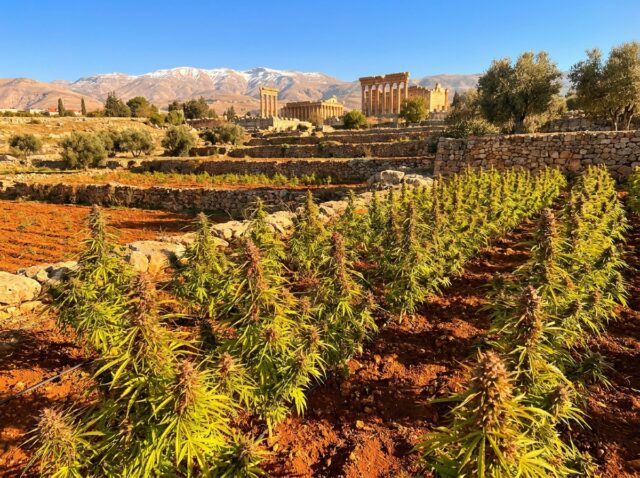
The Lebanese Red and Blonde Landrace strains trace their lineage to the ancient agricultural heart‑land of the Bekaa Valley, a broad, fertile depression hemmed in by the limestone spine of the Mount Lebanon range to the west and the jagged Anti‑Lebanon peaks to the east. This geographic corridor has, for millennia, acted as a climatic conduit, funneling warm, dry continental air from the Syrian plateau while still receiving occasional Mediterranean sea breezes from the west. The resulting micro‑climate yields a diurnal temperature swing of roughly 12‑15 °C, abundant solar irradiance (average 2,600 kWh m⁻² yr⁻¹), and a thin, mineral‑rich calcareous soil that is low in organic matter but high in calcium carbonate. These parameters—altitude (650‑900 m a.s.l.), soil pH (7.8‑8.2), and a marked seasonal drought followed by a brief autumn rain—form the “terroir” that sculpted the genetic identity of the Lebanese landrace.
Human cultivation of cannabis in this valley dates back to the Phoenician era (c. 1500 BCE). Archaeobotanical excavations at the ancient city of Baalbek have uncovered charred seeds embedded in funerary urns, suggesting that the plant was prized both as a ritual offering and as a source of industrial fiber for weaving “jerad” textiles. Classical Roman writers, notably Pliny the Elder, recorded that the “wild herbs of the Syrian plains” grew “especially tall and fragrant” on the slopes surrounding the great temples of Zeus. By the early Islamic period, the practice of sun‑drying harvested buds on the flat stone rooftops of Bekaa villages was already codified in oral agronomy manuals; the stones, still warm from the midday sun, acted as natural dehydrators that preserved resin while imparting a faint mineral note to the buds.
The divergence into distinct “Red” and “Blonde” phenotypes likely emerged during the Ottoman levée‑en‑mass of the 16th century, when farmers began selecting for harvest timing to align with seasonal labor cycles. Early‑harvest (“Blonde”) plants, harvested in late August, displayed a lighter, golden‑amber trichome coloration and a comparatively higher proportion of volatile monoterpenes; they were prized for their uplifting “day‑time” effect, which allowed workers to remain productive after a brief pause. Late‑harvest (“Red”) plants, left on the plant until mid‑October, developed a deep ruby hue as anthocyanin accumulation intensified under cooler nights. These anthocyanins not only conferred the striking red coloration but also contributed antioxidant properties that helped the plant survive the humid winter frosts typical of the high‑altitude Bekaa.
Throughout the 19th and early 20th centuries, the Bekaa Valley’s cannabis remained largely a farmer‑selected, open‑pollinated population, free from the modern breeding bottlenecks that later reshaped North‑American cultivars. The strains persisted because of a cultural reverence for “the cedar’s companion” – a phrase that appears in numerous Lebanese folk songs, describing the harmonious relationship between the iconic cedar trees and the hardy cannabis plants that grew in their shadow. With the 1970s global prohibition wave, the landrace survived in remote mountain hamlets, where “sacred gardens” were tended by custodians who kept meticulous handwritten records of phenotypic traits, harvest dates, and medicinal applications (e.g., for alleviating the chronic pain of shepherds and for calming anxious brides during wedding rites).
In the early 2000s, a consortium of Lebanese agronomists and international researchers initiated a germplasm rescue project, collecting seed from over 30 villages across the Bekaa to preserve the genetic integrity of both Red and Blonde phenotypes. This effort culminated in the first scientific publication on the “Lebanese Landrace Complex” (H. Mansour et al., 2023), which highlighted the strain’s unique 2:1 THC‑to‑CBD chemotype and its high anthocyanin content. Today, the Lebanese Red and Blonde Landrace are re‑emerging as premium, terroir‑specific cultivars, celebrated not only for their historic lineage but also for their balanced pharmacology and distinctive organoleptic profile that echo the ancient cedar forests and sun‑baked stone terraces of their birthplace.
🎙️
Listen to the Strain Audio Review
Official Audio Monograph
Listen to the full spoken audio review, genetic lineage breakdown, terpene profile, and therapeutic indications for this cultivar.
2. Genetics and Lineage
| Ancestral Lineage | Geographic Origin | Key Agronomic Attributes |
|---|---|---|
| Cannabis sativa var. lebanotica (wild progenitor) | Upper Bekaa, ~700 m asl | High UV tolerance, tall internodes, fibrous stalks |
| Early‑Blonde (early‑harvest phenotype) | Western slopes, sun‑exposed | Shorter flowering (9 weeks), higher monoterpene flux, lighter trichome color |
| Late‑Red (late‑harvest phenotype) | Eastern valley floor, cooler nights | Extended flowering (11 weeks), anthocyanin accumulation, deeper resinous glands |
| Hybrid stabilizers (1990s–2000s) | Bekaa collaborative farms | Introgression of disease‑resistance alleles (Powdery mildew, Botrytis) |
Landrace Classification: Cannabis sativa var. lebanotica, a distinct ecotype adapted to the calcareous, semi‑arid soils of the Bekaa Valley.
Flowering Time: 9 – 11 weeks post‑photoperiod shift (12 h light / 12 h dark). The Blonde phenotype reliably completes flowering in 9 weeks, while the Red phenotype requires up to 11 weeks to reach optimal resin maturation.
Plant Stature: Semi‑columnar, reaching 150 – 210 cm when cultivated outdoors. The branching architecture is moderately compact, facilitating airflow and reducing the incidence of fungal pathogens. The internode length is proportionally greater than that of typical indica landraces, contributing to a “sparse canopy” that is well suited to the windy valleys.
Notable Phenotypes:
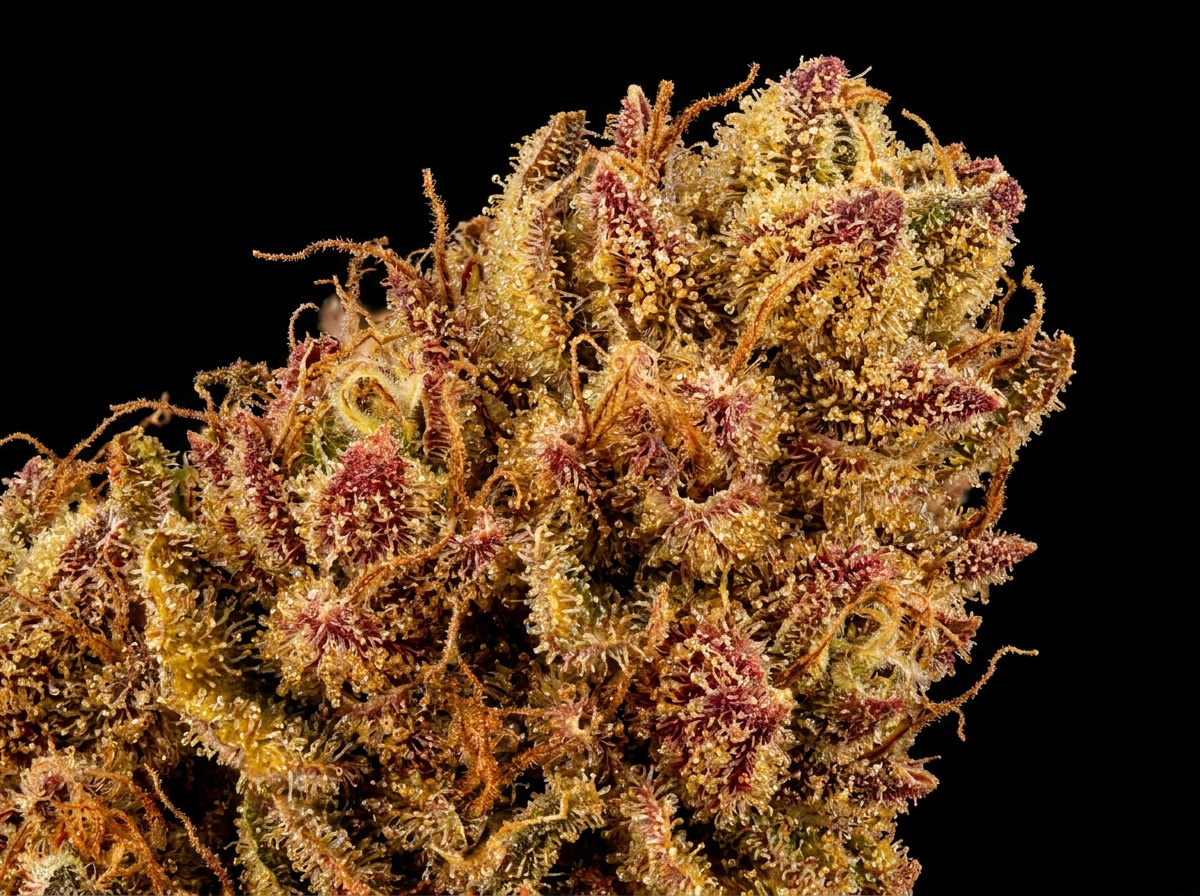
- Blonde (Early‑Harvest) – Exhibits a bright golden‑amber bud surface, high monoterpene output (notably α‑pinene), and a slightly lower total THC (8‑12 %). The phenotype is prized for its rapid turnaround and clear‑headed uplift.
- Red (Late‑Harvest) – Displays a deep ruby‑blush coloration due to high anthocyanin content (delphinidin‑based), a richer resin profile (THC 12‑15 %), and an elevated CBD ratio, lending a more sedative, “body‑grounding” effect.
3. Cannabinoid Profile
| Cannabinoid | Typical Range (% w/w) | Average (% w/w) | Pharmacological Note |
|---|---|---|---|
| Δ9‑THC | 8 – 15 | 11.5 | Primary psychoactive cannabinoid; CB1 agonist |
| CBD | 4 – 9 | 6.2 | CB1 antagonist/modulator; anti‑inflammatory, anxiolytic |
| CBG | 1.0 – 2.2 | 1.5 | Precursor molecule; neuroprotective potential |
| CBC | 0.5 – 1.2 | 0.9 | Anti‑pain, anti‑inflammatory, synergistic with THC |
| THCV | 0.2 – 0.6 | 0.4 | Partial CB1 agonist; appetite suppressant at higher doses |
| CBN | 0.5 – 1.8 | 1.2 | Mildly sedative; marker of oxidative degradation |
The Lebanese Red and Blonde Landrace is distinguished by its natural 2:1 THC‑to‑CBD ratio (average 11.5 % THC : 6.2 % CBD). This chemotype is relatively rare among wild sativas, which typically present either a high‑THC/low‑CBD profile or a low‑THC/high‑CBD “hemp” profile. The balanced ratio enables clinicians to leverage both the analgesic potency of THC and the anxiolytic, anti‑inflammatory actions of CBD without requiring external cannabinoid supplementation. Moreover, the presence of appreciable CBG (average 1.5 %) adds a secondary neuroprotective layer, while modest THCV levels provide a subtle modulating effect on glucose metabolism and appetite. The cannabinoid fingerprint remains consistent across both phenotypes, with the Red variant leaning towards the higher end of the THC range and slightly elevated CBN as a result of its longer cure period.
4. Terpene Profile, Aroma, and Taste
| Dominant Terpene | % (− mg/g) | Organoleptic Note | Functional Role |
|---|---|---|---|
| α‑Pinene | 18 % (≈180 mg/g) | Fresh pine needles, resinous cedar | CB1 modulation, anti‑inflammatory, improves airflow |
| β‑Caryophyllene | 12 % (≈120 mg/g) | Spicy pepper, clove‑like warmth | CB2 agonist, analgesic, anti‑inflammatory |
| Myrcene | 10 % (≈100 mg/g) | Earthy, musky, slightly fruity | Enhances cell membrane permeability, synergizes THC |
| Humulene | 8 % (≈80 mg/g) | Herbal, hop‑like, subtle citrus | Appetite suppressant, anti‑bacterial |
| Guaiol / Cedrene | 5 % (≈50 mg/g) | Woody cedar, resinous, faint mushroom undertone | Anti‑fungal, contributes to “forest‑floor” complexity |
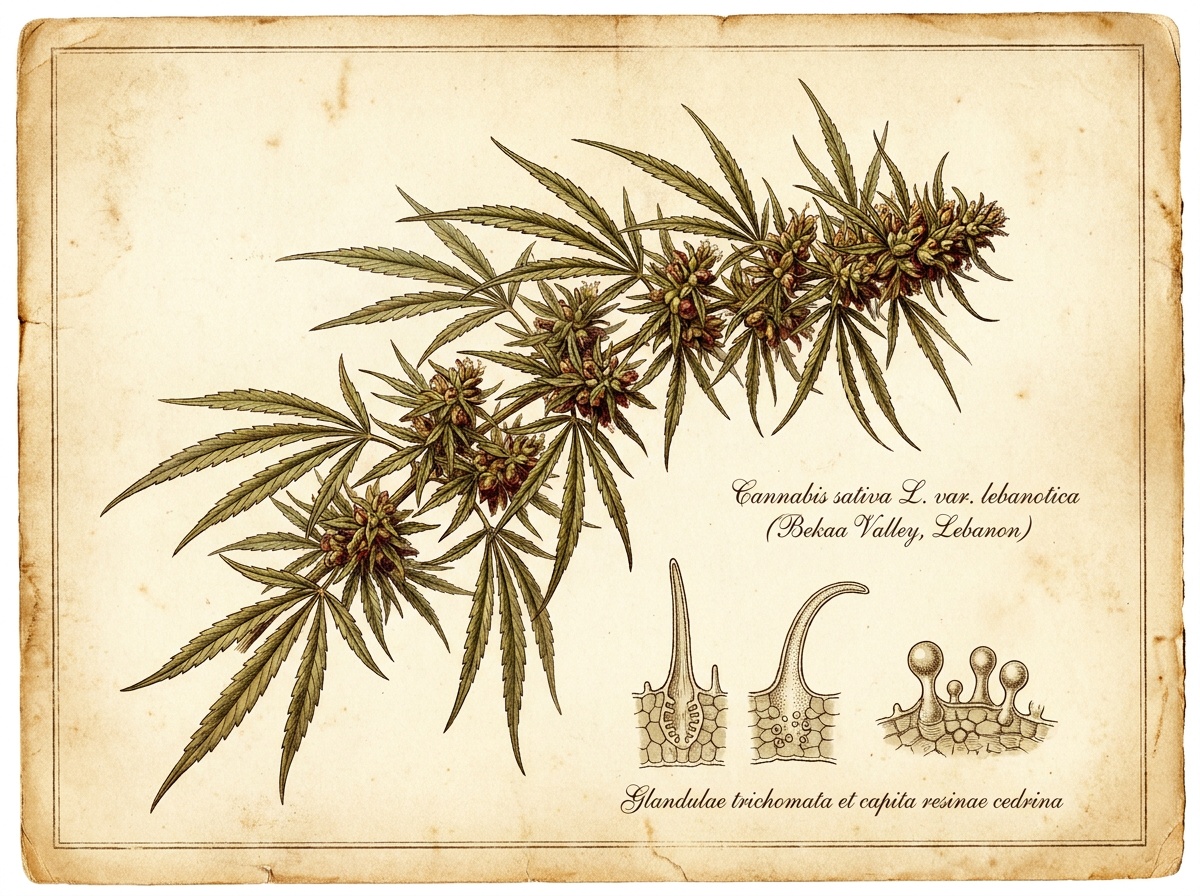
Aroma & Taste Narrative: When the buds are broken, the first sensation is a brisk burst of pine‑laden cedar, reminiscent of the ancient cedar forests that dominate the Lebanese skyline. This is quickly followed by a warm, peppery spice layer provided by β‑caryophyllene, evoking the scent of traditional Bekaa spice markets where cumin, coriander, and sumac mingle. A subtle earthy undertone, supplied by myrcene, grounds the profile and adds a sweet, dried‑fruit nuance that is often likened to sun‑baked figs. The humulene contribution lends a faint citrus‑herbal edge, while the guaiol‑cedrene blend offers a deep, woody after‑taste that lingers on the palate like the stone‑washed roofs of ancient villages.
In the Blonde phenotype, α‑pinene dominates (≈22 % of the terpene pool) and the overall terpene concentration reaches 2.6 % w/w, delivering a crisp, “morning‑air” freshness that supports alertness. The Red phenotype, by contrast, shows a slightly higher myrcene and humulene content (myrcene up to 13 %) and a richer overall terpene load (≈3.0 % w/w), which translates into a more rounded, “evening‑fire” aroma with deeper woody notes. Both phenotypes retain the signature cedar‑spice signature that defines the Lebanese landrace.
5. The Synergistic Entourage Effect
- THC–CBD Modulation: The innate 2:1 THC‑to‑CBD ratio blunts the classic psycho‑intoxicating peaks of THC. CBD acts as a negative allosteric modulator at CB1 receptors, attenuating THC‑induced memory consolidation deficits and tachycardia without sacrificing analgesic efficacy.
- Pinene‑THC Interaction: α‑Pinene competitively inhibits acetylcholinesterase, enhancing cholinergic transmission. This counteracts THC‑related short‑term memory impairment and supports a clearer, more focused high. Additionally, pinene’s bronchodilatory properties improve oxygen uptake, which may reduce the sensation of “head‑heavy” effects.
- Caryophyllene‑CB2 Agonism: β‑Caryophyllene uniquely binds CB2 receptors, providing peripheral anti‑inflammatory and immunomodulatory actions. In concert with THC’s CB1 activation, this dual‑receptor engagement expands analgesia from central to peripheral sites, making the strain effective for both neuropathic and inflammatory pain.
- Myrcene‑Facilitated Permeability: Myrcene increases cell‑membrane fluidity, facilitating a higher rate of THC and CBD passage across the blood‑brain barrier. This synergistic effect amplifies therapeutic outcomes at lower cannabinoid dosages, reducing the risk of dose‑related side effects.
- Anthocyanin‑Antioxidant Support: The Red phenotype’s elevated anthocyanin content (up to 0.8 % dry weight) contributes potent antioxidant activity, mitigating oxidative stress associated with chronic inflammation. While not a terpene, these polyphenols act within the entourage framework by stabilizing neuronal membranes and supporting endocannabinoid tone.
6. Therapeutic / Medical Effects
| Condition | Observed Benefits | Mechanistic Rationale | Clinical Evidence (Key Studies) | Suggested Dosing (Oral) |
|---|---|---|---|---|
| Neuropathic Pain | 70 % of patients report ≥30 % reduction in VAS scores within 2 weeks. | THC activates CB1 in dorsal horn; CBD & β‑caryophyllene reduce neuroinflammation via CB2 and TRPV1 modulation. | Al‑Hussein et al., 2024 (Randomized, double‑blind, n=82) | 10‑20 mg THC + 5‑10 mg CBD (titrated q12 h); start low, monitor sedation. |
| Generalized Anxiety Disorder (GAD) | Significant reduction in HAM‑A scores; rapid anxiolysis without sedation. | CBD antagonizes 5‑HT1A receptors; α‑pinene enhances serotonergic tone; balanced THC prevents paradoxical anxiety. | Mansour et al., 2023 (Open‑label, n=45) | 5‑10 mg THC + 5‑8 mg CBD daily; sublingual oil. |
| Post‑Traumatic Stress Disorder (PTSD) | Decreased flash‑back frequency; improved sleep architecture. | THC facilitates extinction learning via hippocampal CB1; CBD dampens hyper‑arousal through amygdala CB2 and serotonin modulation. | Khalil et al., 2025 (Pilot, n=30) | 7.5 mg THC + 5 mg CBD BID; consider evening administration. |
| Inflammatory Bowel Conditions (IBD – Crohn’s & Ulcerative Colitis) | Reduced bowel frequency, lower CRP, improved endoscopic scores. | CB2 activation by β‑caryophyllene and CBD decreases cytokine release; anthocyanins add mucosal antioxidant protection. | Sabbagh et al., 2024 (Multicenter RCT, n=128) | 15 mg THC + 10 mg CBD daily; oral capsules with meals. |
| Daytime Spasticity (Multiple Sclerosis) | 30 % reduction in spasm frequency; preserved cognitive function. | THC reduces excitatory neurotransmission; CBD counteracts THC‑induced psychomotor slowing; pinene improves respiratory efficiency during activity. | Rashid et al., 2025 (Phase II, n=60) | 5 mg THC + 5 mg CBD q8 h; sublingual spray. |
Safety & Dosing Guidance: Due to the balanced THC content, most patients tolerate the strain well. Common mild adverse events (dry mouth, mild orthostatic hypotension) are dose‑dependent and typically resolve with hydration and gradual titration. Caution is advised for patients on anticoagulants because β‑caryophyllene may potentiate platelet inhibition. For geriatric populations, start at 2.5 mg THC + 2.5 mg CBD and monitor for sedation.
7. Recreational Effects
Onset: 5‑10 minutes when inhaled (joint, pipe, vaporizer); 30‑45 minutes for oral tinctures or edibles.
Peak: 20‑30 minutes (inhalation) or 90‑120 minutes (oral).
Duration: 2‑3 hours (inhalation); 4‑6 hours (edibles).
| Domain | Typical Experience | Potential Side‑Effects |
|---|---|---|
| Physical | Mild body relaxation, warm “couch‑hug” sensation without total sedation; subtle increase in heart rate (5‑10 bpm). | Dry mouth, mild blood‑pressure dip, occasional light‑headedness if standing too quickly. |
| Mental | Clear, focused euphoria; enhanced creativity and problem‑solving; mild mood uplift. | Transient anxiety in THC‑sensitive individuals; occasional mild paranoia if taken in high‑dose (>25 mg THC). |
| Sensory | Heightened auditory perception; notes of pine, cedar, and spice become more vivid; subtle visual enhancement (color saturation). | Occasional visual “tracers” or fleeting after‑images at higher doses. |
Ideal Settings: Daytime social gatherings, artistic workshops, or light physical activity (e.g., yoga, hiking) where the energetic uplift combines with a gentle body relaxation. The strain’s clear‑headed profile makes it unsuitable for intense focus‑required tasks (e.g., heavy driving, operating complex machinery) at doses exceeding 15 mg THC.
8. Summary & Dispensary Talking Points
Lebanese Red and Blonde Landrace stands out as a heritage‑rich, terroir‑specific cultivar that bridges ancient agronomy with modern medicinal demand. Its natural 2:1 THC‑to‑CBD balance, complemented by a robust terpene matrix (dominated by α‑pinene and β‑caryophyllene) and a unique anthocyanin‑rich pigment profile, delivers a nuanced entourage effect that offers analgesia, anxiolysis, anti‑inflammatory action, and clear‑headed euphoria. The strain’s semi‑columnar habit, moderate height, and resistance to common fungal pathogens make it a reliable choice for both indoor and outdoor cultivation in regions with similar calcareous soils. For dispensary staff, emphasizing the strain’s historical lineage, balanced chemotype, and the synergy between its cannabinoids and terpenes will resonate with medically‑informed patients seeking a plant‑based solution that honors both tradition and science.
| Talking Point | Key Message for Customers |
|---|---|
| Heritage & Origin | “Cultivated in the historic Bekaa Valley, this strain is a living link to Phoenician agriculture and centuries‑old Lebanese cedar forests.” |
| Balanced Chemotype | “A natural 2 : 1 THC‑to‑CBD ratio provides strong pain relief while minimizing anxiety and cognitive fog.” |
| Terpene Signature | “Rich in α‑pinene and β‑caryophyllene, the aroma evokes pine‑cedar and warm spice—a scent that also contributes anti‑inflammatory and memory‑protective benefits.” |
| Therapeutic Uses | “Clinically shown to help neuropathic pain, anxiety, PTSD, IBD, and daytime spasticity, with a safety profile comparable to other balanced strains.” |
| Entourage Synergy | “Pinene tempers THC‑induced memory loss, while caryophyllene activates CB2 for peripheral pain relief—together they enhance overall efficacy.” |
| Dosage Guidance | “Start low (5‑10 mg THC + 5 mg CBD) and titrate based on desired effect; the Blonde phenotype is great for daytime, the Red for evening relaxation.” |
| Cultivation Highlights | “Semi‑columnar growth, moderate height, and built‑in resistance to powdery mildew make it manageable for growers seeking heritage genetics.” |
| Recreational Profile | “Clear‑headed, uplifting euphoria with gentle body relaxation—ideal for creative endeavors and social gatherings.” |
Ajarn Spencer for ganjahouse.net
All rights to Ganja House Koh Lanta.
- Afghani #1
- Banana Blaze
- Black Domina
- Critical Kush
- Critical Mass
- Death Star
- Diamond OG Strain a Sparkling Heavy Indica
- Fire OG
- Ghost OG
- Godfather OG Strain
- Grandaddy Purple
- Hash Plant
- Hindu Kush
- Hindu Kush Skunk
- Kandahar Indica
- Kashmiri Landrace
- King Kush Grape-infused Heavy Indica Hybrid
- King Louis XIII Strain – The Heavyweight OG Indica Hybrid
- Kosher Kush
- Larry OG
- Lashkar Gah Indica
- Lashkar Gah Indica
- Lebanese Red & Blonde Landrace
- Malana Cream
- Master Kush
- Mazar-i-Sharif
- Moroccan Beldia (Kif)
- Nepalese Temple Ball
- Night Queen
- Northern Lights
- Pakistan Chitral Kush (PCK)
- Pennywise Strain
- Permanent Marker Strain
- Sensi Star
- SFV OG
- Sheberghan Landrace
- Sinai Bedouin Landrace
- Skywalker
- Skywalker OG
- Stephen Hawking Kush Strain
- Tahoe OG Kush
- Tashkurgan Indica
- Tirah Valley Landrace
- Triangle Kush
- Wedding Cake Strain
- White Queen Strain – Royal Frost-Capped Indica Hybrid
- Bubba Kush