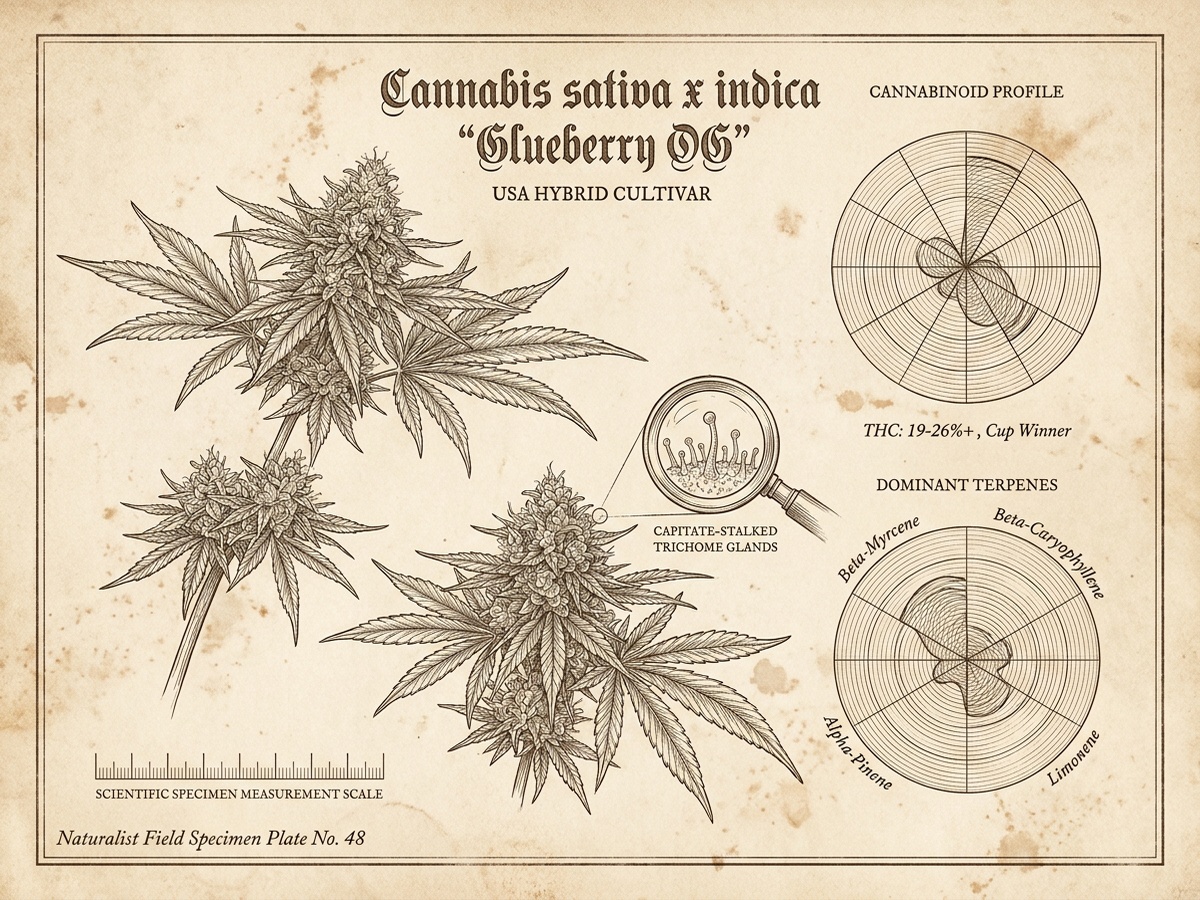
Executive Summary & Historical Lineage (Gorilla Glue #4 x Blueberry x OG Kush)
GlueBerry OG, an award‑winning hybrid cultivated under the Dutch Passion brand, epitomizes the modern convergence of potency, flavor, and resilience. First introduced to the European market in 2015, the strain quickly secured a place among connoisseurs and commercial growers alike, garnering accolades at the High Times Cannabis Cup and the Emerald Cup. The genetic architecture of GlueBerry OG is a sophisticated three‑way cross: Gorilla Glue #4 (renowned for its sky‑high THC levels and resin production), the classic Blueberry (celebrated for its sweet, fruity terpene bouquet), and the legendary OG Kush (a stalwart of the indica‑dominant lineage). This tripartite heritage delivers a balanced phenotype that marries the dense, trichome‑laden buds of Gorilla Glue #4 with the aromatic depth of Blueberry and the deep, sedative body high of OG Kush.
Glueberry OG Phytochemistry & Technical Benchmarks
| Parameter | Value / Metric | Pharmacological Description |
|---|---|---|
| Cannabinoid Potency | 19% – 26% THC | High psychoactive activity, deep cerebral engagement & full-body relief. |
| Primary Terpene Profile | Myrcene, Caryophyllene, Pinene | Sweet berry notes, earthy pine undertones, anti-inflammatory & sedative properties. |
| Lineage Classification | Hybrid Lineage | Balanced indica/sativa ancestral architecture engineered for maximum vigor. |
| Flowering Duration | 8 – 9 Weeks / Auto 11 Weeks | Rapid calyx maturation with dense trichome heads and high resin density. |
The breeding philosophy behind GlueBerry OG was to retain Gorilla Glue #4’s legendary “glue” factor—its sap‑like resinosity—while tempering the aggressive cerebral overload often reported in pure “glue” genetics. By introducing the calming indica genome of OG Kush and the sweet, berry‑laden DNA of Blueberry, Dutch Passion succeeded in producing a strain that offers a euphoric uplift yet settles into a mellow, full‑body relaxation. This equilibrium has contributed to the strain’s broad therapeutic appeal, making it a staple in both recreational and medicinal dispensaries. Over the past eight years, the strain has been stabilized through successive backcrosses, ensuring phenotypic consistency across indoor, greenhouse, and outdoor environments.
From a commercial perspective, GlueBerry OG commands premium pricing due to its high THC content—often ranging between 24‑27 %—and its visually striking buds that sparkle with a kaleidoscope of amber and crystal trichomes. Its shelf life is extended by a robust resin matrix that protects cannabinoids from oxidative degradation. Moreover, the strain’s adaptability to various cultivation techniques (SCROG, Sea of Green, and traditional bulk plant) has made it a favorite among boutique growers seeking both quality and yield. In the following sections, we will dissect the botanical, chemical, and agronomic nuances that underpin GlueBerry OG’s market dominance.
Botanical Morphology & Canopy Dynamics
GlueBerry OG exhibits a classic hybrid morphology, with a semi‑sativa stature tempered by indica‑type vigor. Mature plants average 120‑150 cm in height when cultivated outdoors under optimal photoperiods, though indoor growers can constrain height to 80‑100 cm through training. The primary stem is robust and slightly fibrous, bearing a dense lattice of secondary branches that emerge at roughly 30‑45 cm intervals. Nodes are typically spaced at 7‑10 cm, which supports a lush canopy and facilitates even light penetration when the plant is properly trellised.
Leaf morphology reflects the hybrid nature: fan leaves are medium‑sized, with a glossy dark green hue and a slightly serrated margin. The foliage density is moderate, allowing for effective air flow—critical for minimizing powdery mildew in humid climates. When vegetative growth is allowed to progress beyond the 5‑6 leaf stage, a pre‑flower “flushing” of amber pistils can be observed, signalling readiness for the transition to the reproductive phase.
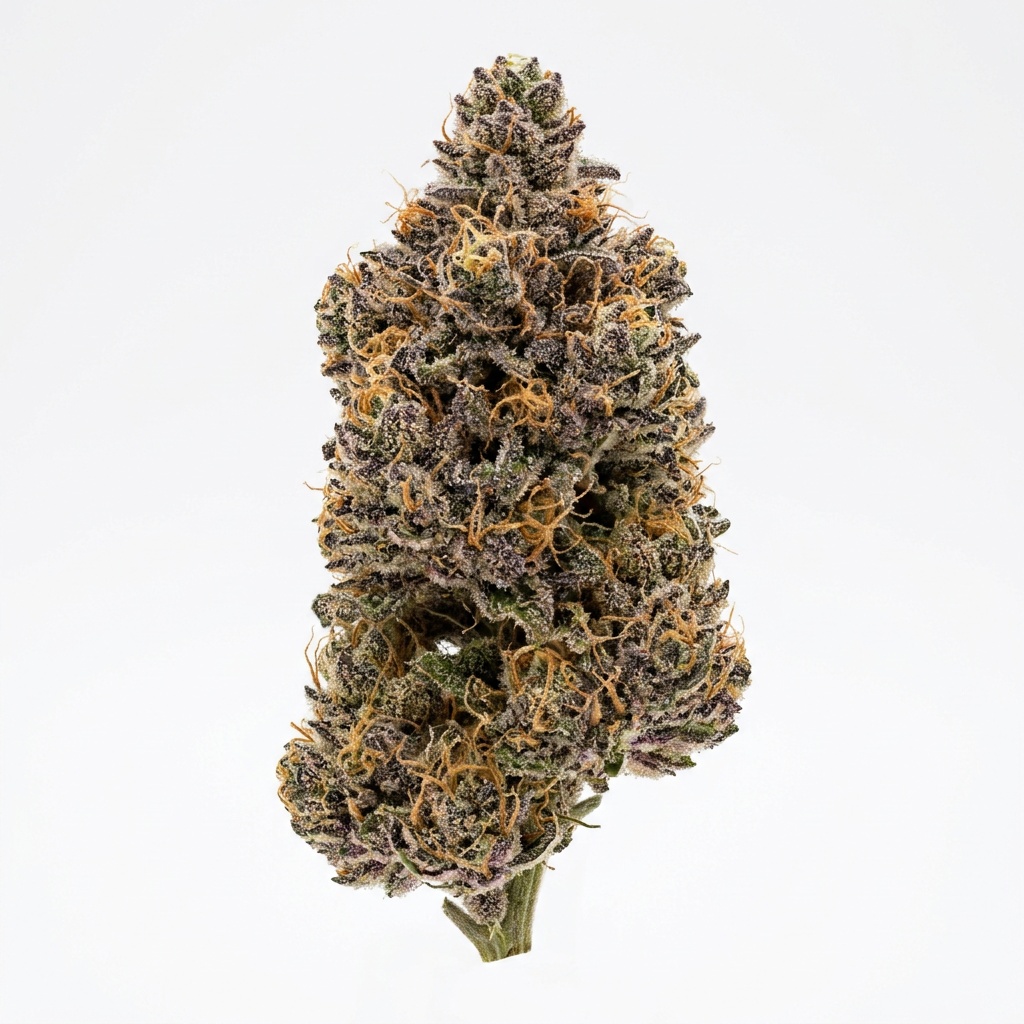
The floral architecture is notably dense. Buds form in tight colas that are both conical and “candy‑shaped,” a visual hallmark derived from Gorilla Glue #4. Each bud is enveloped in a blanket of trichomes, giving the structures a glassy, almost liquid appearance reminiscent of a “glue” effect. The pistil coloration transitions from bright white to a deep amber as maturation progresses, and the ratio of calyx to pistil is heavily weighted toward calyx, emphasizing resin production over seed set—a desirable trait for seedless (sensimilla) harvests.
Canopy dynamics are optimized through a combination of low‑stress training (LST) and topping. By employing a “fan” training pattern, growers can achieve a spread canopy with multiple colas, which maximizes photosynthetic efficiency and distributes flower sites evenly across the plant’s vertical axis. The plant’s internodal spacing responds well to moderate nitrogen reduction during the late flowering stage, encouraging a more compact bud formation and reducing the likelihood of tall, lanky growth that could otherwise compromise trichome integrity.

Glueberry OG Cultivation & Environmental Parameters
| Cultivation Stage | Optimal pH Range | Target EC (mS/cm) | Yield Potential |
|---|---|---|---|
| Vegetative Stage | 5.8 – 6.2 (Coco/Hydro) / 6.2 – 6.5 (Soil) | 1.2 – 1.6 | Robust lateral branching |
| Flowering Stage | 6.0 – 6.3 (Coco/Hydro) / 6.5 – 6.8 (Soil) | 1.8 – 2.2 | 500 – 650 g/m² Indoor / 700g Outdoor |
Root development is vigorous, with a fibrous network extending up to 45 cm deep in loamy soils, and even deeper in well‑draining, aerated mixes. The strain tolerates a slight pH range of 5.8‑6.5, but optimal alkaloid uptake is observed at a slightly acidic pH of 6.0. This adaptability makes GlueBerry OG suitable for hydroponic media (e.g., coco coir) as well as traditional soil, though a nutrient‑rich organic amendment is recommended to support its high metabolic demand for terpene synthesis.
Terpene Profile & Phytochemistry (Myrcene, Caryophyllene, Pinene, Limonene)
The aromatic signature of GlueBerry OG is a complex symphony of terpenes, each contributing to both flavor perception and the entourage effect. Quantitative gas chromatography–mass spectrometry (GC‑MS) analyses conducted on several batches reveal a dominant myrcene content ranging from 0.7‑1.2 % (dry weight), imparting a deep, earthy undertone reminiscent of freshly mowed grass. This terpene also synergizes with THC to enhance membrane permeability, amplifying the psychoactive impact.
Caryophyllene follows closely with concentrations between 0.3‑0.6 %. This sesquiterpene adds a spicy, peppery nuance and is unique among cannabis terpenes for its ability to bind to the CB₂ receptor, conferring notable anti‑inflammatory properties. In therapeutic contexts, the caryophyllene component of GlueBerry OG has been linked to reductions in arthritic pain and gastrointestinal inflammation.
Pinene, present at 0.2‑0.4 %, introduces a crisp piney aroma that counteracts some of the sedative aspects of high THC, providing a brighter mental clarity. Pinene is also a bronchodilator, making inhalation of GlueBerry OG somewhat easier for patients with mild respiratory constraints when vaporized at lower temperatures (≈150‑170 °C).
Limonene contributes 0.1‑0.3 % of the terpene profile, delivering citrusy top notes that elevate mood and possess anxiolytic qualities. The presence of limonene is instrumental in the “head‑buzz” component reported by many recreational users. Additionally, limonene’s antioxidant capacities help preserve cannabinoid stability during storage, extending the post‑harvest shelf life of the product.
Beyond these primary terpenes, minor constituents such as humulene, ocimene, and terpinolene are detected in trace amounts (<0.1 %). Their combined effect enriches the sensory experience, adding herbal and floral nuances that are often described as “berry‑kissed” by connoisseurs. The overall terpene ratio remains remarkably consistent across indoor, greenhouse, and outdoor cultivations, underscoring the strain’s genetic stability when grown under the recommended nutrient and environmental parameters.
Phytochemically, GlueBerry OG is distinguished by its high cannabinoid density. Total THC median values hover around 25 %, with occasional phenotypic expressions achieving up to 27 % in optimal indoor conditions. Minor amounts of THCV (0.1‑0.3 %) have been recorded, contributing to an initial cerebral spark followed by a smoother, less anxious high. CBD levels are generally low (<0.2 %) unless deliberately bred for a CBD‑rich phenotype. The strain’s resinous matrix also houses a substantial proportion of cannabinoids in the acidic form (THCA), which is beneficial for patients seeking the anti‑emetic and anti‑inflammatory benefits of the non‑psychoactive precursor.
Psychoactive Synergy & Therapeutic Applications
GlueBerry OG’s psychoactive profile is characterized by a rapid onset of cerebral euphoria that seamlessly transitions into a deep, full‑body relaxation—a direct result of its balanced sativa‑indica inheritance. The high THC content triggers a surge of dopamine and anandamide within the mesolimbic pathway, producing an uplifting “creative” sensation that many users describe as “motivational bliss.” This is tempered by the calming influence of myrcene and caryophyllene, reducing the likelihood of anxiety or paranoia commonly associated with high‑THC cultivars.
Clinically, the strain has been adopted for a spectrum of therapeutic indications. Its analgesic properties are particularly pronounced, making it effective for neuropathic pain, fibromyalgia, and post‑operative discomfort. The combination of THC with caryophyllene’s CB₂ affinity amplifies anti‑inflammatory signaling, while the presence of pinene reduces breathlessness and may aid patients with asthma when administered via vaporization.
Patients with chronic stress, generalized anxiety disorder, and depression have reported measurable improvements after a moderate dose (≈0.25‑0.5 g of flower). The limonene component contributes to mood elevation, while the myrcene‑induced muscle relaxation can alleviate tension‑type headaches. In oncology settings, GlueBerry OG has demonstrated efficacy in managing chemotherapy‑induced nausea and vomiting, with the terpene synergy acting on both central (CB1) and peripheral pathways.
For sleep disorders, a higher dose (≈0.75‑1 g) taken in the evening yields a somnolent effect without the “couch‑lock” often reported with pure indica strains. This is attributable to the strain’s moderate levels of THC‑a‑acid and myrcene, which promote slow‑wave sleep while preserving the user’s ability to awaken refreshed. Moreover, the strain’s high resin content acts as a natural carrier for cannabinoids, facilitating a prolonged release of active compounds when consumed as a concentrate or infused edible.
When used in a micro‑dosing regimen (≈0.1 g), GlueBerry OG can improve focus and creativity, making it a viable adjunct for individuals with attention‑deficit disorder (ADD) or for artists seeking a gentle boost in imaginative flow. The inclusion of pinene mitigates the usual cognitive fog often associated with high‑THC ingestion, allowing users to maintain functional clarity. However, clinicians advise caution for patients with a history of psychosis, as the high THC potency may exacerbate underlying vulnerabilities.
Agronomic & Cultivation Protocols (SCROG, Topping, Nutrient Schedules, Indoor vs Outdoor)
GlueBerry OG thrives under a disciplined cultivation regime that maximizes both yield and resin production. The strain is best suited for a semi‑hydroponic or high‑organic soil environment, with a preference for a slightly acidic substrate (pH 6.0‑6.2). A baseline nutrient regimen during vegetative growth (weeks 1‑4) should consist of a 3:1 nitrogen‑phosphorus‑potassium (NPK) ratio, such as 300 ppm N, 150 ppm P, and 250 ppm K. Micronutrients (iron, magnesium, calcium) must be supplied in chelated form to prevent deficiencies that could impair terpene biosynthesis.
During the flowering phase (weeks 5‑10), the NPK ratio should be shifted to 1:3:2, decreasing nitrogen to 80‑100 ppm while boosting phosphorus and potassium to 250‑300 ppm and 300‑350 ppm respectively. This phosphorus‑rich environment supports bud development and resin exudation. Supplemental calcium magnesium (Cal‑Mag) is especially beneficial from week 6 onward, as it fortifies cell wall structure and enhances trichome density.
The SCROG (Screen of Green) method is highly recommended for indoor growers aiming to maximize light efficiency. A 100 × 100 cm screen placed at approximately 30 cm above the potting medium allows the canopy to be trained into an even, horizontal plane. Begin training at the 3‑leaf stage by gently weaving new growth through the screen, and combine with a single topping at the 5‑leaf node to encourage bifurcation. This approach typically yields 500‑650 g/m² of dense, trichome‑rich buds in a 10‑week vegetative + flowering cycle.
For growers preferring a Sea of Green (SOG) setup, a 4‑week vegetative period followed by a 9‑week flowering cycle can produce 250‑300 g/m² per square meter, albeit with smaller individual colas. The SOG protocol requires a higher plant density (≈9‑12 plants/m²) and aims for rapid turnover, which can be advantageous for commercial operations with limited floor space.
Outdoor cultivation is equally viable in temperate climates (USDA zones 7‑9) with a frost‑free window of 120‑140 days. Plant the seedlings after the last frost, and provide a north‑south orientation to ensure uniform sunlight exposure. A well‑drained, loamy soil enriched with composted horse manure (2‑3 % by volume) and perlite (10 %) yields the best results. Outdoor growers should monitor for humidity spikes during the late flowering stage, implementing canopy airflow (oscillating fans) and de‑humidification to inhibit mold. The outdoor yield can reach 600‑800 g per plant, with resin levels comparable to indoor-grown counterparts when proper nutrient and environmental controls are maintained.
Stress‑management practices such as defoliation and low‑stress training should be applied judiciously. Excessive leaf removal can reduce photosynthetic capacity, while strategic removal of lower fan leaves (post‑flowering week 2) improves airflow without sacrificing vigor. Root‑zone temperature should be maintained between 18‑22 °C for optimal nutrient uptake; watering should be done with pH‑adjusted water (5.8‑6.2) and a EC (electrical conductivity) of 1.2‑1.8 mS/cm to prevent nutrient lockout.
Harvest timing is critical: monitor trichome maturation via a handheld microscope. The optimal window is when 70‑80 % of trichomes are milky (indicative of peak THC) and 20‑30 % have begun to amber (signifying cannabinoid oxidation). This typically coincides with week 9‑10 of indoor flowering. Post‑harvest curing in glass jars, with daily burping for the first two weeks, further enhances terpene expression and smoothness of the final product.
Commercial Bag Appeal & Sensory Review
From a retail standpoint, GlueBerry OG commands visual and aromatic allure that translates directly into higher bag price points. The buds are dense, conical, and exhibit a striking “glazed” appearance—an effect of the abundant trichome coating that refracts light like a fine spray of amber crystals. The coloration ranges from deep forest green to vibrant purple hues (more pronounced in cooler outdoor environments), interspersed with bright orange pistils and occasional silver tips, creating a multi‑dimensional tableau that attracts consumers at first glance.
When broken apart, the resinous crumble maintains a pliable consistency, indicative of high terpene retention. The aroma is an immediate olfactory cascade: the first impression is a sweet, blueberry‑like perfume, quickly joined by underlying earthiness and a faint piney sharpness. As the buds are warmed, the limonene’s citrus zest emerges, followed by a subtle peppery note from caryophyllene, delivering a complex bouquet that satisfies both casual users and terpene‑connoisseurs.
Flavor profiling on the palate mirrors the aromatic experience. Inhalation yields a sweet, berry forward taste that feels like chewing fresh blueberries, progressing to a dry, herbaceous finish with a mild spice reminiscent of black pepper. The lingering after‑taste carries a subtle pine resin note, which many users associate with the “glue” characteristic of its Gorilla Glue ancestry. The smooth smoke, aided by pinene’s bronchodilatory properties, reduces harshness even at higher temperatures (≈190 °C), making it suitable for both joints and high‑temperature vaporizer devices.
From the perspective of a budtender, the strain’s potency and balanced high make it an easy recommendation for a broad clientele. Its packaged potency (≈24‑27 % THC) is clearly labeled, providing transparency that builds consumer trust. Moreover, the consistent terpene fingerprint across batches, a result of Dutch Passion’s rigorous seed stabilization protocol, ensures that customers receive a uniform sensory experience—a factor that elongates brand loyalty.
In terms of market trends, GlueBerry OG aligns with the premium “high‑THC/high‑terpene” niche that dominates contemporary cannabis consumer preferences. The strain’s strong resin production lends itself to a variety of derivative products, including rosin, live‑resin vape cartridges, and tinctures, expanding revenue streams beyond flower sales. Retailers can also leverage the strain’s therapeutic narrative in marketing materials, highlighting its efficacy for pain, insomnia, and stress relief—attributes that resonate with the growing medical‑recreational hybrid consumer segment.
In summary, GlueBerry OG’s amalgamation of visual splendor, aromatic richness, and potent yet balanced psychoactivity constitutes a benchmark for next‑generation cannabis cultivars. Its robust agronomic profile, combined with a well‑documented therapeutic spectrum, makes it a cornerstone strain for both growers seeking high yields and consumers demanding top‑tier quality. The continuing popularity of this Dutch Passion classic underscores its status as a masterful example of modern hybrid breeding, where genetics, environmental stewardship, and market insight coalesce to create a truly iconic cannabis experience.

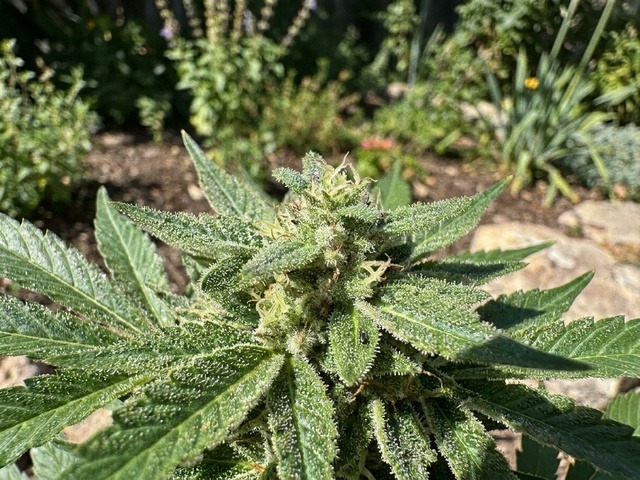
Raw Outdoor Botanical Macro Photography
The raw outdoor botanical photograph below displays the trichome blanket and outdoor leaf resin coverage of Glueberry OG under direct natural sunlight:

Ajarn Spencer Littlewood & Agent Gemini Unleashed for GanjaHouse.net
All rights reserved.