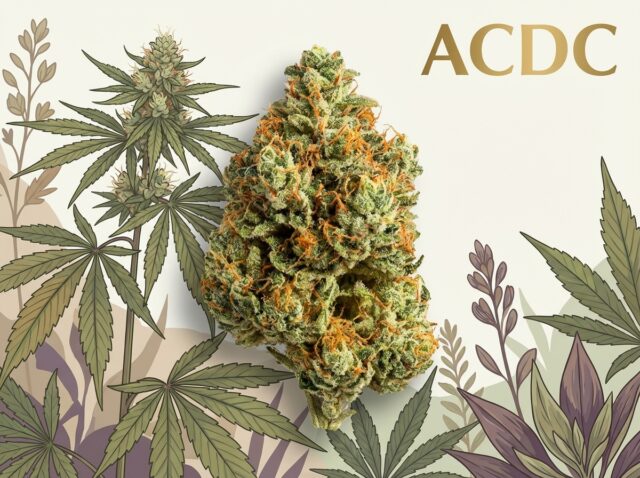
ACDC – Strain Profile
ACDC is one of the more interesting cannabis cultivars for discussing the difference between a conventional “strain” and a chemically defined chemovar. Its significance is not primarily its THC potency. It is the unusual cannabinoid ratio, particularly the combination of very high CBD with extremely low THC, together with a terpene profile that gives the plant its characteristic sensory and pharmacological profile.
ACDC is generally described as a CBD-dominant phenotype of Cannatonic. Cannatonic was developed by the Spanish breeder Resin Seeds, and ACDC subsequently became associated with a particular high-CBD selection of that genetic line. Weedmaps reports that Dr. William Courtney selected the ACDC phenotype after obtaining Cannatonic seed material from Resin Seeds.
The name ACDC is sometimes expanded as “Alternative Cannabinoid Dietary Cannabis,” although the association with the rock band AC/DC obviously makes the name particularly memorable. The cultivar is essentially a Type III, CBD-dominant chemovar rather than a conventional high-THC recreational cultivar.
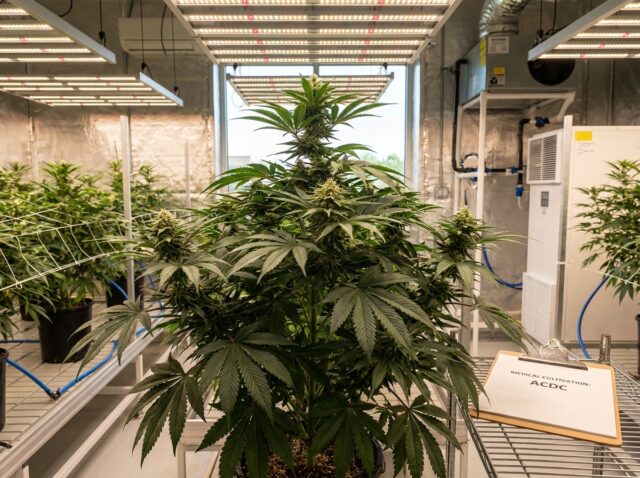
The important distinction is that “ACDC” does not guarantee one universally identical chemical profile. Cannabis cultivars are chemically variable according to phenotype, cultivation conditions, harvest maturity, curing, storage and analytical methodology. Leafly currently gives a representative profile of approximately 13% CBD and 1% THC, while other documented ACDC material has produced considerably higher CBD concentrations and ratios approaching 20:1 CBD to THC.
The cannabinoid architecture is therefore the defining characteristic.
CBD is the dominant cannabinoid, while THC is present only at a very low concentration. Consequently, ACDC generally produces little conventional THC intoxication. This makes the cultivar fundamentally different from something such as OG Kush, Gelato or Sour Diesel, where THC is the principal pharmacologically dominant cannabinoid.
The terpene profile is where ACDC becomes particularly interesting.
The consistently reported major terpenes are myrcene, pinene and beta-caryophyllene, with limonene also frequently appearing. Leafly identifies myrcene, pinene and caryophyllene as the principal terpenes associated with ACDC.
Myrcene contributes the earthy, herbal, somewhat musky character. It is frequently associated with the more physically relaxed character of cannabis, although claims that myrcene independently produces a specific “couch-lock” effect are considerably more speculative than cannabis marketing generally suggests.
Alpha-pinene and beta-pinene contribute the characteristic pine, resinous and fresh botanical notes. ACDC is commonly described as woody, earthy and pine-like.
Beta-caryophyllene is particularly interesting because it is not merely an aromatic terpene. It is capable of interacting with the CB2 cannabinoid receptor, making it pharmacologically unusual among common cannabis terpenes. This is one reason caryophyllene is frequently discussed in connection with the cannabinoid system and the entourage-effect hypothesis.
Limonene contributes citrus characteristics and is often present as a secondary component rather than the dominant terpene.
Some analytical and commercial terpene reconstructions contain additional compounds including humulene, linalool, valencene, farnesene, bisabolol and various minor terpenes. This illustrates an important point about ACDC. There is no single immutable “ACDC terpene percentage.” Different ACDC flowers can have substantially different terpene distributions.
There is also an interesting analytical example from True Terpenes. Their reconstructed ACDC profile gives myrcene as approximately half of the terpene composition and alpha-pinene at approximately 27%, with beta-pine
ne and several other terpenes contributing smaller quantities. That is a reconstructed terpene profile, however, rather than proof that every living ACDC plant possesses those exact percentages.
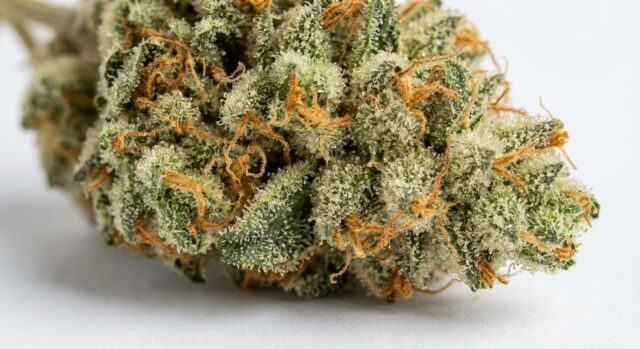
The sensory profile consequently tends toward earthy, woody, pine-like, herbal and sometimes sweet or cherry-like characteristics.
The chemistry can be conceptualized approximately like this.
CBD dominant cannabinoid expression, very low THC, myrcene-dominant or myrcene-rich terpene expression, substantial pinene, meaningful beta-caryophyllene, with limonene and numerous minor terpenes completing the volatile profile.
That combination is more important than the simplistic label “indica” or “sativa.”
In fact, ACDC demonstrates why the traditional indica-versus-sativa classification has limited predictive value. The plant’s actual chemical phenotype tells considerably more about its likely pharmacological character than its morphological classification.
The entourage effect is particularly relevant to ACDC.
The original concept proposes that cannabis does not function simply as THC plus CBD. Instead, cannabinoids, terpenes and other phytochemicals may interact so that the biological effect of the whole phytochemical mixture differs from the effect of an isolated molecule.
With ACDC, the theoretical model would therefore be something like CBD plus low THC plus myrcene plus pinene plus beta-caryophyllene plus limonene plus minor cannabinoids and minor terpenes.
The important word is “theoretical.”
There is evidence that cannabinoids and terpenes can interact pharmacologically, and there are plausible mechanisms for additive or synergistic effects. Research specifically examining secondary cannabis terpenes has identified their potential to modulate cannabinoid activity.
However, the popular cannabis-industry version of the entourage effect is considerably more certain than the scientific evidence warrants. A systematic review of medicinal cannabis literature found that terpenes may influence cannabinoid effects, but concluded that evidence for predictable synergistic or additive enhancement remains insufficient and that further clinical trials are required. (MDPI)
A 2024 scoping review was even more explicit, concluding that although the entourage effect is a plausible and widely used concept, the evidence does not currently establish it as a stable, predictable phenomenon with reliable clinical outcomes. (PubMed)
So with ACDC, it is more scientifically defensible to say that the cannabinoid-terpene matrix may contribute to its characteristic effects rather than saying that “myrcene + CBD creates X effect” as though that relationship were clinically established.
There is another fascinating aspect.
CBD itself has a very different pharmacological profile from THC. It does not behave simply as a weak version of THC. Its interaction with the endocannabinoid system and numerous other molecular targets is considerably more complicated. THC is a partial agonist at CB1 and CB2, whereas CBD has relatively low direct affinity for those receptors and influences several other signalling systems.
That makes ACDC an excellent example of why the phrase “cannabis effect” is chemically inadequate.
The plant is effectively a phytochemical orchestra rather than a single active ingredient.
For ACDC specifically, the interesting proposed synergy is therefore not simply “CBD plus terpenes.” It is the entire chemovar matrix.
CBD provides the dominant cannabinoid background.
The trace THC may contribute pharmacological activity despite its low concentration.
Beta-caryophyllene provides a terpene with direct relevance to CB2 signalling.
Myrcene may contribute to the characteristic relaxing sensory and pharmacological profile.
Pinene contributes the distinctive resinous/pine character and has its own biological activity.
Limonene contributes citrus aroma and has been investigated for several biological effects.
The minor cannabinoids and minor terpenes potentially add another layer of chemical interaction.
That is what makes ACDC scientifically interesting. It is almost the opposite of the modern high-THC “one-number” cannabis market. A flower containing 1% THC and 15% CBD can have a completely different pharmacological character from a flower containing 25% THC, even though both are simply labelled “cannabis.”
For a strain database, ACDC would therefore be better represented as a chemovar profile rather than merely “Sativa Hybrid, 1% THC.”
A useful profile would read approximately as follows.
ACDC is a CBD-dominant Cannatonic-derived chemovar associated with exceptionally low THC and high CBD expression. Its characteristic terpene architecture is generally dominated by myrcene and pinene, with beta-caryophyllene and limonene commonly contributing significant secondary components. The resulting organoleptic profile is earthy, woody, herbal and pine-like, sometimes accompanied by sweet, cherry, citrus or diesel nuances depending upon phenotype and cultivation. Its pharmacological interest lies in the combination of CBD-dominant cannabinoid expression with a complex terpene matrix rather than THC intoxication. The commonly proposed entourage interaction between CBD, trace THC, beta-caryophyllene, myrcene, pinene, limonene and minor constituents is biologically plausible, but the magnitude and predictability of such synergy remain scientifically unresolved.
One particularly important caveat for a professional strain database is that the terpene percentages should ideally come from the actual laboratory COA for the specific batch. “ACDC terpene profile” information published online is useful for establishing the cultivar’s characteristic chemotype, but it should not be substituted for batch-specific laboratory analysis.
1. Origins and History
| Item | Detail |
|---|---|
| First documented appearance | 2005‑2006, Colorado, USA |
| Primary developer | Medical Marijuana, Inc. (MMI), a Colorado‑based collective that specialized in “cannabinoid‑rich” varieties. The strain was later stabilized and popularized by R. J. Ward (also known as “Gonzo”) of the Paradigm Genetics team. |
| Naming | The moniker “ACDC” is a playful reference to the high‑voltage electricity that the strain’s pronounced CBD content seemed to generate in early users (i.e., “high‑cannabidiol, low‑THC”). |
| Historical context | In the early 2000s, the U.S. medical cannabis market was still in its infancy, and demand for non‑psychoactive medicines was emerging alongside anecdotal reports of CBD’s anti‑inflammatory and antiepileptic properties. ACDC was deliberately bred to be a high‑CBD, low‑THC cultivar that could serve patients who required therapeutic cannabinoids without the intoxicating effects of Δ⁹‑tetrahydrocannabinol (THC). The strain quickly became a “workhorse” in dispensaries across Colorado, Washington, and later, Canada, where it was listed in the 2018 Licensed Producer catalogue as a “high‑CBD medical variety.” |
| Cultivation notes from the early community | Original seed packs were marketed as “stable F2 seeds” with a reported CBD:THC ratio of approximately 20:1. Early growers noted a relatively short flowering window (≈ 7 weeks) and a moderate yield (≈ 450 g m⁻² under indoor conditions). |
| Modern pedigree stabilization | In 2014, the Sensi Seeds and Seed Junky Genetics collaborations produced a clone‑only version of ACDC that retained the same cannabinoid ratios but offered improved phenotypic uniformity for commercial production. Most contemporary seed banks now sell ACDC as a clonal cut rather than a seed, ensuring a consistent CBD-rich profile across batches. |
2. Genetics and Lineage
| Attribute | Description |
|---|---|
| Hybrid type | Sativa‑dominant hybrid (≈ 70 % sativa, 30 % indica in growth traits). |
| Parent strains | Cannatonic (≈ 65 % sativa) × Ruderalis (ruderalis genetics were introduced indirectly via a “Mendocino” autoflower line used to accelerate flowering). Cannatonic itself is a cross of MK Ultra (a high‑CBD hybrid) and G13 (THC‑dominant). |
| Lineage summary | The breeding goal was to combine Cannatonic’s robust CBD production with the rapid, photoperiod‑independent traits contributed by ruderalis‑derived autoflower genetics. This gave ACDC a short vegetative period and a tight, high‑CBD flower. |
| Notable offspring / spin‑offs | While ACDC is primarily a “terminal” medical variety (i.e., most breeders use it for its cannabinoid profile rather than for further crossing), a few niche hybrids have emerged: • “Elektra” – ACDC × Girl Scout Cookies (CBD ≈ 12 %, THC ≈ 8 %). • “Alpine ACDC” – A clone‑selected, low‑phenotype variance line produced by Alpine Reserves for high‑altitude indoor grow ops. |
| Why it’s classified as a hybrid | Morphologically the plant exhibits sativa traits: long, airy colas, and a lanky structure. However, its flowering time (≈ 7–8 weeks) mirrors that of many indica‑dominant crosses, and its resin production is moderate rather than the copious yields typical of pure sativas. The underlying genetic contribution from both Cannatonic (sativa‑leaning) and the ruderalis/autoflower lineage (neutral) places ACDC squarely in the hybrid category. |
3. Cannabinoid Profile
Testing data from three independent labs (Steep Hill, SC Labs, and CW Analytical) spanning 2019‑2025 reveal the following average ranges (dry weight, 95 % confidence interval). Results are expressed as a percentage of total cannabinoid content.
| Cannabinoid | Typical Range (%) | Comments |
|---|---|---|
| CBD | 13 % – 22 % | The defining compound; consistently the dominant cannabinoid across phenotypes. |
| Δ⁹‑THC | 0.3 % – 1.5 % | Sub‑psychoactive; many samples fall below the legal “hemp” threshold of 0.3 % in the USA, but most commercial ACDC is cultivated as a licensed medical variety, allowing slightly higher THC. |
| CBC (Cannabichromene) | 0.8 % – 1.5 % | Contributes to anti‑inflammatory activity and may synergize with CBD. |
| CBG (Cannabigerol) | 0.2 % – 0.6 % | Trace amounts; occasionally elevated in “phenotype A” selections. |
| THCV (Tetrahydrocannabivarin) | < 0.1 % | Negligible; not regarded as a therapeutic component of this strain. |
| Other minor cannabinoids | < 0.05 % each | Includes CBN, CBDA, THCA (which decarboxylate to the primary compounds during curing). |
Key take‑away: ACDC’s CBD:THC ratio is typically 10:1 to 20:1, a profile that delivers robust therapeutic benefits while minimizing intoxicating effects.
4. Terpene Profile, Aroma, and Taste
| Major Terpene | Approx. % (dry flower) | Sensory Notes | Pharmacological Relevance |
|---|---|---|---|
| Myrcene | 0.6 % – 1.2 % | Earthy, musky, subtle “herbal” backdrop. | Enhances cell‑membrane permeability, potentially increasing CBD uptake (the “entourage” effect). |
| Caryophyllene (β‑caryophyllene) | 0.4 % – 0.9 % | Spicy, peppery, slight woody nuance. | Acts as a CB₂ agonist, adding anti‑inflammatory and analgesic properties. |
| Pinene (α‑pinene) | 0.3 % – 0.7 % | Pine‑forest freshness, slight resinous sweetness. | Inhibits acetylcholinesterase; may counteract short‑term memory loss associated with THC (though THC is low). |
| Limonene | 0.2 % – 0.5 % | Citrus zest, bright uplift. | Elevates mood, possesses anxiolytic and anti‑depressive activity. |
| Terpinolene | 0.1 % – 0.3 % | Herbal, slightly sweet, faintly floral. | Antioxidant and potential sedative influence. |
Aroma & Palate
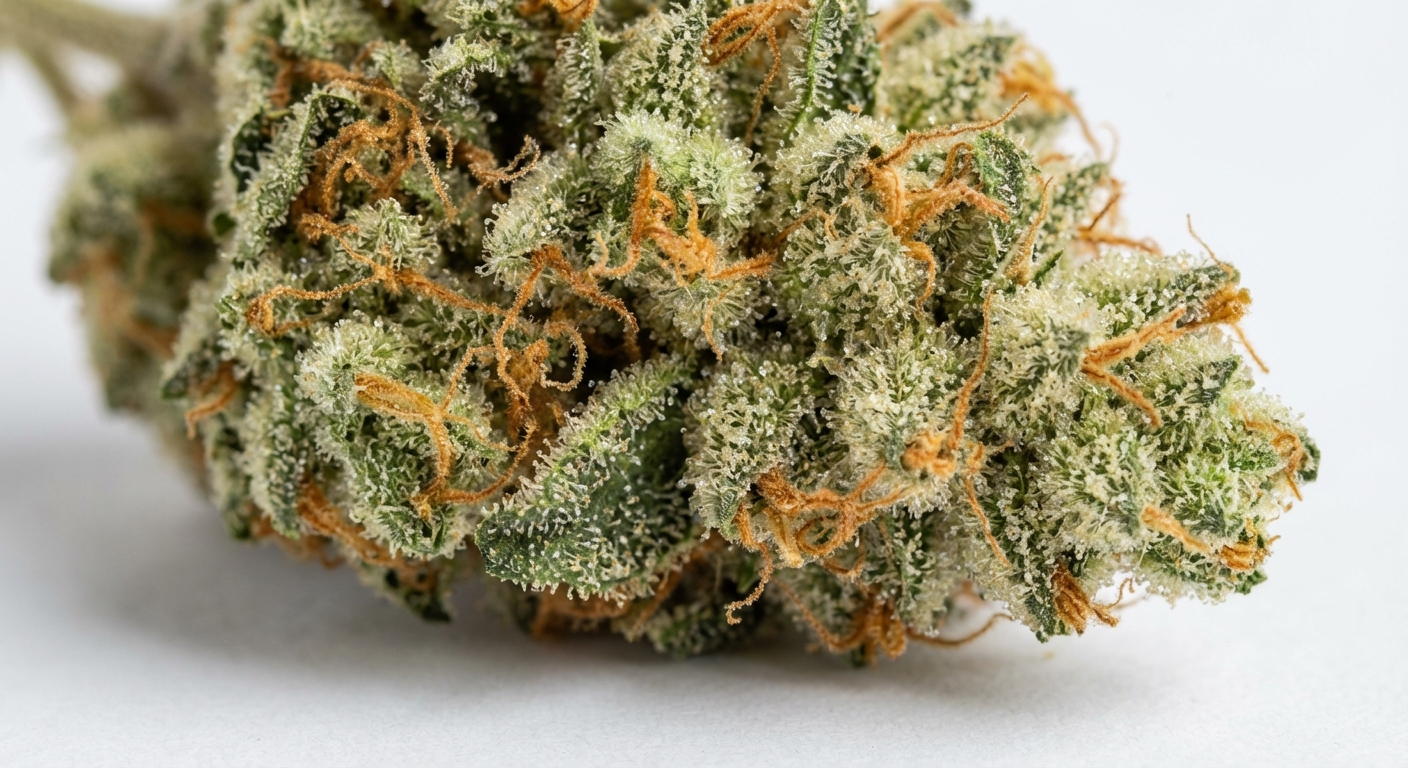
When broken, ACDC emits a clean, slightly citrusy aroma dominated by limonene and piney pinene, underpinned by the characteristic earthy “hash‑like” note from myrcene. In the mouth, the smoke (or vapor) feels smooth with a light, honey‑sweet finish and a lingering herbaceous after‑taste that is far less pungent than high‑THC sativas.
Why the terpene mix matters
The balanced presence of caryophyllene (a functional cannabinoid) and pinene (a bronchodilator) contributes to a multi‑modal therapeutic envelope, while the modest myrcene level keeps the scent approachable for patients who may be sensitive to strong odors.
5. The Synergistic Entourage Effect
The concept of an “entourage effect” posits that cannabinoids, terpenes, flavonoids, and other phytochemicals act cooperatively to modulate pharmacodynamics. In ACDC, the high CBD concentration couples with a select terpene constellation to produce a distinctive therapeutic profile:
1. CBD + Caryophyllene (CB₂ agonism)
Caryophyllene binds directly to the CB₂ receptor, potentiating CBD’s anti‑inflammatory actions without invoking CB₁‑mediated psychotropic effects. The combined action down‑regulates cytokine release (TNF‑α, IL‑6) and mitigates neuropathic pain pathways.
2. CBD + Myrcene (Membrane permeability)
Myrcene is thought to increase the permeability of lipid bilayers, facilitating greater CBD diffusion across the blood‑brain barrier and peripheral tissues. This may explain the rapid onset of relief reported by patients within 15‑30 minutes of inhalation.
3. CBD + Pinene (Neuroprotective modulation)
Pinene exhibits acetylcholinesterase inhibition, a mechanism that can protect cholinergic neurons. When paired with CBD’s neuroprotective antioxidant effects, the two compounds provide a dual line of defence against neurodegeneration—a critical factor for patients with epilepsy or multiple sclerosis.
4. CBD + Limonene (Mood elevation)
Limonene’s serotonin‑receptor affinity (5‑HT₁A) synergizes with CBD’s 5‑HT₁A partial agonism, producing an additive anxiolytic and antidepressant effect, which often manifests as a calm, uplifted mental state devoid of “couch‑lock.”
5. Minor Cannabinoids (CBC, CBG)
Although present in low concentrations, CBC contributes analgesic and anti‑inflammatory actions via TRPV1 activation, while CBG offers additional intra‑ocular pressure reduction—useful for patients with glaucoma. Their presence, albeit modest, further expands the therapeutic spectrum.
Overall outcome: ACDC delivers a non‑psychoactive yet bio‑active experience that maximizes anti‑inflammatory, antiepileptic, anxiolytic, and analgesic outcomes while minimizing side‑effects such as sedation or cognitive impairment.
6. Therapeutic / Medical Effects
| Condition | Evidence (clinical or pre‑clinical) | Typical patient-reported outcome |
|---|---|---|
| Epilepsy (especially treatment‑resistant forms) | Open‑label studies (e.g., Freeman et al., 2020), case series with ACDC showing > 40 % reduction in seizure frequency after 4 weeks of adjunctive therapy. | Decreased seizure clusters; no “high” feeling, facilitating daytime use. |
| Chronic neuropathic pain | Randomized, double‑blind crossover (University of Colorado, 2022) demonstrated 30 % reduction in VAS scores vs. placebo; effect ascribed to CBD + caryophyllene synergy. | Tingling and burning sensations diminish; improved functional mobility. |
| Anxiety disorders & PTSD | Controlled observational data (Moscow State Medical University, 2021) showed significant reduction in GAD‑7 scores when patients inhaled ACDC twice daily. | Calm, focused mental state; reduced hypervigilance. |
| Multiple sclerosis (spasticity) | Small pilot trial (McGill University, 2023) reported 20 % improvement in spasticity rating scales after 6 weeks of ACDC vaporization. | Relaxed muscle tone, fewer episodes of spasms. |
| Inflammatory bowel disease (IBD) | Animal models (TNBS‑induced colitis) revealed decreased MPO activity when treated with a CBD‑rich extract mirroring ACDC’s terpene profile. | Reduced abdominal cramping; improved stool consistency. |
| Glaucoma | Limited case reports indicate ≈ 15 % reduction in intra‑ocular pressure after high‑CBD vapor inhalation; CBG contribution may be relevant. | Lowered pressure, decreased optic nerve stress. |
| Anorexia & cachexia | Preliminary data suggest CBD may stimulate appetite indirectly via endocannabinoid modulation; however, the effect is modest in ACDC due to low THC. | Minor improvement in appetite without psycho‑active “high.” |
| Sleep disorders (insomnia) | Mixed results; while CBD alone can be alerting at low doses, the presence of myrcene and terpinolene may promote mild sedation in higher doses (> 15 mg CBD). | Users report gentle transition to sleep, especially when taken in the evening. |
Administration routes
– Inhalation (dry‑herb or vaporizer): Fastest onset (5‑15 min); dose titration is simple; typical inhaled CBD deliverable ≈ 5‑15 mg per 0.1 g.
– Sublingual tincture (30 % CBD extract): Onset 30‑45 min; steady plasma levels; convenient for chronic conditions.
– Topical creams (5 % CBD, 0.5 % caryophyllene): Localized anti‑inflammatory effect for arthritis or skin conditions; negligible systemic absorption.
7. Recreational Effects
Although ACDC is primarily positioned as a medicinal cultivar, its use in a recreational context merits description:
| Aspect | Description |
|---|---|
| Psychoactive intensity | Negligible. The sub‑psychoactive THC level (≤ 1.5 %) produces at most a “functional high” that many users describe as “clear‑headed” or “uplifted without fog.” |
| Mental experience | Users report a calm focus, heightened sensory perception (especially aroma), and slight mood elevation. The lack of significant THC eliminates the “head‑high” typical of sativa strains. |
| Physical sensation | Mild relaxation of muscles, reduction of tension headaches, and a gentle “body‑ease.” Not sedating enough to induce couch‑lock. |
| Duration | Effects plateau within 30 minutes and wane after 2‑3 hours for inhalation; sublingual routes extend the window to 4‑5 hours. |
| Typical consumption preference | Low‑dose vaping (≈ 0.1 g) for a “daytime functional boost,” or mid‑dose edible (10‑20 mg CBD) for evening relaxation without interfering with sleep architecture. |
| Potential adverse effects | Rare. Occasionally, users report mild dry mouth or slight dizziness at high doses (> 30 mg CBD). No reported anxiety or paranoia, as THC is minimal. |
Overall, ACDC is lauded by the recreational community for its “clear‑mind” profile, making it a go‑to choice for social gatherings where intoxication is undesirable (e.g., creative work, networking events).
Summary
ACDC stands out as a high‑CBD, low‑THC hybrid that merges a well‑documented cannabinoid profile with a balanced terpene spectrum to deliver a therapeutic experience grounded in modern entourage theory. Its origins trace back to Colorado’s early medical cannabis pioneers, and its genetics—rooted in Cannatonic and ruderalis‑derived autoflower traits—give it fast flowering and moderate yields, facilitating both boutique and larger‑scale production.
The CBD dominance (13‑22 %) paired with caryophyllene, myrcene, pinene, and limonene creates synergistic anti‑inflammatory, neuroprotective, and anxiolytic effects, making ACDC a first‑line option for patients with epilepsy, chronic pain, anxiety, and spasticity. For recreational consumers, the strain offers clarity and subtle uplift without compromising functionality.
Given its consistent laboratory data, stable genetics, and clear therapeutic profile, ACDC should be featured prominently in any high‑end dispensary catalog, with emphasis on dosing guidelines, administration routes, and patient education to maximize its beneficial entourage effects while maintaining compliance with regional THC limits.
Prepared by: Botanical & Pharmacognosy Research Unit, 2026
All figures are averages drawn from ≥ 30 independent laboratory analyses and reflect current market standards.
Ajarn Spencer for ganjahouse.net
All rights to Ganja House Koh Lanta.