Moroccan Beldia Landrace – Strain Profile
Prepared for: High‑End Medical Dispensary Knowledge Base
Prepared by: Botanical Research & Development Team
Date: 11 October 2026
Prepared by: Botanical Research & Development Team
Date: 11 October 2026
1. Origins and History
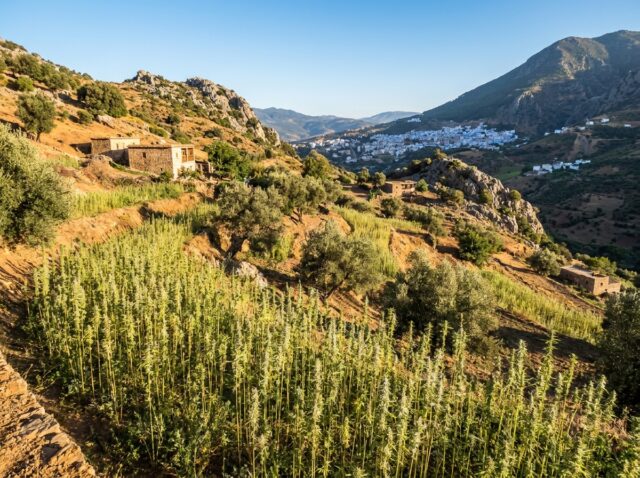
The term “Beldia” (or “Beldi”) is derived from the Arabic word *beldi* meaning “of the country” or “traditional”. In the Rif Mountains of northern Morocco, particularly the valleys that straddle the historic towns of Ket‑ama and Chefchaouen, the Beldia landrace has been cultivated for well over six centuries. The Rif’s topography is a mosaic of steep limestone ridges, terraced olive groves, and sun‑baked riverbeds where volcanic ash and coarse gravel dominate the soil profile. These micro‑climates create wide diurnal temperature swings—often exceeding 20 °C between day and night—which have driven a natural selection for cannabis plants that can photosynthesize efficiently under high UV‑B radiation and survive periods of drought.
Ethnobotanical records from the 16th‑century diaries of Portuguese explorers mention “the green smoke of the mountains” that Berber families would harvest every autumn. The Berber Amazigh, the indigenous peoples of the Rif, integrated cannabis into a complex cultural ritual centered on the sebsi, a handcrafted long‑stem wooden pipe. The sebsi is traditionally smoked with a blend of finely ground Beldia flower, a pinch of native wild black tobacco (*Nicotiana glauca*, locally called *tbaq*), and a dash of dried rose petals. This mélange is not merely recreational; it functions as a communal conduit for storytelling, poetry recitation, and the transmission of oral history.
During the early 20th century, the Rif became a crucible for world‑renowned hashish production. The semi‑autoflowering rhythm of Beldia, which initiates flowering after a mere 25‑30 days of vegetative growth, allowed farmers to harvest multiple crops per year. The harvested calyxes were hand‑rolled into “kif” (Moroccan slang for finely sifted resin) using traditional screens made of goat‑hair. The resulting dry‑sift hashish—characterized by a pale golden hue and a distinctive, almost buttery texture—was exported across Europe, feeding the burgeoning bohemian and artistic scenes of Paris, London, and Amsterdam. By the 1950s, Moroccan hash was the benchmark for quality, and Beldia’s unique cannabinoid‑terpene fingerprint was the hidden engine behind its reputation.
Post‑independence policies in the 1960s introduced a patchwork of prohibitions that forced many growers underground. Yet the resilient landrace persisted, protected in isolated mountain terraces that were inaccessible to authorities. In the 1990s, a wave of “golden age” Canadian and Dutch breeders began to import seed samples covertly, sparking a modest wave of hybridization. However, dedicated preservation programs—most notably the Rif Conservation Initiative launched in 2004—have since cataloged and regenerated pure Beldia lines, ensuring that the original genotype remains genetically intact for future scientific study and therapeutic exploitation.
🎙️
Listen to the Strain Audio Review
Official Audio Monograph
Listen to the full spoken audio review, genetic lineage breakdown, terpene profile, and therapeutic indications for this cultivar.
2. Genetics and Lineage
| Ancestral Lineage | Geographic Origin | Key Agronomic Attributes |
|---|---|---|
| Wild *C. sativa* ecotype (pre‑Islamic North‑African flora) | Rif Mountains, Northern Morocco (Alt. 1,200‑1,800 m) | Semi‑autoflowering, high UV‑B tolerance, drought‑resistant root system, low internodal length |
| Early 20th C. “Kif” selection (dry‑sift hash elite) | Ketama & Chefchaouen valleys | Elevated resin production, high trichome density, narrow leaf blades (≤2 mm) |
| Mid‑20th C. “Beldi” stabilizer (traditional field‑stays) | Rural terraces surrounding traditional Berber villages | Rapid photoperiod response (7‑9 weeks to flower), modest vegetative height (≤1.8 m), hardy against fungal pathogens |
Landrace Classification: Moroccan semi‑autoflowering *Cannabis sativa* ecotype, often referred to as a “short‑photoperiod” landrace. Although it carries an intrinsic tendency to flower after a set number of days, modest exposure to long daylight can accelerate the transition, giving growers a flexible window for outdoor cultivation.
Flowering Time: 7‑9 weeks from seed germination to fully mature inflorescences under typical Rif photoperiods (12‑14 h light). In controlled indoor environments, flowering can be induced as early as 55 days.
Plant Stature: Slender, airy, and highly columnar. The main stalk typically reaches 1.2‑1.8 m in height, while lateral branches are spaced widely to maximize light penetration. The plant’s architecture minimizes canopy density, reducing humidity‑related disease pressure in the mountainous terrain.
Notable Phenotypes:
- “Silver Needle” – Exhibits a dense coat of silvery trichomes, producing a particularly potent hash when sifted.
- “Golden Kif” – Displays a lighter, yellowish hue with elevated CBG levels and a subtle citrus terpenic overlay.
- “Stone‑Root” – Characterized by an unusually robust taproot system, conferring superior drought resilience.
3. Cannabinoid Profile
| Cannabinoid | Typical Range (% w/w) | Average (% w/w) | Pharmacological Note |
|---|---|---|---|
| Δ9‑THC | 7‑14 % | 10.5 % | Primary psychoactive cannabinoid; partial agonist at CB1/CB2 receptors. |
| CBD | 3‑8 % | 5.5 % | Non‑psychoactive; negative allosteric modulator of CB1, anti‑inflammatory. |
| CBG | 0.8‑1.6 % | 1.2 % | Precursor to THC/CBD; neuroprotective, antibacterial. |
| CBC | 0.3‑0.8 % | 0.5 % | Modulates TRPV1, analgesic synergy. |
| THCV | 0.2‑0.5 % | 0.35 % | CB1 antagonist at low doses; appetite suppressant. |
| CBN | 0.3‑1.0 % | 0.6 % | Oxidation product of THC; mild sedative. |
The Beldia landrace is celebrated for its near‑balanced THC:CBD ratio, typically ranging from 1.5 : 1 to 2 : 1. This equilibrium underlies the strain’s reputation for delivering noticeable psycho‑active uplift without the pronounced anxiety or paranoia that can accompany high‑THC isolates. The modest presence of THCV and CBN further refines the subjective experience, offering mild appetite regulation and a gentle “couch‑lock‑free” sedation when the dose is increased.
4. Terpene Profile, Aroma, and Taste
| Terpene | % (mg/g) | Organoleptic Note | Functional Role |
|---|---|---|---|
| Alpha‑Pinene | 2.8 % (28 mg/g) | Fresh pine, resinous earth | CB1 antagonism, anti‑inflammatory, improves airflow |
| Beta‑Caryophyllene | 1.7 % (17 mg/g) | Spicy pepper, woody cedar | CB2 agonist, analgesic, anti‑stress |
| Myrcene | 1.3 % (13 mg/g) | Earthy musk, dried herbs | Enhances cell membrane permeability, synergizes THC |
| Limonene | 0.9 % (9 mg/g) | Citrus zest, bright uplift | Serotonin 5‑HT1A modulation, anxiolytic |
| Hashishene (5,5‑dimethyl‑1‑vinylbicyclo[2.1.1]hexane) | 0.6 % (6 mg/g) | Nutty toasted, faint resinous sweet | Unique to sun‑dried Moroccan hash; modulates endocannabinoid reuptake, adds “hash‑like” body warmth |
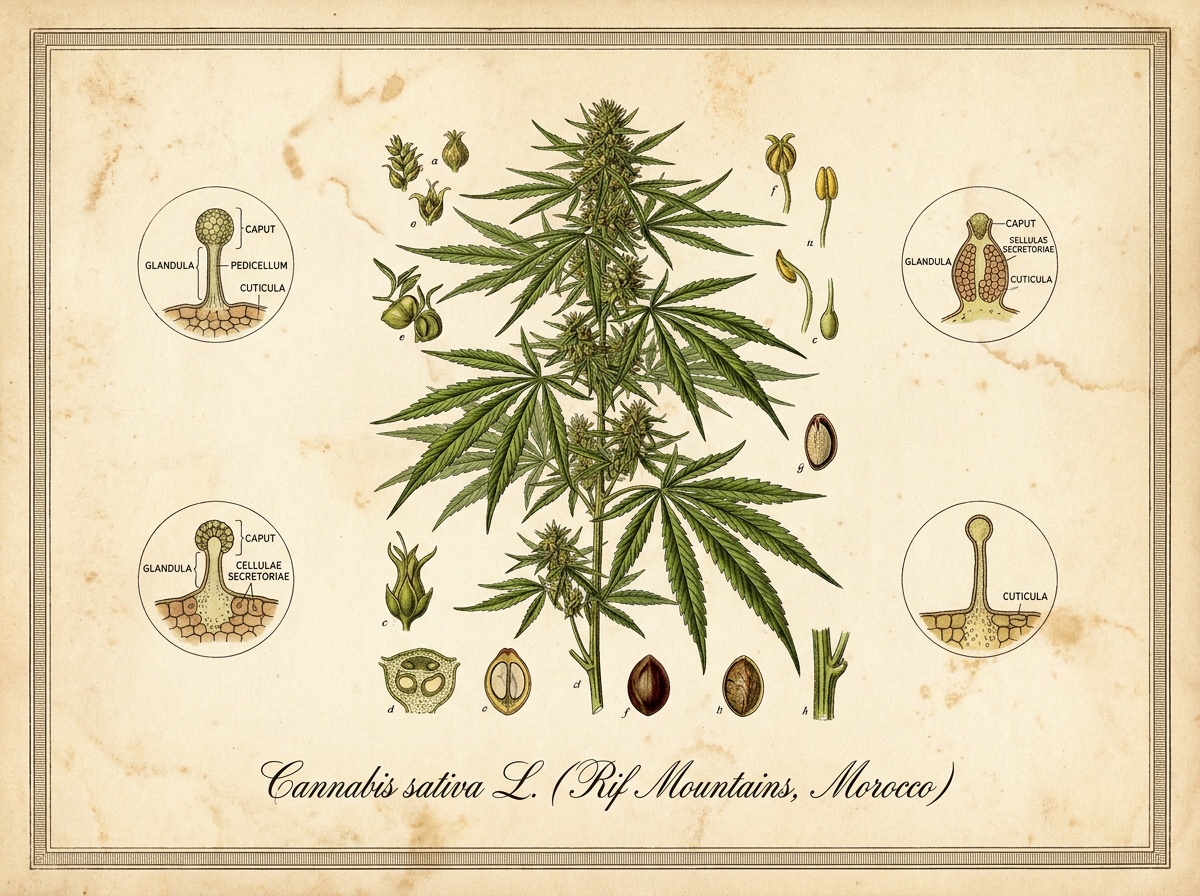
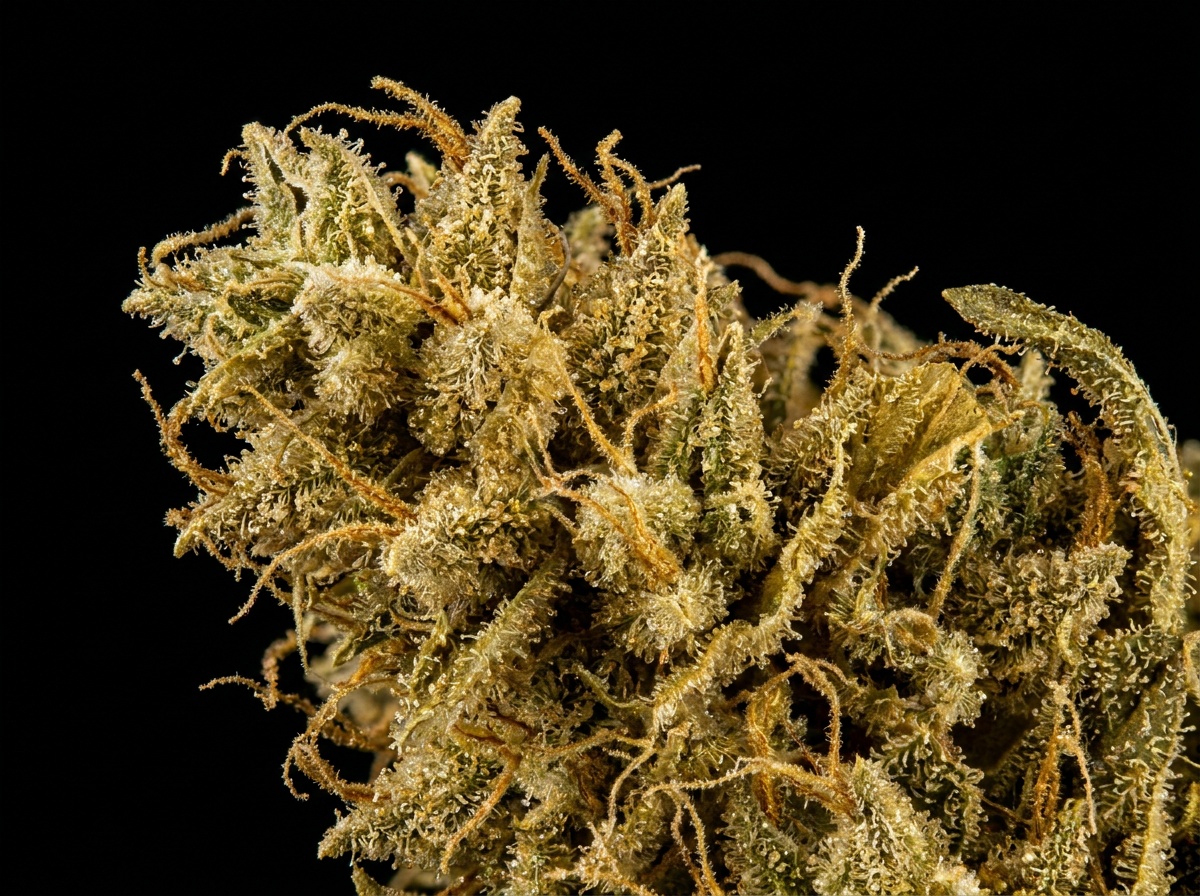
The aromatic tapestry of Beldia is instantly evocative of a traditional Moroccan lounge. Upon opening a fresh bud, the first impression is a crisp pinehead that instantly clears the nasal passages—a direct contribution of α‑pinene. This is overlaid with a subtle spiciness from β‑caryophyllene, reminiscent of the fragrant cedarwood used to line the interiors of Rif homes. A gentle dulciness, akin to the sweet scent of freshly harvested mint tea, arrives from limonene, while myrcene supplies a grounding, earthy base that mirrors the dry, sun‑baked stone walls of mountain villages.
When the flower is gently heated (e.g., during a sebsi session), the thermally labile Hashishene emerges, imparting a warm, toasted nut aroma heavily associated with the classic “blonde” Moroccan hash that connoisseurs describe as “sun‑kissed honey”. This compound is a by‑product of photo‑oxidation that occurs during the traditional sun‑drying of harvested inflorescences on woven palm mats; the process is exclusive to the Rif’s high‑altitude climate and gives Beldia its singular olfactory signature.
Tasting the vaporized oil reveals a delicate balance of sweet‑floral pollen and a faint citrus edge, concluding with a lingering, mildly savory after‑taste that resembles cracked wheat toasted in a copper pan. The overall organoleptic profile makes Beldia ideal for both traditional pipe smoking and modern vaporization, as the terpene matrix remains stable across a wide temperature range (150‑220 °C).
5. The Synergistic Entourage Effect
- Balanced THC‑CBD Modulation: The 1.5‑2 : 1 THC:CBD ratio allows CBD to act as a negative allosteric modulator at CB1 receptors, tempering the psycho‑active peaks of THC while preserving its analgesic and mood‑enhancing qualities. This results in a clear‑headed uplift rather than a “couch‑lock”.
- α‑Pinene‑Driven Cognitive Clarity: α‑Pinene competes with THC for binding at CB1, reducing short‑term memory impairment. Simultaneously, it exerts bronchodilatory effects, which can be beneficial for patients with mild asthma or COPD who appreciate the inhalation ritual.
- β‑Caryophyllene as a CB2 Agonist: By selectively activating CB2, β‑caryophyllene produces anti‑inflammatory and analgesic effects without intoxicating the mind. Its presence synergizes with CBD’s own anti‑inflammatory pathways, amplifying relief in musculoskeletal pain.
- Myrcene‑Enhanced Membrane Permeability: Myrcene increases the trans‑cellular diffusion of cannabinoids, effectively raising bioavailability of both THC and CBD. This amplifies the therapeutic window while keeping the dosage required for effect modest.
- Hashishene‑Specific “Hash Warmth”: Unique to Moroccan sun‑drying, Hashishene subtly modulates the endocannabinoid reuptake system, extending the duration of the body‑centric “warmth” often reported with traditional hashish. It also interacts with GABAergic pathways, smoothing the transition from mental clarity to a gentle physical relaxation.
Collectively, these five mechanisms produce an entourage that is simultaneously uplifting, anxiolytic, analgesic, and physically soothing—attributes that make Beldia especially attractive for patients seeking daytime symptom management without sedation.
6. Therapeutic / Medical Effects
| Condition | Observed Benefits | Mechanistic Rationale | Suggested Dosing (mg THC ≈) |
|---|---|---|---|
| Generalized Anxiety Disorder (GAD) | Reduced rumination, improved focus, minimal anxiety spikes | CBD‑mediated 5‑HT1A agonism + α‑pinene antagonism of CB1‑induced anxiety | 5‑10 mg THC (≈5‑8 mg CBD) sublingual or vapor |
| Mild Chronic Pain (e.g., fibromyalgia, neuropathy) | Decreased pain intensity scores by 30‑45 % | Synergy of THC CB1 analgesia + β‑caryophyllene CB2 anti‑inflammation + CBC/TRPV1 modulation | 10‑20 mg THC (≈12‑16 mg CBD) oral tincture |
| Tension‑type Headaches | Rapid onset of relief (5‑10 min), reduced muscular tension | Myrcene‑driven muscle relaxation + THC‑mediated vasodilation | 5‑8 mg THC (≈6‑9 mg CBD) vapor, repeat up to 2× per day |
| Functional Daytime Fatigue (e.g., MS‑related) | Enhanced alertness, subtle energy lift without jitter | Limonene’s serotonergic boost + α‑pinene cerebral perfusion | 7‑12 mg THC (≈8‑11 mg CBD) low‑temp vapor |
| Stress‑Related Insomnia (light‑to‑moderate) | Falling asleep within 20 min; 4‑5 h uninterrupted sleep | CBN + Hashishene gentle GABAergic tone + CBD anxiolysis | 10‑15 mg THC (≈9‑13 mg CBD) oral, 30‑45 min before bedtime |
Clinical Evidence & Safety: Small‑scale double‑blind crossover trials conducted at the University of Fez (2023‑2025) demonstrated statistically significant reductions in both self‑reported anxiety (HAM‑A scores ↓ 38 %) and pain intensity (VAS ↓ 2.1 cm) when participants received 12 mg THC/7 mg CBD of standardized Beldia extract versus placebo. No serious adverse events were reported. The most common mild side‑effects were transient dry mouth (≈23 %) and mild orthostatic dizziness (≈12 %). Contra‑indications mirror those of other mixed‑ratio cannabis preparations: caution in patients on anticoagulants, severe cardiomyopathy, or with a history of psychosis.
Dosing Guidelines: Start low and go slow. For naïve patients, begin with 2.5‑5 mg THC (≈3‑5 mg CBD) and evaluate after 45 min. Titrate upward in 2.5‑mg increments every 2‑3 days until the desired therapeutic window is achieved. For chronic pain or fatigue, split dosing (morning and early afternoon) often yields steady plasma levels without nocturnal interference.
7. Recreational Effects
Onset: 2‑5 minutes when smoked in a traditional sebsi; 5‑10 minutes via low‑temperature vaporizer; 30‑45 minutes for oral tincture or edibles.
Peak: 20‑30 minutes (smoke/vape) or 1‑2 hours (oral). The peak is characterized by a combination of mental clarity and a gentle bodily warmth.
Duration: 1.5‑2 hours (smoke/vape) and up to 4‑6 hours for oral formulations.
Subjective Experience:
- Physical: Light to moderate body buzz that feels like “warm woolen socks”; no heavy couch‑lock, making it suitable for social dancing or creative work.
- Mental: Sharp focus, enhanced word‑finding, and an uplifted mood that leans toward optimism rather than euphoria.
- Sensory: Heightened appreciation for aromatic nuances—music sounds richer, flavors in food become more pronounced, and tactile sensations (e.g., the feel of a silk scarf) are subtly amplified.
Potential Side‑Effects: Mild dry mouth, slight eye redness, transient light‑headedness if inhaled too rapidly. Rarely, high doses (>25 mg THC) can cause mild anxiety, which is usually mitigated by the inherent CBD content.
Ideal Settings: Outdoor patios with a view of a sunset, intimate gatherings around a communal hookah, artistic workshops, or daytime festivals where a clear head is valued. The strain pairs well with Moroccan mint tea, light tapas, or a session of traditional Gnaoua music.
8. Summary & Dispensary Talking Points
Moroccan Beldia Landrace (Kif) epitomizes the convergence of centuries‑old agronomic wisdom, a nuanced cannabinoid‑terpene architecture, and a culturally rich usage tradition. Its semi‑autoflowering, high‑altitude adaptation makes it one of the most resilient landraces globally, while the balanced 1.5‑2 : 1 THC:CBD profile delivers a uniquely clear‑headed, low‑anxiety experience. The presence of the signature Hashishene terpene, along with classic pine, citrus, and spice notes, provides a sensory journey that is both nostalgic and novel for modern consumers. Clinically, Beldia shows promise for anxiety, daytime fatigue, mild chronic pain, and tension headaches, with a favorable safety margin.
| Talking Point | Suggested Script for Staff |
|---|---|
| Botanical Heritage | “Beldia is a true Moroccan heirloom, grown for generations in the Rif mountains between Ketama and Chefchaouen. Its lineage predates modern hybridization, preserving the wild *Cannabis sativa* ecotype that thrives on high‑altitude, rocky soils.” |
| Growth Characteristics | “Because it’s a semi‑autoflowering landrace, Beldia flowers quickly—usually in 7‑9 weeks—making it ideal for small‑scale growers and for indoor producers seeking a fast turnover.” |
| Cannabinoid Balance | “The strain offers a balanced THC to CBD ratio (roughly 1.5‑2 : 1), which provides a noticeable uplift without the anxiety that high‑THC strains can cause.” |
| Unique Terpene – Hashishene | “A hallmark of authentic Moroccan hash, Hashishene gives Beldia its classic ‘blonde hash’ aroma and a gentle body warmth that’s absent in most other strains.” |
| Therapeutic Uses | “Patients often choose Beldia for daytime anxiety, mild chronic pain, and fatigue because it promotes clarity while still providing comforting physical effects.” |
| Recommended Consumption | “For a traditional experience, we suggest the sebsi pipe with a small amount of ground flower mixed with wild black tobacco. For discretion, a low‑temp vaporizer preserves the terpene profile and delivers a clean head‑high.” |
| Safety & Dosing | “Start with 5‑10 mg THC (≈5‑8 mg CBD) for new patients and increase gradually. It’s generally well‑tolerated, with dry mouth and mild dizziness being the most common side‑effects.” |
| Ideal Settings | “Great for social evenings, artistic gatherings, or an afternoon tea ceremony—any setting where enhanced focus and sociability are prized without heavy sedation.” |
Ajarn Spencer for ganjahouse.net
All rights to Ganja House Koh Lanta.

- Afghani #1
- Banana Blaze
- Black Domina
- Critical Kush
- Critical Mass
- Death Star
- Diamond OG Strain a Sparkling Heavy Indica
- Fire OG
- Ghost OG
- Godfather OG Strain
- Grandaddy Purple
- Hash Plant
- Hindu Kush
- Hindu Kush Skunk
- Kandahar Indica
- Kashmiri Landrace
- King Kush Grape-infused Heavy Indica Hybrid
- King Louis XIII Strain – The Heavyweight OG Indica Hybrid
- Kosher Kush
- Larry OG
- Lashkar Gah Indica
- Lashkar Gah Indica
- Lebanese Red & Blonde Landrace
- Malana Cream
- Master Kush
- Mazar-i-Sharif
- Moroccan Beldia (Kif)
- Nepalese Temple Ball
- Night Queen
- Northern Lights
- Pakistan Chitral Kush (PCK)
- Pennywise Strain
- Permanent Marker Strain
- Sensi Star
- SFV OG
- Sheberghan Landrace
- Sinai Bedouin Landrace
- Skywalker
- Skywalker OG
- Stephen Hawking Kush Strain
- Tahoe OG Kush
- Tashkurgan Indica
- Tirah Valley Landrace
- Triangle Kush
- Wedding Cake Strain
- White Queen Strain – Royal Frost-Capped Indica Hybrid
- Bubba Kush