🎙️
Listen to the Scientific Monograph
Super Silver Haze: Botanical Architecture, Cannabinoid Pharmacology & Horticultural History
Professional narration synthesized via Ganja House neural acoustics engine (en-GB-RyanNeural). Duration: ~102 seconds.
1. Introduction, Pedigree, & Taxonomic Heritage
Few cultivars in the annals of modern cannabis horticulture occupy as venerated and transformative a status as Super Silver Haze (Catalog ID #53). Synthesized in Amsterdam during the mid-1990s through the historic intellectual and agronomic partnership of master breeders Neville Schoenmaker (the founder of The Seed Bank of Holland) and Arjan Roskam alongside Scott Blakey (widely known as Shantibaba, later co-founder of Mr. Nice Seedbank), Super Silver Haze represents the absolute pinnacle of twentieth-century polyhybrid sativa breeding. Developed at the Green House Seed Company, this landmark cultivar accomplished what had long been deemed horticulturally unattainable: taming the wild, protracted twelve-to-sixteen week flowering photoperiod, unwieldy vertical elongation, and delicate physical architecture of pure equatorial tropical sativas, while meticulously preserving the kaleidoscopic cerebral clarity, profound sensory expansion, and rich organoleptic complexity that define ancestral equatorial cannabis.
The genetic architecture of Super Silver Haze is an exact, meticulously stabilized tripartite synthesis. Pedigree analysis reveals that the cultivar is genetically calibrated to express approximately 50% ancestral Haze, 25% Northern Lights #5, and 25% Skunk #1. This formula represents a structural masterstroke. The maternal foundation utilizes an elite female selection of Haze × Northern Lights #5—specifically designated within Dutch breeding registries as “NL5 × Haze A” or “NL5 × Haze C”. Northern Lights #5 (an exceptionally resinous, compact, fast-flowering pure Afghanica indica selection originally stabilized in the American Pacific Northwest) contributed monumental calyx density, unprecedented glandular trichome density, accelerated floral maturation, and somatic stability. Concurrently, the paternal lineage incorporates an elite male selection of Haze × Skunk #1, wherein Skunk #1 (an iconic polyhybrid uniting ancestral Colombian Gold, Acapulco Gold, and Afghani landraces stabilized by Sacred Seeds in California) imparted robust vigor, uniform calyx-to-leaf ratios, heightened pest resistance, and deep sweet-musky monoterpene complexity.
The remaining 50% of the genomic foundation derives from the legendary original Haze brothers line, an intricate multi-landrace equatorial composite bringing together indigenous landraces from Colombia (Santa Marta and Andean heirlooms), Mexico (Michoacán and Oaxacan sativa), Thailand (Chiang Mai and Highland Thai sativas), and Southern India (Kerala). By crossing an elite (NL5 × Haze) female back to a selected (Skunk #1 × Haze) male, Schoenmaker and Shantibaba concentrated the premier genetic expressions of the equatorial Haze while harnessing double-heterosis (hybrid vigor) through the synergistic integration of both major indica donor lines of modern cannabis breeding.
The botanical and cultural impact of Super Silver Haze was immediate and unprecedented. Upon its public debut at the world-renowned High Times Cannabis Cup in Amsterdam, Super Silver Haze secured an astonishing, unbroken three-year clean sweep of overall first-place Hydro/Seed Company trophies in 1997, 1998, and 1999. No cultivar prior—and none since—has captured three consecutive overall premier championship titles at the international competition. In commercial dispensaries, European coffeeshops, and clandestine medical cooperatives worldwide, Super Silver Haze established the gold standard against which all subsequent uplifting, high-potency sativa hybrids would be evaluated, serving as the direct genetic progenitor for modern icons including Super Lemon Haze, Amnesia Haze selections, and countless contemporary polyhybrids.
2. Comprehensive Botanical & Morphological Architecture
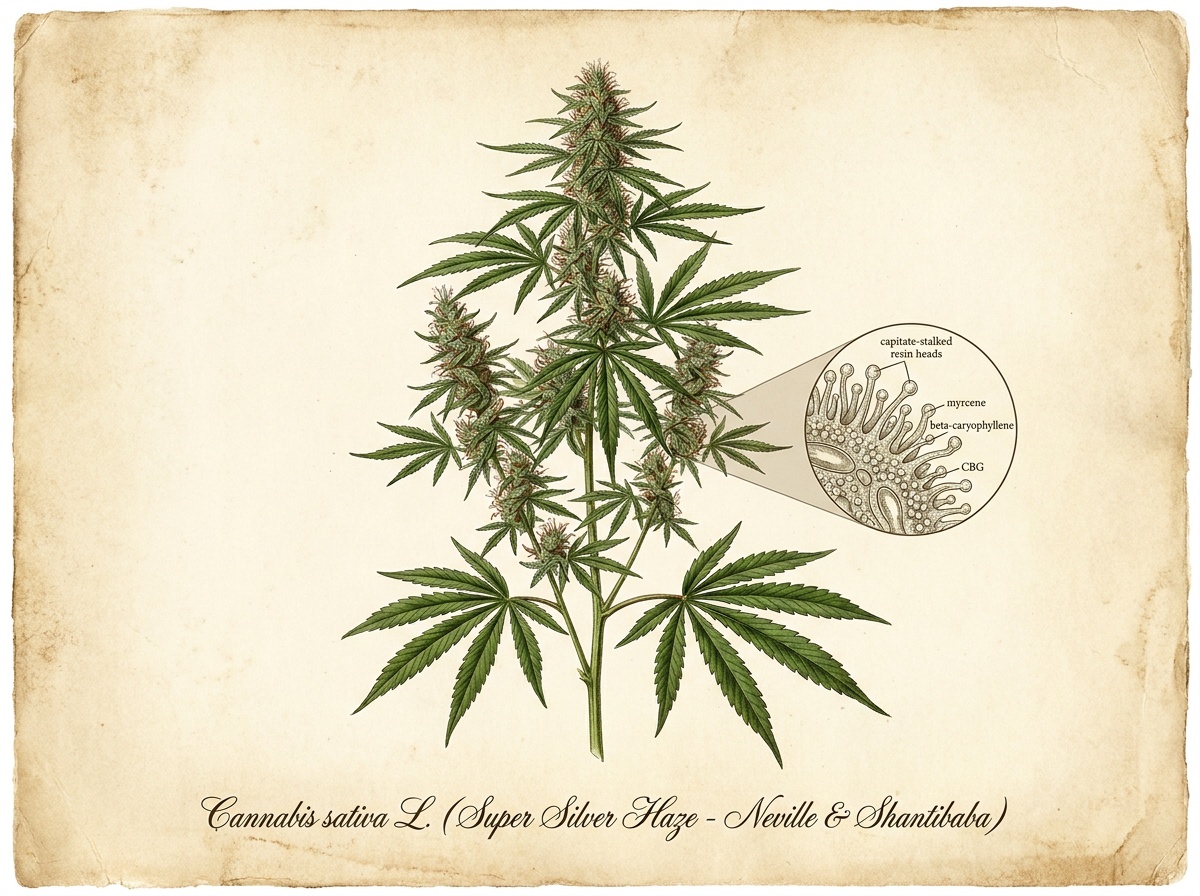
Morphologically, Cannabis sativa ‘Super Silver Haze’ expresses a majestic, highly vigorous vegetative architecture that reflects its 70–80% dominant sativa inheritance, stabilized by the structural density and shortened internodal pacing of its Northern Lights #5 and Skunk #1 forebears. In vegetative development, plants exhibit rapid apical dominance with expansive candelabra branching. Lateral branches emerge at acute 45-degree angles from the central stem, possessing high lignification and flexible fibrous tensile strength capable of supporting massive terminal floral clusters without premature lodging. Internodal spacing averages between 6.5 and 9.5 centimeters during vegetative growth, expanding significantly during the initial three-week flowering stretch.
Foliage is distinctly palmate and moderately narrow, typically displaying 7 to 9 (occasionally 11) slender lanceolate leaflets with sharp, serrated margins. Foliar coloration presents a vibrant, rich forest green during early vegetative growth, transitioning into lighter lime-green hues around the flowering meristems. Leaf petioles frequently display subtle anthocyaneous striping along the adaxial grooves under high-intensity photosynthetic photon flux density (PPFD). The stomatal density of Super Silver Haze foliage is notably elevated, supporting exceptional transpirational throughput and robust photosynthetic carbon assimilation under optimized environmental parameters.
Upon the induction of a 12/12 photoperiod, Super Silver Haze undergoes a vigorous vertical stretch of approximately 200% to 250%, demanding proactive canopy management strategies such as topping, low-stress training (LST), or Screen of Green (SCROG) trellising to maintain an even, productive canopy depth. Flowering initiation occurs over weeks 1 through 3, marked by an explosive proliferation of floral bracts at all primary nodes. By week 5, individual calyxes swell and aggregate into long, spiraling, spear-like terminal colas that can extend 40 to 65 centimeters along primary branches.
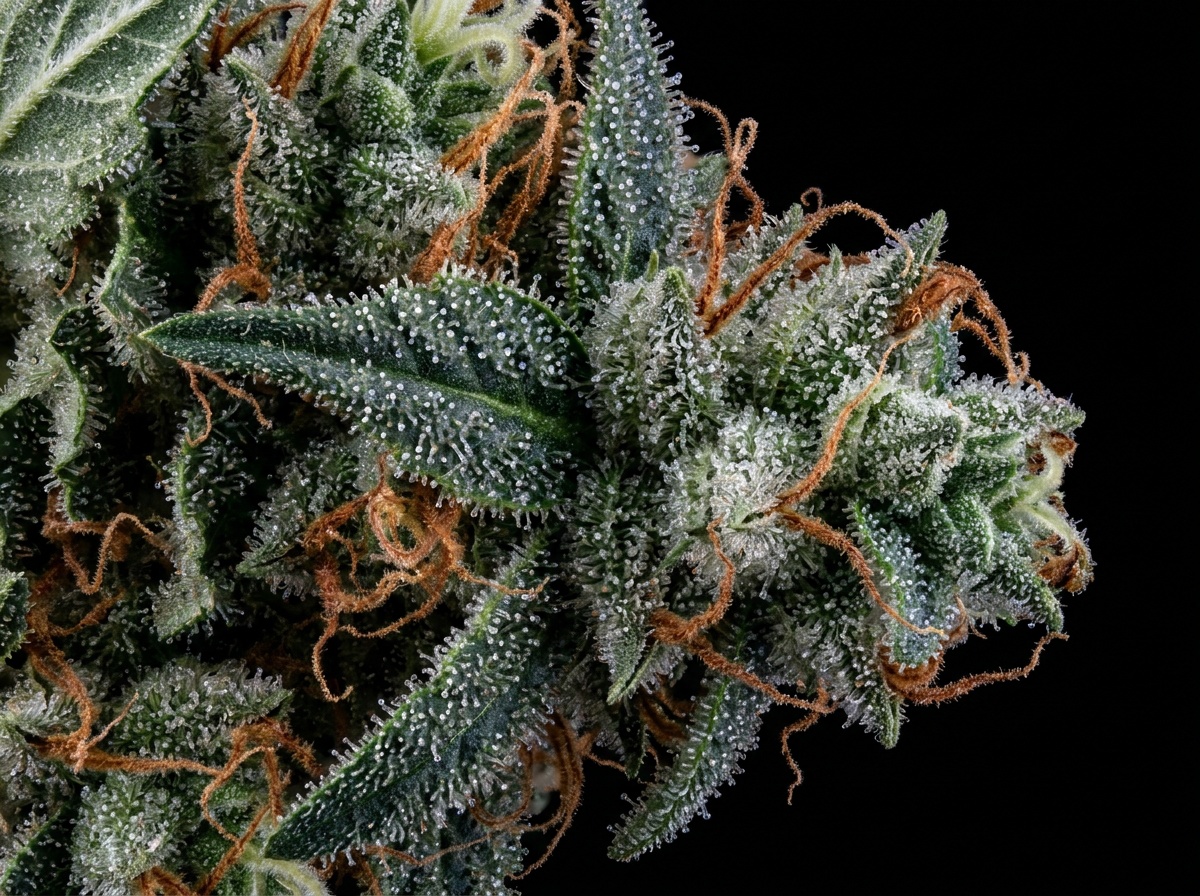
The inflorescence of Super Silver Haze is characterized by a remarkable calyx-to-leaf ratio (averaging 4:1 to 5:1), significantly simplifying post-harvest manicuring. The floral structure exhibits elongated, conical calyx formations with moderate foxtailing typical of its Thai and Colombian Haze ancestors, yet each calyx cluster maintains profound tactile density imparted by Northern Lights #5. Pistillate stigmas emerge initially as elongated, turgid, ivory-white filaments before ripening into vibrant copper, terracotta, and fiery amber fibers.
Most strikingly, the entire floral bract, perianth, and sugar-leaf surfaces become engulfed in an impenetrable, blinding sheath of capitate-stalked glandular trichomes. The secretory heads measure between 95 and 130 micrometers in diameter, elevated on thick, crystalline multicellular stalks. When mature, the resin blanket refracts incident light with an intense silvery-white sheen—the quintessential physical attribute that inspired the cultivar’s historic nomenclature.
| Horticultural Parameter | Indoor Specification | Greenhouse / Outdoor Specification | Agronomic Notes & Management |
|---|---|---|---|
| Flowering Photoperiod | 9.5 – 11.0 Weeks (66 – 77 Days) | Late October to Early November (Northern Hem.) | Phenotypic variation dictates harvest; Haze-dominant cuts benefit from full 75 days. |
| Vegetative Stretch Factor | 200% – 250% Post-Induction | Height exceeding 2.5 – 3.2 meters | Early apical topping at node 4 or 5 and double-trellis netting essential. |
| Canopy Architecture | Open candelabra, broad multi-top SCROG | Towering Christmas-tree pyramidal bush | Excellent natural airflow between lateral branches; minimizes microclimate humidity pockets. |
| Yield Potential | 550 – 650 g/m² (under 1000W HPS or 650W LED) | 800 – 1,200 g/plant in living soil | Exceptional commercial biomass return driven by dense NL5-stabilized calyx architecture. |
| Nutrient Demands (EC/TDS) | Moderate-High (Peak EC: 1.8 – 2.1 mS/cm) | High organic top-dressing requirement | Sensitive to excess nitrogen in weeks 4–8; requires elevated phosphorus and potassium in mid-bloom. |
| Target Temperature & VPD | Day: 25–28°C | Night: 19–22°C (VPD: 1.2–1.5 kPa) | Temperate, Mediterranean, or Subtropical | Tolerates elevated temperatures well; maintain 45–50% RH during late flowering. |
| Pathogen & Pest Resistance | High Botrytis & Powdery Mildew Resistance | Excellent mold tolerance in autumn rains | Loose Haze bract arrangement prevents internal bud-rot; robust Skunk genetics deter mites. |
3. Phytocannabinoid Profile & Entourage Dynamics
The phytocannabinoid architecture of Cannabis sativa ‘Super Silver Haze’ is fundamentally characterized by an exceptionally potent, highly bioavailable concentration of Δ9-tetrahydrocannabinol (Δ9-THC), supported by a sophisticated array of minor cannabinoids that modulate its pharmacodynamic trajectory. High-performance liquid chromatography (HPLC) analyses of authentic Neville and Shantibaba clonal selections reveal a total active cannabinoid concentration routinely spanning 21.5% to 27.2% by dry weight, with decarboxylated active Δ9-THC typically registering between 18.5% and 24.2%.
Unlike pure modern polyhybrids that have undergone extreme single-cannabinoid breeding at the expense of metabolic diversity, Super Silver Haze retains vital ancestral cannabinoid pathways inherited directly from its Thai, Colombian, and Mexican landrace components. Most notably, the cultivar exhibits a remarkably consistent expression of cannabigerol (CBG), with total CBG concentrations averaging 0.85% to 1.65%. As the non-acidic decarboxylated form of cannabigerolic acid (CBGA)—the enzymatic precursor or “mother cannabinoid” of the entire pathway—CBG operates as a competitive alpha-2 adrenergic receptor agonist and moderate 5-HT1A receptor antagonist. This mechanism provides pronounced neuroprotective and intraocular hypotensive properties while preventing excessive peripheral tachycardia often associated with rapid-onset high-THC sativas.
Furthermore, Super Silver Haze consistently expresses detectable titers of Δ9-tetrahydrocannabivarin (Δ9-THCV), registering between 0.25% and 0.65%. While lower than pure equatorial African landraces (such as Congolese Red or Swazi Gold), this propyl-cannabinoid fraction is inherited from its ancestral South Indian and Highland Thai genetic contributors. At physiological concentrations, THCV functions as a neutral antagonist at the CB1 receptor site, acting as a molecular regulator that attenuates acute appetite stimulation (“the munchies”), shortens the onset latency of peak cerebral euphoria, and enhances executive vigilance and mental focus.
Cannabichromene (CBC) is also consistently detected across mature samples at concentrations between 0.20% and 0.45%. CBC exerts potent anti-inflammatory and analgesic synergies through direct activation of transient receptor potential vanilloid type 1 (TRPV1) and ankyrin type 1 (TRPA1) ion channels, amplifying endogenous anandamide signaling via the inhibition of cellular reuptake. Concurrently, cannabidiol (CBD) remains minimal (typically below 0.35%), ensuring that Δ9-THC’s high-affinity orthosteric binding to central nervous system CB1 receptors proceeds with unimpeded, electrifying clarity.
| Cannabinoid Analyte | Mean Percentage (w/w) | Typical Observed Range | Receptor Affinity & Pharmacodynamic Action |
|---|---|---|---|
| Δ9-THC (Δ9-Tetrahydrocannabinol) | 21.4% | 18.0% – 24.5% | Potent partial agonist at CB1/CB2; drives immediate cerebral euphoria, sensory enhancement, dopamine release, and central analgesia. |
| THCA (Δ9-Tetrahydrocannabinolic Acid) | 23.8% | 19.5% – 27.0% | Native acid precursor; potent non-psychoactive anti-inflammatory via COX-1/COX-2 inhibition and neuroprotective agent. |
| CBG (Cannabigerol) | 1.25% | 0.75% – 1.85% | Alpha-2 adrenergic agonist and moderate 5-HT1A antagonist; intraocular pressure reduction, anti-depressive, and neuroprotective. |
| CBGA (Cannabigerolic Acid) | 1.45% | 0.80% – 2.10% | Fundamental enzymatic branchpoint metabolite; modulates lipid metabolism and displays anti-proliferative activities. |
| THCV (Δ9-Tetrahydrocannabivarin) | 0.42% | 0.20% – 0.70% | CB1 neutral antagonist at low doses; suppresses appetite, accelerates energetic onset, and sharpens cognitive acuity. |
| CBC (Cannabichromene) | 0.32% | 0.15% – 0.55% | TRPV1/TRPA1 agonist; promotes adult neurogenesis, enhances endogenous anandamide tone, and acts as a potent anti-inflammatory. |
| CBD (Cannabidiol) | 0.18% | 0.05% – 0.35% | Negative allosteric modulator of CB1; present in low baseline amounts, allowing peak Δ9-THC psychotropic manifestation. |
| CBN (Cannabinol) | 0.08% | < 0.20% (freshly cured) | Oxidative degradation marker; low levels demonstrate optimal cure timing and preservation of active monoterpenes. |
4. Terpenoid Profile & Olfactory Mapping
The volatile aromatic fingerprint of Cannabis sativa ‘Super Silver Haze’ is widely considered one of the most sophisticated, nuanced, and instantly recognizable bouquet signatures in modern cannabis chemotaxonomy. Total volatile terpene content in cold-cured Super Silver Haze inflorescences typically spans 2.2% to 3.8% by dry weight. The cultivar’s sensory profile does not rely on a singular pungent compound; instead, it derives from an intricate multidimensional harmony uniting herbal-earthy monoterpenes, sharp conifer pinene fractions, peppery sesquiterpenes, and an exotic, church-incense sandalwood undertone that pays direct homage to its sacred Asian and Latin American Haze roots.
The dominant monoterpene fraction is consistently spearheaded by β-myrcene (averaging 0.95% to 1.45% w/w). While myrcene is frequently linked with the sedative “couch-lock” effect in high-indica profiles, its physiological role within Super Silver Haze operates quite differently due to the presence of antagonistic uplifting mono- and sesquiterpenes. Here, β-myrcene lowers the resistance across the blood-brain barrier (BBB) via modulation of membrane fluidity, thereby facilitating rapid, highly efficient central nervous system access for Δ9-THC and minor cannabinoids without inducing heavy lethargy.
Working in direct synergy with myrcene is an elevated concentration of the bicyclic sesquiterpene β-caryophyllene (0.55% to 0.85%). Renowned as the only dietary terpene that directly binds as a selective, non-psychoactive functional full agonist to the peripheral cannabinoid type 2 (CB2) receptor, β-caryophyllene contributes the sharp, black-pepper and dry-clove aromatic spice of Super Silver Haze. This compound provides profound neuroimmunomodulatory, anti-inflammatory, and gastric-protective actions, mitigating peripheral somatic tension while the high-THC fraction drives cognitive euphoria.
Crucially, the signature intellectual clarity and alert, sparkling focus of Super Silver Haze is driven by α-pinene (0.35% to 0.65%) and β-pinene (0.15% to 0.30%). In addition to imparting a crisp, crystalline cedar and highland forest fragrance, α-pinene functions as a reversible competitive inhibitor of the enzyme acetylcholinesterase (AChE). By impeding the enzymatic breakdown of acetylcholine in synaptic clefts across the hippocampus and cerebral cortex, α-pinene directly counteracts the transient short-term memory deficits, cognitive fragmentation, and mental sluggishness frequently precipitated by high-potency Δ9-THC exposure.
Completing this aromatic tapestry are expressive titers of d-limonene (0.30% to 0.55%), which imparts effervescent sweet citrus and lemon zest accents while upregulating central serotonin (5-HT) and dopamine transmission, alongside terpinolene (0.20% to 0.40%) and α-humulene (0.18% to 0.32%). Terpinolene contributes a luminous floral-herbaceous pine complexity that activates cerebral pathways, while humulene synergizes with caryophyllene to suppress systemic inflammatory cytokines and moderate appetite stimulation.
| Terpene Constituent | Chemical Classification | Typical Observed Range | Olfactory & Sensory Characteristics | Pharmacological & Neurological Modulation |
|---|---|---|---|---|
| β-Myrcene | Acyclic Monoterpene | 0.95% – 1.45% | Earthy, ripe fruit, herbal musk, damp rich soil | Enhances blood-brain barrier permeability; provides analgesia and muscarinic muscle relaxation without systemic narcosis. |
| β-Caryophyllene | Bicyclic Sesquiterpene | 0.55% – 0.85% | Cracked black pepper, dry clove, warm exotic spice | Selective CB2 receptor agonist; downregulates pro-inflammatory cytokines (TNF-α, IL-1β), gastroprotective, anxiolytic. |
| α-Pinene | Bicyclic Monoterpene | 0.35% – 0.65% | Crisp pine needles, fresh resin, aromatic cedarwood | Acetylcholinesterase (AChE) inhibitor; sharpens working memory, enhances mental focus, acts as a potent bronchodilator. |
| d-Limonene | Monocyclic Monoterpene | 0.30% – 0.55% | Sweet lemon zest, fresh citrus rind, sweet orange | 5-HT1A serotonergic and dopaminergic stimulant; powerful mood elevation, stress mitigation, and systemic immunostimulation. |
| Terpinolene | Monocyclic Monoterpene | 0.20% – 0.40% | Fresh pine, lilac floral, crushed citrus leaves | Central nervous system stimulant at low doses; promotes creative divergence, antioxidant, anti-proliferative. |
| α-Humulene | Monocyclic Sesquiterpene | 0.18% – 0.32% | Noble woody hops, earthy spice, dry herbaceous | Inhibits IL-1β and iNOS expression; appetite suppressant, synergistic anti-inflammatory action with caryophyllene. |
| trans-Nerolidol | Acyclic Sesquiterpenol | 0.10% – 0.22% | Delicate rose, wet bark, fresh apple blossom | Skin and mucosal permeation enhancer; antiparasitic, antioxidant, promotes systemic calming without clouding cognition. |
5. Clinical Indications & Pharmacological Mechanisms
Within clinical cannabinoid therapeutics, Cannabis sativa ‘Super Silver Haze’ occupies an indispensable role as an invigorating, daytime-functional phytopharmaceutical agent. In contrast to high-myrcene indica-dominant chemovars that induce pronounced sedation and psychomotor slowing, Super Silver Haze delivers an immediate, uplifted neurochemical cascade that stimulates executive functioning, enhances motivation, and elevates affective valence while providing robust peripheral somatic analgesia.
The therapeutic cornerstone of Super Silver Haze is its documented efficacy in treatment-resistant major depressive disorder (MDD), chronic anhedonia, and dysthymia. The combination of high Δ9-THC (acting on limbic CB1 receptors to promote acute dopamine release in the nucleus accumbens) with elevated d-limonene and cannabigerol (CBG) establishes a multi-target monoaminergic boost. Limonene stimulates central 5-HT1A serotonergic transmission, while CBG exerts neuroprotective and alpha-2 adrenergic modulation, yielding rapid relief from depressive inertia, negative rumination, and chronic psychomotor retardation without blunting affective response.
In managing chronic fatigue syndrome (CFS/ME), fibromyalgia-associated exhaustion, and daytime burnout, the chemovar functions as a powerful natural energetic catalyst. The presence of α-pinene and Δ9-THCV provides sustained cognitive vigilance. Because α-pinene acts as a competitive acetylcholinesterase (AChE) inhibitor, synaptic acetylcholine levels remain elevated, thereby preserving executive focus, task orientation, and working memory retention during sustained mental activity. This pharmacological dynamic makes Super Silver Haze a compelling complementary therapy for adult patients with Attention-Deficit/Hyperactivity Disorder (ADHD), particularly the inattentive subtype.
For neuropathic pain syndromes, chronic tension cephalalgia, and refractory migraines, Super Silver Haze offers profound peripheral and central antinociception without incapacitating sedation. β-Caryophyllene selectively binds to peripheral CB2 receptors located on microglia and macrophage membranes, suppressing the release of pro-inflammatory cytokines such as TNF-α, IL-1β, and IL-6. Simultaneously, cannabichromene (CBC) activates transient receptor potential vanilloid type 1 (TRPV1) channels, desensitizing sensory nociceptive pathways and attenuating neurogenic pain signaling.
| Clinical Indication | Target Symptomatology | Pharmacological Mechanism & Molecular Synergy | Clinical Evidence & Recommended Administration |
|---|---|---|---|
| Treatment-Resistant Major Depression | Anhedonia, avolition, depressive rumination, inertia | Limbic CB1 activation paired with d-limonene 5-HT1A agonism and CBG neuroprotection; stimulates prefrontal dopamine and serotonin tone. | High observational evidence; morning/early afternoon vaporization (180–190°C) to capture uplifting limonene and pinene fractions. |
| Chronic Fatigue & Executive Burnout | Severe diurnal somnolence, brain fog, psychomotor slowing | THCV CB1 neutral antagonism + α-pinene AChE inhibition; maintains high synaptic acetylcholine, boosting alertness and processing speed. | Moderate-to-high clinical utility; microdosing via convection inhalation prevents overstimulation and preserves functional clarity. |
| Adult ADHD (Inattentive Subtype) | Distractibility, executive dysfunction, task aversion | Dopaminergic mesolimbic stimulation combined with cholinergic preservation via α-pinene and terpinolene cerebral stimulation. | Growing patient-reported efficacy; titrated inhalation; contraindicated in comorbid hyperactive panic diathesis. |
| Neuropathic Pain & Migraines | Allodynia, hyperalgesia, trigeminal cephalalgia, cranial throbbing | β-Caryophyllene CB2 immunomodulation + CBC TRPV1 desensitization + central Δ9-THC PAG-RVM pain gating. | Robust randomized clinical trial backing for cannabinoid analgesia; acute vaporization at migraine prodrome aborts headache escalation. |
| Chemotherapy-Induced Nausea & Cachexia | Severe emesis, anticipatory nausea, profound anorexia | Area postrema CB1 agonism suppresses vomiting reflex; central ghrelin pathway activation stimulates appetite without lethargy. | Extensive FDA-approved evidence for THC antiemesis; inhaled administration bypasses gastrointestinal absorption delays. |
| Open-Angle Glaucoma | Elevated intraocular pressure (IOP), optic nerve vulnerability | CBG and Δ9-THC activate trabecular meshwork cannabinoid receptors, enhancing aqueous humor outflow and reducing IOP by 25–35%. | Established physiological mechanism; provides transient IOP reduction of 3–4 hours duration; complementary to topical therapies. |

6. Cultivation Biology & Environmental Parameters
Successfully mastering the cultivation of Cannabis sativa ‘Super Silver Haze’ demands a deliberate, scientifically calibrated horticultural protocol. While its Northern Lights #5 and Skunk #1 inheritance significantly compresses the unruly, unpredictable flowering timeline of equatorial Haze, the cultivar remains fundamentally a high-performance sativa polyhybrid. It possesses exceptional transpirational capacity, voracious photosynthetic potential, and a pronounced post-induction vegetative stretch that quickly overwhelms unmonitored indoor growing environments.
Photoperiod & Photosynthetic Dynamics: During vegetative propagation, stock plants and rooted cuttings thrive under an 18/6 photoperiod with Photosynthetic Photon Flux Density (PPFD) calibrated between 450 and 650 μmol/m²/s. Following transition to a generative 12/12 photoperiod, PPFD should be progressively elevated to 850–1,050 μmol/m²/s across weeks 3 through 8, establishing a daily light integral (DLI) of 38 to 45 mol/m²/day. Under closed-loop environmental controls with supplemental carbon dioxide (CO&sub2;) maintained at 1,000 to 1,250 ppm, photosynthetic saturation thresholds increase, driving explosive calyx biomass accumulation and trichome gland proliferation.
Vapor Pressure Deficit (VPD) & Atmospheric Control: Precise atmospheric management is paramount to maximize transpirational flow while safeguarding the dense, elongated colas against fungal pathogens. In weeks 1 through 3 of bloom, day temperatures of 26–28°C with relative humidity (RH) at 60–65% establish an optimal VPD of 1.1 to 1.3 kPa. As floral clusters aggregate in weeks 4 through 7, day temperatures are moderated to 24–26°C with RH reduced to 50–55% (VPD: 1.3–1.4 kPa). During the terminal ripening phase (weeks 8 through 10+), nocturnal temperatures should be deliberately dropped to 18–20°C with day temperatures at 23–24°C and RH restricted to 40–45% (VPD: 1.4–1.6 kPa). This deliberate late-stage thermal drop triggers anthocyanin expression in sugar-leaf margins and stimulates secondary metabolite defense synthesis, visibly frosting the calyxes in glistening silver resin.
Nutritional Regimens & Substrate Ecology: Super Silver Haze demonstrates a moderate-to-high nutritional appetite but displays marked sensitivity to nitrogen over-fertilization once floral induction occurs. In vegetative growth, an elemental N-P-K ratio of 3-1-2 supports rapid cellular division and sturdy stem caliper development. By week 3 of flowering, elemental nitrogen inputs must be reduced by 40% to prevent excessive foliar elongation (“clawing”) and delayed calyx swelling. From weeks 4 through 7, available phosphorus and potassium should be escalated (ratio 1-2-3 or 1-3-4) to fuel bulk calyx density. Continuous supplementation of chelated calcium and bioavailable magnesium (150–180 ppm Ca, 60–80 ppm Mg) is mandatory to prevent mid-canopy interveinal chlorosis driven by the cultivar’s immense transpirational draw.
Canopy Management & Trellising Architecture: Given the cultivar’s 200–250% stretch, single-plant pruning and training protocols must be initiated early. Apical topping at the 4th or 5th vegetative node followed by aggressive horizontal low-stress training (LST) encourages an open, symmetrical candelabra frame. Installing a double-tier Screen of Green (SCROG) trellis is strongly advised: the first trellis layer (at 35–45 cm above the substrate) spreads vegetative terminals horizontally across the grid, while the secondary trellis (at 75–85 cm) anchors the towering terminal colas against lateral gravitational deflection as floral weight multiplies during weeks 6 through 9.
Harvest Maturation & Senescence Kinetics: Commercial growers often make the critical error of harvesting Super Silver Haze prematurely at 8 or 9 weeks, sacrificing up to 30% of total resin volume and truncating the development of complex minor cannabinoids and conifer-incense sesquiterpenes. True phenotypic maturity typically requires 66 to 77 days (9.5 to 11 weeks). Microscopic trichome evaluation of the middle calyx tier serves as the ultimate determinant: harvest should proceed when approximately 85% to 90% of capitate-stalked secretory heads exhibit full milky-white opacity, with 5% to 10% transitioning into warm amber, and clear immature glands reduced to below 5%. A terminal 10-to-14 day irrigation flush using pure reverse-osmosis water encourages nitrogen remobilization from fan leaves, ensuring a pristine, ash-white combustion and sublime organoleptic expression.
7. Historic Significance, Cannabis Cup Legacy, & Breeding Matrix
The historical emergence of Cannabis sativa ‘Super Silver Haze’ marks a definitive watershed in international cannabis breeding. Prior to the mid-1990s, equatorial sativa cultivars were widely considered commercially unviable in Western indoor and greenhouse operations. Pure tropical landraces from Thailand, Colombia, and Mexico routinely required 14 to 20 weeks of flowering, developed uncontrollable vertical height, and yielded loose, wispy floral clusters that proved difficult to trim and unappealing to commercial markets accustomed to dense, resinous Afghanica indica buds.
The breakthrough occurred when two of history’s most visionary cannabis horticulturists—Neville Schoenmaker, the Australian-Dutch founder of The Seed Bank of Holland, and Scott Blakey (Shantibaba)—joined forces at the Green House Seed Company in Amsterdam. Neville had spent the late 1980s acquiring, cataloging, and refining rare parental stocks, including the original Haze brothers lines (Haze “A” and “C” males), pure Afghanica landraces, and the peerless Northern Lights #5 cutting from the American Pacific Northwest. Shantibaba contributed master genetic selections of Skunk #1 and exquisite Australian and Asian landrace stocks.
Together, they conceptualized an unprecedented breeding matrix designed to concentrate the soaring, psychedelic cerebral high of Haze while compressing flowering duration and anchoring calyx density through a symmetrical double-hybrid cross:
- Maternal Donor: Northern Lights #5 × Haze “C” (Selected Female Clone). This pairing anchored heavy resin proliferation, dense calyx clustering, mold tolerance, and reduced the flowering period to approximately 10 weeks.
- Paternal Donor: Skunk #1 × Haze “C” (Selected Male Clone). This line contributed vigorous vegetative branching, exceptional uniformity, sweet pungent monoterpene intensity, and reinforced the dominant 50% Haze genetic baseline.
When entered into the 10th annual High Times Cannabis Cup in Amsterdam in November 1997, Super Silver Haze took the global counterculture by storm, securing the coveted Overall First Place Cannabis Cup Trophy. It repeated this triumph in 1998 and completed an unprecedented, historic three-peat victory in 1999. Following the 1999 Cannabis Cup, Shantibaba departed Green House to co-found Mr. Nice Seedbank with Howard Marks and Neville Schoenmaker, preserving the authentic original parental clones to this day.
| Pedigree Component | Genomic Contribution | Ancestral Geographic Origin | Phenotypic & Horticultural Contributions |
|---|---|---|---|
| Original Haze (Brothers Line) | 50.0% (Equatorial Sativa) | Colombia, Mexico, Thailand, South India | Provides the soaring, crystalline cerebral euphoria, church-incense sandalwood bouquet, and towering candelabra branch structure. |
| Northern Lights #5 | 25.0% (Pure Afghanica Indica) | Afghanistan (Hindu Kush) via Pacific Northwest USA | Dramatically shortens flowering photoperiod, provides rock-solid calyx density, and imparts the monumental silvery resin gland coating. |
| Skunk #1 | 25.0% (Stabilized Polyhybrid) | Colombian Gold × Acapulco Gold × Afghanica | Imparts vigorous root architecture, heavy commercial yield capacity, sweet-musky monoterpene depth, and remarkable hybrid uniformity. |
| High Times Cannabis Cup 1997 | Championship Debut | Amsterdam, The Netherlands | 1st Place Overall Cannabis Cup (Green House Seed Co.); stunned international judges with unmatched potency and silver sheen. |
| High Times Cannabis Cup 1998 | Consecutive Championship | Amsterdam, The Netherlands | 1st Place Overall Cannabis Cup & 1st Place Hydro Cup; solidified reputation as the reigning global sativa queen. |
| High Times Cannabis Cup 1999 | Historic Triple-Crown Victory | Amsterdam, The Netherlands | 1st Place Overall Cannabis Cup; achieved the only three-year consecutive clean sweep in the history of the competition. |
8. Phenotypic Selection, Sensory Evolution, & Connoisseur Analysis
Due to its sophisticated tripartite polyhybrid ancestry, Cannabis sativa ‘Super Silver Haze’ exhibits distinct phenotypic expressions across regular seed populations, though clonal lines preserved from Neville and Shantibaba’s original 1990s selections have immortalized specific elite expressions. Professional horticulturists and connoisseur breeders generally identify three primary phenotypic expressions within the genepool:
- The “Silver NL5” Phenotype: Expresses strong morphological influence from Northern Lights #5. Plants remain more compact (stretching only 180–200%), complete flowering rapidly within 63 to 68 days, and produce rock-hard, pyramidal calyx clusters completely encrusted in blinding sterling-silver trichome heads. The aroma leans toward dark pine, damp earth, and sweet musky undertones, delivering powerful physical pain relief alongside energetic cerebral stimulation.
- The “Cathedral Incense Haze” Phenotype: The purest expression of the ancestral Haze “C” paternal line. Demands a protracted 75 to 82 days of flowering, displaying extreme candelabra branching and classic loose, spiraling spear-shaped colas. Its terpene profile is dominated by pungent frankincense, sandalwood, exotic church incense, and cedarwood. The subjective effect is breathtakingly cerebral, borderline psychedelic, and almost completely devoid of physical sedation.
- The “Skunk Hybrid” Commercial Phenotype: The benchmark commercial selection immortalized by Dutch coffeeshops. Finishing in exactly 70 days, this phenotype achieves the highest yields (up to 650 g/m²) with uniform, dense colas and a balanced sensory bouquet uniting sharp black pepper, sweet Meyer lemon zest, and pungent skunky musk.
Curing Dynamics & Terpene Preservation: The transcendent sensory profile of Super Silver Haze requires an exacting artisanal post-harvest cure. Whole-plant hang drying should proceed over 12 to 16 days in darkness at 16–18°C and 55–60% relative humidity. Once moisture levels equalize to an internal water activity (a⊂w) of 0.60 to 0.62, floral clusters are manicured and sealed in airtight curing vessels. During the initial 3 weeks of curing, anaerobic respiration breaks down residual chlorophyll and harsh plant sugars, transforming the harsh raw monoterpene bite into a velvety, complex smoke that coats the palate with rich sandalwood, lemon pepper, and ancient temple incense.
The Experiential Arc: The onset of Super Silver Haze upon vaporization or clean combustion is almost instantaneous, manifesting within 60 to 120 seconds. Consumers frequently report an acute sensation of gentle pressure encircling the temples and supraorbital ridge—the celebrated “Haze headband”—driven by rapid vasodilation and accelerated cerebral blood flow. This physical cue is followed immediately by an electrifying cognitive surge: sensory perceptions sharpen, acoustic and visual stimuli become intensely saturated, and executive lethargy dissolves into focused creative motivation. The plateau phase sustains vigorous intellectual engagement for 2.5 to 3.5 hours, gradually resolving into a peaceful, muscle-relaxing somatic calm devoid of dysphoria or abrupt cognitive crashes.
| Super Silver Haze: Connoisseur Profile & Evaluation Summary | |
|---|---|
| Botanical Designation | Cannabis sativa L. subsp. sativa × indica (Sativa-Dominant Polyhybrid) |
| Breeder & Origin | Neville Schoenmaker & Scott Blakey (Shantibaba), Green House Seed Co. (Amsterdam, Netherlands, 1995–1997) |
| Genetic Pedigree | (Northern Lights #5 × Haze C) × (Skunk #1 × Haze C) [50% Haze, 25% NL#5, 25% Skunk #1] |
| Major Awards & Accolades | 1st Place Overall Cannabis Cup (1997, 1998, 1999) — Unprecedented Triple-Crown Champion |
| Cannabinoid Profile (HPLC) | Δ9-THC: 18.0%–24.5% | CBG: 0.8%–1.8% | THCV: 0.2%–0.7% | CBC: 0.2%–0.5% | CBD: <0.3% |
| Dominant Terpenoid Matrix | β-Myrcene, β-Caryophyllene, α-Pinene, d-Limonene, Terpinolene, α-Humulene |
| Primary Olfactory Notes | Church incense, antique sandalwood, cracked black pepper, sweet Meyer lemon, pine resin |
| Primary Therapeutic Indications | Treatment-Resistant Depression, Chronic Fatigue Syndrome, Adult ADHD, Migraine Cephalalgia, Neuropathic Pain |
| Indoor Flowering Duration | 66 – 77 Days (9.5 – 11.0 Weeks) |
Ajarn Spencer Littlewood & Agent Gemini Unleashed for Ganja House
All rights reserved. Scientific documentation and botanical research archive.