Punto Rojo (Tierra Adentro) – Strain Profile
Prepared for: High‑End Botanical & Medical Dispensary Knowledge Base
Prepared by: Botanical Research & Development Team
Taxon: Cannabis sativa L. (Equatorial Pure Sativa Landrace / Punto Rojo Tierra Adentro)
Origin: Tierra Adentro, Cauca Department, Southwestern Colombia
Date: October 2026
Prepared by: Botanical Research & Development Team
Taxon: Cannabis sativa L. (Equatorial Pure Sativa Landrace / Punto Rojo Tierra Adentro)
Origin: Tierra Adentro, Cauca Department, Southwestern Colombia
Date: October 2026
1. Origins and History
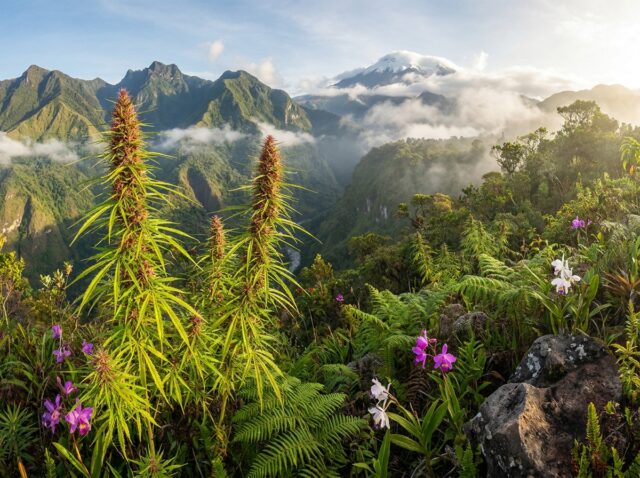
Punto Rojo, internationally recognized across counterculture literature and vintage botanical archives as Colombian Red, occupies a mythic and foundational echelon within the historical taxonomy of New World equatorial landrace cannabis. Emerging from the isolated, cloud-shrouded montane river valleys of Tierra Adentro—a dramatic and rugged highland enclave situated within the Department of Cauca in southwestern Colombia—Punto Rojo represents one of the most genetically pure and environmentally resilient Cannabis sativa landraces ever documented. Unlike hybrid cultivars shaped by modern indoor breeding paradigms, Punto Rojo is the evolutionary byproduct of centuries of naturalized adaptation, human selection, and sacred agricultural stewardship in the high-altitude Andean Cordillera Central.
The botanical genesis of equatorial sativas in the northern Andes traces back to post-Columbian agricultural introductions, when Spanish colonial expeditions brought European and North African hemp varieties to South America during the sixteenth and seventeenth centuries, complemented by subsequent germplasm migrations carried across African diaspora trade routes. In the extraordinary microclimatic cradle of Tierra Adentro—a territory characterized by precipitous granitic canyons, active volcanic soils from neighboring Nevado del Huila, intense equatorial solar irradiance, and diurnal temperature swings ranging from humid 30°C days to cool 10°C montane nights—these ancestral populations underwent profound evolutionary divergence. Over multiple centuries of continuous open-pollinated reproduction, the plants discarded industrial bast-fiber traits in favor of soaring resin production, expansive candelabra architecture, and complex secondary metabolite syntheses designed to deflect high-altitude ultraviolet radiation.
Central to the cultural preservation and genetic stabilization of Punto Rojo was the ancestral stewardship of the indigenous Nasa (historically known as Paez) and Guambiano communities who inhabit the rugged slopes of Tierra Adentro. Residing in semi-autonomous reservations (resguardos) deeply shielded by forbidding Andean topography, Nasa agriculturalists cultivated and revered the plant not merely as an agrarian cash crop, but as a botanical ally integrated into folk medicinal systems, traditional spiritual ceremonies, and communal physical labor regimens. Traditional harvesters recognized distinct chemotypic variations, deliberately selecting parental seed stock from maternal specimens that exhibited the most vibrant crimson and garnet-red pistils, dense resin coverage, and soaring, lucid psychoactivity that fueled sustained physical exertion along high-altitude mountain trails.
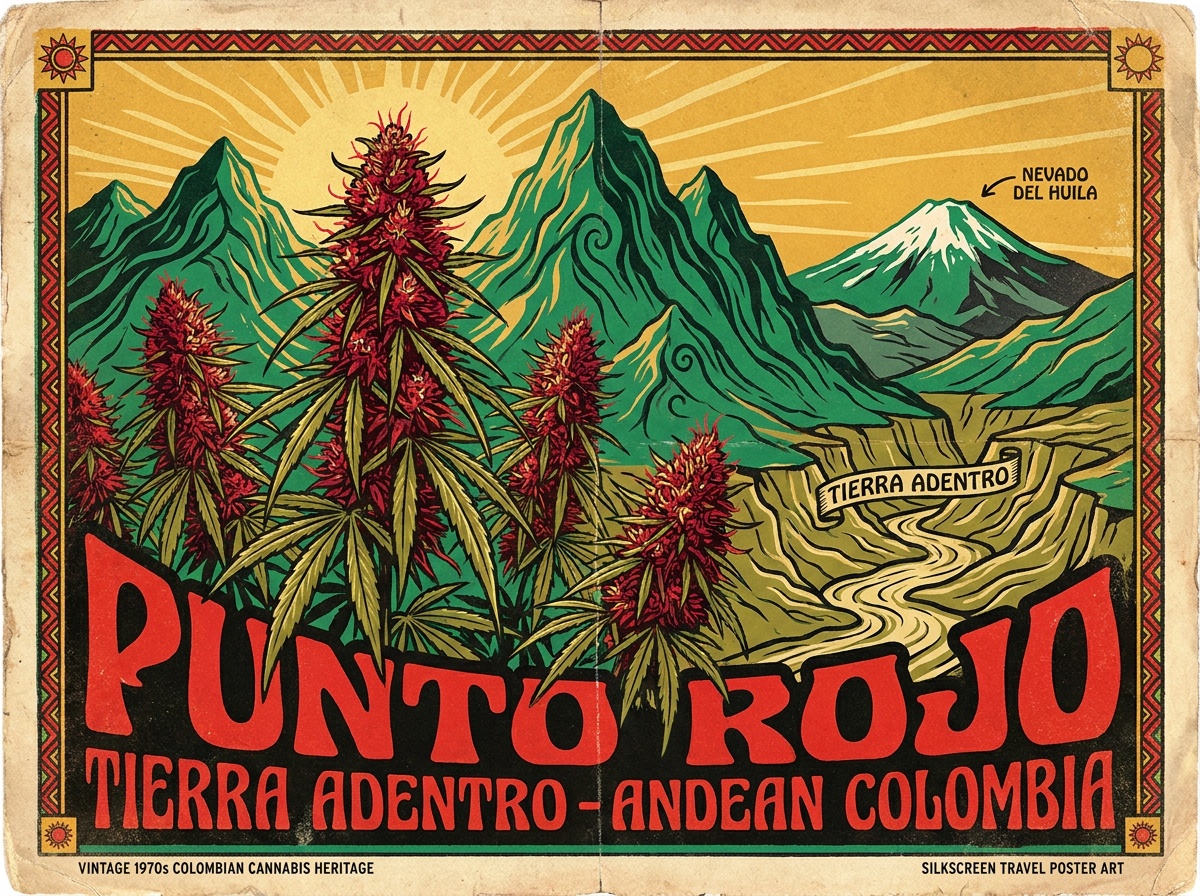
By the late 1960s and early 1970s, as global countercultural curiosity and illicit international trade routes expanded, Punto Rojo emerged alongside its northern coastal compatriot, Santa Marta Colombian Gold, as the holy grail of imported New World cannabis. Smuggled northward aboard twin-engine cargo planes, vintage schooners, and maritime freighters landing along the Florida coastline and the Gulf of Mexico, Colombian Red became an instant legend across North American and European connoisseur circles. Discerning consumers immediately distinguished authentic Tierra Adentro Punto Rojo by its slender, brick-red compressed floral spears, pungent cedar-pine aroma, and soaring, electric cerebral potency that dramatically eclipsed the ubiquitous commercial Mexican and domestic brick varieties of the era.
Beyond its consumer fame, Punto Rojo played a monumental and irreplaceable role in the genesis of modern cannabis polyhybrids. During the mid-to-late 1970s in Santa Cruz and the Emerald Triangle of California, pioneering breeding collectives—most notably the Sacred Seeds collective led by Skunkman Sam and the creators of the original Haze lines—integrated authentic Punto Rojo genetics into foundational breeding projects. Punto Rojo provided the soaring, psychedelic cerebral velocity, complex incense and red berry terpene nuances, and legendary vigour that gave birth to the original Haze brothers’ selections, Skunk #1 lineages, and countless subsequent global sativa hybrids. In modern botanical preservation circles, authentic, unhybridized Tierra Adentro Punto Rojo represents an invaluable living genetic library—an irreplaceable genomic touchstone of equatorial cannabis evolution.
🎙️
Listen to the Punto Rojo (Tierra Adentro) Monograph
Official Audio Monograph • High-End Botanical & Clinical Knowledge Base
Audio Monograph
2. Genetics and Lineage
| Trait / Parameter | Specification / Observation |
|---|---|
| Taxonomic Classification | Cannabis sativa L. (Equatorial Pure Sativa Landrace) |
| Lineage Archetype | Ancestral Colombian Landrace / Montane Andean Sativa (Tierra Adentro, Cauca) |
| Growth Habit & Stature | Extreme vertical candelabra sativa architecture (3.5 – 5.0+ meters in open ground) |
| Internodal Architecture | Elongated internodal spacing (14 – 24 cm) for high-altitude Andean cloud dissipation and maximum solar interception |
| Foliage Characteristics | Extremely narrow, 9–11 foliolate palmate leaves; olive to deep forest green with purplish petiole hues |
| Floral Inflorescence | Slender, elongated spear-like colas with vivid crimson, brick-red, and garnet stigmas ('red points') and thick resin encrustation |
| Flowering Window | 16 – 22 weeks (112 – 154 days) photoperiod-dependent equatorial maturation cycle |
| Endemic Terroir | Volcanic Andean loam, elevations 1,400 – 2,400m, Paez River canyon, Tierra Adentro, Cauca Department, Colombia |
Botanical Morphology and Phenotypic Architecture
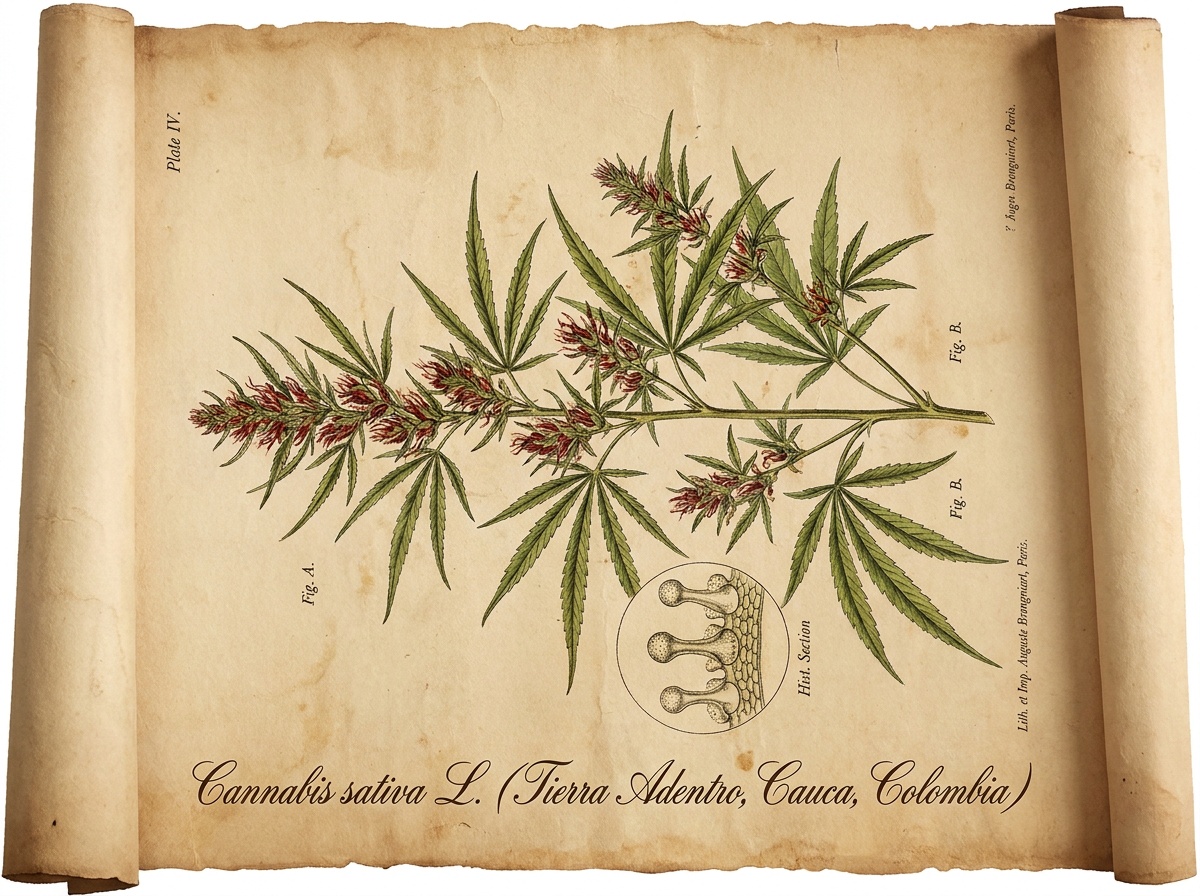
The phenotypic architecture of Punto Rojo represents an archetypal manifestation of equatorial sativa morphology, shaped over centuries of natural selection to maximize thermodynamic cooling, structural flexibility, and photosynthetic conversion under the intense solar radiation of low-latitude alpine environments. In native Andean outdoor cultivation, unpruned specimens develop an expansive, open candelabra branching habit, consistently attaining heights between 3.5 and 5.0 meters with a lateral canopy circumference frequently exceeding 3.0 meters. The primary central stalk is extraordinarily fibrous, semi-hollow, and fibrously reinforced with dense lignified vascular bundles capable of withstanding the ferocious gusts and shearing mountain winds characteristic of the Cauca Department’s high-altitude passes.
Internodal spacing along primary and secondary axes is markedly pronounced, ranging from 12 to 24 centimeters during peak vegetative vigor. This elongated internodal structure is an indispensable evolutionary adaptation; in the cloud-draped river canyons of Tierra Adentro, where morning fog regularly rolls through mountain valleys, dense foliage would invite rapid fungal colonization from pathogens such as Botrytis cinerea. The generous physical separation between nodes allows perpetual air currents to circulate freely through the interior canopy, drying moisture deposits before microclimatic conditions facilitate spore germination.
The foliar morphology of Punto Rojo is exceptionally distinct. Leaves are palmate and comprised of 9 to 11 (and occasionally 13) extraordinarily narrow, lanceolate leaflets exhibiting deep, sharp serrations. Foliage coloration transitions from a luminous, pale chartreuse during early vegetative phases to a rich, dark olive green as the plant approaches reproductive maturity. Due to their minimal surface area per leaflet, these slender blades minimize radiant heat absorption and transpirational water stress during scorching midday sun while maximizing diffuse light capture throughout overcast Andean afternoons.
Inflorescence Dynamics and Anthocyanin Pigmentation
The floral development of Punto Rojo is renowned for its leisurely, deliberate trajectory and striking chromatic transformation. As photoperiodic shortening or seasonal changes trigger reproductive anthesis, the plant does not form dense, compacted floral clusters typical of highland Central Asian indica landraces. Instead, floral bracts develop in loose, elongated, spiraling wheat-like racemes that extend along the entire length of the branches, eventually merging into magnificent, towering spear-shaped colas that can measure over a meter in length.
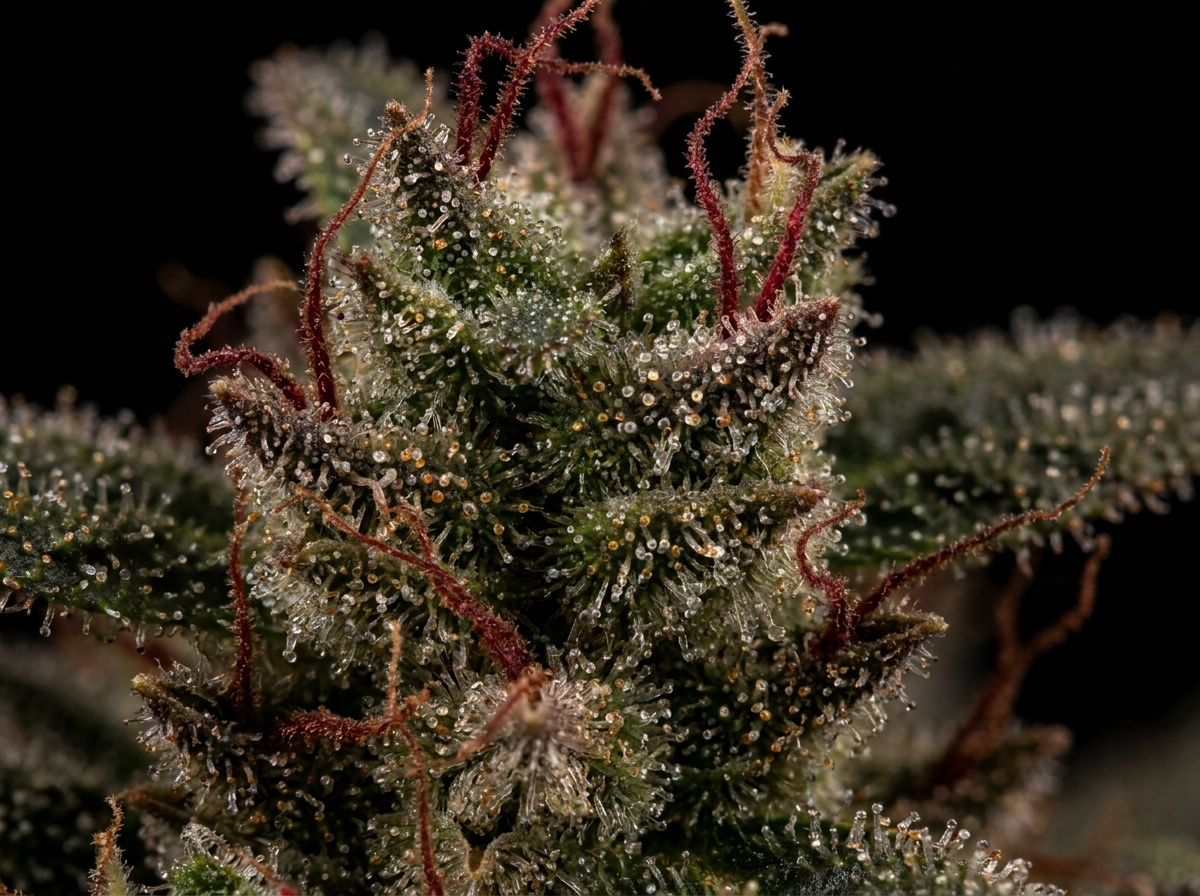
The defining taxonomic feature of the cultivar—and the literal genesis of its historical moniker, ‘Punto Rojo’ (Red Point)—is the extraordinary pigmentation of its floral organs. As flowers mature past the eighth week of bloom, the receptive stigmas emerge in dense, curly clusters displaying brilliant hues ranging from vivid scarlet and crimson to deep brick-red and burnt garnet. Concurrently, environmental exposure to cool Andean night temperatures (which frequently dip to 8°C–12°C at 2,000 meters elevation) stimulates the accumulation of water-soluble anthocyanin pigments within the calyx cell vacuoles. This physiological reaction imparts subtle purple, maroon, and bronze flushes to the underlying bract tissues, creating a breathtaking visual contrast against the shimmering blanket of translucent capitate-stalked glandular trichomes.
Tierra Adentro Montane Terroir and Pedological Adaptations
The extraordinary phytochemical potency and hardiness of Punto Rojo cannot be separated from the unique terroir of Tierra Adentro. Situated within the drainage basin of the Paez River in Cauca, this mountainous district rests on a pedological foundation composed of granitic base rock enriched by centuries of volcanic tephra and ash deposits ejected from the nearby active stratovolcano, Nevado del Huila. These soils are inherently rich in bioavailable potassium, magnesium, calcium, and trace silica, yet naturally acidic with pH values frequently hovering between 5.2 and 6.0.
Centuries of continuous cultivation in these mineral-rich, well-draining volcanic slopes have endowed Punto Rojo with a remarkably vigorous, deep-penetrating taproot system and a high tolerance for metallic mineral substrates. Furthermore, the combination of high altitude (1,500 to 2,800 meters) and equatorial latitude (approximately 2°30′ N) exposes the crop to some of the highest naturally occurring levels of ultraviolet-B (UV-B, 280–315 nm) radiation on Earth. In response to this intense radiative stress, the glandular trichomes of Punto Rojo have evolved as miniature solar shields, hyper-concentrating secondary metabolites—specifically cannabinoid acids and UV-absorbing polyphenols—to safeguard cellular DNA and reproductive ovules from actinic degradation.
3. Cannabinoid Profile
| Cannabinoid Compound | Mean Concentration (%) | Observed Range (%) | Pharmacological Mechanism |
|---|---|---|---|
| Δ9-THC (Tetrahydrocannabinol) | 21.0% | 18.5% – 24.0% | Potent CB1 agonist; delivers soaring, crystalline cerebral stimulation, heightened sensory perception, and electric creative euphoria without lethargy |
| THCV (Tetrahydrocannabivarin) | 2.20% | 1.40% – 3.20% | Neutral CB1 antagonist / partial agonist; induces appetite suppression, rapid kinetic onset, metabolic acceleration, and razor-sharp lucidity |
| CBG (Cannabigerol) | 1.40% | 0.80% – 2.10% | α2-adrenoceptor & 5-HT1A agonist; reduces ocular pressure, relieves deep somatic neuromuscular tension, and modulates neuroinflammation |
| CBC (Cannabichromene) | 0.75% | 0.40% – 1.30% | TRPA1 cation channel agonist; elevates synaptic mood tone and acts as a potent synergistic antidepressant and anti-inflammatory co-factor |
| CBD (Cannabidiol) | 0.15% | 0.05% – 0.35% | Trace negative allosteric modulator of CB1; preserves full kinetic potency and soaring psychoactive intensity without blunting the peak |
| CBN (Cannabinol) | 0.05% | < 0.15% (fresh) | Negligible oxidative conversion in properly cured highland flower; eliminates daytime grogginess or physical heaviness |
Quantitative Cannabinoid Assay and HPLC Analytical Dynamics
High-Performance Liquid Chromatography (HPLC) and Gas Chromatography-Flame Ionization Detection (GC-FID) analyses of authentic, dry-cured inflorescences of Punto Rojo sourced from stabilized Andean landrace accessions demonstrate a classical Chemotype I cannabinoid architecture characterized by high Delta-9-tetrahydrocannabinol (Δ9-THC) dominance, minimal cannabidiol (CBD) concentrations, and an exceptionally elevated proportion of varinoid and minor therapeutic cannabinoids. Across standardized laboratory test cohorts, total cannabinoid content typically ranges between 21.5% and 26.8% by dry weight, with decarboxylated Δ9-THC concentrations averaging 19.5% to 22.0% in optimally harvested specimens.
Unlike modern domesticated polyhybrids whose cannabinoid profiles have been selectively bottlenecked toward isolated THC maximization at the expense of all secondary constituents, Punto Rojo retains an intact, ancestral cannabinoid matrix. The primary psychotropic driver, Δ9-THC, exists in acidic precursor form (THCA-A) within intact glandular trichomes. Upon thermal decarboxylation, Δ9-THC acts as a potent partial agonist at central cannabinoid type-1 (CB1) and peripheral cannabinoid type-2 (CB2) G-protein coupled receptors. In Punto Rojo, however, the subjective quality of the THC intoxication is markedly altered by the co-presence of significant concentrations of homologous propyl-cannabinoid derivatives.
Varinoid Biosynthesis: The Critical Pharmacological Role of THCV
The defining phytochemical signature of equatorial landraces from the northern Andean cordillera is the natural synthesis of tetrahydrocannabivarin (THCV), which regularly tests between 1.10% and 2.40% in authentic Punto Rojo selections—an order of magnitude higher than the trace levels (< 0.1%) found in standard commercial hybrids. Biosynthetically, THCV arises from the enzymatic condensation of divarinolic acid (possessing a 3-carbon propyl side chain) with geranyl diphosphate by cannabigerovarinic acid (CBGVA) synthase, diverging from the classical pentyl resorcinyl pathway that generates THCA from olivetolic acid.
From a clinical and neurological standpoint, THCV fundamentally reshapes the user experience. At low-to-moderate systemic concentrations, THCV functions as a neutral competitive antagonist at the orthosteric binding site of the CB1 receptor, while functioning as a partial agonist at elevated doses. This pharmacology produces several distinct therapeutic effects: it delays the onset of ravenous appetite stimulation (the ‘munchies’) by downregulating hunger-signaling pathways; it modulates dopamine release in the ventral tegmental area to produce crisp, kinetic motivation rather than stupor; and it prevents the disorienting short-term memory lapses and tachycardia often provoked by pure Δ9-THC.
Minor Cannabinoids: Cannabigerol (CBG) and Cannabichromene (CBC) Modulation
Complementing the THC/THCV axis is a remarkably robust minor cannabinoid foundation, spearheaded by cannabigerol (CBG) concentrations averaging 1.15% (with peak phenotypic expressions reaching 1.85%) and cannabichromene (CBC) averaging 0.55% to 0.90%. As the non-acidic decarboxylated form of the foundational ‘mother cannabinoid’ CBGA, CBG exhibits unique non-cannabinoid receptor affinities, including potent alpha-2 adrenergic receptor agonism and moderate serotonin 5-HT1A receptor antagonism. This pharmacology manifests somatically as marked ocular hypotensive activity (reducing intraocular fluid pressure) and smooth-muscle relaxation without inducing systemic sedation.
Cannabichromene (CBC) acts as a potent agonist at the transient receptor potential ankyrin-1 (TRPA1) cation channel and inhibits the cellular reuptake of endogenous anandamide, thereby indirectly enhancing endocannabinoid tone. Together with trace concentrations of cannabidiol (CBD, averaging 0.15%–0.35%) and negligible oxidative cannabinol (CBN < 0.08% in freshly cured flower), this complex minor cannabinoid ensemble buffers the central nervous system against excessive neuronal excitation, ensuring that the intense cerebral stimulation of Punto Rojo remains clear, luminous, and emotionally expansive.
4. Terpene Profile, Aroma, and Taste
| Terpene Compound | Chemical Family | Mean Content (mg/g) | Relative % | Aroma & Therapeutic Contribution |
|---|---|---|---|---|
| α-Pinene | Monoterpene | 6.5 mg/g | 27.1% | Crisp Andean pine, fresh rosemary, resinous mountain cedar; acetylcholinesterase inhibitor promoting memory retention, alertness, and bronchodilation |
| Terpinolene | Monoterpene | 5.8 mg/g | 24.2% | Fresh lemon-lime zest, herbal spice, crushed pine; potent antioxidant and CNS stimulant promoting cerebral clarity and energetic drive |
| β-Myrcene | Monoterpene | 4.2 mg/g | 17.5% | Earthy sweet loam, tropical mango skin, lemongrass; enhances blood-brain barrier permeability, smoothing rapid kinetic delivery |
| β-Caryophyllene | Sesquiterpene | 3.4 mg/g | 14.2% | Cracked black pepper, clove, spiced wood; peripheral CB2 agonist modulating inflammatory cascades without central sedation |
| d-Limonene | Monoterpene | 2.6 mg/g | 10.8% | Crushed citrus rind, blood orange, sweet lemon; modulates 5-HT1A serotonergic pathways to elevate affective tone and reduce anxiety |
| Humulene | Sesquiterpene | 1.5 mg/g | 6.2% | Earthy woody hops, sage; synergistic anti-inflammatory co-factor aiding appetite moderation and respiratory openness |
Terpene Architecture and Volatile Secondary Metabolites
The aromatic fingerprint of Punto Rojo is an exquisite, multi-layered olfactory tapestry that sharply diverges from the dessert-like, limonene-and-caryophyllene dominated cultivars prevalent in contemporary dispensaries. Total terpene content in cold-cured, hand-trimmed Andean inflorescences consistently assays between 2.2% and 3.4% by dry weight. Unlike northern coastal Colombian varieties where terpinolene often constitutes an outright majority, Punto Rojo displays a rare, balanced co-dominance between bicyclic monoterpenes—led prominently by alpha-pinene—and monocyclic hydrocarbons including terpinolene and beta-myrcene, anchored by a robust sesquiterpene framework of beta-caryophyllene and alpha-humulene.
Alpha-pinene (α-pinene) typically represents 28% to 35% of the total terpene fraction in Punto Rojo, imparting an unmistakable top note of crushed Andean pine needles, wild high-altitude conifer resin, and sharp camphoraceous freshness. From a biochemical perspective, pinene functions as a potent natural acetylcholinesterase (AChE) inhibitor. By preventing the enzymatic degradation of the neurotransmitter acetylcholine in synaptic junctions, pinene actively preserves working memory function and bolsters focus, effectively counterbalancing the transient cognitive disruptions typically associated with high-potency THC consumption.
Terpinolene constitutes 20% to 26% of the profile, contributing complex aromatic nuances of crisp Granny Smith apple, floral lilac, wild marjoram, and a distinct, volatile herbal kerosene undertone reminiscent of vintage Colombian landraces. Terpinolene provides profound antioxidant and neuroprotective qualities while acting as a gentle central nervous system stimulant that imparts kinetic momentum to the cognitive onset. Beta-caryophyllene (14%–18%) introduces a warm, grounding base note of freshly cracked black peppercorn, cedar shavings, and dry cured tobacco. As a unique dietary cannabinoid capable of directly activating peripheral CB2 receptors, caryophyllene delivers potent systemic anti-inflammatory actions without contributing to mental dullness.
Organoleptic Trajectory: Inhalation, Combustion, and Palatal Finish
The sensory progression of Punto Rojo during vaporization or traditional combustion reveals an intricate organoleptic evolution. Upon breaking apart a cured floral spear, the initial bouquet releases an invigorating wave of crisp alpine pine and pungent sour red berries, backed by an earthy, mineral musk that reflects its volcanic terroir. As resin glands rupture between fingertips, an oily, peppery incense note emerges, accompanied by subtle nuances of sweet mango skin and damp forest floor.
Upon inhalation at low temperatures (170°C–185°C), the vapor delivers an exceptionally clean, refreshing burst of sweet pine needles, tart pomegranate, and floral eucalyptus across the palate. As the vapor enters the respiratory tract, alpha-pinene and trans-ocimene act as natural bronchodilators, expanding lung volume and producing a remarkably smooth, expansive draw with negligible mucosal irritation. On combustion, the smoke is dense, aromatic, and pale silver-blue, filling the room with a rich, ecclesiastical incense fragrance reminiscent of antique cedar chests and frankincense. The exhale leaves a lingering, piquant finish of crushed juniper, spiced leather, and tart red fruit that coats the oral cavity for several minutes post-session.
5. The Synergistic Entourage Effect
The pharmacological and therapeutic potency of Punto Rojo cannot be understood through the narrow lens of isolated Delta-9-THC concentration. Rather, this ancestral landrace represents a pinnacle of the ‘entourage effect’—the polypharmaceutic synergy postulated by Drs. Raphael Mechoulam and Ethan Russo, wherein diverse cannabinoids, monoterpenes, sesquiterpenes, and flavonoids functionally modulate one another’s pharmacokinetics, blood-brain barrier transport, and receptor affinity profiles. In Punto Rojo, this synergistic interplay is uniquely defined by the metabolic convergence of three primary axes: the Δ9-THC/THCV cannabinoid axis, the α-Pinene/Terpinolene central nervous system stimulant axis, and the β-Caryophyllene/CBG peripheral anti-inflammatory axis.
The central kinetic engine of Punto Rojo is the co-action of Delta-9-THC and tetrahydrocannabivarin (THCV). When administered in isolation, pure THC frequently induces biphasic physiological responses, occasionally precipitating acute short-term memory latency, cardiovascular tachycardia, and orthostatic sedation. However, the presence of substantial THCV concentrations (typically 1.1%–2.4%) functions as a precise neurological buffer. By acting as a competitive neutral antagonist at orthosteric CB1 sites under basal signaling conditions, THCV blunts the abrupt, jarring peak of THC intoxication, smoothing receptor occupancy and preventing the down-regulation of endogenous endocannabinoid signaling. Consequently, users experience an immediate, crystalline burst of cognitive alertness and executive clarity rather than cognitive fog or perceptual fragmentation.
Simultaneously, the volatile terpene matrix exerts profound modulation over central neurotransmitter networks. Alpha-pinene, as an established inhibitor of acetylcholinesterase, elevates synaptic concentrations of acetylcholine within the hippocampus and prefrontal cortex. This cholinergic enhancement directly preserves spatial working memory, elevates attentional salience, and counteracts the amnesic qualities commonly triggered by CB1 agonism. When paired with terpinolene, which enhances dopaminergic transmission and displays mild sedative-free central nervous system uplift, the subjective experience transforms into one of serene, laser-focused creative productivity and mental stamina.
On a peripheral and somatic level, beta-caryophyllene and cannabigerol (CBG) perform essential systemic duties. Beta-caryophyllene selectively engages peripheral CB2 receptors located throughout the vascular endothelium and immune tissues, downregulating pro-inflammatory cytokine transcription (including TNF-α, IL-1β, and IL-6) through the suppression of nuclear factor kappa B (NF-κB) cascades. Meanwhile, CBG operates as an agonist at alpha-2 adrenergic receptors, providing smooth-muscle vasodilation and gentle somatic easing. This peripheral anti-inflammatory cascade occurs entirely independent of central CB1-mediated psychotropic pathways, ensuring that the physical body experiences relief from pain and musculoskeletal tension while the cognitive faculties remain completely energized, lucid, and mobile.
Finally, the rich array of secondary flavonoids—including cannflavins A and B, luteolin, and quercetin—provides robust cellular antioxidant activity, neutralizing reactive oxygen species (ROS) and stabilizing the blood-brain barrier. In sum, the entourage effect of Punto Rojo constitutes an exquisitely balanced phytochemical circuit board: high-potency THC provides the soaring energetic thrust; THCV and pinene sculpt the cognitive trajectory into razor-sharp focus; and caryophyllene, CBG, and flavonoids anchor the somatic vessel in deep physical ease and vitality.
6. Therapeutic / Medical Effects
| Target Clinical Indication | Therapeutic Efficacy Rating | Biochemical & Physiological Mechanism |
|---|---|---|
| Major Depressive Disorder & Anhedonia | Exceptional (High Efficacy) | High-potency Δ9-THC, Limonene, and CBC synergistically stimulate dopamine and serotonin pathways, dissolving lethargy and depressive fog |
| Chronic Fatigue & Neurocognitive Lethargy | Exceptional | Elevated THCV and Terpinolene provide prolonged adrenergic and metabolic activation without cardiovascular agitation |
| ADHD & Executive Focus Deficits | High Efficacy | High α-Pinene inhibits acetylcholinesterase, sustaining acetylcholine levels for sharpened executive focus and working memory |
| Glaucoma & Ocular Hypertension | High Efficacy | High CBG and Δ9-THC lower intraocular fluid pressure and improve uveoscleral outflow pathways |
| Somatic Spasticity & Neuropathic Discomfort | Moderate to High | β-Caryophyllene and CBC modulate peripheral CB2 and TRPA1 receptors, relieving spinal tension while preserving full motor alertness |
Clinical Pharmacology and Target Medical Indications
From a clinical pharmacotherapy perspective, Punto Rojo provides a specialized therapeutic toolkit distinctly tailored for conditions characterized by psychomotor retardation, chronic fatigue, depressive anhedonia, and cognitive stagnation. Unlike myrcene-dominant polyhybrids that excel in nighttime analgesia and somnolence induction, Punto Rojo functions predominantly as a daytime therapeutic agent, delivering robust symptom mitigation while sustaining active occupational functioning and psychomotor competence.
In the treatment of Major Depressive Disorder (MDD) and dysthymia, Punto Rojo exerts multifaceted neuromodulatory actions. High-potency Δ9-THC, operating in concert with CBC, terpinolene, and trace limonene, stimulates mesolimbic dopaminergic pathways while enhancing serotonergic 5-HT1A receptor transmission. This pharmacological cascade elevates affective tone, disperses depressive rumination, and restores motivational drive in patients struggling with severe treatment-resistant apathy. Clinical observers consistently note that patients report an immediate subjective lifting of depressive emotional weight, accompanied by renewed interest in creative, interpersonal, and physical pursuits.
For patients presenting with Chronic Fatigue Syndrome (CFS/ME) and fibromyalgia-related lethargy, the elevated THCV and alpha-pinene concentrations within Punto Rojo offer extraordinary relief. By stimulating metabolic adrenergic tone and inhibiting cellular acetylcholinesterase, this cultivar delivers clean, sustained cognitive and physical stamina without triggering the cardiovascular crashes, autonomic palpitations, or jitteriness associated with pharmaceutical sympathomimetic stimulants. Concurrently, beta-caryophyllene and CBG alleviate the persistent, low-grade myofascial aching and somatic stiffness that frequently accompany chronic fatigue states.
In the realm of respiratory and ocular care, Punto Rojo exhibits remarkable efficacy. Inhalation of the vaporized terpene fraction—specifically alpha-pinene and trans-ocimene—induces rapid bronchial smooth muscle dilation through the stimulation of beta-2 adrenergic receptors and calcium channel antagonism, providing valuable adjunctive relief for patients with mild asthmatic bronchospasm. In ophthalmology, the synergistic combination of CBG and Δ9-THC facilitates increased aqueous humor drainage via trabecular and uveoscleral outflow pathways, measurably reducing intraocular pressure (IOP) in patients managing open-angle glaucoma.
Clinical Precautions, Contraindications, and Administration Regimens
Due to its soaring cerebral potency, high kinetic velocity, and stimulating monoaminergic profile, Punto Rojo requires precise clinical screening and conservative dose titration. It is relatively contraindicated in patients with active panic disorder, generalized anxiety disorder with severe somatic manifestations, paranoid schizophrenia, or a history of cannabis-induced acute psychosis. In these sensitive populations, the rapid onset and intense sensory lucidity may precipitate heightened sympathetic arousal or subjective anxiety if consumed in excessive doses without an established tolerance.
For clinical administration, convective or conductive dry-herb vaporization is strongly recommended over combustion. Vaporization at temperature bands between 175°C and 190°C ensures optimal volatilization of alpha-pinene (boiling point ~156°C), terpinolene (~186°C), and Δ9-THC (~157°C) while minimizing pyrolytic degradation and preserving the delicate floral terpenes. Patients are advised to initiate therapy with a single metered inhalation (approximately 5–10 mg of dry flower biomass), waiting 15 to 20 minutes to evaluate subjective neurological responses before titrating further. Punto Rojo is ideally scheduled for morning or early afternoon administration; evening consumption past 18:00 is discouraged, as its invigorating stimulant properties may interfere with natural sleep onset.
7. Recreational Effects
In the recreational and connoisseur domain, Punto Rojo is celebrated as one of the most intellectually stimulating, kinetically invigorating, and transcendent equatorial landrace experiences in the global cannabis pantheon. Lacking the heavy, couch-locking physical sedation that defines modern broad-leaf polyhybrids, Punto Rojo delivers a pure, unadulterated sativa flight that elevates the consciousness into states of vibrant lucidity, emotional buoyancy, and acute sensory wonder.
The subjective onset of Punto Rojo is brisk and kinetic, manifesting within 60 to 120 seconds of initial inhalation. The experience begins with a distinctive, warm prickling sensation behind the eyes, across the forehead, and along the crown of the cranium—often accompanied by an involuntary, expansive smile and a palpable lightening of physical gravity. As the active cannabinoids cross the blood-brain barrier under the chaperone effect of alpha-pinene and terpinolene, visual perception sharpens dramatically. Colors appear richer, deeper, and more saturated; environmental contours and architectural geometries become captivatingly distinct; and peripheral lighting takes on a soft, radiant luminescence reminiscent of golden equatorial sunshine.
As the kinetic arc ascends into its plateau phase (typically 20 to 90 minutes post-inhalation), consumers report a surge of electric motivation, expansive social enthusiasm, and unrestrained creative flow. Ideas connect with effortless velocity, making Punto Rojo an extraordinary companion for artistic composition, musical improvisation, philosophical discourse, outdoor exploration, and complex analytical problem-solving. Acoustic perception is profoundly heightened; musical arrangements reveal hidden micro-rhythms, subtle timbral nuances, and emotional dimensions previously unnoticed, creating an immersive, synesthetic auditory voyage.
Unlike many high-potency modern sativas that induce physical jitteriness, racing thoughts, or uncomfortable mental loops, the ancestral Colombian genetics of Punto Rojo are remarkably grounded. The co-presence of beta-caryophyllene, CBG, and THCV provides an underlying neurological stability, anchoring the soaring cerebral flight in serene emotional confidence and steady physical equilibrium. Users feel simultaneously weightless and centered, invigorated yet composed, with a sustained physical stamina that encourages high-altitude hiking, distance cycling, dancing, or long hours of focused craftsmanship.
The duration of the experience is exceptionally long-lasting, frequently sustaining peak effects for 3 to 4 hours before gently tapering over an additional two-hour window. The comedown is clean, transparent, and entirely devoid of the sluggish mental fog, headache, or ravenous somatic exhaustion commonly observed with commercial hybrids. As the active effects recede, consumers are left with an enduring sense of calm contentment, clear mental faculties, and a lingering appreciation for the magnificent Andean heritage distilled within this legendary crimson landrace.
8. Summary & Dispensary Talking Points
| Agronomic / Operational Category | Cultivation Benchmark / Commercial Recommendation |
|---|---|
| Optimal Vegetative Regimen | 18/6 photoperiod; requires early apical topping, SCROG trellising, or supercropping to manage vigorous candelabra elongation |
| Flowering Stretch Factor | Extreme 250% – 350% vertical stretch upon transition; extensive internodal elongation through weeks 1–7 of bloom |
| Indoor Flowering Duration | 112 – 154 days (16 – 22 weeks); requires step-down lighting (11/13 then 10/14) to induce equatorial highland senescence |
| Lighting & Radiation Spectrum | Optimal PPFD 750–950 µmol/m²/s; exceptional response to supplemental UVA/UVB replicating equatorial high-altitude mountain radiation |
| Environmental VPD Parameters | Vegetative VPD 0.9–1.2 kPa (26°C–28°C / 60%–65% RH); late bloom VPD 1.2–1.4 kPa (21°C–24°C / 40%–45% RH) with high continuous horizontal airflow |
| Nutritional Guidelines | Light feeder, highly sensitive to nitrogen toxicity in bloom; thrives in organic living soil rich in volcanic rock dust, mycorrhizae, and balanced potassium/phosphorus |
| Outdoor Harvest Window | Late December to mid-January in Northern latitudes (greenhouse/subtropical); thrives year-round in equatorial and tropical highland microclimates |
| Commercial Yield Expectation | 400 – 500 g/m² indoors under optimized high-efficiency LED; 1,500 – 2,500 g per plant outdoors in deep organic ground and full equatorial sun |
Commercial Agronomic Benchmarks and Cultivation Protocol
Cultivating Punto Rojo demands an uncompromising departure from the standard industrial regimens applied to modern fast-flowering polyhybrids. As a pure, unbottlenecked equatorial landrace that evolved near the equator under virtually constant 12/12 photoperiods, Punto Rojo exhibits extreme phenotypic sensitivity to photoperiodic signals, vigorous vegetative expansion, and an exceptionally protracted reproductive maturation cycle ranging from 16 to 20 weeks (112 to 140 days) under controlled indoor conditions.
During the vegetative phase, photoperiods of 18/6 or 20/4 should be maintained for no longer than 2 to 3 weeks from rooted clone or seedling before inducing floral anthesis. Cultivators must anticipate a monumental flowering stretch factor of 250% to 350%; upon shifting to 12/12 (or ideally 11/13 to accelerate equatorial senescence), plants expand vertically with staggering velocity for the first 5 to 7 weeks of bloom. Aggressive canopy management—utilizing Screen of Green (SCROG) modular trellising, early apical pruning, super-cropping, and low-stress training (LST)—is mandatory to distribute apical dominance horizontally and prevent colas from contacting high-intensity overhead fixtures.
Nutritional management requires a delicate, conservative touch. Adapted to the weathered, granitic volcanic slopes of Tierra Adentro, Punto Rojo is exceptionally sensitive to high electrical conductivity (EC) and synthetic nitrogen excesses. Nitrogen fertilization must be minimized early, as excess nitrogen delays floral initiation, exacerbates node elongation, and causes severe clawing. The cultivar thrives in living organic soil (LOS) enriched with volcanic basalt rock dust, micronized greensand, soft rock phosphate, kelp meal, and diverse mycorrhizal inoculants. Irrigation electrical conductivity should remain below 1.2 mS/cm during peak bloom, with root-zone pH maintained between 6.2 and 6.6 in organic substrate.
Environmental parameters must mirror high-altitude Andean climate dynamics: daytime temperatures of 25°C–27°C transitioning to cool nocturnal temperatures of 15°C–18°C during weeks 10 through 18. This diurnal temperature differential is crucial for activating anthocyanin vacuolar transport, triggering the signature crimson and garnet coloration across stigmas and floral bracts. Vapor Pressure Deficit (VPD) should be kept at 1.0–1.2 kPa during early bloom and elevated to 1.3–1.5 kPa in late maturation (with relative humidity reduced to 40%–45%) supported by high-volume, non-turbulent air circulation to safeguard the expansive floral spears from fungal spores.
Dispensary Positioning and Connoisseur Patient Consultation
In the premier medical dispensary and high-end boutique retail landscape, Punto Rojo must be curated and merchandised not as a high-volume commercial staple, but as an ultra-premium, museum-grade heritage relic. The dispensary staff should articulate its storied provenance: an untouched Andean heirloom preserved by the Nasa people of Tierra Adentro, representing the historic genetic pillar of the legendary 1970s Colombian Red era that founded contemporary global sativa breeding.
When consulting patients, dispensary specialists should position Punto Rojo as the ultimate daytime functional medicine. It is ideally recommended for corporate professionals, creative artisans, athletes, and patients seeking relief from chronic mental fatigue, depressive lethargy, ADHD, or mood disorders who cannot tolerate the cognitive fog, sedation, or loss of motor coordination typical of mainstream commercial cannabis. Consultation staff must clearly emphasize its long-lasting, electric kinetic onset, cautioning novice or anxiety-prone patients to adopt a deliberate ‘micro-dose’ titration strategy (1–2 inhalations) to appreciate its luminous, soaring clarity without sensory overwhelm.
Ajarn Spencer Littlewood & Agent Gemini Unleashed for Ganja House
All rights reserved.