Listen to the Botanical Monograph Audio Edition
Professional voice narration summarizing the botanical pedigree, chemotypic architecture, and clinical indications of The Wife.
1. Executive Summary & Botanical Taxonomy
The Wife stands as one of the most consequential maternal cornerstones in the modern history of Type III cannabidiol (CBD) genetics—revered across North American and European breeding archives as “The King of CBD” and the foundational genetic mother of the modern craft hemp movement. Originally selected and stabilized within Colorado’s medical cannabis ecosystem (associated with Terrapin Care Station’s medical breeding program and subsequently championed on the Western Slope by Bodhi Urban and High Grade Hemp Seed), The Wife shattered early botanical assumptions regarding the ceiling of non-intoxicating cannabidiol synthesis. At a time when most first-generation high-CBD cultivars struggled to reach 10% to 12% CBD without spiking past regulatory tetrahydrocannabinol limits, The Wife consistently synthesized 16.0% to 20.0% total cannabidiol while holding delta-9-tetrahydrocannabinol strictly below 0.30% w/w (and total potential THC around 0.45%–0.60%), establishing an extraordinary ~33:1 to 50:1 CBD-to-THC ratio.
Taxonomically classified within Cannabis sativa L. as a balanced-to-indica-leaning Type III hybrid (approximately 60% Cannabis sativa subsp. indica and 40% Cannabis sativa subsp. sativa), The Wife exhibits a remarkably compact, broad-leafed, and resin-drenched morphological phenotype. Unlike tall, fibrous, monoecious European industrial hemp cultivars that produce wispy inflorescences and minimal glandular resin, The Wife forms stout, heavily lignified lateral branches loaded with rock-hard, golf-ball-to-conical floral clusters. Its high calyx-to-leaf ratio, thick cuticular wax layer, and abundant capitate-stalked glandular trichomes made it the premier maternal breeding parent for an entire generation of world-famous Type III hybrids—most notably Cherry Wine (The Wife × Charlotte’s Cherries), Trophy Wife, and numerous compliant smokable CBD lines.
Clinically and organoleptically, The Wife is celebrated for its deeply comforting, non-intoxicating somatic tranquility and its refined bouquet of sweet maraschino cherry, damp woodland earth, floral cherry blossom, and warm black-pepper spice. Driven by a volatile terpene triad of beta-myrcene, trans-beta-caryophyllene, and alpha-pinene—supplemented by alpha-humulene, alpha-bisabolol, and linalool—The Wife provides rapid, clear-headed relief for generalized anxiety, peripheral neuropathic pain, arthritic joint inflammation, myofascial spasm, and post-traumatic hyperarousal. Because its 33:1 cannabinoid architecture exerts negative allosteric modulation at central CB1 receptors while activating serotonin 5-HT1A and peripheral CB2 pathways, patients experience profound physical decompression and emotional serenity with zero psychoactive intoxication or cognitive impairment.
From an archival and regulatory perspective, The Wife represents the definitive genetic bridge between the pre-2014 medical cannabis sanctuary movement and the modern global compliant cannabidiol industry. Prior to the stabilization of The Wife, farmers and medical caregivers were forced to choose between low-resin industrial fiber cultivars that lacked therapeutic terpene density and unstable Type II/III medical crosses that frequently exceeded legal delta-9-tetrahydrocannabinol thresholds during late-season maturation. By fixing a homozygous functional cannabidiolic acid synthase (CBDAS) genotype within a compact, broad-leafed, high-resin drug-type chassis, The Wife proved that federally compliant cannabis could achieve connoisseur-grade bag appeal, 18%+ cannabidiol potency, and extraordinary breeding prepotency across filial generations.
| Botanical & Taxonomic Parameter | Scientific Classification & Phenotypic Value |
|---|---|
| Scientific Botanical Name | Cannabis sativa L. (Type III Chemovar / Indica-Leaning 60/40 High-CBD Maternal Foundation) |
| Breeding Foundation & Origin | Colorado Medical Breeding Collective (Terrapin Care Station / High Grade Hemp Seed Foundation) |
| Genetic Pedigree | Proprietary Stabilized Colorado High-CBD Medical Selection (Homozygous CBDAS/CBDAS Clone/Line) |
| Chemotypic Classification | Type III Cannabis (CBD-Dominant, Approximate 33:1 Total CBD:THC Ratio / >50:1 Delta-9 Ratio) |
| Cannabidiol (CBD) Concentration | 16.0% – 20.0% w/w by Dry Floral Biomass (Mean Typical: 18.2%) |
| Delta-9-THC Concentration | <0.30% w/w (Typically 0.14% – 0.27% Compliant Harvest Window; Non-Intoxicating) |
| Total Active Cannabinoids | 18.0% – 22.8% Total Phytocannabinoids (including CBG, CBC, CBDV, and CBT) |
| Indoor Flowering Duration | 56 to 63 Days (8.0 to 9.0 Weeks) under 12/12 Photoperiod Induction |
| Outdoor Harvest Window | Late September to Early October (Northern Hemisphere Temperate & Mountain Zones) |
| Structural Biomass Yield Potential | Indoor: 450–550 g/m² | Outdoor: 800–1,200 g/plant in living organic field beds |
| Dominant Terpene Triad | Beta-Myrcene, Beta-Caryophyllene, Alpha-Pinene (supported by Humulene, Bisabolol & Linalool) |
2. Genetic Pedigree & Breeding History
The origin story of The Wife is inextricably linked to the golden era of Colorado medical cannabis research between 2010 and 2015, when patient collectives, analytical laboratories, and pioneering breeders along the Front Range (Boulder and Denver) and the Western Slope (Paonia and Grand Junction) collaborated to isolate pure, non-intoxicating cannabidiol phenotypes. During this formative decade, thousands of paediatric epilepsy families, combat veterans with post-traumatic stress disorder, and chronic pain patients migrated to Colorado seeking high-ratio CBD therapeutics that could deliver anti-seizure, anti-inflammatory, and anxiolytic relief without the psychotomimetic activation of delta-9-tetrahydrocannabinol. While early breakthroughs such as Charlotte’s Web, ACDC, and R4 proved the clinical efficacy of high-CBD cannabis, many of those initial clone-only selections exhibited wispy, sativa-leaning floral morphology, slow rooting, susceptibility to powdery mildew, or unstable cannabinoid ratios when stressed.
Within the breeding rooms of Terrapin Care Station in Boulder, Colorado—and subsequently across the high-elevation breeding fields of Bodhi Urban and High Grade Hemp Seed in Paonia—geneticists conducted intensive chemotypic and morphological screening to isolate an elite Type III mother plant that possessed true indoor “Kush-grade” bud density alongside an ultra-clean 30:1+ CBD-to-THC ratio. The resulting selection, affectionately named The Wife, stood head and shoulders above contemporaneous CBD clones. Analytical testing via high-performance liquid chromatography (HPLC) revealed that The Wife was strictly homozygous for the functional cannabidiolic acid synthase allele (CBDAS/CBDAS) and carried zero functional copies of tetrahydrocannabinolic acid synthase (THCAS), allowing it to accumulate 16% to 20% total CBD while maintaining one of the lowest THCA-to-CBDA stoichiometric drift ratios ever recorded in drug-type cannabis.
Beyond its extraordinary analytical certificate of analysis (COA), what elevated The Wife to legendary status among cannabis breeders was its superior maternal general combining ability (GCA). In plant breeding, many elite clones fail to transmit their desirable traits consistently when outcrossed, either due to complex polygenic heterozygosity or cytoplasmic incompatibility. The Wife, however, proved to be a genetic prepotent mother: when pollinated by diverse pollen donors, she reliably stamped her filial progeny with shortened internodal spacing, thick vascular stalks, dense golf-ball-to-conical calyx stacking, bulbous capitate-stalked trichome heads, and a soothing sweet-cherry and woodland-earth terpene baseline.
Following the passage of the 2014 United States Farm Bill, Bodhi Urban utilized The Wife as the maternal foundation for a series of landmark hybridizations that defined the American craft hemp industry. By crossing The Wife with Charlotte’s Cherries, Urban created Cherry Wine—arguably the most famous compliant smokable CBD hybrid in history. Subsequent crosses pairing The Wife with T1 (Trump), Berry Blossom, and elite Kush selections produced champions such as Trophy Wife and Wife’s Lemonade. Even as hundreds of newer F1 and S1 hybrids have entered the global seed catalog over the past decade, pure clone and feminized S1 populations of The Wife remain prized by medical cultivators and solventless extractors who demand uncompromising 33:1 ratio purity and heirloom Colorado craft quality.
From a Mendelian and quantitative genetics standpoint, The Wife represents a masterclass in selective stabilization of the BD/BD locus on Chromosome 6 alongside polygenic selection for alpine-hardy secondary metabolite expression. When feminized S1 populations are generated from the original mother cut via colloidal silver or silver thiosulfate (STS) ethylene inhibition, progeny exhibit minimal phenotypic segregation, clustering tightly around two primary expressions: the classic “Boulder Berry-Kush” phenotype (approximately 75% of individuals), which finishes in 56 to 60 days with dense golf-ball calyx clusters and sweet maraschino-cherry and chamomile aromatics, and a slightly broader-leafed “Paonia Mountain” expression (approximately 25% of individuals), which takes 60 to 63 days, displays deeper plum-violet anthocyanin coloration under cool night temperatures, and leans slightly heavier toward woody beta-caryophyllene and subalpine pine.
3. Morphological Architecture & Glandular Phenotypes
In both controlled indoor environments and high-altitude outdoor gardens, The Wife displays a stout, compact, indica-leaning hybrid growth habit (60% Indica / 40% Sativa) that contrasts sharply with the tall, leggy stature of traditional hemp varieties. During vegetative development, plants establish a dense, symmetrical bush silhouette reaching 90 to 135 centimeters indoors and 150 to 185 centimeters outdoors. The main stem and primary lateral branches thicken rapidly, developing robust xylem and phloem vascular bundles encased in a rigid, finely ribbed epidermis that supports heavy late-flower colas with minimal staking. Internodal distances remain tight and uniform, averaging 3.5 to 5.0 centimeters, while the palmate fan leaves feature seven to nine broad, overlapping leaflets with a rich, dark-emerald chlorophyll density.
When transitioned to a 12/12 flowering photoperiod, The Wife exhibits a modest, highly predictable 1.25x to 1.45x vertical stretch over the first sixteen days of bloom—making it exceptionally well-suited for vertical multi-tier indoor racking systems, low-ceiling tents, and uniform Screen of Green (ScrOG) canopies. By week four of flowering, nodal sites along the primary and secondary branches rapidly swell into dense, rounded, golf-ball-shaped floral clusters that fuse along the upper third of each branch into thick, blunt-tipped conical colas. The calyxes are large, tear-drop-shaped, and tightly imbricated, yielding a high calyx-to-leaf ratio (approximately 4.2:1 to 4.8:1) that minimizes trimming labor and resists moisture pockets when proper horizontal airflow is maintained.
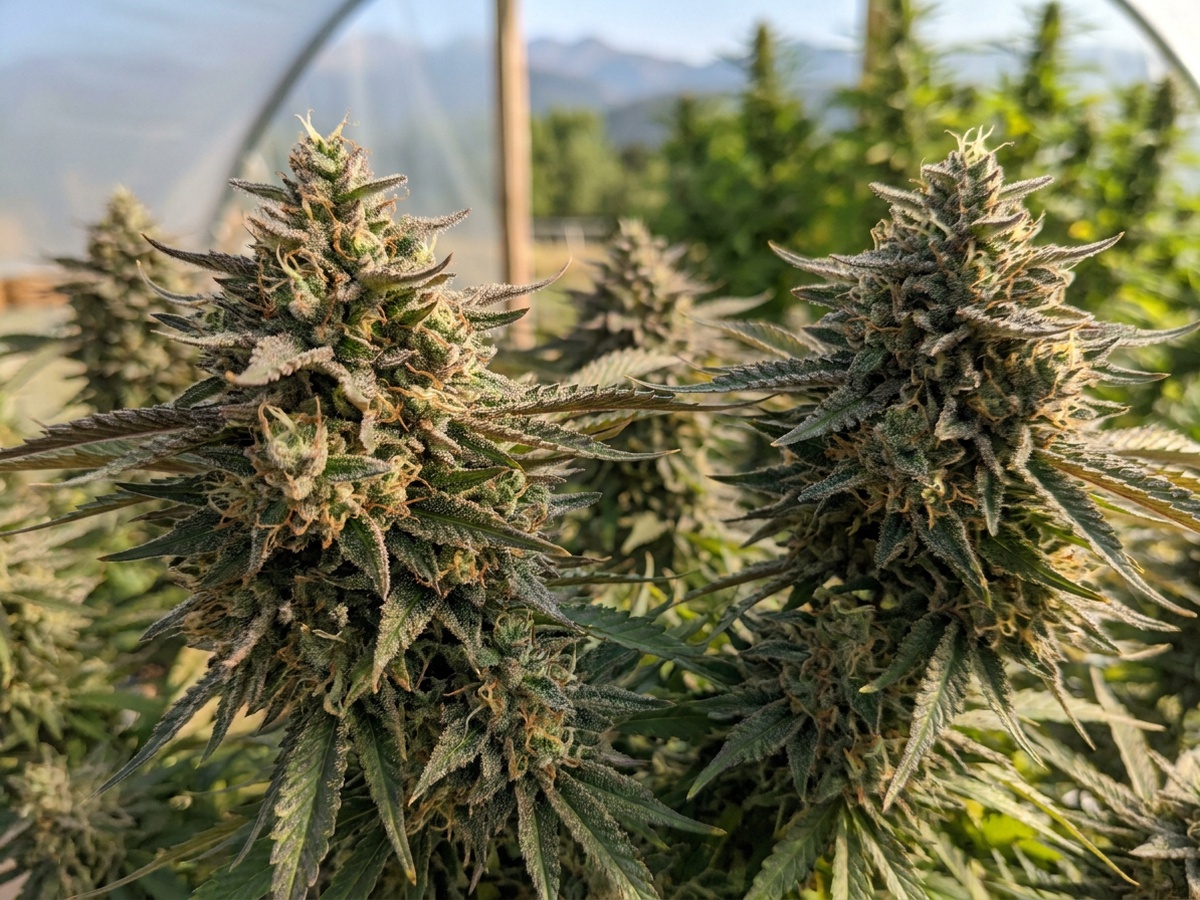
During the final three weeks of maturation (days 42 to 63), The Wife puts on a dazzling display of secondary metabolite and pigment synthesis. As bracts swell to their final density, the foliage and outer calyx tips frequently develop subtle blush tones of cherry-plum, lavender, and deep maroon when exposed to cool nocturnal temperatures below 16°C (61°F), set against vibrant clusters of copper-orange and rust-amber stigmas. Under high-magnification stereomicroscopy, the bract epidermis is blanketed by a thick, velvety forest of capitate-stalked glandular trichomes measuring 80 to 110 micrometers across the secretory head. These resin glands exude a viscous, aromatic oleoresin rich in CBDA and sesquiterpenes, giving the cured flowers a silvery-white, sugar-frosted sheen and a tacky, resinous texture when broken apart by hand.
Anatomical cross-sections of The Wife’s floral bracts and subtending sugar leaves reveal a multi-tiered defensive and biosynthetic epidermis. Beneath the forest of long-stalked capitate trichomes sits a secondary layer of capitate-sessile glands (35 to 55 micrometers) and miniature bulbous trichomes, interspersed with cystolithic non-glandular hairs containing calcium carbonate deposits that deter phytophagous insects. The vascular pedicel supplying each floral cluster is unusually robust, enabling sustained phloem translocation of sucrose and amino acids into the developing secretory disk cells right up to the ninth week of bloom. Meanwhile, the subterranean root system forms a dense, fibrous mat of lateral feeder roots with high cation-exchange capacity, allowing The Wife to thrive equally well in living organic soil beds, raised outdoor rows, and recirculating coco-coir fertigation arrays.
4. Chemotypic Profile & Cannabinoid Biosynthesis
At the genomic and enzymatic level, The Wife represents one of the purest, most stable Type III cannabinoid synthase architectures ever characterized in Cannabis sativa L. Situated within the cannabinoid synthase gene cluster on Chromosome 6, The Wife carries homozygous functional alleles of cannabidiolic acid synthase (CBDAS/CBDAS) paired with completely inactivated, frame-shifted pseudogenes at the paralogous tetrahydrocannabinolic acid synthase (THCAS) locus. Because no functional THCAS enzyme is translated within the secretory disk cells of its glandular trichomes, the universal cannabinoid precursor cannabigerolic acid (CBGA)—formed via the plastidic prenylation of olivetolic acid with geranyl pyrophosphate (GPP) by aromatic prenyltransferase CsPT4—is channeled almost exclusively into the FAD-dependent oxidative cyclization pathway catalyzed by CBDAS.
In mature, properly cured flowers of The Wife, total cannabidiol concentration (calculated as neutral CBD + 0.877 × CBDA) consistently registers between 16.0% and 20.0% by dry weight, with top-shelf indoor living-soil harvests frequently testing between 18.5% and 20.4%. Crucially, because all known functional CBDAS isoforms exhibit a minor catalytic side-reaction that cyclizes roughly 3% of substrate CBGA into delta-9-THCA and 2%–3% into cannabichromenic acid (CBCA), total potential THC in The Wife tracks at an exceptionally tight ~33:1 stoichiometric ratio relative to total CBD. When harvested at peak milky-trichome maturity during week eight to nine of bloom, neutral delta-9-THC measures between 0.14% and 0.27% w/w—Remaining safely below the 0.30% federal compliance threshold while providing a 50:1 to 70:1 ratio of total CBD to neutral delta-9-THC.
Complementing its dominant CBDA/CBD fraction is a medically valuable cohort of minor phytocannabinoids that enrich The Wife’s full-spectrum physiological efficacy. Residual uncyclized cannabigerolic acid (CBGA / CBG) typically accounts for 0.45% to 1.15% of dry floral weight, acting as a potent alpha-2 adrenergic receptor agonist and gamma-aminobutyric acid (GABA) reuptake inhibitor. Cannabichromene (CBCA / CBC) accumulates at 0.35% to 0.85% w/w, contributing selective CB2 receptor agonism, TRPA1 nociceptive channel desensitization, and inhibition of endogenous anandamide inactivation. Furthermore, incorporation of divarinolic acid precursor via the propyl-side-chain polyketide pathway generates 0.15% to 0.38% cannabidivarin (CBDVA / CBDV), adding neuronal membrane stabilization and anti-hyperexcitability protection.
To appreciate the biochemical elegance of The Wife’s cannabinoid accumulation curve, one must follow the upstream flux of carbon inside the secretory cells of the capitate-stalked trichome. In the cytosol, hexanoic acid generated via lipoxygenase and hydroperoxide lyase cleavage of C18 unsaturated fatty acids is activated by hexanoyl-CoA synthetase (CsAAE1) and condensed with three molecules of malonyl-CoA by tetraketide synthase (TKS) and olivetolic acid cyclase (OAC) to form olivetolic acid. Simultaneously, within the leucoplast stroma, pyruvate and glyceraldehyde-3-phosphate pass through seven enzymatic steps of the methylerythritol phosphate (MEP) pathway to yield geranyl pyrophosphate (GPP). Aromatic prenyltransferase CsPT4 embedded in the plastid envelope transfers the ten-carbon geranyl group onto the resorcinol ring of olivetolic acid, producing CBGA. Because The Wife expresses high transcript levels of CBDAS alongside abundant flavin adenine dinucleotide (FAD) cofactor regeneration, CBGA is rapidly oxidized via hydride transfer and deprotonation into CBDA before significant non-enzymatic degradation can occur.
| Phytocannabinoid Analyte | Acidic Precursor & Neutral Form | Dry Weight Concentration (% w/w) | Primary Pharmacological Role in The Wife |
|---|---|---|---|
| Cannabidiol (Total CBD) | CBDA / CBD | 16.0% – 20.0% | CB1 negative allosteric modulator, 5-HT1A agonist, FAAH inhibitor, TRPV1 desensitizer |
| Delta-9-Tetrahydrocannabinol | Delta-9-THC (Neutral) | 0.14% – 0.27% (<0.3% Compliant) | Sub-psychoactive trace CB1/CB2 partial agonist supporting entourage analgesia |
| Tetrahydrocannabinolic Acid | THCA-A | 0.28% – 0.50% (33:1 Total Ratio) | Non-intoxicating PPAR-gamma agonist and COX-1/COX-2 anti-inflammatory modulator |
| Cannabigerol (Total CBG) | CBGA / CBG | 0.45% – 1.15% | Alpha-2 adrenergic receptor agonist, GABA reuptake inhibitor, myofascial relaxant |
| Cannabichromene (Total CBC) | CBCA / CBC | 0.35% – 0.85% | TRPA1 agonist, selective CB2 agonist, anti-nociceptive & mood-elevating synergist |
| Cannabidivarin (Total CBDV) | CBDVA / CBDV | 0.15% – 0.38% | Propyl-side-chain anticonvulsant, TRPV1/TRPV2 modulator, neuronal excitability buffer |
| Cannabicitran (CBT) | CBT (Neutral Diether) | 0.04% – 0.16% | Natural diether cyclization derivative of CBD; inhibits extract crystallization |
5. Volatile Terpene Matrix & Organoleptic Analysis
While its daughter cultivar Cherry Wine leans toward a bold, fermented pinot-noir and aged-cheddar bouquet, The Wife expresses a softer, sweeter, and deeply soothing botanical aromatic profile that routinely measures between 1.6% and 2.9% (16.0 to 29.0 mg/g) of dry floral weight. Breaking open a slow-cured bud of The Wife releases an immediate primary wave of sweet maraschino cherry syrup, sun-ripened red orchard berries, and fresh cherry blossom, grounded by a comforting base of damp forest loam, warm cracked black pepper, cedarwood, and chamomile herbal tea. This gentle, velvety aromatic signature lacks any harsh acridity, making The Wife a favorite among medical patients with sensitive respiratory tracts or migraine-triggered olfactory hypersensitivity.
The primary volatile driver of The Wife is beta-myrcene (0.50% to 0.92% w/w), an acyclic monoterpene synthesized in the plastids that imparts the lush, sweet dark-cherry and loamy-earth core while promoting peripheral muscle relaxation and facilitating blood-brain barrier transport of phytocannabinoids. Second in abundance is trans-beta-caryophyllene (0.35% to 0.68% w/w), a bicyclic sesquiterpene synthesized via the cytosolic mevalonate pathway that contributes warm black-peppercorn and clove-wood spice while functioning as a direct, selective full agonist of peripheral cannabinoid type 2 (CB2) receptors. Third in the primary triad is alpha-pinene (0.20% to 0.42% w/w), which lends a clean, brisk subalpine pine needle top-note and preserves daytime mental clarity by inhibiting acetylcholinesterase.
Enriching this primary triad is a distinctive secondary ensemble of sesquiterpene alcohols and monoterpenes that give The Wife its signature floral-herbal gentleness: alpha-humulene (0.12% to 0.26% w/w) adds woody, hop-like depth and systemic anti-inflammatory synergy; alpha-bisabolol (0.09% to 0.22% w/w, the primary soothing sesquiterpene alcohol of German chamomile, Matricaria recutita) imparts a delicate honeyed-chamomile and sweet floral finish on the palate while calming neurogenic skin and mucosal inflammation; and linalool (0.08% to 0.20% w/w) provides lavender-blossom serenity and positive allosteric modulation of inhibitory GABAA chloride channels.
Across sequential convection vaporization temperatures, The Wife demonstrates remarkable flavor stability. At 165°C to 176°C (329°F to 349°F), the vapor is light, silky, and dominated by sweet cherry blossom, pine needle, and orchard berry esters. At 180°C to 190°C (356°F to 374°F), full CBDA decarboxylation merges with beta-myrcene and beta-caryophyllene to coat the tongue in warm cherry-compote and peppered herbal tea notes. At 192°C to 200°C (378°F to 392°F), alpha-bisabolol, linalool, and alpha-humulene emerge on the finish, leaving a sweet, floral-woody aftertaste accompanied by deep somatic calm.
Gas chromatography–mass spectrometry (GC-MS) with flame ionization detection (FID) of slow-cured flowers of The Wife also reveals a critical minor volatile fraction composed of oxygenated monoterpenoids, aliphatic esters, and sesquiterpene oxides—including fenchol (0.04%–0.09%), beta-ocimene (0.05%–0.11%), caryophyllene oxide (0.04%–0.08%), and trace isoamyl and hexyl esters. Together with alpha-bisabolol and linalool, these trace aroma compounds buffer the respiratory epithelium against thermal irritation during inhalation, explaining why medical patients with sensitive airways consistently rate The Wife among the smoothest, least tussigenic high-CBD flowers ever bred.
| Volatile Terpene Compound | Chemical Class & Boiling Point | Typical Concentration (% w/w) | Organoleptic Note & Synergistic Bioactivity |
|---|---|---|---|
| Beta-Myrcene | Acyclic Monoterpene (167°C / 332°F) | 0.50% – 0.92% | Sweet maraschino cherry, damp woodland earth; TRPV1 analgesia & muscle relaxation |
| Beta-Caryophyllene | Bicyclic Sesquiterpene (160°C / 320°F) | 0.35% – 0.68% | Warm black peppercorn, cedar spice; selective CB2 receptor agonist & NF-kB inhibitor |
| Alpha-Pinene | Bicyclic Monoterpene (155°C / 311°F) | 0.20% – 0.42% | Fresh subalpine pine needle; bronchodilator & acetylcholinesterase inhibitor |
| Alpha-Humulene | Monocyclic Sesquiterpene (198°C / 388°F) | 0.12% – 0.26% | Woody herbal hops; systemic anti-inflammatory & COX-2 suppression |
| Alpha-Bisabolol | Monocyclic Sesquiterpene Alcohol (153°C @ 12mmHg) | 0.09% – 0.22% | Sweet chamomile tea, cherry blossom; soothing neuro-anti-inflammatory & gastroprotective |
| Linalool | Acyclic Terpene Alcohol (198°C / 388°F) | 0.08% – 0.20% | Delicate lavender floral note; GABA-A positive allosteric modulation & anxiolysis |
6. Therapeutic Mechanisms & Clinical Applications
In clinical practice, The Wife is revered as a foundational “baseline stabilizer” for patients requiring high-titer cannabidiol therapy with zero risk of central nervous system intoxication. Because its ~33:1 total CBD-to-THC ratio (>50:1 neutral delta-9-THC ratio) pairs 16%–20% cannabidiol with negligible THC, and because CBD binds to an allosteric site on central CB1 receptors that reduces orthosteric agonist efficacy, The Wife produces no euphoria, no perceptual distortion, no tachycardia, and no short-term working memory deficit. Patients can inhale or ingest therapeutic doses prior to surgical consultations, academic lectures, or precision occupational tasks while maintaining complete cognitive command.
For patients suffering from chronic generalized anxiety disorder (GAD), panic attacks, post-traumatic stress disorder (PTSD), and autonomic dysautonomia, The Wife exerts a rapid, multi-pathway calming effect. Cannabidiol acts as a direct agonist at somatodendritic and postsynaptic 5-HT1A serotonin receptors in the dorsal raphe nucleus, prefrontal cortex, and amygdala, attenuating conditioned fear responses and blunting acute stress-induced surges in cortisol and epinephrine. Simultaneously, CBD inhibits fatty acid amide hydrolase (FAAH) to elevate endogenous anandamide tone, while linalool, alpha-bisabolol, and residual CBG potentiate GABAA receptor currents and alpha-2 adrenergic autoreceptors—quieting sympathetic heart palpitations, chest tightness, and somatic restlessness within minutes of inhalation.
In the management of inflammatory rheumatological conditions, osteoarthritis, degenerative disc disease, endometriosis-associated pelvic pain, and peripheral neuropathy, The Wife delivers potent non-opioid analgesia. Trans-beta-caryophyllene and CBC selectively activate peripheral CB2 receptors on immune cells and dorsal root ganglia, inhibiting NF-κB signaling and downregulating TNF-α, IL-1β, IL-6, and monocyte chemoattractant protein-1 (MCP-1). Concurrently, high-titer CBD, beta-myrcene, and alpha-bisabolol bind and desensitize TRPV1, TRPV2, and TRPA1 nociceptive ion channels while activating nuclear PPARγ receptors to resolve chronic tissue inflammation and peripheral mechanical allodynia.
Additionally, The Wife has a distinguished clinical pedigree in neurological hyperexcitability, essential tremor, migraine prophylaxis, and myofascial spasticity. By antagonizing GPR55, blocking T-type voltage-gated calcium channels, and inhibiting adenosine reuptake via ENT1 blockade, the combination of CBD, CBDV, and CBG stabilizes hyperexcitable cortical and spinal motor circuits. Patients with nocturnal leg cramps, cervical dystonia, temporomandibular joint (TMJ) clenching, or tension migraines report deep, sustained neuromuscular release when combining sublingual full-spectrum extracts of The Wife with targeted evening vaporization.
Beyond neurological and rheumatological indications, The Wife is increasingly utilized in integrative gastroenterology and metabolic wellness protocols for irritable bowel syndrome (IBS), inflammatory bowel discomfort, visceral hypersensitivity, and stress-induced gastric dysmotility. Enteric glial cells, mucosal mast cells, and myenteric plexus neurons throughout the human gastrointestinal tract express high densities of CB2, TRPV1, PPARγ, and 5-HT1A receptors. When patients administer sublingual or oral lipid extracts of The Wife, cannabidiol, cannabigerol, trans-beta-caryophyllene, and alpha-bisabolol act concertedly to downregulate mucosal mast-cell degranulation, preserve tight-junction epithelial integrity (zonula occludens-1 and occludin proteins), and calm hyperactive vagal-enteric pain reflexes without slowing healthy peristalsis.
Furthermore, in addiction medicine and harm-reduction psychiatry, The Wife serves as an invaluable clinical tool for cannabis tolerance recalibration, high-THC withdrawal mitigation, and nicotine or alcohol craving attenuation. Heavy consumers of high-THC concentrates who experience CB1 receptor downregulation, morning nausea, irritability, and rebound insomnia during tolerance breaks find that substituting The Wife satisfies the behavioral and sensory ritual of inhalation while its 33:1 CBD profile restores normal endocannabinoid homeostasis and normalizes amygdala-striatal cue reactivity.
| Clinical Indication / Symptom Domain | Primary Synergistic Compounds | Receptor & Molecular Pathway | Recommended Dosing & Administration Protocol |
|---|---|---|---|
| Generalized Anxiety & PTSD Hyperarousal | CBD (33:1) + Linalool + Alpha-Pinene | 5-HT1A agonism, FAAH inhibition (elevated anandamide), GABA-A modulation | Dry-herb vaporization at 176°C–184°C (2–4 inhalations TID or PRN acute stress) |
| Chronic Arthritic & Inflammatory Pain | CBD + Beta-Caryophyllene + Alpha-Bisabolol | Selective CB2 agonism, PPAR-gamma activation, COX-2 & TNF-alpha suppression | 30–60 mg full-spectrum sublingual oil BID + vaporization at 188°C–195°C |
| Peripheral Neuropathy & Radiculopathy | CBD + CBG + CBC + CBDV | TRPV1/TRPA1 desensitization, GPR55 antagonism, alpha-2 adrenergic agonism | 25–45 mg oral/sublingual lipid tincture Q8H + evening vapor session at 192°C |
| Myofascial Spasticity, TMJ & Nocturnal Cramps | CBD + Beta-Myrcene + CBG + Linalool | Spinal interneuron GABA enhancement, ENT1 adenosine elevation, muscle relaxation | Vaporization at 190°C–198°C 45 mins prior to sleep + topical salve application |
| Migraine Prophylaxis & Trigeminal Tension | CBD + CBDV + Beta-Myrcene + Caryophyllene | Inhibition of CGRP release along trigeminovascular afferents; meningeal CB2 activation | 20 mg sublingual oil daily prophylaxis + 3–4 vapor draws at 182°C at prodrome onset |
7. Precision Agronomic & Cultivation Protocol
Cultivating The Wife rewards indoor medical horticulturists and outdoor organic hemp farmers alike with one of the most manageable, uniform, and resilient canopies in the Type III gene pool. Because The Wife exhibits a naturally stout 60/40 indica-leaning frame with thick vascular stems and tight 3.5 to 5.0 cm internodes, it requires far less vertical headroom than lanky sativa-dominant CBD cultivars such as ACDC or Sour Tsunami. Plant in biologically rich, well-draining living organic soil amended with worm castings, composted bark humus, bokashi, kelp meal, oyster shell flour, basalt rock dust, and vesicular-arbuscular mycorrhizal fungi (Rhizophagus irregularis), maintaining root-zone pH between 6.2 and 6.6 (or 5.8 to 6.1 in coco coir fertigation).
During the vegetative phase (weeks 1–4), maintain an 18/6 photoperiod at a photosynthetic photon flux density (PPFD) of 450 to 650 μmol/m2/s, daytime canopy temperatures of 24°C to 27°C (75°F to 81°F), and relative humidity between 60% and 68% (target VPD: 0.85 to 1.05 kPa). Because The Wife develops dense broad-leaflet foliage and compact lateral branches, perform an apical topping above the fifth node during week three of vegetative growth and gently spread the eight to ten primary lateral shoots outward using low-stress training (LST) clips or a primary horizontal trellis net. Prune away the lowest two pairs of shaded basal branches during late vegetative growth to promote crisp sub-canopy laminar airflow.
Upon flipping to the reproductive flowering phase (12/12 photoperiod, 56 to 63 days), increase PPFD to 800–1,000 μmol/m2/s (or up to 1,100 μmol/m2/s with 1,150 ppm CO2 enrichment during weeks two through six). Because The Wife forms remarkably dense, chunky golf-ball-to-conical colas, a strategic defoliation at day 20 of bloom—removing large inward-facing fan leaves that shade axillary bud sites—is essential both to maximize lower-canopy bud density and to eliminate microclimates of stagnant humidity. Transition nutrition from vegetative nitrogen toward elevated phosphorus, potassium, magnesium, calcium, and bioavailable sulfur (via potassium sulfate and langbeinite) from week three through week seven of bloom to fuel CBDA synthase activity and sweet cherry-bisabolol terpene production. Maintain mid-to-late flower daytime temperatures at 22°C to 25°C (72°F to 77°F) with relative humidity strictly controlled between 44% and 50% (target VPD: 1.30 to 1.45 kPa).
Compliance & Harvest Timing Protocol: One of The Wife’s greatest agronomic virtues is its wider compliance harvest window compared to faster-spiking Type III hybrids. Nevertheless, because total CBD climbs rapidly between days 45 and 60 of bloom, cultivators producing for strict <0.30% total/delta-9-THC jurisdictions should perform pre-harvest HPLC testing starting at day 40 of flower. Harvesting between days 54 and 58 when capitate-stalked trichome heads are 80% milky-opaque yields 16%–18.5% CBD with 0.14%–0.26% delta-9-THC; allowing the crop to finish to day 60–63 in licensed medical gardens pushes total CBD to 19%–20%+ with peak cherry-chamomile terpene richness. Whole-plant hang-dry at 16°C (60°F) and 58%–60% relative humidity in darkness for 14 days, followed by hand trimming and a 21-to-28-day cold cure in sealed glass vessels at a water activity (aw) of 0.58–0.61.
Integrated Pest Management (IPM) & Solventless Extraction Suitability: Because The Wife produces tight, chunky golf-ball floral clusters along its upper colas, preventative biological IPM is essential in humid late-summer climates. Weekly foliar applications of Bacillus subtilis, Bacillus amyloliquefaciens, and potassium silicate during vegetative growth fortify epidermal cell walls against powdery mildew (Golovinomyces cichoracearum) and Botrytis cinerea, while predatory mites (Amblyseius swirskii and Neoseiulus californicus) introduced at the onset of 12/12 bloom keep two-spotted spider mites and western flower thrips completely suppressed without chemical residues. For solventless hashmakers and medical extractors, The Wife’s bulbous 80–110 μm capitate-stalked trichome heads detach cleanly in ice-water agitation across the 73 μm, 90 μm, and 120 μm collection bags, pressing at 76°C–82°C (169°F–180°F) into a golden-amber, cherry-chamomile-scented live CBD rosin with exceptional stability.
| Cultivation Phase | Photoperiod & PPFD Intensity | Canopy Temp & RH / VPD Target | EC / Nutritional & Horticultural Focus |
|---|---|---|---|
| Rooting & Early Vegetative (Weeks 1–2) | 18/6 Light | 300–450 μmol/m²/s | 25°C–27°C | 65%–70% RH (0.85 kPa) | EC 1.0–1.3 mS/cm; mycorrhizal root drench, kelp extract, balanced Ca/Mg & N |
| Late Vegetative & Shaping (Weeks 3–4) | 18/6 Light | 500–650 μmol/m²/s | 24°C–26°C | 58%–64% RH (1.05 kPa) | EC 1.4–1.7 mS/cm; apical topping at node 5, lateral branch spreading, potassium silicate |
| Transition & Early Bloom (Days 1–21) | 12/12 Light | 750–850 μmol/m²/s | 23°C–26°C | 50%–56% RH (1.20 kPa) | EC 1.8–2.0 mS/cm; interior fan-leaf defoliation at day 20, elevate P, K & Mg |
| Mid-Bloom Calyx Swelling (Days 22–44) | 12/12 Light | 900–1,000 μmol/m²/s | 22°C–25°C | 45%–50% RH (1.35 kPa) | EC 1.9–2.1 mS/cm; sulfur & K boost for trichome density, initiate HPLC tracking day 40 |
| Late Ripening & Cold Finish (Days 45–60) | 12/12 Light | 800–850 μmol/m²/s | 20°C Day / 15°C Night | 42% RH (1.40 kPa) | EC 0.2–0.4 mS/cm (clean water finish); harvest at 80% milky trichomes for <0.3% THC |
8. Dispensary Consultation & Connoisseur Evaluation
Within medical cannabis dispensaries and craft hemp apothecaries, The Wife holds an esteemed position as the quintessential “patient’s flower”—an ultra-clean, velvety-smooth 33:1 cultivar that prioritizes gentle palate comfort, zero respiratory harshness, and deep, dependable somatic relief. Whereas some modern exotic hybrids overwhelm sensitive patients with sharp fuel, ammonia, or pungent skunk volatiles, The Wife wraps the senses in a comforting blanket of sweet maraschino cherry, wild orchard berry, chamomile blossom, and warm cedar-pepper earth. Its chunky, silver-frosted golf-ball nugs break apart effortlessly in the grinder, releasing a sweet cherry-herbal perfume that translates with remarkable fidelity into both dry-herb vaporizers and traditional rolled flower.
For medical formulators and home apothecaries, The Wife is also an exceptional cultivar for preparing full-spectrum sublingual MCT/olive-oil infusions, transdermal balms, and non-decarboxylated raw CBDA/CBD capsules. Because its cannabinoid profile is so heavily weighted toward CBDA (16%–20%) with minimal THCA and rich alpha-bisabolol/beta-caryophyllene fractions, lipid infusions prepared from The Wife exhibit a clean golden-emerald hue, a pleasant cherry-chamomile herbal taste, and reliable dose-to-dose consistency without any risk of accidental oral THC intoxication.
In dual-phase extraction protocols, clinical formulators frequently divide a harvest of The Wife into two equal fractions: the first fraction is cold-extracted in organic extra-virgin olive oil or fractionated coconut oil at 38°C (100°F) without prior thermal heating to preserve native acidic cannabidiolic acid (CBDA) and cannabigerolic acid (CBGA), while the second fraction is precision-decarboxylated at 115°C (240°F) for 60 minutes to convert CBDA into neutral CBD before lipid infusion. Blending these two fractions at a 1:1 ratio produces a comprehensive “acidic-plus-neutral” full-spectrum tincture that leverages CBDA’s superior oral bioavailability (up to 4-fold higher peak plasma concentration than neutral CBD) and potent COX-2 / 5-HT1A affinity alongside neutral CBD’s sustained central and peripheral receptor modulation.
| Connoisseur Evaluation Criterion | Benchmark Score | Sensory & Clinical Assessment Notes |
|---|---|---|
| Aromatic Gentleness & Bouquet Harmony | 9.5 / 10 | Soothing sweet maraschino cherry, damp woodland loam, chamomile blossom, and warm black pepper |
| Vapor Smoothness & Palate Comfort | 9.7 / 10 | Exceptionally silky, non-expansive vapor enriched by alpha-bisabolol and sweet cherry esters |
| Bud Density & Trichome Encrustation | 9.6 / 10 | Compact, Kush-like golf-ball-to-conical colas blanketed in opalescent capitate-stalked resin glands |
| Ratio Purity & Non-Intoxicating Safety | 9.9 / 10 | Benchmark 33:1 total ratio (>50:1 delta-9-THC ratio) ensures zero psychoactivity for sensitive patients |
| Myofascial, Anxiolytic & Anti-Inflammatory Efficacy | 9.7 / 10 | Deep somatic relaxation, joint comfort, and serene emotional grounding across day or evening use |
Dispensary Staff & Budtender Consultation Scripts
Patient Inquiry 1 (The Highly THC-Sensitive or First-Time Medical Patient): “I have never used cannabis before and I am terrified of feeling dizzy, anxious, or out of control, but my doctor suggested trying high-CBD flower for my chronic neck tension and generalized anxiety. Where should I start?”
Budtender Guidance Script: “Start with The Wife—she is famous across Colorado and the medical cannabis community as the ‘King of CBD’ and the mother of Cherry Wine. With a 33:1 CBD-to-THC ratio (16% to 20% CBD and under 0.3% THC), it is physically impossible for this flower to make you feel high or paranoid. Instead, its sweet cherry, chamomile, and black-pepper terpenes gently melt neck and shoulder tension within five minutes while leaving your mind completely calm and clear.”
Patient Inquiry 2 (The Patient with Sensitive Lungs or Migraine Triggers): “Strong gassy or skunky cannabis odors trigger my headaches and make me cough. Do you have a high-potency CBD cultivar with a softer, smoother vapor?”
Budtender Guidance Script: “The Wife is our smoothest, most comforting high-CBD flower. Because it contains alpha-bisabolol—the soothing active terpene in chamomile tea—alongside beta-myrcene and linalool, the vapor at 180°C (356°F) feels silky on the throat and tastes like sweet cherry blossom and mild herbal tea, with zero gassy or skunky harshness.”
Patient Inquiry 3 (The Home Tincture & Topical Formulator): “I want to make my own full-spectrum CBD olive oil drops and joint-pain salve at home without worrying about accidentally making the oil too psychoactive.”
Budtender Guidance Script: “The Wife is the gold-standard cultivar for home infusions. Because her genetics lock in up to 20% CBD with less than 0.3% THC and abundant beta-caryophyllene and CBG, decarboxylating and infusing The Wife into organic MCT or olive oil gives you a potent, golden, cherry-herbal medicine that relieves joint inflammation both orally and topically with zero psychoactive risk.”
Ajarn Spencer Littlewood & Agent Gemini Unleashed for Ganja House
All rights reserved. Scientific documentation and botanical research archive.