Listen to the Botanical Monograph Audio Edition
Professional voice narration summarizing the botanical pedigree, chemotypic architecture, and clinical indications of Dinamed CBD Plus.
1. Executive Summary & Botanical Taxonomy
Dinamed CBD Plus represents a landmark achievement in modern therapeutic cannabis genetics, representing the apex of selective, non-intoxicating cannabidiol stabilization engineered by the master scientific breeders at Dinafem Seeds. Released to the European and international medical cannabis communities following years of rigorous filial inbreeding and phenotypic selection, Dinamed CBD Plus was created specifically to elevate the potency ceiling of pure medicinal cannabidiol (CBD) while rigorously suppressing delta-9-tetrahydrocannabinol (THC) biosynthesis. While its groundbreaking predecessor, Dinamed CBD, established the feasibility of isolating an elite, sweet-citrus European Type III chemovar exhibiting roughly twelve to fourteen percent CBD with sub-one-percent THC, Dinamed CBD Plus was purposefully bred to push CBD concentrations into unprecedented medical thresholds ranging between 16% and 20%, whilst maintaining THC levels strictly beneath the 0.5% threshold. This biochemical precision delivers an extraordinary therapeutic cannabinoid ratio exceeding 30:1 and frequently surpassing 40:1, providing medical patients and clinical practitioners with a dependable, ultra-potent botanical medicine entirely unencumbered by psychoactive disorientation.
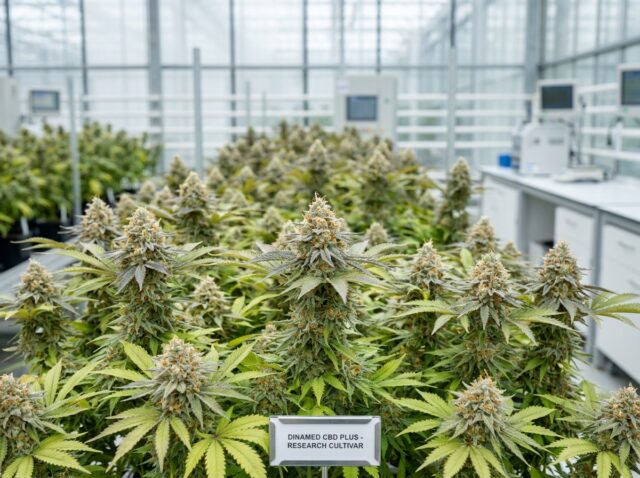
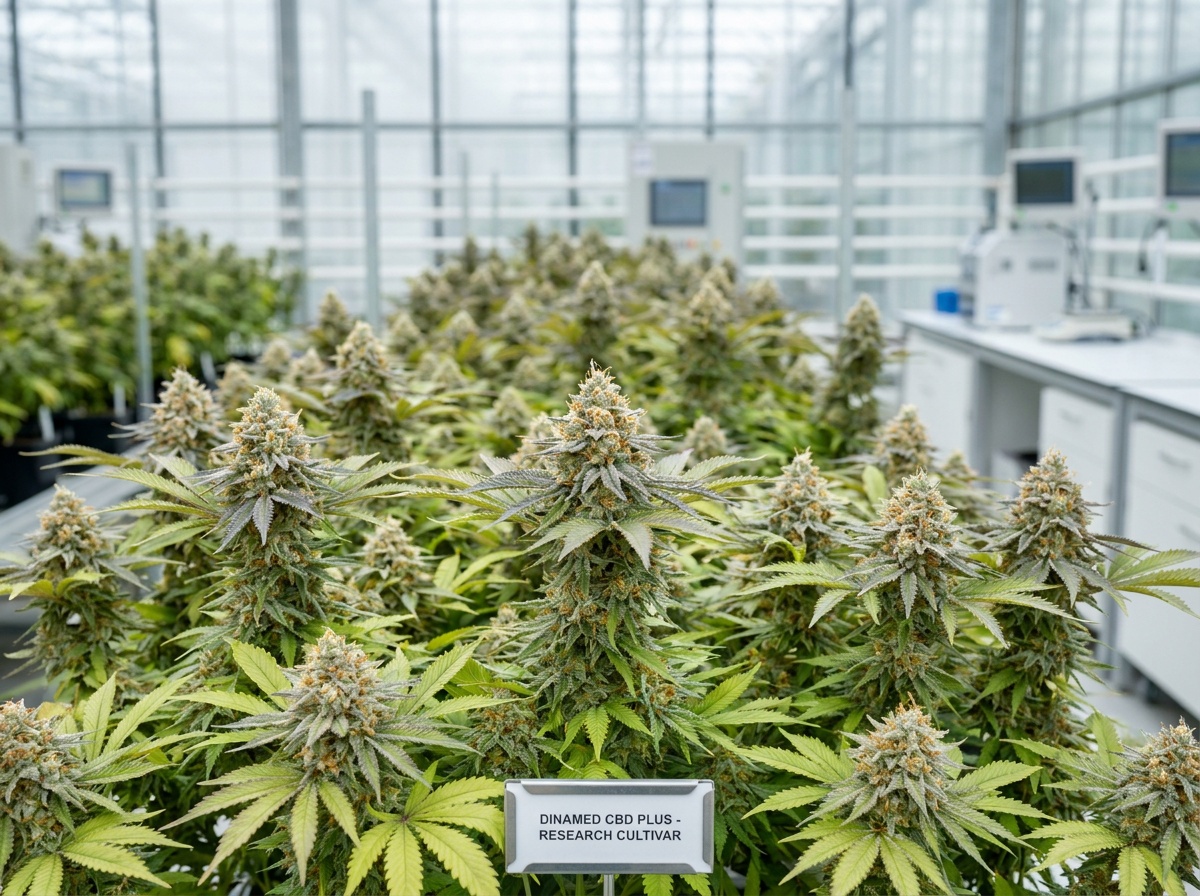
Taxonomically, Dinamed CBD Plus exhibits a sativa-dominant botanical habit (roughly 60% Cannabis sativa subsp. sativa and 40% Cannabis sativa subsp. indica), manifested through an open, highly branched structure, slender spear-shaped fan leaves, and remarkable internodal spacing that facilitates superior photosynthetic penetration and airflow. Unlike many industrial fiber hemp varieties that synthesize high levels of CBD but suffer from woody floral biomass, meager terpene production, and low overall glandular trichome density, Dinamed CBD Plus was bred exclusively from drug-type medical cannabis germplasm. This heritage ensures that the cultivar develops massive, resinous floral structures, profound capitate-stalked trichome coverage, and a lavish aromatic bouquet dominated by beta-myrcene, alpha-pinene, and d-limonene. As modern clinical neurology, epileptology, and rheumatology increasingly mandate high-dose cannabidiol protocols uncompromised by cognitive intoxication, Dinamed CBD Plus serves as an essential biological benchmark for standardizing full-spectrum botanical extracts, vaporized inhalation therapies, and sublingual formulations.
| Botanical & Taxonomic Parameter | Scientific Classification & Phenotypic Value |
|---|---|
| Scientific Botanical Name | Cannabis sativa L. (Type III Chemovar / High-CBD Sativa-Dominant Hybrid) |
| Breeding Foundation & Seed Bank | Dinafem Seeds (San Sebastián, Basque Country, Spain / Released circa 2018) |
| Genetic Pedigree | Dinamed CBD Lineage Elite Selection x Dinamed CBD Lineage (S1 / Filial Refinement) |
| Chemotypic Classification | Type III Cannabis (CBD-dominant, strictly sub-psychoactive THC:CBD < 0.03) |
| Total Cannabinoid Potential | 18.5% – 22.5% Total Active Cannabinoids by Dry Floral Mass |
| Standard Photoperiod Response | Strict Short-Day Obligate Photoperiodic Flowering (12/12 induction) |
| Indoor Flowering Duration | 55 to 63 Days (8.0 to 9.0 Weeks) from floral initiation |
| Outdoor Harvest Window | Late September to Early October (Northern Latitudes 35°N – 48°N) |
| Structural Biomass Yield Potential | Indoor: 450–550 g/m² | Outdoor: 800–1000 g/plant (living organic soil beds) |
| Primary Terpene Expression | Beta-Myrcene, Alpha-Pinene, Beta-Pinene, d-Limonene, Beta-Caryophyllene |
2. Genetic Pedigree & Breeding History
The creation of Dinamed CBD Plus represents a pivotal chapter in European cannabinoid science, emerging directly from the intensive laboratory breeding programs spearheaded by Dinafem Seeds in Spain during the mid-2010s. For decades, Western commercial cannabis cultivation had been driven almost exclusively by market demand for ever-increasing psychoactive potency, resulting in the near-total extinction of active cannabidiol synthase alleles across recreational polyhybrids. By 2010, the typical commercial cannabis strain possessed THC levels exceeding 20%, whereas CBD had plummeted to negligible trace levels below 0.1%. When preclinical research by Mechoulam, Zuardi, and Guimarães, along with clinical pediatric trials for Dravet and Lennox-Gastaut syndromes, catalyzed a global medical renaissance, breeders discovered that natural Type III cannabis plants with drug-type resin morphology were virtually nonexistent outside of a few rare heritage clones like Charlotte’s Web, Cannatonic, Harlequin, and Sour Tsunami.
Dinafem Seeds embarked on an ambitious multi-year breeding initiative known as the “Pure CBD Project.” Utilizing high-performance gas chromatography and mass spectrometry (GC/MS) coupled with high-pressure liquid chromatography (HPLC), the Dinafem scientific team screened hundreds of seed populations and heirloom selections to identify parental candidates possessing homozygous recessive alleles for tetrahydrocannabinolic acid synthase (THCAS) alongside fully functional, high-velocity cannabidiolic acid synthase (CBDAS) alleles. This rigorous screening culminated in the launch of Dinamed CBD in 2017—celebrated as Spain’s first 100% therapeutic feminized strain that consistently maintained THC beneath 1.0% while expressing 10% to 14% CBD with a bright, sweet orange-citrus terpene profile.
However, Dinafem’s geneticists recognized that medical patients requiring massive therapeutic dosages (often exceeding 100 mg to 300 mg of CBD daily for seizure mitigation or neuroinflammatory disorders) required even higher cannabinoid concentrations to reduce the volume of plant material or carrier oil ingested. Consequently, Dinafem initiated an elite self-pollination and filial selection program from the absolute highest-performing individuals within the original Dinamed CBD pool. By inbreeding an exceptional parental female known in breeding records as “Dinamed CBD Elite Clone #4″—a specimen that consistently registered 16% CBD and an extraordinary resin output—and subjecting hundreds of offspring to chemical phenotyping, the breeders isolated a remarkable lineage capable of consistently delivering between 16% and 20% CBD while locking THC firmly below 0.5%.
This stabilized filial generation was christened **Dinamed CBD Plus**. Beyond merely amplifying total cannabinoid output by roughly 30% over its predecessor, the breeders succeeded in refining the plant’s resin architecture. The floral bracts of Dinamed CBD Plus developed larger, more mechanically resilient glandular trichome heads, shorter stalk necks, and a profoundly enhanced resistance to mold and botrytis, establishing it as one of the most commercially viable and therapeutically potent Type III photoperiod cultivars ever stabilized in Europe.
3. Morphological Architecture & Glandular Phenotypes
In the vegetative and flowering canopy, Dinamed CBD Plus presents an exquisite hybrid morphology that reflects its 60% sativa dominance while exhibiting the compact nodal density and stout lateral branch strength typical of elite modern indica cultivars. During vegetative growth, the plant demonstrates vigorous apical dominance with rapid vascular development, producing slender, serrated fan leaves displaying an elegant emerald green hue. Internodal spacing is moderately wide (typically 4.5 to 7.0 centimeters), which serves as a vital structural defense against microclimate stagnation, ensuring optimal air movement throughout the lower interior canopy and significantly decreasing vulnerability to fungal pathogens such as powdery mildew (*Golovinomyces cichoracearum*).
Upon induction of the 12/12 photoperiod, Dinamed CBD Plus exhibits a moderate, highly manageable stretch, typically expanding to approximately 1.8 to 2.2 times its pre-flowering height. Stems and lateral branches develop robust lignified structures capable of supporting heavy floral biomass without the severe branch lodging frequently observed in pure tropical sativa landraces. By week four of flowering, floral clusters coalesce into elongated, conical colas that run continuously along the primary stems. The calyx-to-leaf ratio is exceptionally high for a high-CBD cultivar, greatly streamlining post-harvest hand manicuring and automated trimming operations.
One of the most striking morphological characteristics of Dinamed CBD Plus is its potential for anthocyanin expression during late senescence. When night temperatures are dropped by 4°C to 6°C during weeks seven through nine, the outer margins of the fan leaves and the bract tips undergo a dramatic pigmentary shift, transitioning from forest green to deep royal purple, lavender, and violet. This chromatic display creates a breathtaking visual contrast against the vibrant tangerine and deep copper stigmas that weave through the flower clusters.
Microscopically, the glandular trichome development of Dinamed CBD Plus is extraordinary. Whereas many high-CBD industrial hemp varieties exhibit predominantly sessile trichomes or sparse, fragile capitate-stalked trichomes with head diameters under 70 micrometers, Dinamed CBD Plus generates dense carpets of fully articulated capitate-stalked glandular trichomes with head diameters regularly measuring between 90 and 115 micrometers. The secretory cells within these trichome heads remain packed with clear to milky resin throughout weeks six to eight, with optimal cannabinoid maturity occurring when approximately 85% to 90% of the gland heads turn fully milky-opaque with 5% to 10% turning pale amber. Because CBD oxidation kinetics differ slightly from THC (CBD degrades primarily into cannabielsoin [CBE] rather than cannabinol [CBN]), harvesting when trichomes are predominantly milky preserves peak cannabidiolic acid integrity and captures the complete volatile monoterpene fraction.
4. Complete Phytochemical Profile (Cannabinoids & Terpenes)
The chemical fingerprint of Dinamed CBD Plus represents a masterpiece of metabolic engineering, classified unequivocally as a classic Type III chemovar under the de Meijer chemotaxonomic framework. In Type III cannabis, the biochemical pathway that converts the central cannabinoid precursor cannabigerolic acid (CBGA) into tetrahydrocannabinolic acid (THCA) via THCA synthase is rendered almost completely inactive, while cannabidiolic acid synthase (CBDAS) exhibits maximum enzymatic velocity. In cured, laboratory-tested floral specimens of Dinamed CBD Plus cultivated under optimized organic conditions, total cannabidiol (CBD + CBDA) routinely registers between 16.0% and 20.2% by dry weight, with outstanding phenotypes occasionally reaching 21.5%.
Crucially for medical compliance and therapeutic safety, total delta-9-tetrahydrocannabinol (THC + THCA) consistently remains between 0.35% and 0.55%, never exceeding 0.70% even under high-intensity horticultural lighting. This yields a CBD:THC ratio typically spanning 30:1 to 45:1. Furthermore, Dinamed CBD Plus synthesizes notable secondary cannabinoid fractions, including cannabigerol (CBG: 0.4%–0.8%), cannabichromene (CBC: 0.2%–0.5%), and trace concentrations of cannabidivarin (CBDV: 0.1%–0.3%). This diverse minor cannabinoid array creates a robust full-spectrum synergy, augmenting therapeutic efficacy through what Mechoulam and Russo termed the “entourage effect.”
| Cannabinoid Analyte | Formula / Acid State | Typical Range (% Dry Weight) | Therapeutic Function & Mechanism |
|---|---|---|---|
| Cannabidiolic Acid (CBDA) | C₂₂H₃₀O₄ (Native raw acid) | 14.5% – 18.0% | Potent selective COX-2 inhibitor, 5-HT1A receptor agonist, anti-emetic. |
| Cannabidiol (Decarboxylated CBD) | C₂₁H₃₀O₂ (Active neutral) | 1.5% – 2.5% (post-cure) | Negative allosteric modulator of CB1, TRPV1 agonist, neuroprotective, anticonvulsant. |
| Tetrahydrocannabinolic Acid (THCA) | C₂₂H₃₀O₄ (Native raw acid) | 0.30% – 0.50% | Non-intoxicating immunomodulator, PPAR-gamma receptor agonist. |
| Δ⁹-Tetrahydrocannabinol (THC) | C₂₁H₃₀O₂ (Active neutral) | 0.05% – 0.15% | Trace presence; insufficient to elicit CB1-mediated psychoactive disorientation. |
| Cannabigerolic Acid (CBGA) | C₂₂H₃₂O₄ (Stem molecule) | 0.40% – 0.80% | Direct biosynthetic parent molecule; exhibits strong antibacterial and metabolic properties. |
| Cannabichromene (CBC) | C₂₁H₃₀O₂ (Neutral) | 0.20% – 0.50% | TRPA1 agonist, promotes adult neural stem progenitor cell viability, anti-inflammatory. |
| Cannabidivarin (CBDV) | C₁₉H₂₆O₂ (Propyl homologue) | 0.10% – 0.30% | Potent non-CB anticonvulsant through TRPV1/TRPV2 desensitization; Rett syndrome target. |
From a biosynthetic perspective, the metabolic commitment to cannabidiol production in Dinamed CBD Plus involves the coordinated upregulation of geranyl pyrophosphate (GPP) and olivetolic acid condensation via geranylpyrophosphate:olivetolate geranyltransferase (GOT). The resulting cannabigerolic acid (CBGA) pool serves as the common substrate for branching cannabinoid synthase enzymes. In wild-type or Type I recreational chemovars, THCA synthase demonstrates strong substrate competition, rapidly diverting CBGA toward delta-9-THCA. In Dinamed CBD Plus, genetic markers reveal complete non-expression or non-functional nonsense mutations in the THCA synthase loci, permitting CBDAS to convert upwards of 95% of available CBGA directly into CBDA. The minor concentrations of CBGA remaining unreacted (typically 0.4% to 0.8%) represent a valuable clinical asset, as CBGA has demonstrated independent biological activity as an agonist of peroxisome proliferator-activated receptors (PPARs) and as an inhibitor of viral entry glycoproteins in respiratory models.
The preservation of volatile monoterpenes in Dinamed CBD Plus is largely governed by post-harvest curing thermodynamics. While mono- and sesquiterpenes share lipid solubility with phytocannabinoids, their lower vapor pressures render them susceptible to evaporative degradation. For instance, beta-myrcene volatilizes rapidly above 25°C, while alpha-pinene exhibits substantial loss at elevated relative humidities during improper drying. By employing a cold, closed-loop dehydration and cure protocol at 15°C to 16°C, the retention of both alpha- and beta-pinene alongside limonene remains exceptionally high, ensuring that patients receive not merely an isolated cannabinoid delivery mechanism, but an authentic botanical medicine rich in synergistic secondary metabolites.
The volatile aromatic spectrum of Dinamed CBD Plus is equally impressive, offering an organic, sweet citrus-fruit profile characterized by sweet orange, ripe clementines, fresh pine resin, and soft herbal undertones. Total terpene content typically ranges between 1.8% and 2.8% of dry flower weight. Beta-myrcene acts as the primary dominant monoterpene (averaging 38% to 45% of the total terpene fraction), delivering sedative, muscle-relaxant, and blood-brain barrier permeability-enhancing properties. This is closely followed by alpha-pinene and beta-pinene (constituting roughly 22% of the terpene profile), which provide profound bronchodilatory actions while acting as natural acetylcholinesterase inhibitors, promoting mental clarity and respiratory ease. d-Limonene (accounting for 14% to 18%) infuses the signature sweet citrus top notes and delivers mood-elevating, anxiolytic, and gastroprotective benefits, while beta-caryophyllene contributes a subtle, spicy peppery base note that binds directly to peripheral CB2 receptors as a functional dietary cannabinoid.
| Terpene Fraction | Chemical Class | Typical Content (% / mg/g) | Aromatic Character & Physiological Synergy |
|---|---|---|---|
| Beta-Myrcene | Acyclic Monoterpene | 0.75% – 1.25% (7.5–12.5 mg/g) | Ripe mango, earthy hops; provides systemic musculoskeletal relaxation and analgesia. |
| Alpha-Pinene | Bicyclic Monoterpene | 0.35% – 0.55% (3.5–5.5 mg/g) | Crisp highland pine; bronchodilator, acetylcholinesterase inhibitor supporting alertness. |
| d-Limonene | Monocyclic Monoterpene | 0.28% – 0.45% (2.8–4.5 mg/g) | Sweet orange, tangerine zest; dopamine-enhancing, anxiolytic, gastric mucosal protective. |
| Beta-Caryophyllene | Bicyclic Sesquiterpene | 0.18% – 0.32% (1.8–3.2 mg/g) | Cracked black pepper, warm clove; selective peripheral CB2 agonist, powerful anti-inflammatory. |
| Beta-Pinene | Bicyclic Monoterpene | 0.10% – 0.18% (1.0–1.8 mg/g) | Fresh herbal basil, rosemary; synergistic with alpha-pinene in reducing airway resistance. |
| Alpha-Humulene | Monocyclic Sesquiterpene | 0.06% – 0.12% (0.6–1.2 mg/g) | Noble woody earthiness; works synergistically with caryophyllene to suppress NF-κB pathways. |
5. Pharmacological Action & Clinical Indications
The clinical pharmacology of Dinamed CBD Plus is governed by the multi-target molecular pharmacodynamics of high-concentration cannabidiol operating in combination with secondary cannabinoids and bioactive terpenes. Unlike THC, which acts as a direct partial agonist at cannabinoid Type 1 (CB1) receptors in the central nervous system to elicit psychotropic intoxication, cannabidiol operates as a negative allosteric modulator (NAM) of CB1 receptors. By binding to an allosteric site structurally distinct from the orthosteric binding pocket, CBD alters the receptor conformation, attenuating the receptor’s affinity for endogenous anandamide (AEA) and exogenous THC. This non-intoxicating mechanism ensures that Dinamed CBD Plus produces zero cognitive impairment, dizziness, or temporal disorientation, making it completely suitable for pediatric, geriatric, and professionally active adult populations.
In the domain of clinical epileptology, the high concentration of CBDA alongside neutral CBD in Dinamed CBD Plus presents intriguing therapeutic possibilities. Preclinical pharmacodynamic evaluations indicate that cannabidiolic acid (CBDA) exhibits an affinity for 5-HT1A serotonin receptors that is roughly one hundred times greater than neutral CBD. This hyper-affinity confers potent anti-hyperalgesic and anti-emetic actions at sub-milligram concentrations. In pediatric populations where hepatic metabolism may be stressed by concurrent anti-epileptic medications (such as clobazam, valproate, or topiramate), the incorporation of whole-plant extracts featuring both CBDA and CBD enables lower aggregate milligram dosing while sustaining equivalent or superior seizure suppression.
Furthermore, the interaction between cannabidiol and the cytochrome P450 enzyme complex warrants meticulous clinical oversight. Cannabidiol serves as a competitive inhibitor of CYP3A4 and CYP2C19 isoenzymes in the liver. When administering high therapeutic doses of Dinamed CBD Plus extracts concurrently with pharmaceuticals metabolized by these pathways, serum concentrations of active parent compounds and active metabolites (such as N-desmethylclobazam) may become elevated. Clinicians are therefore advised to monitor serum drug levels and initiate a systematic titration protocol, scheduling cannabinoid administrations at least two to three hours apart from conventional oral medications to minimize hepatic substrate competition.
Beyond the classical endocannabinoid receptors, the elevated CBD concentrations in Dinamed CBD Plus engage a wide spectrum of non-cannabinoid biological targets:
- Serotonin 5-HT1A Receptor Agonism: Cannabidiol directly stimulates 5-HT1A serotonergic receptors at physiological concentrations, generating rapid-onset anxiolytic, anti-depressant, and neuroprotective responses without inducing tachyphylaxis or withdrawal phenomena.
- TRPV1 De-sensitization & Pain Modulation: CBD acts as an agonist at transient receptor potential vanilloid 1 (TRPV1) cation channels. Prolonged engagement leads to rapid channel desensitization, conferring profound relief from neuropathic pain, thermal hyperalgesia, and peripheral inflammatory signaling.
- GPR55 Antagonism: By functioning as an antagonist at G-protein coupled receptor 55 (GPR55—sometimes referred to as the putative CB3 receptor), CBD inhibits intracellular calcium release, reducing neuronal hyperexcitability and inhibiting abnormal osteoclast-mediated bone reabsorption.
- Inhibition of Fatty Acid Amide Hydrolase (FAAH): Cannabidiol weakly inhibits FAAH while competitively displacing anandamide from cellular fatty acid binding proteins (FABPs). This elevates endogenous anandamide levels, restoring physiological endocannabinoid tone.
- Anti-Inflammatory Cytokine Suppression: High doses of CBD markedly suppress pro-inflammatory cytokine cascades (including TNF-alpha, IL-1beta, IL-6, and IFN-gamma) while upregulating anti-inflammatory IL-10 through the suppression of microglial activation and NF-κB transcription.
| Clinical Diagnostic Indication | Underlying Biomolecular Mechanism | Evidence Level & Clinical Application |
|---|---|---|
| Refractory Epileptic Encephalopathies (Dravet, Lennox-Gastaut) | GPR55 antagonism, TRPV1 desensitization, T-type calcium channel blockage reducing aberrant neuronal firing. | Class I Clinical Trial Evidence (FDA/EMA approved pure CBD benchmark; substantial seizure frequency reduction). |
| Generalized Anxiety & Panic Disorders (GAD, Social Anxiety) | Direct 5-HT1A serotonergic agonism in limbic and paralimbic cortical areas; amygdala dampening. | Double-blind human clinical trials demonstrating significant reduction in autonomic stress and public-speaking anxiety. |
| Autoimmune Inflammatory Arthropathies (Rheumatoid Arthritis, Lupus) | Suppression of TNF-alpha, IL-6, synovial fibroblast proliferation, and selective CB2-mediated immune modulation via caryophyllene. | Extensive preclinical and human observational data confirming reductions in morning stiffness and joint swelling. |
| Peripheral Neuropathy & Central Pain Syndromes | Modulation of spinal dorsal horn sensory processing, inhibition of microglial neuroinflammation, myrcene analgesia. | Significant clinical utility in diabetic neuropathy, chemotherapy-induced neuropathy, and post-herpetic neuralgia. |
| Neurodegenerative Mitigation (Parkinson’s, ALS, Huntington’s) | Potent antioxidant radical scavenging, mitochondrial protection, reduction of excitotoxic glutamate accumulation. | Demonstrated neuroprotective capacity in animal models and exploratory trials reducing dyskinesia and psychosis. |
6. Comprehensive Agronomic & Horticultural Guide
Soil ecology and rhizosphere dynamics exert a profound influence on the secondary metabolite expression of Dinamed CBD Plus. When cultivated in regenerative living organic soil (LOS) amended with mycorrhizal fungi (*Rhizophagus irregularis*), beneficial rhizobacteria (*Bacillus subtilis*, *Pseudomonas putida*), and humic substances, plants demonstrate a marked upregulation of secondary metabolite defense pathways. The symbiosis between arbuscular mycorrhizae and the root cortex enhances phosphorus and micronutrient bioavailability, particularly chelated iron, zinc, and manganese, which serve as essential co-factors in terpene synthase and polyketide synthase enzyme kinetics. Living organic systems routinely produce floral biomass with 15% to 25% higher total terpene concentrations compared to synthetic salt-based hydroponic media.
Irrigation strategy is another critical agronomic lever. During the final 14 days before harvest, instituting a controlled dry-down protocol—allowing substrate moisture tension to rise to -40 to -50 kPa before gentle rehydration—triggers an adaptive osmotic stress response in the plant. This mild environmental cue stimulates the glandular trichome head cells to synthesize additional protective resin and secondary metabolites as a biological barrier against dehydration and ultraviolet radiation, elevating final cannabinoid and terpene percentages without sacrificing floral biomass integrity.
Cultivating Dinamed CBD Plus requires specialized horticultural practices tailored specifically to maximize cannabinoid synthesis in resinous Type III drug-type plants while rigorously managing photoperiod timing and environmental parameters. While industrial hemp cultivars are frequently sown broadcast in outdoor agricultural fields with minimal nutrient inputs, Dinamed CBD Plus is a high-value medical cultivar designed to thrive in precision-controlled indoor environments, modern research glasshouses, and living organic soil beds under organic certification standards.
Vegetative Stage Management & Canopy Architecture
During vegetative growth, Dinamed CBD Plus prefers a root-zone temperature maintained between 21°C and 24°C, with ambient canopy temperatures of 25°C to 27°C during photoperiod hours and 20°C to 22°C during dark periods. Relative humidity (RH) should be calibrated between 60% and 70% to sustain a target Vapor Pressure Deficit (VPD) of 0.8 to 1.1 kPa. Because of its vigorous lateral branching habit, Dinamed CBD Plus responds exceptionally well to low-stress training (LST) and the Screen of Green (SCROG) method. Early apical topping above the 4th or 5th node at roughly day 18 of vegetative development redirects auxins to secondary lateral shoots, establishing a broad, multi-topped horizontal canopy that prevents vertical crowding and ensures uniform photon flux across all flowering sites.
Flowering Cycle & Environmental Transition
The photoperiod transition to a 12/12 schedule initiates rapid floral induction, with preliminary pre-flowers and pistil clusters emerging within 7 to 9 days. During the early flowering stretch (weeks 1 to 3), light intensity should be incrementally escalated from 550 to 800 µmol/m²/s Photosynthetic Photon Flux Density (PPFD). As plants transition into peak floral swelling (weeks 4 to 7), PPFD can be pushed to 950–1050 µmol/m²/s under supplemental CO₂ enrichment maintained at 1,000 to 1,200 ppm. Relative humidity must be progressively lowered: maintain 50% to 55% during mid-flower (VPD 1.2–1.4 kPa), and drop to 40% to 45% during the final three weeks (VPD 1.4–1.6 kPa) to induce resin thickening and completely inhibit botrytis development within the dense, resinous floral colas.
| Cultivation Phase | Duration | Temperature & RH | VPD & PPFD Target | Nutrient EC / pH Regimen |
|---|---|---|---|---|
| Seedling / Early Clone | 10–14 Days | 24°C–26°C | 70%–75% RH | 0.6–0.8 kPa | 200–300 PPFD | EC 0.8–1.0 mS/cm | pH 6.2–6.5 (soil) / 5.8 (hydro) |
| Active Vegetative Growth | 21–28 Days | 25°C–27°C | 60%–65% RH | 0.9–1.1 kPa | 450–650 PPFD | EC 1.3–1.6 mS/cm | High N, Moderate P, High K |
| Early Flower (Stretch) | Weeks 1–3 | 24°C–26°C | 55%–60% RH | 1.1–1.3 kPa | 650–850 PPFD | EC 1.6–1.8 mS/cm | Balanced N-P-K, Calcium & Magnesium boost |
| Mid Flower (Bulk Resin) | Weeks 4–7 | 23°C–25°C | 48%–52% RH | 1.3–1.5 kPa | 850–1050 PPFD | EC 1.8–2.1 mS/cm | Low N, Elevated P & K, Sulfur for terpenes |
| Late Senescence & Flush | Weeks 8–9 | 20°C–22°C (night 16°C) | 40%–45% RH | 1.5–1.7 kPa | 600–750 PPFD | EC 0.3–0.6 mS/cm | Pure reverse osmosis organic root flush |
Post-Harvest Drying, Curing & Terpene Stabilization
Harvesting Dinamed CBD Plus should be conducted during the early photoperiod hours when volatile monoterpene levels are at their physiological peak. Stems are whole-plant hung in a specialized environmental curing room maintained at strict 60/60 parameters: 60°F (15.5°C) ambient temperature and 60% relative humidity, accompanied by gentle, indirect air circulation. The slow drying phase must extend between 12 and 16 days until smaller lateral branches snap cleanly rather than bend.
Following precise hand trimming, flowers undergo anaerobic glass jar or airtight food-grade curing at 18°C and 58% to 62% internal moisture content for a minimum of 28 to 45 days. The containers are “burped” daily for 15 minutes during the initial two weeks, gradually transitioning to weekly checks. This prolonged curing window permits the enzymatic breakdown of residual chlorophyll, starches, and nitrates while allowing the complex ester and terpene matrix (specifically the myrcene-pinene-limonene triad) to mature into an extraordinarily smooth, sweet citrus smoke and vapor.
7. Comparative Strain Analysis & Chemotypic Analogues
To contextualize Dinamed CBD Plus within the global continuum of therapeutic cannabis cultivars, it is illuminating to evaluate how its chemotypic and agronomic profile compares to other prominent Type III high-CBD reference strains:
- Dinamed CBD (Parent Predecessor): While the original Dinamed CBD clone was revolutionary for its clean sweet-orange terpene profile and 10%–14% CBD content, Dinamed CBD Plus elevates total active cannabinoid concentration by an average of 30% (reaching 16%–20% CBD) while demonstrating tighter calyx structure and superior trichome density. For commercial extraction facilities and patients requiring concentrated doses, Dinamed CBD Plus delivers significantly higher extraction yields per kilogram of dry biomass.
- Harle-Tsu (Northern California Benchmark): Bred by Southern Humboldt Seeds by crossing Harlequin with Sour Tsunami, Harle-Tsu is renowned for its high CBD expression (18%–22%) and exceptional myrcene/terpinolene ratios. However, Harle-Tsu exhibits a wider phenotypic variance in seed form, occasionally throwing 1:1 or 10:1 phenotypes, whereas Dinamed CBD Plus has been extensively stabilized through filial inbreeding to guarantee strict Type III uniformity (>30:1 CBD:THC) across virtually 100% of seed populations.
- Valentine X (High-CBD Sour Tsunami Selection): Named in honor of St. Valentine, Valentine X is a 25:1 CBD:THC variant of Sour Tsunami that excels in pediatric seizure disorders. Valentine X displays an earthy, musky pine terpene profile dominated by pinene and myrcene with an indica-leaning structural habit. In contrast, Dinamed CBD Plus provides a noticeably brighter, sweeter citrus-fruit flavor profile with a more vigorous, open sativa-hybrid canopy structure that offers superior mold resistance in humid glasshouse environments.
- Charlotte’s Web (Historic Hemp Pioneer): The legendary Colorado cultivar that galvanized national CBD legislation represents an industrial hemp x drug-type cross. While highly therapeutic, Charlotte’s Web often retains an earthy, grassy, and slightly astringent herbal flavor profile with relatively loose floral morphology. Dinamed CBD Plus represents a much more refined drug-type flower possessing tight calyxes, intense sugar-frosting, and an appealing dessert-citrus olfactory bouquet that makes it vastly superior for dry flower inhalation and premium organic craft processing.
8. Patient Consumption Guidance & Dosing Strategies
Because Dinamed CBD Plus synthesizes virtually no intoxicating delta-9-THC, its administration profile is exceptionally broad and forgiving, allowing patients to achieve profound therapeutic symptom relief without the risk of dysphoria, anxiety, tachycardia, or functional sedation. However, maximizing therapeutic outcomes requires an informed, methodical approach to administration routes, dosing titrations, and timing.
Inhalation via Convection Vaporization
For rapid relief of acute symptoms—such as panic attacks, muscular spasms, sudden inflammatory flares, or breakthrough neuropathic pain—convection dry flower vaporization provides the most efficient pharmacokinetics. Bioavailability via pulmonary inhalation ranges from 30% to 50%, with therapeutic blood plasma levels reached within 2 to 5 minutes.
To preserve the delicate terpene spectrum while releasing the complete cannabinoid fraction, temperature-stepped vaporization is strongly recommended:
- Low Temperature (160°C – 175°C / 320°F – 347°F): Volatilizes alpha-pinene (b.p. 156°C), beta-myrcene (b.p. 168°C), and d-limonene (b.p. 176°C) while initiating early CBD release. This range delivers maximum citrus flavor, mental clarity, bronchodilation, and anxiety reduction with zero throat harshness.
- Medium Temperature (180°C – 195°C / 356°F – 383°F): Mobilizes peak cannabidiol (CBD boiling point ~180°C) and beta-caryophyllene (b.p. 130°C–140°C). This tier delivers deep somatic musculoskeletal relaxation, anti-inflammatory action, and systemic tension relief.
- High Temperature (200°C – 210°C / 392°F – 410°F): Captures trace higher-boiling phytocannabinoids (including CBC and trace THCA conversion) for potent nighttime pain mitigation and deep physical ease.
Oral Lipid Formulations & Sublingual Tinctures
For chronic, systemic conditions such as autoimmune disease, Crohn’s disease, generalized anxiety disorder, and epilepsy, oral ingestion of full-spectrum lipid extracts (prepared in organic MCT oil, cold-pressed hemp seed oil, or extra virgin olive oil) provides extended pharmacological duration. While oral bioavailability is lower (6% to 15%) due to hepatic first-pass metabolism, the therapeutic effects persist for 6 to 10 hours, creating stable, around-the-clock endocannabinoid modulation.
Patients should adhere to the clinical principle of “start low and titrate slowly.” Initial dosing typically commences at 15 mg to 25 mg of active CBD twice daily with meals containing healthy dietary lipids (which enhances cannabinoid absorption three- to five-fold). If well tolerated after 4 to 5 days, the dose can be escalated in increments of 10 mg to 15 mg per day until the optimal therapeutic window is identified. For severe pediatric epileptic conditions under clinical supervision, weight-based titrations often range between 5 mg/kg/day and 20 mg/kg/day of pure CBD, divided into two daily administrations.