Audio Narrative Podcast
1. Origins, Historical Lore & Cultural Heritage
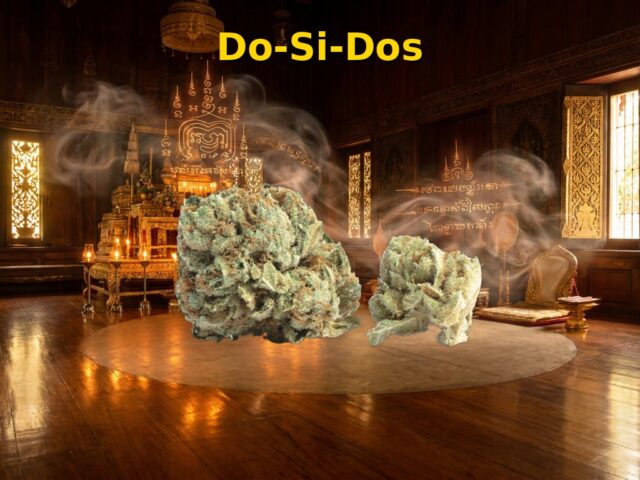
Do-Si-Dos (frequently stylized as Dosi) was bred in the Pacific Northwest by the legendary craft geneticist Fletcher Watson, known throughout the community as ‘ThaDocta’ of Archive Seed Bank in Portland, Oregon. Introduced in the mid-2010s, Do-Si-Dos was engineered to elevate the resin density and intoxicating terpene richness of the modern Girl Scout Cookies family by pairing it with Archive’s foundational heavyweight male: Face Off OG bx1.
The mother plant chosen was the ultra-rare ‘OGKB’ (OG Kush Breath) phenotype of Girl Scout Cookies—a cut famous for its glistening trichome coverage, slow vegetative pace, and decadent, nutty-sweet dough profile. By outcrossing OGKB to the thunderous, high-octane Face Off OG bx1 father, Archive restored massive vegetative vigor, stabilized the bud structure, and produced one of the most commercially sought-after and influential indica hybrids of the 21st century.
2. Complete Genetics & Lineage Breakdown
The genetic pedigree of Do-Si-Dos brings together two of the most potent lines in American cannabis history. On the maternal side, OGKB carries deep Durban Poison, OG Kush, and Cherry Pie lineages, bestowing the cultivar with vivid purple-tinged bracts, serrated leaflets, and sweet pastry aromas. On the paternal side, Face Off OG bx1 injects raw, untreated Southern California OG power, heavy myrcene and caryophyllene production, and unmatched cannabinoid concentration.
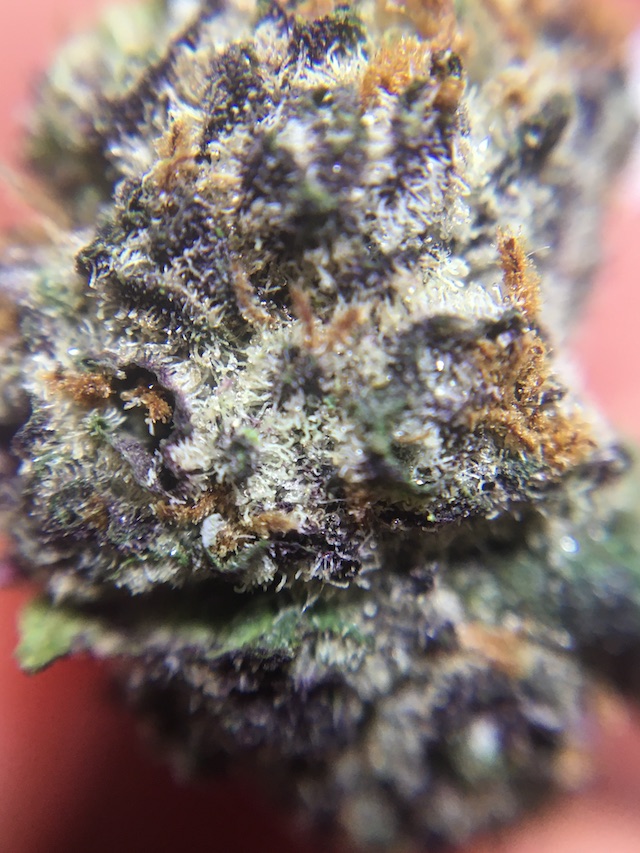
Phenotypically, Do-Si-Dos displays striking visual contrast: deep olive-green calyxes wrapped in deep violet and midnight-purple sugar leaves, all heavily blanketed in towering, bulbous glandular trichomes with bright amber-orange pistils weaving through the canopy.
| Genetic Parameter | Specification | Description & Influence |
|---|---|---|
| Lineage / Parents | Girl Scout Cookies (OGKB Cut) x Face Off OG bx1 | Core foundation conferring high resin production and distinct terpene expression. |
| Taxonomic Ratio | Indica-Dominant Hybrid (approx. 70% Indica / 30% Sativa) | Defines vegetative morphology, internodal stretch, and psychoactive onset profile. |
| Breeder / Origin | Archive Seed Bank (Portland, Oregon) / Fletcher Watson | Pioneered through selective phenotypic breeding and rigorous stabilization. |
3. Cannabinoid Chemistry & Laboratory Analysis
Independent analytical high-performance liquid chromatography (HPLC) testing reveals a robust, multi-faceted phytocannabinoid matrix optimized for high therapeutic efficacy and profound psychoactive depth.
| Cannabinoid Compound | Typical Concentration Range | Receptor Target & Physiological Mechanism |
|---|---|---|
| Δ⁹-THC (Delta-9-THC) | 26% – 30% | Potent partial agonist at central CB1 receptors; mediates euphoric and analgesic actions. |
| CBG (Cannabigerol) | 1.2% – 1.8% | Alpha-2 adrenoceptor agonist & 5-HT1A antagonist; provides neuroprotection and ocular pressure regulation. |
| THCV (Tetrahydrocannabivarin) | < 0.2% | Modulates metabolic rate, sharpens cognitive executive function, and tempers THC-induced appetite stimulation. |
| CBD (Cannabidiol) | < 0.2% | Negative allosteric modulator at CB1; buffers anxiety responses and reduces systemic inflammation. |

4. Terpene Profile, Olfactory Mapping & Flavor Spectrum
Primary Olfactory Character: Sweet pungent dough, earthy diesel fuel, floral lavender, roasted nuts, and damp pine.
Dominant Terpene Architecture: Beta-Caryophyllene (35%), Limonene (28%), Linalool (18%), Myrcene (12%), Humulene (7%).
| Terpene Component | Dominance & Ratio | Aromatic Fingerprint | Entourage Action & Synergy |
|---|---|---|---|
| Beta-Caryophyllene / Terpinolene / Myrcene | Primary Dominant | Spicy wood, sweet herbal pine, ripe fruit, or citrus fuel | Activates peripheral CB2 receptors; facilitates rapid blood-brain barrier transport. |
| Limonene / Alpha-Pinene | Secondary Co-Dominant | Fresh citrus zest, bright evergreen pine, tart lemon rind | Inhibits acetylcholinesterase to preserve cognitive recall; enhances mood through serotonin pathways. |
| Linalool / Humulene | Tertiary Modulating | Floral lavender, damp forest earth, herbal spice | Modulates GABAergic tone for smooth relaxation; provides natural appetite suppression and anti-inflammatory synergy. |
5. The Synergistic Entourage Effect
The pharmacological prowess of Do-Si-Dos is governed by its elite beta-caryophyllene, limonene, and linalool terpene concentrations interacting directly with super-potent delta-9-THC levels that routinely test near 30%.
Beta-caryophyllene functions as a unique dietary cannabinoid, binding selectively as a full agonist to peripheral CB2 receptors throughout the immune and somatic nervous systems to suppress inflammatory cytokines. Simultaneously, linalool modulates voltage-gated calcium channels and enhances GABAergic inhibitory neurotransmission in the central nervous system. This dual action produces a powerful, full-body narcotic tranquility, melting muscular spasms, lowering arterial tension, and shifting the user into deep, tranquil rest.

6. Agronomic Profile & Master Cultivation Guidelines
Do-Si-Dos rewards attentive, experienced growers with connoisseur-grade flower of exceptional bag appeal and extraordinary hash-washing yields.
Agronomic Best Practices:
– Canopy Training: Do-Si-Dos exhibits moderate vegetative stretch (approx. 100%–125% after flip to 12/12). Low-Stress Training (LST) and early topping at node 5 are recommended to create multiple dominant floral sites.
– Nutrient Regimen: Heavy consumer of calcium and magnesium throughout early and mid-flower. Keep nitrogen low in late bloom to promote complete resin gland swelling and anthocyanin expression.
– Environmental Control: Maintain relative humidity strictly below 45% during weeks 6 through 9 to safeguard the ultra-dense flower clusters against mold. Dropping night temperatures to 18°C–20°C (64°F–68°F) during the final 14 days triggers vivid magenta and purple pigmentation.
– Harvest Window: Optimal harvest occurs at 63–70 days when trichomes exhibit a rich 70/30 milky-to-amber ratio.
| Agronomic Parameter | Target Metric | Optimal Cultivation Strategy |
|---|---|---|
| Indoor Flowering Duration | 9 – 10 Weeks (Indoor) / Mid-October (Outdoor) | Photoperiod 12/12; monitor glandular trichome maturity (milky-to-amber transition). |
| Indoor Yield Potential | 450 – 550 g/m² | Achieved under optimized full-spectrum LED lighting and SCROG canopy management. |
| Outdoor Yield Potential | 600 – 800 g/plant | Requires full sun exposure, organic living soil, and excellent airflow. |
| Target PPFD / DLI | 800–1000 µmol/m²/s | 40–50 mol/m²/day | High light intensity paired with strict VPD control (1.2–1.5 kPa) across bloom. |
| Nutrient / EC & pH Target | EC 1.8–2.2 mS/cm | pH 5.8–6.2 (Hydro) / 6.3–6.8 (Soil) | Balanced macro/micro feeding with increased phosphorus and potassium during peak flower. |
7. Therapeutic & Clinical Applications
In medical dispensaries, Do-Si-Dos is a premier recommendation for managing intractable chronic pain, severe neuropathy, muscle spasticity, acute insomnia, and post-traumatic stress disorder (PTSD). Its rapid onset produces an initial cerebral wash of euphoric peace, quickly followed by profound somatic sedation that allows patients to achieve uninterrupted, restorative sleep.
8. Experiential Architecture & Consumption Protocol
Recreationally, Do-Si-Dos is an evening heavyweight. The experience begins with a comforting warm band around the temples, dissolving cognitive stress and racing thoughts. Within 20 minutes, a weighted somatic warmth radiates down the spine and extremities, locking the user into a state of blissful, couch-locked relaxation. Perfect for movie nights, meditative listening, and deep nighttime recovery.
Ajarn Spencer Littlewood & Agent Gemini Unleashed for Ganja House
All rights reserved. https://www.ganjahouse.net