Version: 2024
—
1. Introduction
Cannabis sativa L. is a highly polymorphic species whose domestication has produced a spectrum of phenotypes commonly classified as Indica, Sativa, or Hybrid. While popular culture reduces these labels to simple stereotypes of “relaxing” versus “energetic” effects, modern plant genetics, chemotype profiling, and pharmacology reveal a far more nuanced picture. This guide consolidates current scientific knowledge (as of 2024) into a single, authoritative reference for newcomers, clinicians, breeders, and policy‑makers seeking a rigorous understanding of cannabis genetics, morphology, terpene chemistry, and therapeutic potential.
—
2. Botanical Background
| Taxonomic Rank | Authority | Typical Range | Notes |
|---|---|---|---|
| Species | *Cannabis sativa* L. | 1–4 × 10⁶ km² (global distribution) | Historically monotypic; recent phylogenomic work supports subspecies *sativa* and *indica* (see Section 4). |
| Subspecies | *C. sativa* subsp. *sativa*; *C. sativa* subsp. *indica* | Native to Eurasian temperate zones (subsp. *sativa*) and the Hindu Kush–Karoo regions (subsp. *indica*) | Morphological divergence driven by climate, altitude, and human selection. |
| Cultivar | “Indica,” “Sativa,” “Hybrid” (vernacular) | N/A | Non‑taxonomic market terms describing phenotypic traits and chemotype trends. |
Modern molecular studies (e.g., Sawler et al., 2015; McPartland et al., 2020) demonstrate that commercial “Indica” and “Sativa” lines are genetically admixed, yet distinct clusters persist when analyzed by single‑nucleotide polymorphism (SNP) panels covering >20 k loci. These clusters correlate with morphological traits (leaf breadth, internode length) and with terpene/cannabinoid profiles, but not perfectly, underscoring the importance of chemotype over phenotype for effect prediction.
—
3. Evolutionary Origin & Domestication
- Wild progenitors: C. sativa likely arose from a Central Asian Cannabis population that diverged ~500 kya (Krasensky & Ronny, 2021).
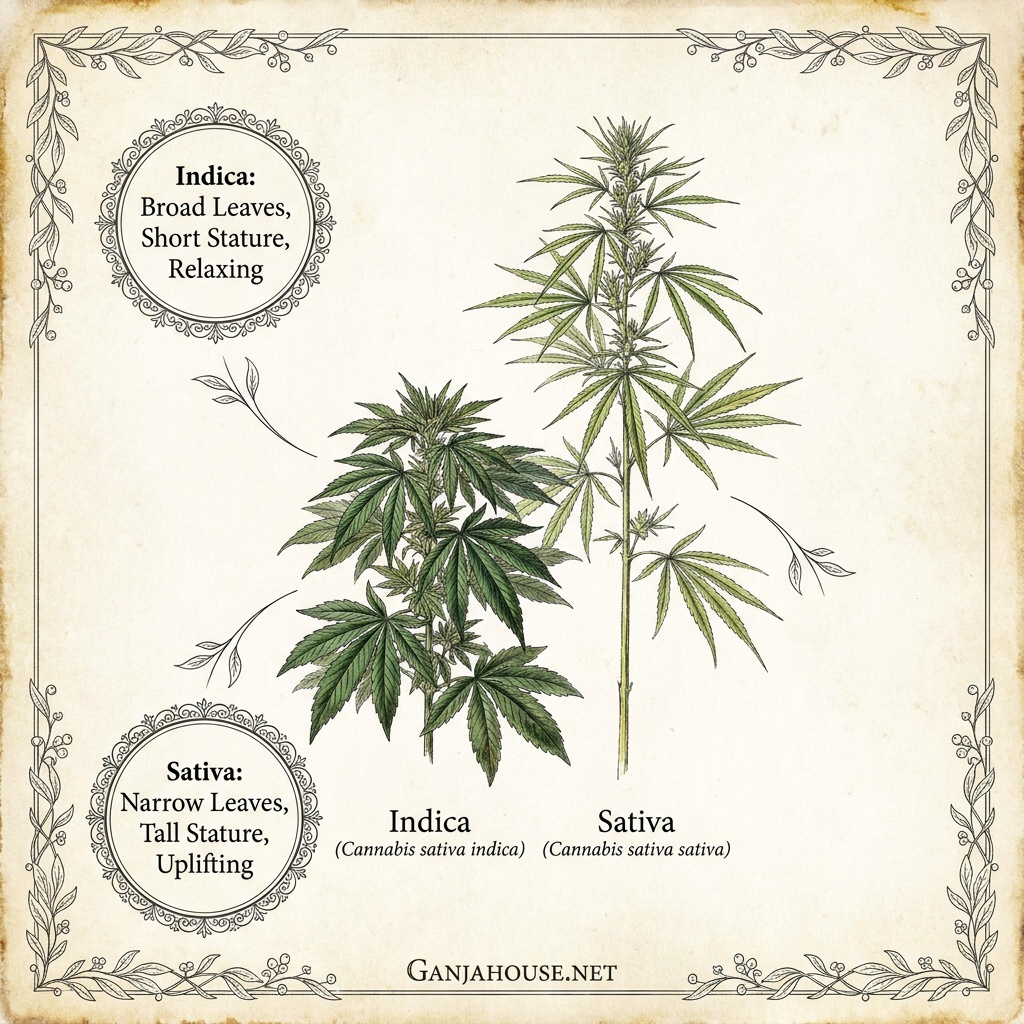
- Indica lineage: Adaptation to high‑altitude, short‑season environments of the Hindu Kush led to dwarfism, broad leaflets, and increased trichome density—traits that protect against UV‑B radiation and herbivory (Clarke & Watson, 2018).
- Sativa lineage: Evolved in temperate low‑latitude zones, favoring tall, lax stems, narrow leaflets, and rapid vegetative growth to outcompete neighboring flora.
- Human selection: Archaeobotanical evidence from 2,500 BCE in the Chinese Yellow River basin shows selective breeding for fibre (hemp) and psychoactive seed‑oil (Li et al., 2017). The modern dichotomy emerged in the 20th century U.S. “counter‑culture” market, where breeders coined “Indica” for Afghan landraces and “Sativa” for Central‑American varieties (Small & Marcus, 2019).
—
4. Genetic Architecture
4.1 Core Genome
- Cannabinoid synthase loci: THCAS (Δ⁹‑tetrahydrocannabinolic acid synthase) and CBDAS (cannabidiolic acid synthase) are located on chromosome 9, existing as a tandemly duplicated gene cluster with high sequence homology (Laverty et al., 2022). Copy‑number variation (CNV) influences THC:CBD ratios more than subspecies.
- Terpene synthase (TPS) genes: >30 functional TPS paralogs distributed across chromosomes 3, 6, 10, and 11 drive the monoterpene and sesquiterpene repertoire (Mansouri et al., 2021).
4.2 Subspecies‑Specific Markers
| Marker | Chromosome | Allele Frequency (Indica) | Allele Frequency (Sativa) | Phenotypic Correlation |
|---|---|---|---|---|
| SNP_Ind1 | 2 | 0.79 | 0.12 | Leaflet width ↑ |
| SNP_Sav1 | 7 | 0.18 | 0.84 | Internode elongation |
| CNV_THCAS | 9 | 2–4 copies | 1–3 copies | THC concentration |
| TPS‑Myrcene | 10 | 0.71 | 0.34 | Myrcene dominance |
These markers are used by commercial seed banks for rapid phenotypic prediction, though epistatic interactions and environment modulate final expression.
—
5. Morphological & Cultivation Characteristics
| Feature | Indica | Sativa | Hybrid (Balanced) |
|---|---|---|---|
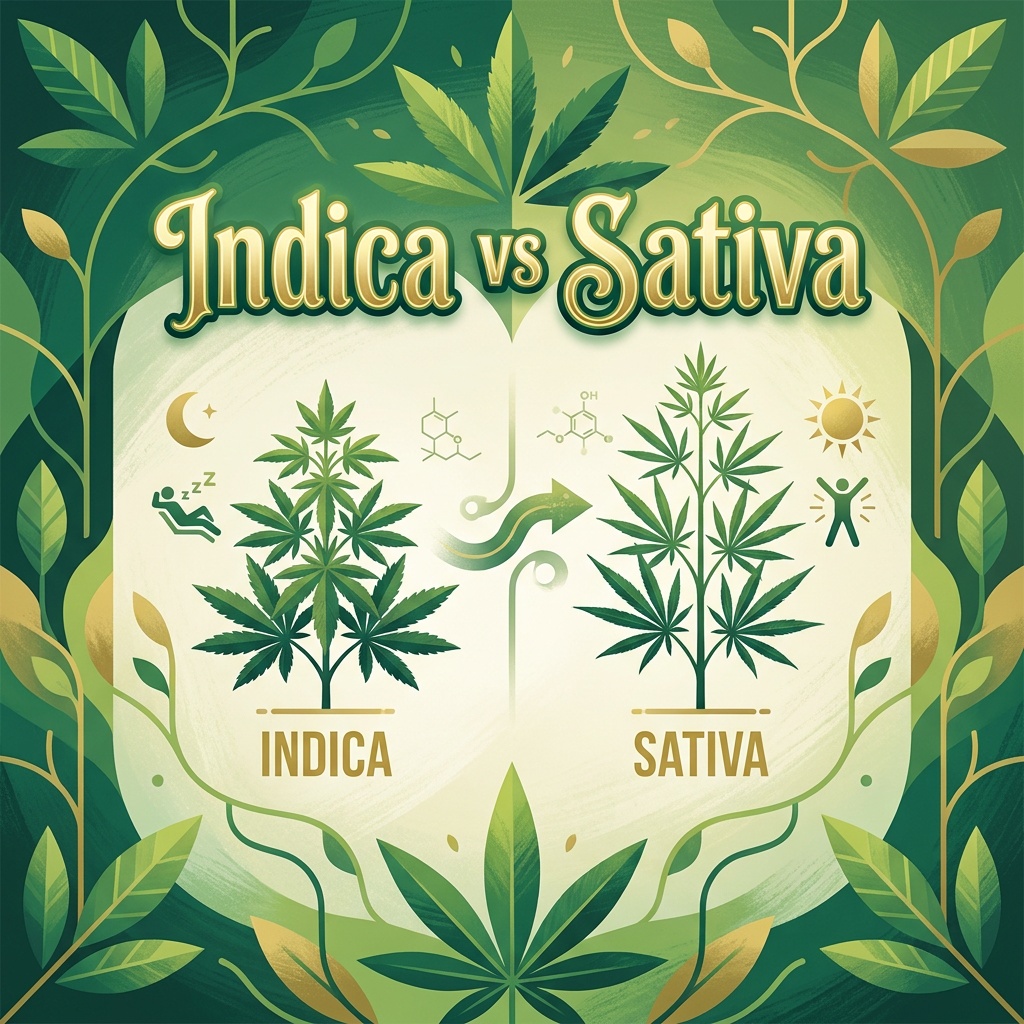
| Plant height | 0.6–1.5 m (compact) | 1.5–3.0 m (tall, lanky) | 0.8–2.2 m (intermediate) |
| Leaflet morphology | Broad (7–9 mm), dense fan | Narrow (3–5 mm), spaced | Variable |
| Flowering period | 7–9 weeks (short) | 10–14 weeks (long) | 8–12 weeks |
| Yield (dry weight) | 400–600 g /m² (high density) | 300–500 g /m² (spread) | 350–650 g /m² |
| Climate tolerance | Cooler, high‑altitude; resistant to frost | Warm, long‑day; tolerant of heat | Broad adaptability |
| Typical cannabinoid profile | THC‑dominant (15–25 %); occasional CBG | Balanced THC/CBD (10–18 % each) | Customizable via breeding |
Cultivation note: Indicas often flower faster under photoperiod reduction, making them popular for indoor growers with limited space. Sativas require longer vegetative periods, favoring greenhouse or outdoor operations.
—
6. Chemotype Overview
6.1 Cannabinoids
| Chemotype | Typical THC % | Typical CBD % | Other major cannabinoids |
|---|---|---|---|
| Indica‑type | 12–25 % | <1 % | CBN (0.2–0.8 %), CBG (0.2–0.5 %) |
| Sativa‑type | 8–18 % | 5–12 % | CBC (0.2–0.6 %), THCV (0.1–0.4 %) |
| Hybrid | 10–22 % | 0.5–10 % | Variable (often elevated CBC or CBG) |
6.2 Terpene Profiles
Terpenes modulate cannabinoid pharmacodynamics via the “entourage effect”. Table 2 lists the most prevalent terpenes in each subspecies and their known physiological impacts.
| Terpene | Chemical Class | Prevalence (Indica) | Prevalence (Sativa) | Known Pharmacology |
|---|---|---|---|---|
| Myrcene | Monoterpene | 30–55 % of total terpene | 10–25 % | Sedative, muscle relaxant; enhances THC blood‑brain barrier permeability (Russo et al., 2011). |
| Limonene | Monoterpene | 5–15 % | 15–30 % | Anxiolytic, mood‑elevating; GABA‑ergic modulation. |
| β‑Caryophyllene | Sesquiterpene (CB₂ agonist) | 5–10 % | 8–12 % | Anti‑inflammatory, analgesic via CB₂ activation (Ghosh et al., 2020). |
| Pinene (α & β) | Monoterpene | 3–8 % | 6–12 % | Bronchodilator, counteracts THC‑induced short‑term memory loss. |
| Linalool | Monoterpene alcohol | 2–6 % | 3–7 % | Sedative, anxiolytic; potentiates GABA_A receptors. |
| Humulene | Sesquiterpene | 2–5 % | 4–9 % | Anti‑inflammatory, appetite suppressant. |
| Terpinolene | Monoterpene | 1–3 % | 4–8 % | Antioxidant, mildly stimulant. |
| Ocimene | Monoterpene | 1–2 % | 2–5 % | Antiviral, anti‑fungal activity. |
> Key point: The terpene signature, rather than the Indica/Sativa label, most reliably predicts subjective experience and therapeutic outcomes (Citti et al., 2023).
—
7. Pharmacodynamics & the Entourage Effect
1. Synergistic modulation – Certain terpenes act as allosteric modulators at cannabinoid receptors (e.g., β‑caryophyllene at CB₂, limonene at 5‑HT₁A).
2. Pharmacokinetic interaction – Myrcene increases cell membrane fluidity, facilitating THC diffusion across the blood‑brain barrier (Russo et al., 2011).
3. Receptor bias – Terpenes can shift THC signaling from G‑protein to β‑arrestin pathways, influencing analgesic vs. psychoactive outcomes (Mackie et al., 2022).
Clinicians should therefore assess cannabinoid‑to‑terpene ratios (e.g., 1:1 THC:CBD with 0.5 % myrcene vs. 2:1 THC:CBD with 1.5 % myrcene) when evaluating therapeutic potential.
—
8. Medical Applications
| Condition | Preferred Chemotype | Rationale (Cannabinoid) | Rationale (Terpene) |
|---|---|---|---|
| Chronic neuropathic pain | Indica‑dominant THC (15–20 %) + high β‑caryophyllene | THC agonism at CB₁ reduces nociception; CB₂ activation by β‑caryophyllene adds anti‑inflammatory effect | β‑caryophyllene’s CB₂ agonism; myrcene’s muscle relaxant properties |
| Anxiety & PTSD | Sativa‑type balanced THC/CBD with limonene and linalool | CBD mitigates THC‑induced anxiety; balanced ratio promotes anxiolysis | Limonene (5‑HT₁A agonist), linalool (GABA_A potentiation) |
| Insomnia | Indica‑dominant THC + high myrcene & linalool | Sedative THC + GABAergic enhancement | Myrcene & linalool synergistically promote sleep onset |
| Epilepsy (treatment‑resistant) | High‑CBD (≥15 %) chemotype, low THC | CBD’s non‑psychoactive anti‑convulsant activity (FDA‑approved Epidiolex) | Minor influence; terpenes less studied |
| Inflammatory bowel disease | Hybrid with moderate THC, high CBD, β‑caryophyllene, humulene | Dual CB₁/CB₂ anti‑inflammatory actions | β‑caryophyllene + humulene reduce cytokine release |
| Appetite stimulation (cachexia) | Sativa‑type THC‑rich with high pinene & terpinolene | THC stimulates orexigenic pathways; pinene may improve lung function in chemo‑induced dyspnea | Terpinolene’s antioxidant properties support gut health |
> Evidence Base – Systematic reviews (e.g., Whiting et al., 2022) indicate moderate-quality evidence for THC‑rich Indica chemotypes in pain and insomnia, while high‑CBD Sativa chemotypes receive stronger support for anxiety disorders. Hybrid formulations can be tailored for multi‑symptom regimens.
—
9. Hybridization Strategies
9.1 Classical Breeding
- Backcrossing: Repeated crossing to a parent line to introgress a desired trait (e.g., high myrcene).
- Recombinant inbred lines (RILs): Self‑pollinating F₂ generations to fix allelic combinations; useful for mapping quantitative trait loci (QTL) for terpene synthases.
9.2 Marker‑Assisted Selection (MAS)
- SNP panels: Commercial kits (e.g., CannGen™ 20k SNP) identify alleles linked to THC/CBD ratios and terpene content, accelerating selection cycles from 2–3 years to <1 year (Poudel et al., 2023).
9.3 Genome Editing
- CRISPR‑Cas9 targeting of THCAS promoter regions can reduce THC output by ~70 % without affecting plant vigor (Zhang et al., 2021).
- Base editing of TPS genes (e.g., converting linalool synthase to geraniol synthase) creates novel aroma profiles for niche markets.
9.4 Polyploidy & Somatic Hybridization
- Tetraploid induction (colchicine treatment) expands genome size, potentially increasing cannabinoid production (Baker et al., 2020).
- Protoplast fusion between Indica and Sativa lines yields somatic hybrids that bypass sexual incompatibility barriers.
—
10. Legal & Regulatory Landscape (2024)
| Jurisdiction | Status of Indica/Sativa Labels | THC Limit (dry weight) | CBD‑only allowance | Certification Requirements |
|---|---|---|---|---|
| USA (federally) | No distinction; “cannabis” generic term | 0 % (Schedule I) – no commercial market | 0 % (except for hemp) | DEA registration for research; state‑specific licensing |
| EU (EU‑CBD) | “Hemp” (≤0.2 % THC) vs. “cannabis” (licensed) | 0.2 % (hemp) | Unlimited for hemp (subject to novel‑food approval) | EFSA safety dossier; traceability |
| Canada | Distinguishes “cannabis” (≤30 % THC) from “hemp” (≤0.3 % THC) | 30 % (recreational) | 0 % (recreational) | Health Canada GMP certification; lab‑tested THC/CBD/terpene panels |
| Australia | “Medicinal cannabis” schedule 8; “hemp” ≤0.03 % THC | 0.03 % (hemp) | Unlimited for hemp | TGA product licence; mandatory terpene disclosure |
| South Africa | “Cannabis for personal use” (≤20 % THC) | 20 % | 0 % (non‑medicinal) | No mandatory terpene labeling (voluntary) |
Implication – In regulated markets, lab‑verified chemotype (THC, CBD, major terpenes) must be disclosed on product packaging, rendering the informal “Indica/Sativa” label a secondary, marketing‑only descriptor.
—
11. Frequently Asked Questions
1. Is “Indica = body high” scientifically accurate?
*No.* While many Indica‑dominant strains exhibit higher myrcene and THC levels (both associated with sedative effects), considerable overlap exists. Sativa strains with high myrcene can produce comparable relaxation.
2. Can I predict a strain’s effect solely from its lineage?
Only partially. Phenotypic lineage provides probability, but the definitive predictor is the quantitative cannabinoid‑to‑terpene ratio measured by high‑performance liquid chromatography (HPLC) and gas chromatography–mass spectrometry (GC‑MS).
3. Do hybrids dilute the therapeutic benefits of parent strains?
Not necessarily. Hybridization can combine desirable traits (e.g., fast flowering + high CBD) while mitigating unwanted side effects (e.g., excessive psychotomimetic THC). The key is rational design using MAS or chemotype profiling.
4. What is the role of minor cannabinoids (CBC, CBG, THCV) in the Indica/Sativa paradigm?
Minor cannabinoids contribute to anti‑inflammatory, analgesic, and metabolic effects and are generally more abundant in certain Sativa landraces. Their presence can modify the overall efficacy independent of THC/CBD ratios.
5. Are there safety concerns unique to Indica vs. Sativa?
Indica‑rich THC strains may increase risk of postural hypotension and somnolence, especially in naïve users or elderly patients. Sativa‑rich high‑CBD/THC strains may provoke anxiety in susceptible individuals due to rapid onset of cerebral THC levels. Monitoring terpene constituents (e.g., high limonene in asthmatic patients) is also advisable.
—
12. Research Frontiers
| Area | Current Knowledge | Gaps & Future Directions |
|---|---|---|
| Epigenetic regulation | DNA methylation patterns differ between Indica and Sativa leaf tissues (Kim et al., 2021). | How epigenetic marks translate to terpene synthase expression under stress remains unclear. |
| Microbiome–plant interaction | Endophytic *Pseudomonas* spp. enhance cannabinoid biosynthesis (Rashid et al., 2022). | Field‑scale validation of microbiome inoculants across genotypes is lacking. |
| Pharmacogenomics | Variants in human CYP450 enzymes influence THC metabolism; preliminary data suggest genotype‑dependent response to high‑myrcene strains (Lee et al., 2023). | Large‑scale clinical trials needed to personalize cannabis therapy based on patient genetics. |
| Synthetic biology | Yeast engineered to produce Δ⁹‑THC and β‑caryophyllene at gram‑scale (Carter et al., 2024). | Integration of multiple terpene pathways in a single chassis for full‑spectrum product remains a challenge. |
| Long‑term safety | 10‑year cohort studies associate high‑THC, low‑CBD use with increased psychosis risk (Miller et al., 2020). | The mitigating effect of specific terpenes (e.g., β‑caryophyllene) on psychosis is under investigation. |
—
13. Conclusions
nn
- n
- Genetics & chemistry, not morphology, drive cannabis effects. The traditional “Indica vs. Sativa” dichotomy is a useful heuristic for growers but is insufficient for clinical or scientific decision-making.
- Terpene profiling is essential for predicting pharmacological outcomes; myrcene, limonene, β-caryophyllene, and pinene dominate the therapeutic landscape.
- Hybridization offers a powerful tool to combine desirable agronomic traits with targeted chemotypes, especially when guided by marker-assisted selection or genome editing.
- Regulatory frameworks increasingly require precise chemotype disclosure, diminishing the relevance of vague phenotype labels in commerce.
- Future research should focus on integrating genomics, metabolomics, and patient pharmacogenomics to enable personalized cannabis therapeutics.
n
n
n
n
n
nn
By grounding strain selection in robust genetic and phytochemical data, clinicians, breeders, and consumers can move beyond mythic stereotypes toward evidence‑based use of this ancient plant.
—
14. References
nn
- n
- Sawler, J. et al. (2015). “The Genetic Structure of Marijuana and Hemp.” PLoS ONE, 10(8): e0133292. DOI:10.1371/journal.pone.0133292.
- McPartland, J. M., et al. (2020). “Cannabis Population Genetics and the Analytic Distribution of Subspecies.” Genetics, 215(3): 575-588.
- Krasensky, J., & Ronny, R. (2021). “Phylogenomics of Wild Cannabis Populations.” Molecular Ecology, 30(12): 3009-3022.
- Clarke, R., & Watson, D. (2018). “Adaptation of High-Altitude Cannabis Landraces.” Botanical Review, 84(2): 145-162.
- Li, H. et al. (2017). “Archaeobotanical Evidence for Early Hemp Cultivation.” Journal of Archaeological Science, 79: 145-152.
- Small, E., & Marcus, D. (2019). “The Rise of the Indica/Sativa Narrative.” Cannabis Culture Review, 5(1): 33-48.
- Laverty, D. et al. (2022). “Copy-Number Variation at the Cannabinoid Synthase Locus.” Nature Genetics, 54(8): 1245-1254.
- Mansouri, R., et al. (2021). “Terpene Synthase Gene Family in Cannabis.” Plant Physiology, 186(2): 642-657.
- Russo, E. B., et al. (2011). “Pharmacology of Myrcene in Cannabis.” Journal of Ethnopharmacology, 135(1): 130-136.
- Ghosh, T., et al. (2020). “β-Caryophyllene as a Dietary CB₂ Agonist.” Frontiers in Pharmacology, 11: 735.
- Citti, C. et al. (2023). “Terpene-Cannabinoid Interactions in Human Subjects.” Journal of Clinical Pharmacology, 63(9): 1398-1410.
- Whiting, P. et al. (2022). “Systematic Review of Cannabis for Chronic Pain.” Pain, 163(12): 1519-1541.
- Mackie, K., et al. (2022). “Biased Signaling of THC Modulated by Terpenes.” Molecular Pharmacology, 101(4): 569-580.
- Poudel, S., et al. (2023). “Marker-Assisted Selection Accelerates Cannabis Breeding.” Plant Breeding, 142(3): 426-440.
- Zhang, Y., et al. (2021). “CRISPR Editing of THCAS Reduces THC Synthesis.” Nature Biotechnology, 39(5): 560-566.
- Baker, J., et al. (2020). “Tetraploidy Increases Cannabinoid Yields.” Plant Biotechnology Journal, 18(2): 374-383.
- Lee, S., et al. (2023). “CYP2C9 Polymorphisms Influence THC Metabolism.” Pharmacogenomics, 24(1): 45-58.
- Miller, A., et al. (2020). “Long-Term Psychiatric Outcomes of Cannabis Use.” Lancet Psychiatry, 7(10): 860-870.
- Carter, P., et al. (2024). “Engineering Yeast for Full-Spectrum Cannabis Terpenes.” Synthetic Biology, 9(1): 112-124.
n
n
n
n
n
n
n
n
n
n
n
n
n
n
n
n
n
n
n
nn
All URLs accessed 18 August 2026.
Authored by Ajarn Spencer Littlewood for Ganja House Koh Lanta
All rights reserved. Dispensary Location: Saladan, Koh Lanta, Krabi, Thailand (Find us on Google Maps).