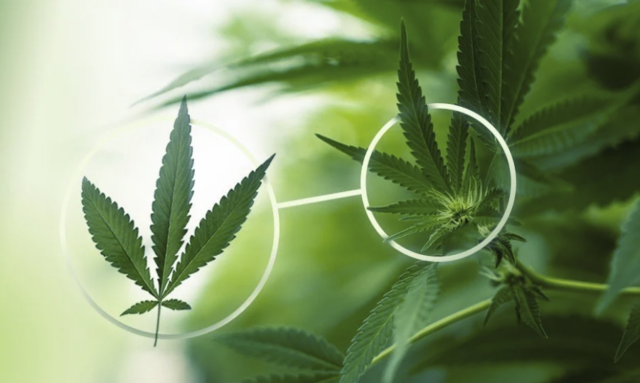
Cannabis Ruderalis; The Secret of Autoflowering
C. ruderalis played a vital role in expanding cannabis cultivation to new environments by contributing its hardiness and autoflowering genes. This remarkable plant, native to the cold and unforgiving climates of Eastern Europe and Central Asia, has long been prized for its ability to thrive in conditions that would be inhospitable to many other cannabis varieties. Its hardiness is largely due to its natural adaptation to the short growing seasons and cooler temperatures of its native region, allowing it to complete its life cycle in as little as 60 days.
The autoflowering trait of C. ruderalis is also a significant advantage, as it enables the plant to produce buds and seeds without the need for a change in photoperiod. This means that C. ruderalis plants will automatically switch from vegetative growth to flowering, regardless of the light cycle, making them ideal for growers who want to produce high-quality cannabis in a short amount of time. By incorporating the hardiness and autoflowering genes of C. ruderalis into their breeding programs, cannabis cultivators have been able to create a wide range of strains that are better suited to a variety of environments and growing conditions.
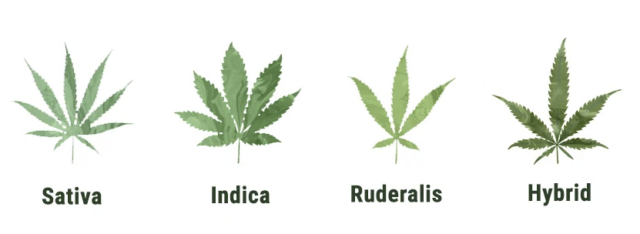
Types of Cannabis Strains; Sativa, Indica, Ruderalis, and Hybrid (Mix of any of the aforementioned)
Ruderalis’s Role in Environmental Adaptation:
- Hardiness and Autoflowering:
- C. ruderalis evolved in harsh, unpredictable climates. Its autoflowering trait is a key adaptation, allowing it to reproduce quickly regardless of light cycles.
- This hardiness, combined with its resistance to pests and diseases, made it invaluable for breeders seeking to adapt cannabis to new environments.
- Expansion of Cultivation:
- When cannabis cultivation spread to regions with different climates and light cycles, ruderalis’ genes were crucial.
- Breeders used ruderalis to create hybrids that could thrive in these new environments, particularly in higher latitudes where long summer days are not guaranteed.
- This is how cannabis became a plant that could be grown successfully in places it never naturally existed before.
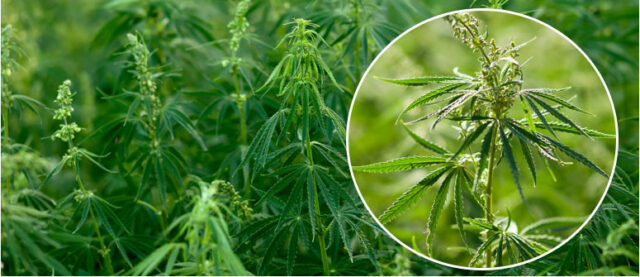
The Hybrid Reality:
- Erosion of “Pure” Strains:
- The concept of “pure” indica or sativa strains is largely outdated. Decades of crossbreeding have created a vast array of hybrids.
- Almost all modern cannabis strains carry some ruderalis genetics, even if it’s a small percentage.
- Dominance, Not Purity:
- The terms “indica” and “sativa” now primarily refer to the dominant traits expressed by a particular hybrid.
- A strain labeled “indica-dominant” may exhibit the physical characteristics and effects associated with indica, but it will likely contain genetic material from other cannabis varieties.
- This understanding is vital, as it allows people to understand that the plant is far more complex than marketing would lead them to believe.
- Human Influence:
- Cannabis has been cultivated and selectively bred by humans for centuries, much like domestic animals.
- This long history of human intervention has resulted in a highly diverse and hybridized plant.
- It is very much a plant that humans have shaped to our needs.
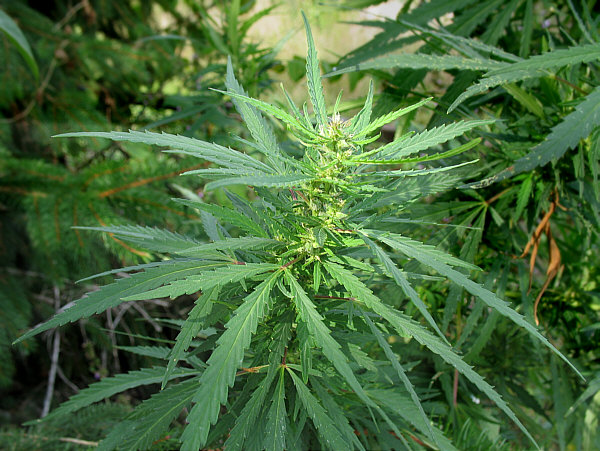
Key Takeaways:
C. ruderalis played a vital role in expanding cannabis cultivation to new environments by contributing its hardiness and autoflowering genes. This remarkable plant, native to the cold and unforgiving climates of Eastern Europe and Central Asia, has long been prized for its ability to thrive in conditions that would be inhospitable to many other cannabis varieties. Its hardiness is largely due to its natural adaptation to the short growing seasons and cooler temperatures of its native region, allowing it to complete its life cycle in as little as 60 days.
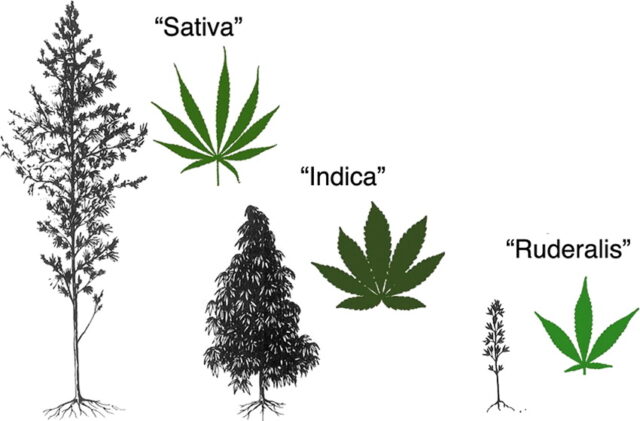
The autoflowering trait of C. ruderalis is also a significant advantage, as it enables the plant to produce buds and seeds without the need for a change in photoperiod. This means that C. ruderalis plants will automatically switch from vegetative growth to flowering, regardless of the light cycle, making them ideal for growers who want to produce high-quality cannabis in a short amount of time. By incorporating the hardiness and autoflowering genes of C. ruderalis into their breeding programs, cannabis cultivators have been able to create a wide range of strains that are better suited to a variety of environments and growing conditions.
- Modern cannabis strains are almost universally hybrids, with varying degrees of indica, sativa, and ruderalis influence.
- The terms “indica” and “sativa” now indicate dominant traits rather than pure genetic lineages.
- Understanding the hybridization of cannabis, allows for a more accurate understanding of the plant, and its effects.